Hoplites
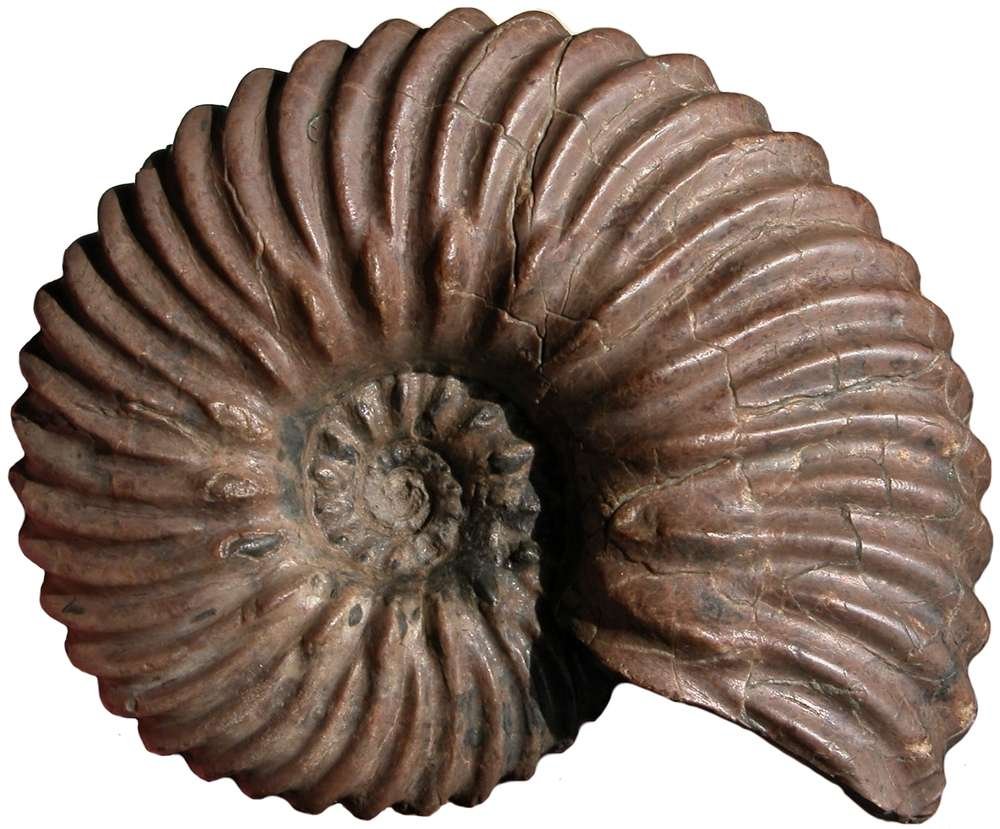
Hoplites dentatus
Image: Image sourced via web search (Fair use / Educational)
About Hoplites
Hoplites dentatus is an extinct species of ammonite cephalopod that thrived during the Middle Albian stage of the Early Cretaceous period, approximately 115 to 100 million years ago. Found predominantly across the shallow epicontinental seas that once covered much of modern-day Europe, this marine invertebrate holds immense significance in the field of paleontology. As a highly successful and widely distributed organism, Hoplites dentatus serves as a crucial index fossil, allowing geologists and paleontologists to date and correlate sedimentary rock layers across vast geographical distances with remarkable precision. Its distinctive ribbed shell and widespread abundance make it a cornerstone species for understanding the complex marine ecosystems of the Mesozoic era, providing a window into the dynamic environmental conditions of a world dominated by dinosaurs on land and giant marine reptiles in the seas.
The physical anatomy of Hoplites dentatus is characterized by its beautifully coiled, planispiral shell, which typically measures between five and fifteen centimeters in diameter, though some exceptional macroconch specimens can grow slightly larger. The shell is heavily ornamented with prominent, bifurcating ribs that originate near the umbilicus—the central depression of the coil—and sweep outward toward the venter, or the outer edge of the shell. These ribs often terminate in distinct, tooth-like tubercles or nodes along the ventrolateral shoulder, a feature that gives the species its specific epithet "dentatus," meaning toothed. The venter itself features a pronounced sulcus or groove, flanked by these alternating nodes, creating a zigzag pattern that is highly diagnostic of the genus. Internally, the shell was divided into a series of chambers, or camerae, separated by complex, highly folded walls known as septa. The intricate suture patterns formed where these septa met the outer shell wall are of the ammonitic type, featuring highly frilled saddles and lobes that provided immense structural strength against water pressure. While the soft tissues of Hoplites dentatus are not preserved in the fossil record, comparative anatomy with modern cephalopods like the nautilus, squid, and octopus allows paleontologists to infer its biological appearance. It would have possessed a distinct head with well-developed, camera-like eyes capable of forming sharp images, essential for navigating the marine environment and spotting prey. A ring of tentacles, likely numbering between ten and several dozen, would have surrounded a sharp, parrot-like chitinous beak and a radula used for grasping and processing food. The animal's body would have occupied only the final, largest chamber of the shell, known as the body chamber, while a specialized tube called the siphuncle ran through the earlier chambers, allowing the organism to regulate its buoyancy by adjusting the gas and fluid levels within. Compared to modern marine life, Hoplites dentatus would have resembled a heavily armored, free-swimming nautilus, though its internal biology and evolutionary lineage align it more closely with modern coleoids like squids and octopuses.
The paleobiology of Hoplites dentatus reveals a highly active and adaptable marine predator. Like most ammonites, it is believed to have been a carnivore, feeding on a variety of small marine organisms including zooplankton, small crustaceans, larval fish, and possibly even smaller cephalopods. Its hunting strategy likely involved using its keen eyesight to locate prey before extending its tentacles to capture and draw the food toward its powerful beak. Locomotion was achieved primarily through jet propulsion, a mechanism common to all cephalopods. By drawing water into its mantle cavity and forcefully expelling it through a muscular funnel or hyponome, Hoplites dentatus could propel itself backward through the water column. However, the heavily ribbed and ornamented nature of its shell suggests that it was not a particularly fast or streamlined swimmer compared to some of its smoother-shelled relatives. Instead, it likely relied on maneuverability and the defensive capabilities of its robust shell to evade predators. The complex septa and siphuncle system allowed for precise control over buoyancy, enabling the animal to hover effortlessly at specific depths or migrate vertically through the water column in search of food or favorable environmental conditions. Social behavior in Hoplites dentatus is a subject of ongoing study, but the frequent discovery of large, monospecific assemblages suggests that they may have congregated in significant numbers, possibly for mating or in response to localized food blooms. Growth patterns, as evidenced by the sequential addition of chambers to the shell, indicate a relatively rapid growth rate during the early stages of life, slowing as the animal reached sexual maturity. Metabolism estimates suggest a highly active lifestyle, requiring a constant and abundant food supply to fuel its jet-propelled locomotion and rapid growth.
The ecological context of the Middle Albian stage was characterized by a warm, greenhouse climate with high global sea levels, resulting in the formation of extensive, shallow epicontinental seas across much of Europe and other continents. Hoplites dentatus inhabited these warm, sunlit waters, which were teeming with a diverse array of marine life. The marine food web of the time was highly complex, with phytoplankton and zooplankton forming the base, supporting a vast array of invertebrates, fish, and marine reptiles. Hoplites dentatus occupied a mid-level position in this food web, acting as both a voracious predator of smaller organisms and a crucial food source for larger predators. Co-existing species included a wide variety of other ammonites, belemnites, bivalves, gastropods, and echinoderms, creating a rich and competitive benthic and pelagic ecosystem. The primary predators of Hoplites dentatus would have been large marine reptiles such as ichthyosaurs, plesiosaurs, and early mosasaurs, as well as large predatory fish and sharks. Fossilized ammonite shells bearing the distinct, crushing bite marks of mosasaurs and the puncture wounds of specialized fish teeth provide direct evidence of these predator-prey relationships. To survive in this dangerous environment, Hoplites dentatus relied on the structural integrity of its ribbed shell, which provided significant resistance against crushing forces, and its ability to quickly alter its depth to escape surface-dwelling predators.
The discovery history of Hoplites dentatus is deeply intertwined with the early development of paleontology as a formal scientific discipline in the 19th century. The species was first formally described by the prominent English naturalist and illustrator James Sowerby in 1821, in his monumental work "The Mineral Conchology of Great Britain." Sowerby originally assigned the species to the catch-all genus Ammonites, naming it Ammonites dentatus due to the distinctive tooth-like nodes along its venter. The type specimens were collected from the Gault Clay formation near Folkestone in Kent, England, a site that has since become world-renowned for its exceptionally preserved Albian fossils. As the classification of ammonites became more refined in the late 19th and early 20th centuries, the genus Hoplites was erected by the German paleontologist Melchior Neumayr in 1875 to accommodate this and related species, recognizing their distinct morphological characteristics. The Gault Clay remains the most significant source of Hoplites dentatus fossils, with generations of paleontologists, including notable figures like L.F. Spath in the 1920s and 1930s, utilizing these abundant and well-preserved specimens to establish detailed biostratigraphic zonations. Spath's meticulous work on the ammonites of the Gault Clay, including Hoplites dentatus, laid the foundation for the modern understanding of Albian stratigraphy and the evolutionary relationships within the family Hoplitidae.
The evolutionary significance of Hoplites dentatus lies in its role as a representative of the highly diverse and rapidly evolving family Hoplitidae, which dominated the shallow seas of the Boreal realm during the Early Cretaceous. Ammonites as a group are renowned for their rapid rates of evolution and high degree of morphological diversity, making them unparalleled tools for biostratigraphy. Hoplites dentatus is a classic example of this, serving as the primary index fossil for the Hoplites dentatus Zone, a specific interval of geological time within the Middle Albian stage. Its widespread distribution and rapid evolution allow geologists to correlate rock formations across Europe, from the United Kingdom to France, Germany, and beyond. In the broader tree of life, Hoplites dentatus belongs to the subclass Ammonoidea, a group of cephalopods that diverged from the ancestors of modern coleoids (squids, octopuses, and cuttlefish) during the Devonian period. While ammonites share a superficial resemblance to the modern nautilus, their internal shell structure and evolutionary history indicate that they are more closely related to the soft-bodied coleoids. The intricate, highly folded suture patterns of Hoplites dentatus represent an evolutionary innovation that allowed ammonites to construct lighter, thinner shells without sacrificing structural strength, a key adaptation that contributed to their immense success throughout the Mesozoic era. Ultimately, the entire ammonite lineage, including the descendants of Hoplites, went extinct at the end of the Cretaceous period during the K-Pg mass extinction event, leaving no direct modern descendants, though their coleoid cousins survived and continue to thrive today.
Scientific debates surrounding Hoplites dentatus and its relatives primarily focus on the interpretation of shell morphology, sexual dimorphism, and paleoecology. One of the most significant ongoing discussions involves the concept of sexual dimorphism in ammonites. It is widely accepted that many ammonite species exhibited pronounced sexual dimorphism, with females typically growing much larger (macroconchs) than males (microconchs). In the case of Hoplites dentatus, distinguishing between true distinct species and dimorphic pairs within a single species has historically caused taxonomic confusion. Some researchers argue that certain smaller, differently ornamented forms previously classified as separate species are actually the microconchs of Hoplites dentatus. Another area of debate concerns the exact depth at which these animals lived. While the heavily ribbed shell suggests a relatively shallow, near-shore habitat, isotopic analysis of the shell material sometimes yields conflicting data regarding water temperature and depth preferences. Additionally, the specific diet of Hoplites dentatus remains a topic of investigation, with some paleontologists utilizing advanced imaging techniques like synchrotron microtomography to examine the rare preservation of buccal masses (mouthparts) and stomach contents in related species to better understand their feeding habits.
The fossil record of Hoplites dentatus is exceptionally rich, particularly in Western Europe. The most famous and prolific fossil sites are located within the Gault Clay formation of southeastern England, especially around Folkestone, and the corresponding Argiles de l'Aube formation in the Champagne-Ardenne region of France. Thousands of specimens have been collected from these localities over the past two centuries. The preservation quality of Hoplites dentatus fossils is often excellent, largely due to the fine-grained, anoxic muds in which they were buried. In many cases, the original aragonite of the shell is preserved, retaining the beautiful, iridescent nacre or mother-of-pearl that covered the living animal. While the soft tissues are almost never preserved, the internal molds (steinkerns) and the intricate details of the external shell ornamentation, including the growth lines and suture patterns, are frequently captured with stunning clarity. These well-preserved fossils provide an invaluable resource for studying the ontogeny (growth and development) and morphological variation within the species.
The cultural impact of Hoplites dentatus extends beyond the realm of academic paleontology. Due to its abundance, striking appearance, and frequent preservation of iridescent nacre, it is a highly sought-after specimen among amateur fossil collectors and commercial dealers. Beautifully prepared specimens of Hoplites dentatus are prominently displayed in natural history museums worldwide, including the Natural History Museum in London and the Muséum national d'Histoire naturelle in Paris, where they serve as iconic representatives of Mesozoic marine life. The perfect, mathematically precise spiral of the ammonite shell has long fascinated artists, mathematicians, and the general public, symbolizing the intersection of natural beauty and geometric order. In educational settings, Hoplites dentatus is frequently used as a textbook example to teach students about index fossils, biostratigraphy, and the process of fossilization, making it an enduring ambassador for the science of paleontology.
Classification
Time Period
Discovery
Location
United Kingdom
Formation
Gault Clay
Frequently Asked Questions
What is Hoplites?
Hoplites dentatus is an extinct species of ammonite cephalopod that thrived during the Middle Albian stage of the Early Cretaceous period, approximately 115 to 100 million years ago. Found predominantly across the shallow epicontinental seas that once covered much of modern-day Europe, this marine i...
When did Hoplites live?
Hoplites lived during the cretaceous period of the mesozoic era approximately 115-100 million years ago.
Where was Hoplites discovered?
Fossils of Hoplites were discovered in United Kingdom in the Gault Clay.
What did Hoplites eat?
Hoplites was a carnivore. It lived in marine habitats.
What type of fossil is Hoplites?
Hoplites is preserved as a body fossil. The preservation quality is excellent.
Related Specimens
From the mesozoic era · body fossils