Atrypa
Atrypa reticularis
Image: Image sourced via web search (Fair use / Educational)
About Atrypa
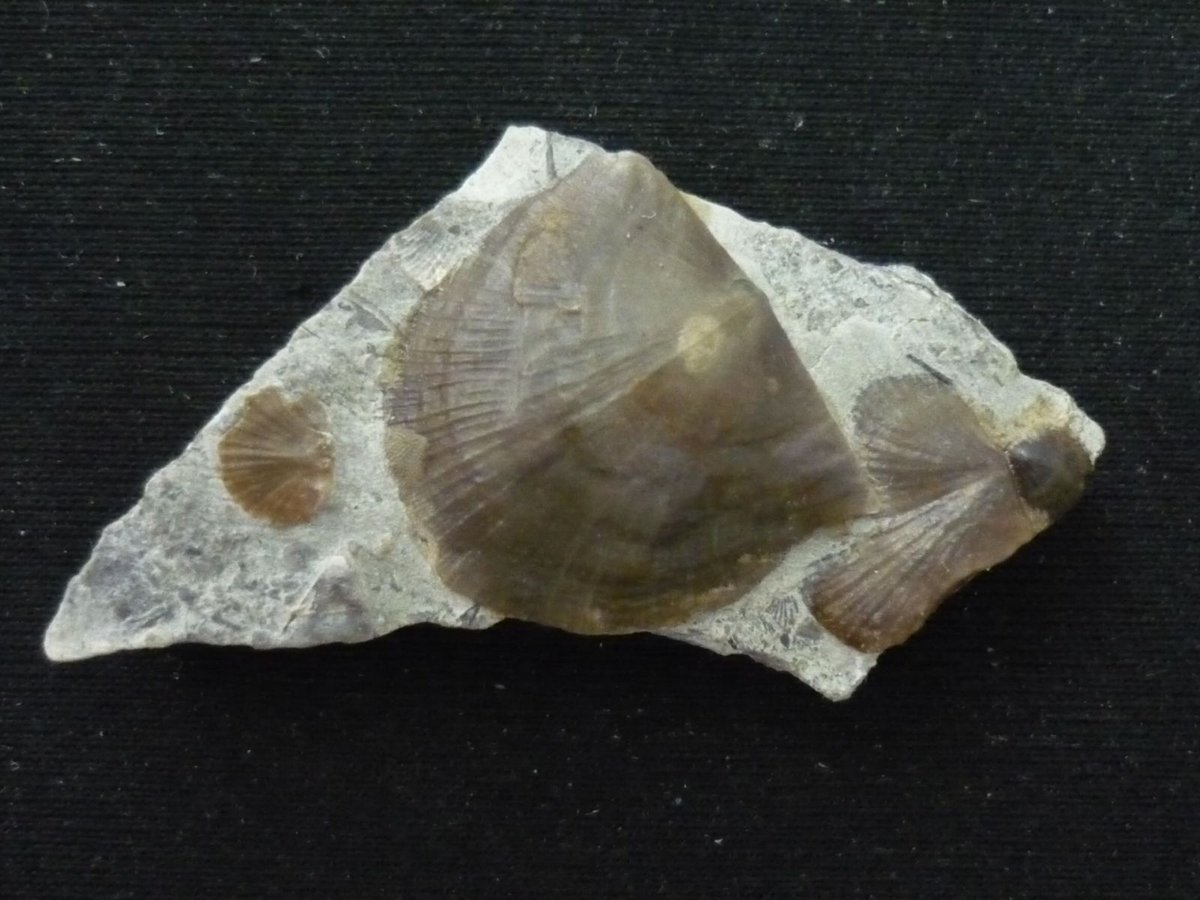
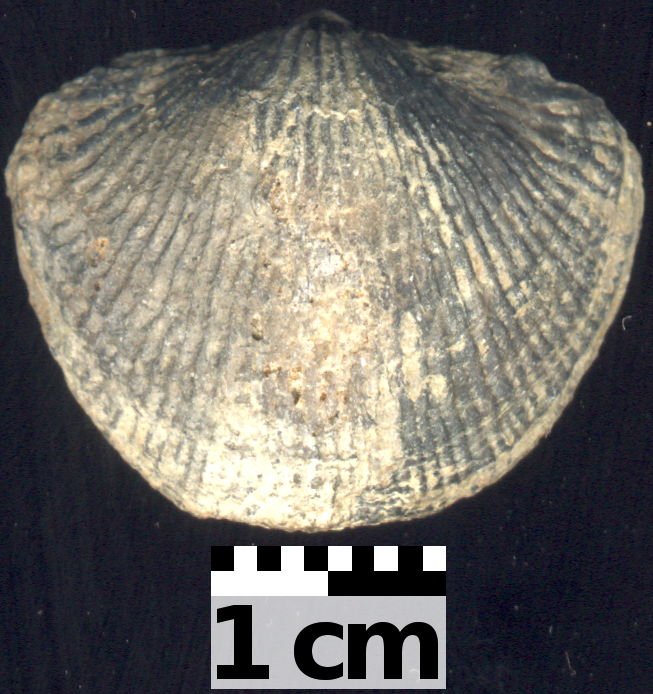
Atrypa reticularis is an extinct species of brachiopod, a marine invertebrate that thrived during the Silurian and Devonian periods, approximately 420 to 370 million years ago. As a member of the phylum Brachiopoda, it superficially resembled modern bivalve mollusks like clams, but belonged to an entirely different and ancient lineage characterized by a unique feeding organ called a lophophore. This organism was incredibly widespread, inhabiting shallow, warm marine environments across the globe, and its fossils are so abundant that it serves as a crucial index fossil for paleontologists dating Paleozoic rock layers. The sheer volume of Atrypa reticularis fossils found in marine deposits has provided scientists with invaluable insights into the biodiversity, ecological dynamics, and eventual collapse of the massive reef systems that defined the Devonian period. Its ubiquitous presence in the fossil record makes it a cornerstone species for understanding the evolutionary history of early marine benthic communities. The physical anatomy of Atrypa reticularis is defined by its distinctive biconvex shell, which typically measures between two and four centimeters in length, making it roughly the size of a modern walnut or a small scallop. The shell is composed of two unequal valves: the pedicle (ventral) valve, which is slightly smaller and flatter, and the brachial (dorsal) valve, which is more deeply convex and rounded. The specific epithet 'reticularis' refers to the highly characteristic reticulate, or net-like, pattern on the exterior of the shell. This pattern is formed by the intersection of strong, radiating ridges called costae and prominent, concentric growth lines. In life, the shell was likely composed of stable low-magnesium calcite, which contributed to its exceptional preservation in the fossil record. At the posterior end of the pedicle valve, there is a small opening called the foramen, through which a fleshy stalk known as the pedicle extended to anchor the animal to the sea floor. Inside the shell, Atrypa possessed a complex, calcified support structure called the brachidium, which took the form of two spiraling cones (spiralia) directed toward the center of the shell. These spiralia supported the lophophore, the delicate, tentacle-bearing organ used for feeding and respiration. Unlike modern bivalves, which rely on gills for both breathing and filter-feeding, the internal anatomy of Atrypa was entirely dominated by this intricate lophophore system, leaving relatively little room for other soft tissues. Paleobiologically, Atrypa reticularis was an obligate, sessile benthic filter-feeder. Upon settling on the ocean floor as a microscopic larva, the animal would secrete its calcitic shell and attach itself to a hard substrate—such as a rock, a dead shell, or a coral skeleton—using its muscular pedicle. Once anchored, it remained in that exact location for the entirety of its adult life. Its feeding strategy relied entirely on the ambient water currents of its shallow marine habitat. By slightly gaping its valves, Atrypa allowed water to flow over its lophophore. The microscopic cilia lining the tentacles of the lophophore would beat in a coordinated fashion, generating a localized current that drew in water laden with plankton, suspended organic detritus, and dissolved oxygen. The tentacles would trap the food particles and transport them along a ciliated groove to the mouth, located at the base of the lophophore. Because it was entirely dependent on suspended food, Atrypa required clear, well-oxygenated water; excessive sediment would easily clog its delicate feeding apparatus. Growth occurred incrementally, as evidenced by the concentric growth lines on the shell, which can sometimes be analyzed to determine the animal's age and the environmental conditions it experienced during different seasons, much like tree rings. The ecological context of Atrypa reticularis is inextricably linked to the magnificent reef systems of the Silurian and Devonian periods. During this time, the Earth's continents were largely clustered into two massive supercontinents, Gondwana and Euramerica, separated by warm, shallow, epicontinental seas. These seas were home to some of the most extensive and diverse reef ecosystems in the planet's history. However, unlike modern reefs, which are built primarily by scleractinian corals, the Devonian reefs were constructed by a diverse assemblage of extinct organisms, including stromatoporoids (a type of reef-building sponge) and tabulate and rugose corals. Atrypa reticularis was a dominant component of the benthic fauna in these environments, often forming dense clusters or 'brachiopod beds' in the sheltered lagoons and fore-reef slopes. It coexisted with a dazzling array of marine life, including crinoids (sea lilies), trilobites, early cephalopods, and an increasing diversity of jawed fishes, such as the heavily armored placoderms. In this complex food web, Atrypa served as a primary consumer of phytoplankton and detritus. While its hard calcitic shell provided significant protection against many predators, it was likely preyed upon by specialized shell-crushing predators, including certain types of early sharks, placoderms, and possibly predatory cephalopods. The discovery and taxonomic history of Atrypa reticularis dates back to the very foundations of modern biological classification. The species was first formally described by the pioneering Swedish botanist and zoologist Carl Linnaeus in the 12th edition of his seminal work, Systema Naturae, published in 1767. Linnaeus originally classified it under the genus Anomia, naming it Anomia reticularis, as the distinct phylum Brachiopoda had not yet been established, and early naturalists often grouped these organisms with bivalve mollusks due to their superficial similarities. It was not until the early 19th century that the genus Atrypa was erected by Johan Wilhelm Dalman in 1828 to accommodate this and related species, recognizing their distinct morphological features, particularly the lack of a prominent pedicle opening in adult specimens of some species (the name Atrypa translates roughly to 'without a hole', a slight misnomer based on the obscured foramen in mature individuals). Over the centuries, thousands of specimens have been collected from classic geological localities across Europe, particularly the Wenlock Limestone of England and the fossil-rich strata of Gotland, Sweden. These early discoveries were instrumental in helping 19th-century geologists like Roderick Murchison and Adam Sedgwick define the Silurian and Devonian stratigraphic systems. The evolutionary significance of Atrypa reticularis lies in its representation of the massive evolutionary radiation of the rhynchonelliform brachiopods during the middle Paleozoic era. The order Atrypida, to which it belongs, first appeared in the Middle Ordovician period and rapidly diversified, becoming one of the most successful and abundant groups of marine invertebrates by the Devonian. The development of the complex, calcified spiralia to support the lophophore was a key evolutionary innovation, allowing these brachiopods to maximize their feeding efficiency and outcompete other benthic filter-feeders in the nutrient-rich shallow seas. Atrypa reticularis itself is often viewed as a highly successful, generalized form that gave rise to numerous specialized descendant species and subspecies adapted to specific microhabitats within the reef ecosystems. However, the evolutionary journey of the Atrypida came to a dramatic and abrupt end during the Late Devonian mass extinction events, specifically the Kellwasser Event at the Frasnian-Famennian boundary, approximately 372 million years ago. This extinction event, likely driven by rapid global cooling, ocean anoxia, and sea-level fluctuations, decimated the shallow marine reef ecosystems, leading to the complete and total extinction of the order Atrypida. Consequently, Atrypa left no modern descendants, and its lineage represents a fascinating dead end in the tree of life. Scientific debates surrounding Atrypa reticularis primarily focus on its taxonomy and the precise interpretation of its functional morphology. Because the species was so widespread and existed for tens of millions of years, it exhibits a high degree of morphological variation across different geographic regions and stratigraphic levels. This has led to ongoing debates among paleontologists regarding the 'species concept' as applied to Atrypa. Some researchers argue that Atrypa reticularis represents a single, highly variable, globally distributed species (a cosmopolitan species), while others contend that it is actually a 'species complex'—a group of closely related, cryptic species that are morphologically similar but genetically distinct. Modern morphometric analyses, using 3D scanning and statistical modeling of shell shapes, are currently being employed to untangle this taxonomic web. Another area of debate involves the exact orientation and hydrodynamics of the internal lophophore. While the calcified spiralia clearly indicate the shape of the organ, researchers continue to use computational fluid dynamics to model exactly how water flowed into the shell, across the tentacles, and back out, attempting to understand how the animal optimized feeding while preventing the recirculation of waste water. The fossil record of Atrypa reticularis is truly global and exceptionally robust. Fossils of this species and its close relatives have been discovered on every continent, with particularly famous and abundant deposits located in North America (such as the Devonian formations of New York, Ohio, and Ontario), Europe (the UK, Sweden, and Germany), Asia (China and Russia), and Australia. The preservation quality is typically excellent to exceptional. Because the shells were originally composed of stable low-magnesium calcite, they are highly resistant to the dissolution and recrystallization processes that often destroy the aragonitic shells of bivalves and gastropods. Consequently, Atrypa shells are frequently found perfectly intact, preserving microscopic details of the reticulate ornamentation and growth lines. In some exceptional localities, such as the silicified faunas of the Glass Mountains or certain Devonian limestones where the rock matrix can be dissolved away with weak acids, the delicate internal spiralia are preserved in pristine, three-dimensional detail. This abundance and high preservation potential make Atrypa one of the most common fossils encountered by field geologists working in middle Paleozoic marine strata. Culturally, while Atrypa reticularis may not possess the cinematic fame of a Tyrannosaurus rex or the pop-culture recognition of a trilobite, it holds a deeply respected and foundational place within the earth sciences and paleontology education. It is a staple of university teaching collections worldwide; almost every geology or paleontology student has handled an Atrypa shell during their laboratory coursework to learn about brachiopod anatomy, index fossils, and biostratigraphy. In natural history museums, slabs of Devonian limestone densely packed with Atrypa shells are frequently displayed in dioramas and exhibits illustrating the ancient reef environments that predated the dinosaurs by hundreds of millions of years. For amateur fossil hunters and rockhounds, finding a perfectly preserved 'lamp shell' with its intricate, net-like patterning is a thrilling connection to a vibrant, alien marine world that vanished long before the first vertebrates ever crawled onto land.
Classification
Time Period
Discovery
Location
Europe
Formation
Wenlock Limestone
Frequently Asked Questions
What is Atrypa?
Atrypa reticularis is an extinct species of brachiopod, a marine invertebrate that thrived during the Silurian and Devonian periods, approximately 420 to 370 million years ago. As a member of the phylum Brachiopoda, it superficially resembled modern bivalve mollusks like clams, but belonged to an en...
When did Atrypa live?
Atrypa lived during the devonian period of the paleozoic era approximately 420-370 million years ago.
Where was Atrypa discovered?
Fossils of Atrypa were discovered in Europe in the Wenlock Limestone.
What did Atrypa eat?
Atrypa was a filter-feeder. It lived in marine habitats.
What type of fossil is Atrypa?
Atrypa is preserved as a body fossil. The preservation quality is excellent.
Related Specimens
From the paleozoic era · body fossils