Hylonomus
Hylonomus lyelli
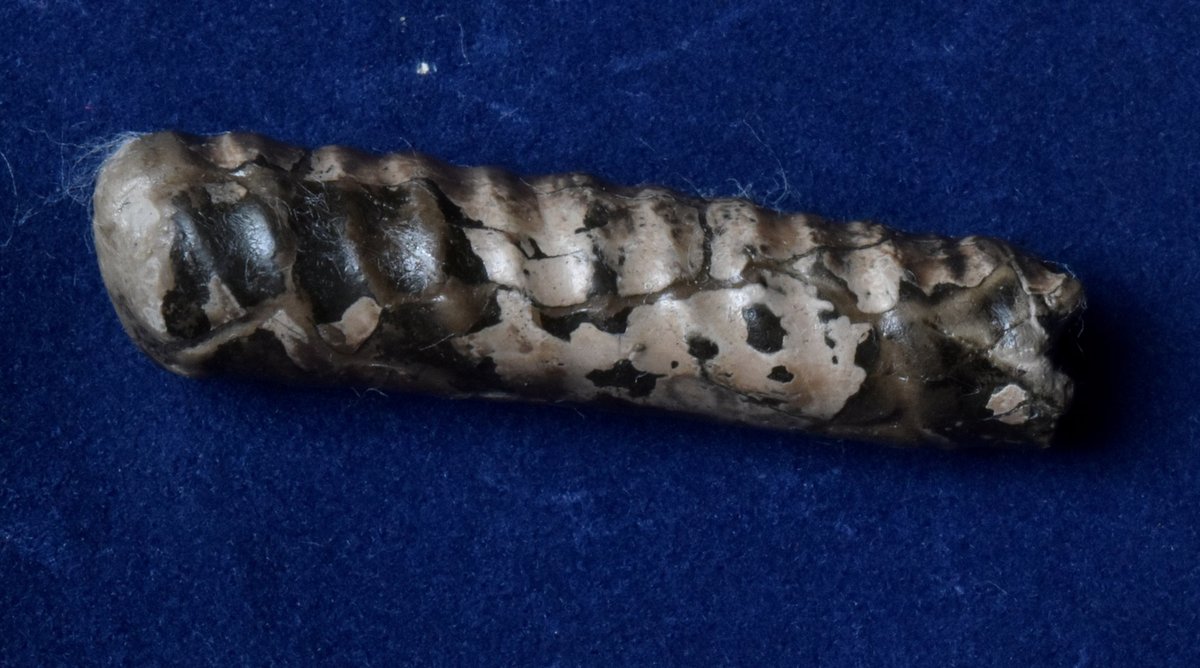
Image: Category:Hylonomus fossils - Wikimedia Commons (CC BY-SA)
About Hylonomus
Hylonomus lyelli stands as a landmark organism in the grand narrative of vertebrate evolution, representing the earliest undisputed reptile known to science. This small, agile creature inhabited the lush, tropical coal swamps of the Late Carboniferous period, approximately 312 million years ago, in a region now known as Nova Scotia, Canada. Its appearance marks a profound evolutionary transition, signaling the moment when vertebrates finally severed their reproductive ties to water, an innovation that would pave the way for the eventual reptilian dominance of terrestrial ecosystems for hundreds of millions of years.
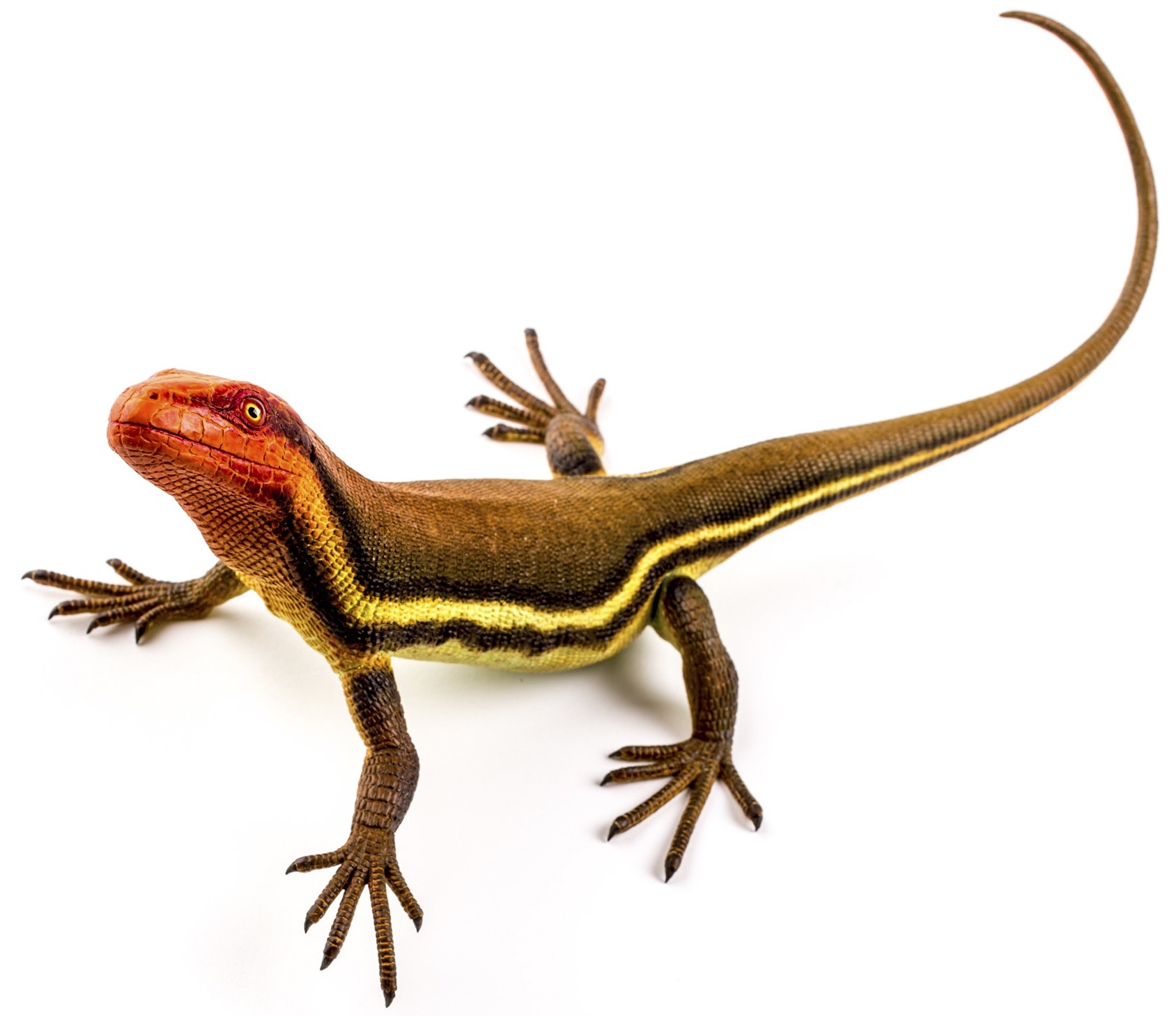
Physically, Hylonomus was a diminutive and gracile animal, closely resembling a modern-day lizard in its overall body plan. It reached a total length of 20 to 25 centimeters, a significant portion of which was comprised of its long, slender tail, which likely served as a counterbalance during rapid movements. Its estimated weight was minimal, probably only a few dozen grams, comparable to a small anole or gecko. The skull was relatively small and anapsid in its primitive condition, lacking the temporal fenestrae (openings behind the eye sockets) that would characterize later reptile groups. Its jaws were lined with numerous small, sharp, peg-like teeth, which were homodont, meaning they were all similar in shape. This simple but effective dentition was perfectly suited for piercing the tough exoskeletons of its invertebrate prey. The body was supported by relatively robust limbs held in a sprawling posture, extending out from the sides of the body rather than directly beneath it. This arrangement, while less efficient for sustained running than the erect posture of later archosaurs, provided stability and allowed for quick, scurrying locomotion across the forest floor. Its five-toed feet were equipped with small claws, suggesting an ability to grip surfaces and perhaps even climb low-lying vegetation or scramble over fallen logs.
The paleobiology of Hylonomus is inferred from its anatomy and the rich ecological context in which its fossils were found. Its sharp, pointed teeth are a clear indicator of an insectivorous or more broadly carnivorous diet, targeting the abundant arthropods of the Carboniferous forests. Prey would have included early insects like cockroaches, dragonflies, and other arthropods such as millipedes and arachnids that thrived in the damp leaf litter. Hylonomus was likely an active and opportunistic predator, using its keen senses to detect movement and its agility to ambush or pursue small prey. Its locomotion was characterized by a sinuous, side-to-side body movement typical of early tetrapods, allowing it to navigate the complex, cluttered environment of the swamp floor. Behaviorally, it is hypothesized that Hylonomus was diurnal, active during the day when its invertebrate prey was most abundant. The unique preservation of specimens within hollow tree stumps suggests a behavioral tendency to seek shelter from predators or adverse weather conditions in pre-existing burrows or cavities. As a reptile, its most crucial biological trait was its reproductive strategy: the laying of amniotic eggs. This revolutionary adaptation, featuring a protective shell and internal membranes, allowed for reproduction on land, freeing Hylonomus and its descendants from the aquatic larval stage that constrained their amphibian ancestors.
Hylonomus lived within the vast, equatorial coal swamps of the Pennsylvanian subperiod of the Carboniferous. The global climate was warm and humid, with no significant polar ice caps, resulting in high sea levels. The supercontinent of Pangaea was in the process of assembling, and the Joggins region of Nova Scotia was situated near the paleo-equator. This environment was dominated by a colossal, alien-looking flora, including towering lycopsid trees like Lepidodendron and Sigillaria, which could reach heights of over 30 meters, as well as giant calamites (horsetails) and dense ferns. The forest floor was a thick mat of decaying plant matter, forming the peat that would later become the extensive coal seams of the Joggins Formation. In this world, Hylonomus occupied a specific ecological niche as a small terrestrial insectivore. It shared its habitat with a diverse array of other creatures, including the giant arthropod Arthropleura, a millipede-like animal that could grow over two meters long, and various amphibians like the lepospondyl Dendrerpeton. As a small vertebrate, Hylonomus would have been both a predator of smaller invertebrates and prey for larger amphibians and potentially larger, yet-to-be-discovered terrestrial predators. Its position in the food web was crucial, linking the primary decomposers and herbivores with higher-level carnivores.
The discovery of Hylonomus is inextricably linked to one of the world's most important fossil sites: the Joggins Fossil Cliffs in Nova Scotia. In the mid-19th century, the Canadian geologist Sir John William Dawson, accompanied by his esteemed British mentor Sir Charles Lyell, investigated the exposed coal-age strata at Joggins. During their expeditions in 1852 and subsequent years, they made a remarkable find. Within the fossilized, hollowed-out stumps of giant lycopsid trees, they discovered the delicate skeletons of several small vertebrates. These animals had seemingly crawled into the hollow stumps for shelter, became trapped, and were subsequently buried by sediment and perfectly preserved. In 1860, Dawson formally described the most complete of these specimens, naming it Hylonomus lyelli. The generic name, Hylonomus, translates to "forest mouse" or "forest dweller," reflecting its habitat, while the specific name, lyelli, was chosen to honor Charles Lyell for his foundational contributions to geology and his presence during the initial discoveries. The primary specimen, or holotype, remains a cornerstone of vertebrate paleontology, providing the first clear glimpse into the anatomy of the earliest reptiles.
The evolutionary significance of Hylonomus cannot be overstated. It sits at or very near the base of the reptilian family tree, representing the dawn of the Amniota, the clade that includes all reptiles, birds, and mammals. Its skeleton exhibits a mosaic of primitive and advanced features. While retaining a generally amphibian-like sprawling posture, its skeletal proportions, particularly the more robust pectoral and pelvic girdles and stronger limbs, point to a more fully terrestrial lifestyle. The key diagnostic feature that firmly places it within the reptilian lineage is the structure of its ankle bones, specifically the astragalus and calcaneum, which are fused in a way that is characteristic of reptiles and distinct from their amphibian relatives. As an anapsid, Hylonomus lacked the skull openings that would later define the major reptilian subgroups: the synapsids (mammal-like reptiles) and diapsids (which led to lizards, snakes, crocodiles, dinosaurs, and birds). Hylonomus is therefore considered a protorothyridid or a basal eureptile, part of the stem group from which all other reptile lineages radiated. It provides a tangible link to the last common ancestor of all amniotes, illustrating the foundational body plan that would be modified and elaborated upon to produce the incredible diversity of terrestrial vertebrates that followed.
Despite its foundational status, Hylonomus has not been entirely free from scientific debate. For many years, its position as the "first reptile" was challenged by other Carboniferous fossils, such as Westlothiana from Scotland, which exhibits a blend of reptilian and amphibian traits and is now often considered a stem-amniote or a very early amphibian-like reptile. Another contender, Casineria, also from Scotland, is known from a single, incomplete specimen but shows features suggesting it may be even more basal than Hylonomus. However, the completeness and clear reptilian anatomy of the Hylonomus specimens have allowed it to retain its title as the earliest undisputed reptile. Its precise phylogenetic placement within the early amniote radiation is also a subject of ongoing technical analysis, with researchers debating its exact relationship to other early reptile groups like the captorhinids and the lineage that led to diapsids. These debates, fueled by new fossil discoveries and advanced analytical techniques, continually refine our understanding of this pivotal moment in vertebrate history, with Hylonomus remaining the essential benchmark for all such discussions.
The fossil record of Hylonomus is geographically constrained but taphonomically exceptional. All known specimens have been recovered from the Joggins Formation in Nova Scotia, Canada. This remarkable site, now a UNESCO World Heritage site, is famous for its in-situ preservation of the Carboniferous coal swamp ecosystem. The most famous specimens of Hylonomus are those found within the fossilized lycopsid tree stumps, a unique mode of preservation that protected their delicate skeletons from scavenging and decay. This "tree stump trap" phenomenon has yielded dozens of articulated or partially articulated skeletons, making Hylonomus one of the best-represented early reptiles. The quality of preservation is often exquisite, allowing for detailed study of its skeletal anatomy, from the fine bones of the skull to the individual phalanges of its feet. While its known geographic range is limited to this single locality, the environmental conditions it represents were widespread across equatorial Pangaea, suggesting that Hylonomus or very similar animals were likely far more broadly distributed during the Late Carboniferous than the fossil record currently indicates.
As the earliest definitive reptile, Hylonomus holds a special place in both scientific and public spheres. It is a textbook example of a major evolutionary transition and is featured prominently in museum exhibits on the history of life around the world, including the Canadian Museum of Nature and the Joggins Fossil Centre itself. Its discovery by Dawson and Lyell is a classic story in the history of paleontology, illustrating the importance of careful observation and serendipity. In 2002, Hylonomus lyelli was officially declared the Provincial Fossil of Nova Scotia, cementing its cultural and educational importance to the region of its discovery. For students of biology and paleontology, Hylonomus serves as a critical case study for understanding the origin of amniotes and the adaptations that enabled vertebrates to conquer the land.
Classification
Time Period
Discovery
Location
Joggins, Nova Scotia, Canada
Formation
Joggins Formation
Frequently Asked Questions
What is Hylonomus?
Hylonomus lyelli stands as a landmark organism in the grand narrative of vertebrate evolution, representing the earliest undisputed reptile known to science. This small, agile creature inhabited the lush, tropical coal swamps of the Late Carboniferous period, approximately 312 million years ago, in ...
When did Hylonomus live?
Hylonomus lived during the carboniferous period of the paleozoic era approximately 312 million years ago.
Where was Hylonomus discovered?
Fossils of Hylonomus were discovered in Joggins, Nova Scotia, Canada in the Joggins Formation.
What did Hylonomus eat?
Hylonomus was a carnivore. It lived in terrestrial habitats.
What type of fossil is Hylonomus?
Hylonomus is preserved as a body fossil. The preservation quality is good.
Related Specimens
From the paleozoic era · body fossils