Amplectobelua
Amplectobelua symbrachiata
Image: Image sourced via web search (Fair use / Educational)
About Amplectobelua
Amplectobelua symbrachiata represents a fascinating and formidable predator from the Cambrian seas, a time when complex life was rapidly diversifying in an event known as the Cambrian Explosion. This ancient arthropod relative, belonging to the extinct group Radiodonta, patrolled the seafloor of what is now China approximately 520 million years ago. Its discovery has provided crucial insights into the early evolution of arthropods and the structure of the earliest complex marine ecosystems, revealing a world populated by a bizarre and wonderful array of creatures, with Amplectobelua acting as a key mid-tier predator.
Amplectobelua was a moderately sized radiodont, with complete specimens of the type species, A. symbrachiata, reaching lengths of approximately 18 to 20 centimeters. Its body plan was characteristic of radiodonts, featuring a segmented trunk, a pair of large, complex frontal appendages, and a distinctive circular mouth structure known as an oral cone. However, its most defining features were its powerful frontal appendages, which give the genus its name, derived from the Latin 'amplectus' (embrace) and 'belua' (monster). Unlike the more finely spined, basket-like appendages of its famous relative Anomalocaris, Amplectobelua's appendages were robust and specialized for grasping. Each appendage consisted of a main shaft with a series of endites, or spines, projecting inwards. The fourth endite from the base was dramatically enlarged, forming a massive, pincer-like claw in conjunction with the distal end of the appendage. This formidable grasping tool was equipped with smaller spines, ideal for securing and manipulating struggling prey. The body itself was flattened and possessed a series of lateral flaps, likely used for propulsion through the water. At the posterior end, it featured a tail fan composed of three pairs of long, blade-like structures, which would have provided stability and steering. Its eyes, while not as prominently stalked as in some other radiodonts, were large and compound, suggesting it was a visual hunter, capable of detecting movement in the dimly lit benthic environment. For scale, its body length was comparable to that of a large modern crayfish or a small lobster, making it a significant predator in its ecosystem.
Based on its unique anatomical features, the paleobiology of Amplectobelua is interpreted as that of an active, benthic predator. The powerful, pincer-like frontal appendages were not suited for filter-feeding or combing through sediment for small organisms. Instead, they were clearly adapted for seizing and crushing prey. Its primary targets were likely other arthropods, particularly trilobites, which were abundant during the Cambrian. The robust nature of the claws suggests an ability to grapple with and potentially breach the hard carapaces of these animals. Fossil evidence, including healed bite marks on some trilobite fossils, has been tentatively linked to predators like Amplectobelua, supporting this hypothesis. Locomotion was likely achieved by undulating the lateral body flaps in a wave-like motion, a method common to radiodonts, allowing it to swim or glide just above the seafloor. The tail fan would have acted as a rudder for steering and provided bursts of speed when necessary. While direct evidence of social behavior is non-existent, it is presumed to have been a solitary hunter, given the nature of most modern predatory arthropods. Its large eyes indicate that vision played a key role in locating prey, stalking it from a short distance before lunging forward to capture it with its specialized appendages. Once secured, the prey would be passed to the circular, tooth-lined oral cone located on the underside of the head, which would then break the victim down into smaller, ingestible pieces.
Amplectobelua lived in the warm, shallow epicontinental seas that covered the South China plate during the Cambrian Period, specifically Stage 3. The world at this time was vastly different, with most continental landmasses clustered in the Southern Hemisphere. The climate was generally warmer than today, with no polar ice caps. The ecosystem Amplectobelua inhabited, preserved in the Chengjiang biota, was one of the most diverse of its time. It was a bustling benthic community teeming with life, including a vast array of sponges, brachiopods, priapulid worms, and numerous types of arthropods. Trilobites, such as Eoredlichia, were exceptionally common and would have formed a primary food source. Amplectobelua occupied a position as a mid-sized predator within this complex food web. It was not the apex predator; that role was likely held by its much larger relative, Anomalocaris, which could reach lengths of up to a meter. Amplectobelua would have competed with other medium-sized predators while also needing to avoid being preyed upon by larger ones. Its existence demonstrates the rapid development of sophisticated predator-prey dynamics and ecological tiering shortly after the initial burst of animal diversification. The environment was a soft, muddy substrate, and Amplectobelua's body plan was well-suited for navigating this type of seafloor habitat.
The discovery of Amplectobelua is tied to the remarkable fossil deposits of the Chengjiang biota in Yunnan Province, China. These fossils were first brought to widespread scientific attention in 1984 by paleontologist Hou Xianguang. While isolated radiodont appendages had been known from various Cambrian sites for decades (often misidentified as shrimp bodies or other organisms), the Chengjiang fossils provided the first complete or near-complete specimens, revolutionizing our understanding of this group. Amplectobelua symbrachiata was formally described in 1995 by Hou Xianguang, Jan Bergström, and Per Ahlberg. The holotype specimen, a nearly complete body fossil, revealed the true nature of the animal, connecting the previously enigmatic grasping appendages to a radiodont body plan. The species name 'symbrachiata' refers to the pincer-like arrangement of its appendage spines. The discovery was part of a wave of paleontological research in China that unveiled an entire ecosystem with a level of detail previously only seen in Canada's Burgess Shale. No single specimen has achieved a nickname like 'Sue' or 'Lucy,' but the collective material from the Maotianshan Shales has been instrumental in reconstructing not just Amplectobelua, but the entire Cambrian marine world. The initial description was based on several well-preserved specimens that clearly showed the body flaps, tail fan, and the crucial details of the frontal appendages that set it apart from other radiodonts.
Amplectobelua holds a significant position in the story of early animal evolution. It belongs to the stem-group of Arthropoda, meaning it is more closely related to modern arthropods (insects, crustaceans, spiders, etc.) than to any other phylum, but branched off before the last common ancestor of all living arthropods. The study of Amplectobelua and its relatives in the order Radiodonta provides critical clues about the ancestral arthropod body plan. Features like segmented bodies, jointed appendages, and compound eyes are all hallmarks of the arthropod lineage that were present in these early forms. Amplectobelua, with its highly specialized frontal appendages, demonstrates that even at this early stage, the radiodonts had diversified into various ecological niches, developing a range of feeding strategies. It represents a different evolutionary path from Anomalocaris, which had more delicate feeding appendages, and from filter-feeding radiodonts like Tamisiocaris. This diversity highlights the rapid adaptive radiation of the group and showcases the evolutionary experimentation that characterized the Cambrian Explosion. By studying the anatomy of Amplectobelua, scientists can trace the origin and modification of key arthropod features, such as how appendages were adapted for different functions like locomotion, sensation, and, in this case, predation.
Despite the exceptional quality of the fossils, several aspects of Amplectobelua's biology remain subjects of scientific debate. The precise function of its pincer-like appendage is one such area. While the prevailing theory is that it was used for crushing hard-shelled prey like trilobites, some researchers suggest it may have been used more for grasping and holding softer-bodied animals, with the large spine acting as an anchor. The exact mechanics of its locomotion are also debated; while the lateral flaps were clearly used for swimming, the degree of maneuverability and speed they provided is still being modeled and discussed. Furthermore, the classification within Radiodonta itself is an area of active research. As new species are discovered, the relationships between families like Amplectobeluidae and Anomalocarididae are frequently revised. A second species, Amplectobelua stephenensis, was described from the slightly younger Burgess Shale in Canada. Initially placed in its own genus, Daley and Budd reassigned it to Amplectobelua in 2010, suggesting the genus was geographically widespread and persisted for several million years. This reassignment, however, continues to be debated by some paleontologists who question whether the similarities are strong enough to warrant placing them in the same genus.
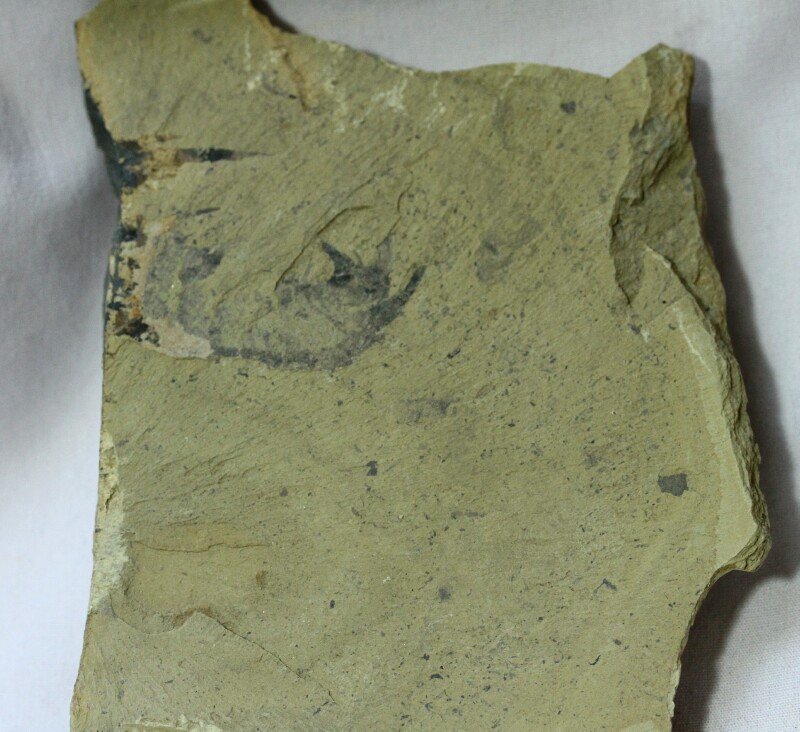
The fossil record of Amplectobelua is geographically concentrated but temporally significant. The primary and most important fossils of the type species, A. symbrachiata, come exclusively from the Chengjiang biota in Yunnan, China. These Maotianshan Shales are famous for their Lagerstätte-type preservation, where soft tissues are preserved as carbonaceous films in fine-grained mudstone, a process that captures an incredible amount of anatomical detail. Dozens of specimens are known, ranging from isolated appendages to articulated, complete bodies, although complete specimens remain relatively rare compared to more common Chengjiang animals like trilobites. The preservation quality is exceptional, allowing for detailed study of the gut tract, musculature imprints, and the fine structure of the appendages. The potential second species, A. stephenensis, is known from the Burgess Shale in British Columbia, Canada. If this classification is correct, it extends the genus's range across a significant portion of the globe during the middle Cambrian, from Laurentia (ancient North America) to the South China plate. The preservation in the Burgess Shale is also exceptional, providing complementary data on amplectobeluid anatomy.
While not as famous as its larger cousin Anomalocaris, Amplectobelua has gained recognition among paleontology enthusiasts and appears in various educational contexts. Its menacing, pincer-like claws make it a visually striking example of Cambrian predation. It is featured in museum displays that showcase the diversity of the Chengjiang biota, such as those at the Chengjiang Fossil Site Natural History Museum in China. It has also appeared in documentary series about prehistoric life, often depicted as a formidable hunter of trilobites, illustrating the dangers of the Cambrian seafloor. Its importance lies in demonstrating that the 'weird wonders' of the Cambrian were not just evolutionary dead ends but were part of a complex and highly functional ecosystem with a variety of specialized predators. For students of evolution, Amplectobelua serves as a perfect case study in adaptive radiation and the specialization of predatory appendages in early arthropod relatives.
Classification
Time Period
Discovery
Location
China
Formation
Chengjiang biota (Maotianshan Shales)
Frequently Asked Questions
What is Amplectobelua?
Amplectobelua symbrachiata represents a fascinating and formidable predator from the Cambrian seas, a time when complex life was rapidly diversifying in an event known as the Cambrian Explosion. This ancient arthropod relative, belonging to the extinct group Radiodonta, patrolled the seafloor of wha...
When did Amplectobelua live?
Amplectobelua lived during the cambrian period of the paleozoic era approximately 520-515 million years ago.
Where was Amplectobelua discovered?
Fossils of Amplectobelua were discovered in China in the Chengjiang biota (Maotianshan Shales).
What did Amplectobelua eat?
Amplectobelua was a carnivore. It lived in marine, benthic habitats.
What type of fossil is Amplectobelua?
Amplectobelua is preserved as a body fossil. The preservation quality is exceptional.
Related Specimens
From the paleozoic era · body fossils