Pliosaurus
Pliosaurus funkei
Image: Image sourced via web search (Fair use / Educational)
About Pliosaurus
Pliosaurus funkei was a colossal marine reptile that reigned as an apex predator in the frigid, high-latitude seas of the Late Jurassic period, approximately 155 to 145 million years ago. Belonging to a group of short-necked plesiosaurs known as pliosaurids, this species represents one of the largest and most powerful macropredators ever to have lived. Its discovery in the Arctic archipelago of Svalbard, Norway, dramatically expanded our understanding of marine reptile gigantism and the ecological dynamics of ancient polar oceans, solidifying its status as a paleontological icon.
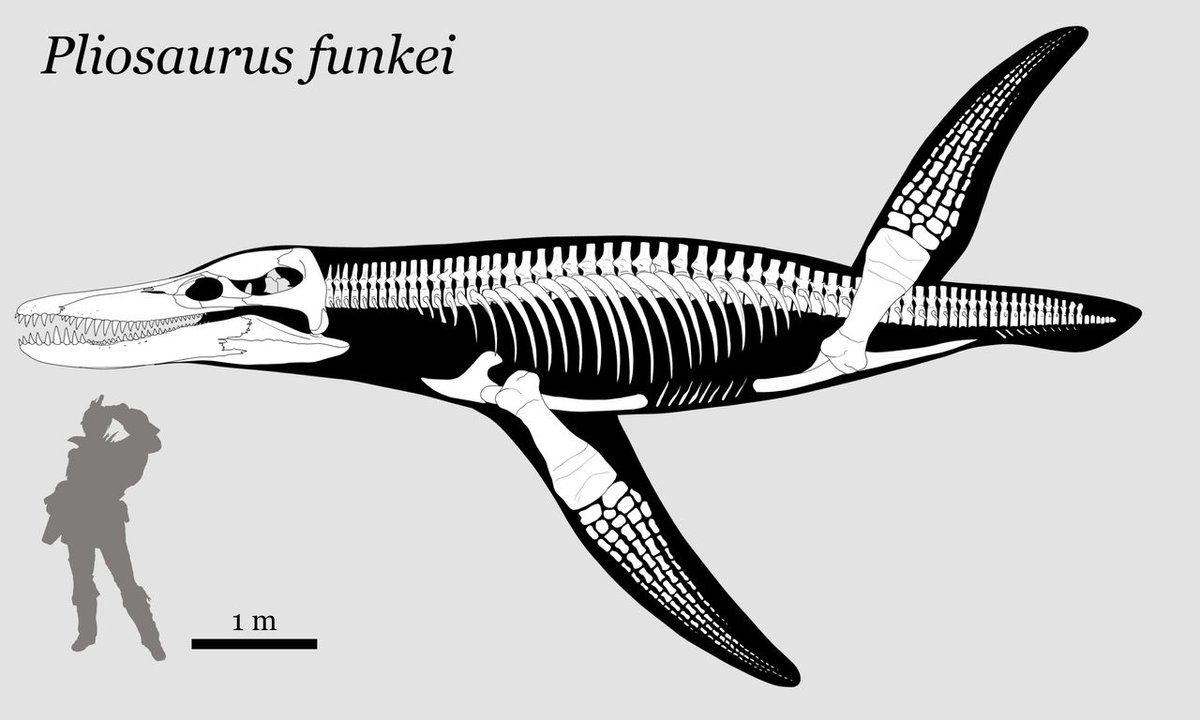
Pliosaurus funkei was a truly gigantic animal, a leviathan of the Jurassic seas. Initial media reports, fueled by the nickname 'Predator X,' suggested sensational lengths of up to 15 meters, but more rigorous scientific analysis of the holotype and referred specimens has yielded more conservative, yet still formidable, estimates. Current research places its total body length between 10 and 13 meters (approximately 33 to 43 feet). Weight estimates are inherently more speculative but likely ranged from 10 to 20 metric tons, placing it in the same size class as a modern sperm whale. Its most terrifying feature was its enormous skull, which in the holotype specimen (PMO 214.135) is estimated to have been between 1.6 and 2 meters long. The skull was robustly constructed, characterized by a relatively short, wide snout compared to other pliosaurs, giving it a powerful, crushing bite. Its jaws were lined with massive, conical teeth that were triangular in cross-section, deeply rooted in the jawbones, and perfectly adapted for seizing and dismembering large prey. The postcranial skeleton was equally impressive, featuring a teardrop-shaped, streamlined body powered by two pairs of enormous, wing-like flippers. These flippers, supported by robust limb girdles, were the animal's primary means of propulsion. The neck was short and muscular, a hallmark of the Pliosauridae, providing the stability needed to wield its massive head as a weapon. Its vertebrae, particularly those in the cervical region, were broad and heavily built, indicating immense neck strength. Unlike the elongated necks of its plesiosaur cousins, the short neck of Pliosaurus funkei was an adaptation for a macropredatory lifestyle, allowing for rapid, powerful head movements to snatch prey.
The paleobiology of Pliosaurus funkei paints a picture of a hypercarnivorous apex predator. Its immense size, powerful jaws, and formidable dentition indicate a diet consisting of large marine animals. Isotopic analysis and the fossilized remains of potential prey found in the same geological formation suggest its menu included large fish, ichthyosaurs, and even other plesiosaurs, such as the long-necked cryptoclidids and kimmosaurids that shared its habitat. Its hunting strategy was likely one of ambush and overwhelming force. Pliosaurus funkei would have used its dark dorsal coloration for camouflage in the deep, dimly lit polar waters, approaching prey from below before launching a devastatingly powerful attack. Biomechanical studies of its skull and teeth suggest a bite force that could have been among the strongest of any known animal, capable of crushing bone and shearing through flesh with ease. Locomotion was achieved through a unique form of underwater flight, with all four flippers generating thrust. This method, shared by all plesiosaurs, would have provided a combination of powerful acceleration for ambushing prey and efficient cruising for patrolling its vast territory. While direct evidence of social behavior is nonexistent, it is plausible that these animals were largely solitary hunters, given their role as apex predators and the vast resources required to sustain a single individual. Metabolism was likely higher than that of modern reptiles, an adaptation necessary to maintain body temperature and power its active predatory lifestyle in the cold waters of the Boreal Sea.
Pliosaurus funkei inhabited the Boreal Sea, a high-latitude marine environment that covered the region of modern-day Svalbard during the Tithonian stage of the Late Jurassic. This was not a polar ice cap as we know it today; the Mesozoic was a greenhouse world with no permanent polar ice. However, these northern seas would have been significantly cooler than the tropical waters of the Tethys Ocean to the south, with seasonal variations in light and temperature. The Agardhfjellet Formation, where its fossils were found, represents a deep-water, offshore marine environment rich in organic material. The ecosystem was complex and teeming with life. Pliosaurus funkei sat at the very top of the food web, an undisputed apex predator. Its prey included a diverse array of marine life. Large ichthyosaurs like Cryopterygius and Janusaurus were abundant and likely formed a significant part of its diet. The seas were also home to numerous other plesiosaurs, including long-necked forms like Colymbosaurus and Djupedalia, which may have been hunted by the giant pliosaur. The food web's base was supported by ammonites, belemnites, and various species of fish, which in turn sustained the larger marine reptiles. The presence of such a massive predator indicates that the Boreal Sea was an incredibly productive ecosystem, capable of supporting a multi-tiered food chain culminating in a predator of this magnitude. Its role was crucial in regulating the populations of other large marine animals, shaping the structure of this ancient polar marine community.
The discovery of Pliosaurus funkei is a modern paleontological saga. The story began in 2006 during an expedition to Svalbard led by Norwegian paleontologist Dr. Jørn H. Hurum of the University of Oslo's Natural History Museum. The team, including Bjørn Funke and May-Liss Funke, for whom the species would later be named, uncovered the partial remains of a massive pliosaur in the Agardhfjellet Formation. The initial find was tantalizing, but it was the subsequent excavation seasons, particularly in 2007 and 2008, that revealed the true scale of the creature. The team meticulously excavated two significant specimens, designated PMO 214.135 (the holotype) and PMO 214.136. The discovery quickly captured global media attention, and the creature was nicknamed 'Predator X' long before its formal scientific description. This moniker highlighted its immense size and presumed predatory prowess, creating a public sensation. For several years, 'Predator X' was a paleontological celebrity without a formal name. Finally, in 2012, the team of Espen M. Knutsen, Patrick S. Druckenmiller, and Jørn H. Hurum published the official description in the Norwegian Journal of Geology, formally naming the species Pliosaurus funkei in honor of the volunteers who discovered it. The key specimens, consisting of cranial and postcranial elements including parts of the skull, jaw, vertebrae, and flipper bones, remain the cornerstone of our understanding of this magnificent animal.
Pliosaurus funkei holds significant evolutionary importance as it provides a crucial window into the upper limits of marine reptile gigantism and the diversification of pliosaurids. As a member of the family Pliosauridae, it belongs to a lineage of short-necked plesiosaurs that evolved to become the dominant marine predators of the Jurassic and early Cretaceous. Its discovery demonstrated that these animals could achieve sizes previously thought to be reserved for the largest mosasaurs of the Late Cretaceous or modern whales. The species helps to refine the phylogeny of the genus Pliosaurus, a group known for its taxonomic complexity. The unique anatomical features of P. funkei, such as the spacing of its teeth and the morphology of its cervical vertebrae, help distinguish it from other large pliosaurs like Pliosaurus macromerus and Kronosaurus, clarifying the evolutionary relationships within this clade of marine titans. Furthermore, its existence in a high-latitude, cooler water environment challenges previous assumptions about the geographic and climatic ranges of these giant reptiles. It shows that pliosaurids were highly adaptable and capable of thriving outside of the warmer, more southerly seas, indicating a sophisticated degree of thermal regulation. Pliosaurus funkei serves as a prime example of convergent evolution, developing a body plan and ecological role analogous to that of modern orcas or sperm whales, despite being a reptile with no direct living descendants.
The study of Pliosaurus funkei has not been without scientific debate, much of which centered on its size. The initial, highly publicized estimates of a 15-meter length and a 45-ton weight were based on preliminary field data and comparisons to other pliosaurids like Kronosaurus. However, the formal 2012 description presented a more conservative and scientifically rigorous analysis, scaling back the length to 10-13 meters. This revision highlights the importance of detailed anatomical study over media-driven sensationalism. Another area of discussion involves the taxonomy of the genus Pliosaurus itself. The genus has historically been a 'wastebasket taxon,' with many large pliosaurid remains from the Late Jurassic of Europe being assigned to it. The detailed description of P. funkei, with its unique set of diagnostic features, has helped to better define what constitutes a Pliosaurus and has contributed to the ongoing effort to clean up the taxonomy of the family Pliosauridae. The exact number of valid Pliosaurus species and their relationships to one another remains an active area of research, with P. funkei providing a key, well-preserved data point for these phylogenetic analyses.
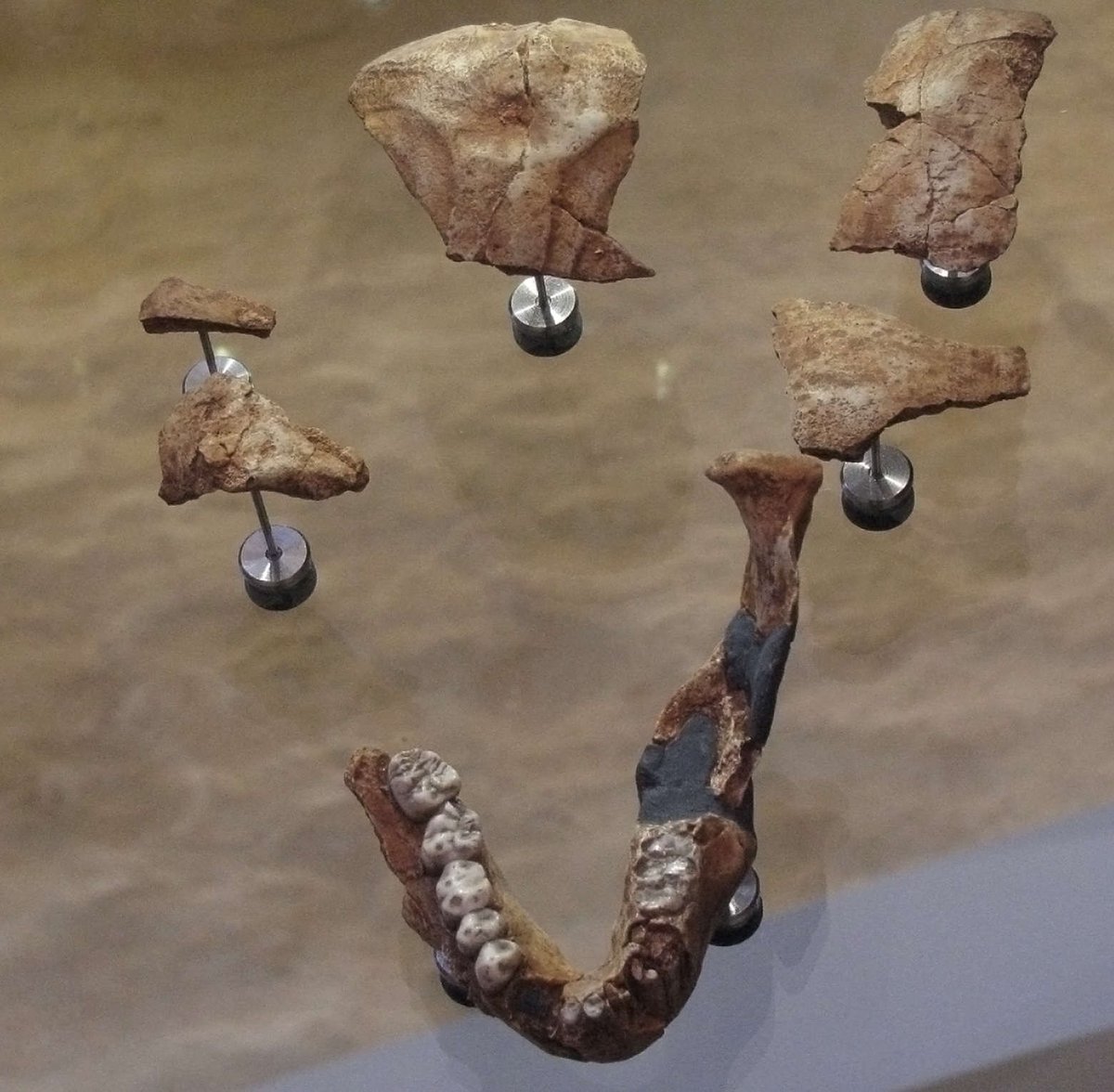
The fossil record of Pliosaurus funkei is, to date, exclusively known from the Agardhfjellet Formation on the island of Spitsbergen, in the Svalbard archipelago of Norway. This makes it a geographically restricted and rare species. The known material is based primarily on two partial skeletons, the holotype PMO 214.135 and the referred specimen PMO 214.136. While incomplete, these skeletons are significant because they preserve both cranial and postcranial elements, which is uncommon for giant pliosaurs. The holotype includes a significant portion of the posterior skull, several cervical and dorsal vertebrae, and parts of the right foreflipper. The preservation quality is considered good, with the bones showing limited distortion despite the immense pressures they endured during fossilization. The Svalbard locality, managed by the University of Oslo, has become a world-famous site for marine reptile fossils, yielding not just Pliosaurus funkei but an entire, remarkably complete ancient ecosystem. The discovery of over 40 skeletons of various marine reptiles in this area underscores its global importance for understanding life in the Jurassic polar seas. The rarity of P. funkei fossils emphasizes the challenges of finding and excavating remains in such a remote and harsh Arctic environment.
The cultural impact of Pliosaurus funkei has been disproportionately large relative to its brief history in the scientific literature, thanks almost entirely to its 'Predator X' moniker. This catchy nickname, combined with its colossal size, captured the public imagination and led to widespread media coverage and inclusion in popular science documentaries. Most notably, it was the focus of a 2009 BBC documentary special, 'Predator X,' part of the 'Walking with Dinosaurs' series, which cemented its place in popular culture as the ultimate sea monster. The reconstructed skeleton of Pliosaurus funkei is a centerpiece exhibit at the Natural History Museum at the University of Oslo, where it continues to awe visitors and serve as a powerful educational tool for teaching about prehistoric life, evolution, and the dynamic nature of Earth's past climates and ecosystems.
Classification
Time Period
Discovery
Location
Svalbard, Norway
Formation
Agardhfjellet Formation
Frequently Asked Questions
What is Pliosaurus?
Pliosaurus funkei was a colossal marine reptile that reigned as an apex predator in the frigid, high-latitude seas of the Late Jurassic period, approximately 155 to 145 million years ago. Belonging to a group of short-necked plesiosaurs known as pliosaurids, this species represents one of the larges...
When did Pliosaurus live?
Pliosaurus lived during the jurassic period of the mesozoic era approximately 155-145 million years ago.
Where was Pliosaurus discovered?
Fossils of Pliosaurus were discovered in Svalbard, Norway in the Agardhfjellet Formation.
What did Pliosaurus eat?
Pliosaurus was a carnivore. It lived in marine habitats.
What type of fossil is Pliosaurus?
Pliosaurus is preserved as a body fossil. The preservation quality is good.
Related Specimens
From the mesozoic era · body fossils
-tooth/7fb56d2cf543.png)
/09c845a0ecb7.png)