Kannemeyeria
Kannemeyeria simocephalus
Image: Image sourced via web search (Fair use / Educational)
About Kannemeyeria
Kannemeyeria was a large, herbivorous dicynodont therapsid that roamed the supercontinent of Pangaea during the Middle Triassic period, approximately 247 to 235 million years ago. As one of the most successful and widespread large herbivores of its time, it represents a crucial component of the terrestrial ecosystems that re-established themselves following the devastating Permian-Triassic extinction event. Its fossils provide invaluable insights into the recovery of life and the dominance of synapsids before the rise of the dinosaurs.
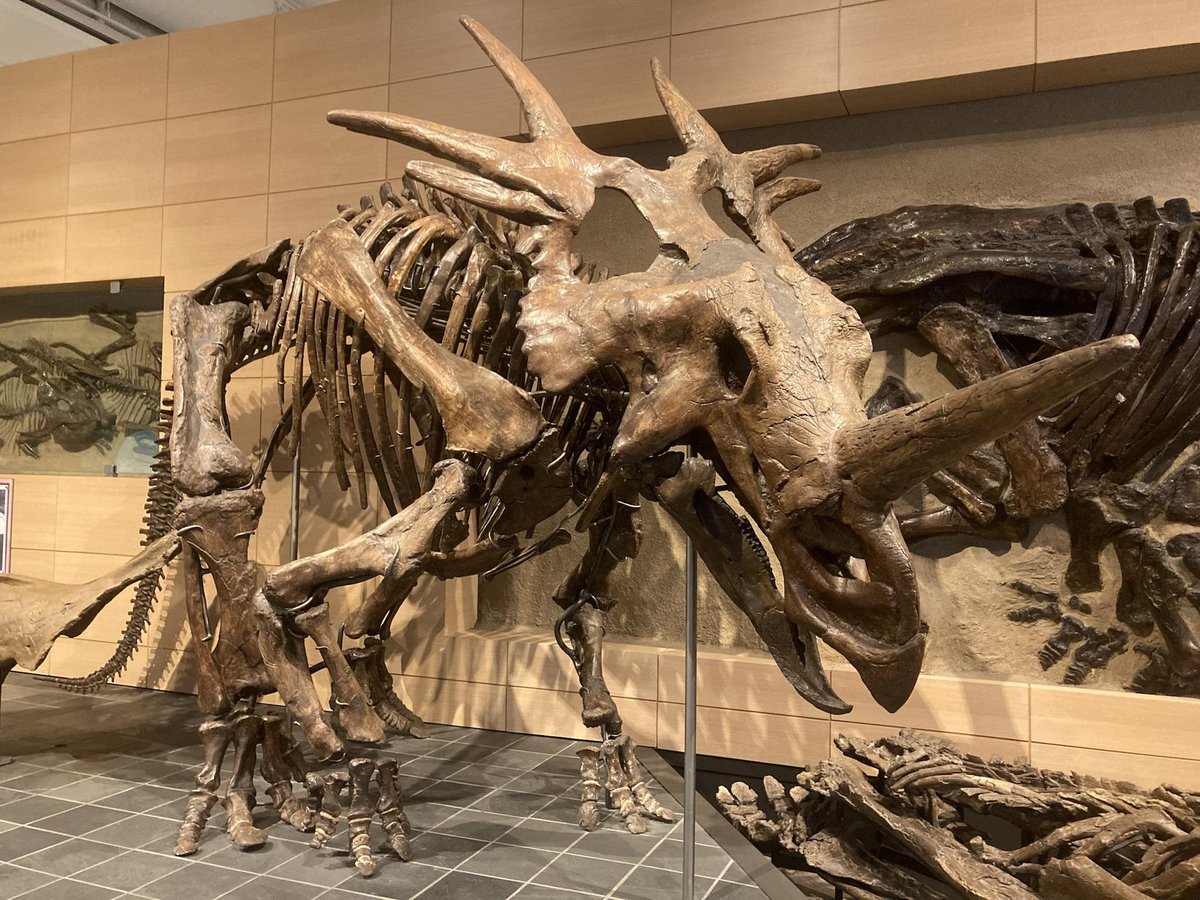
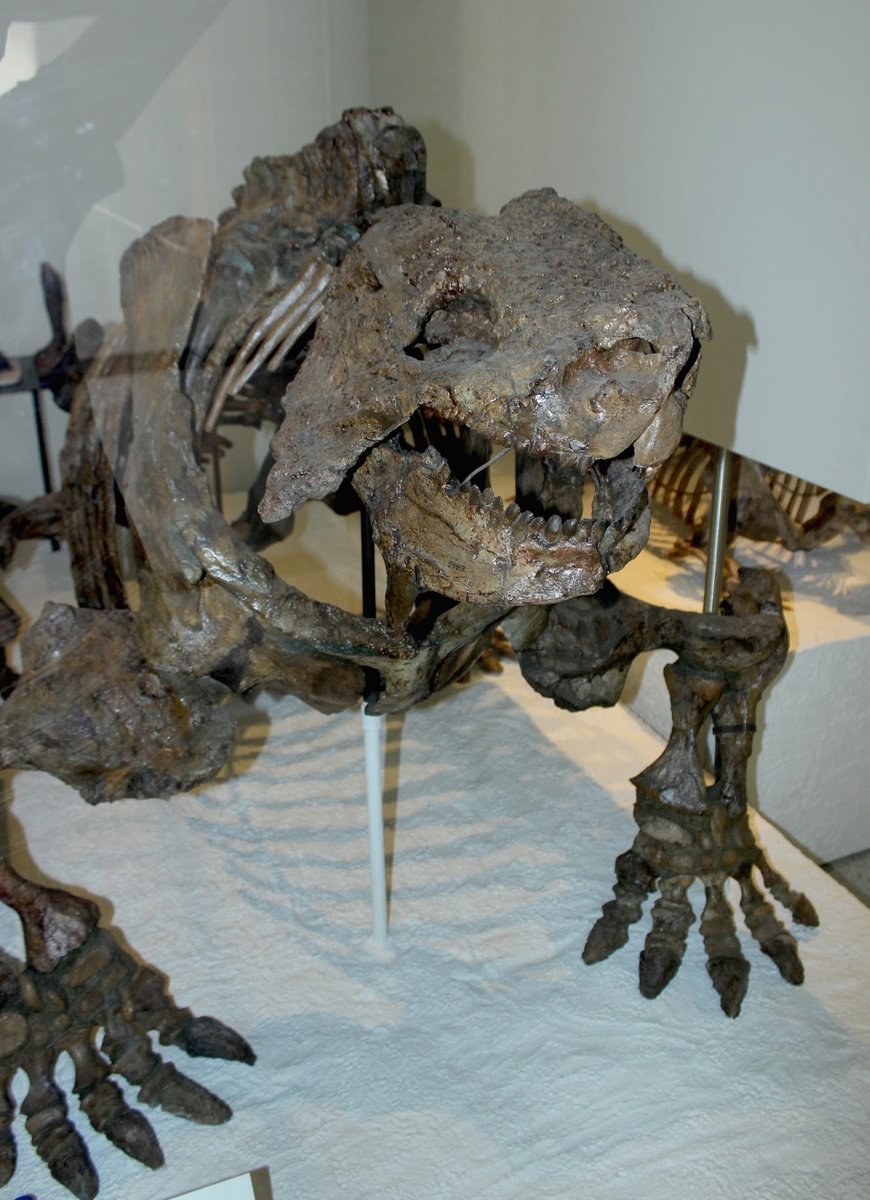
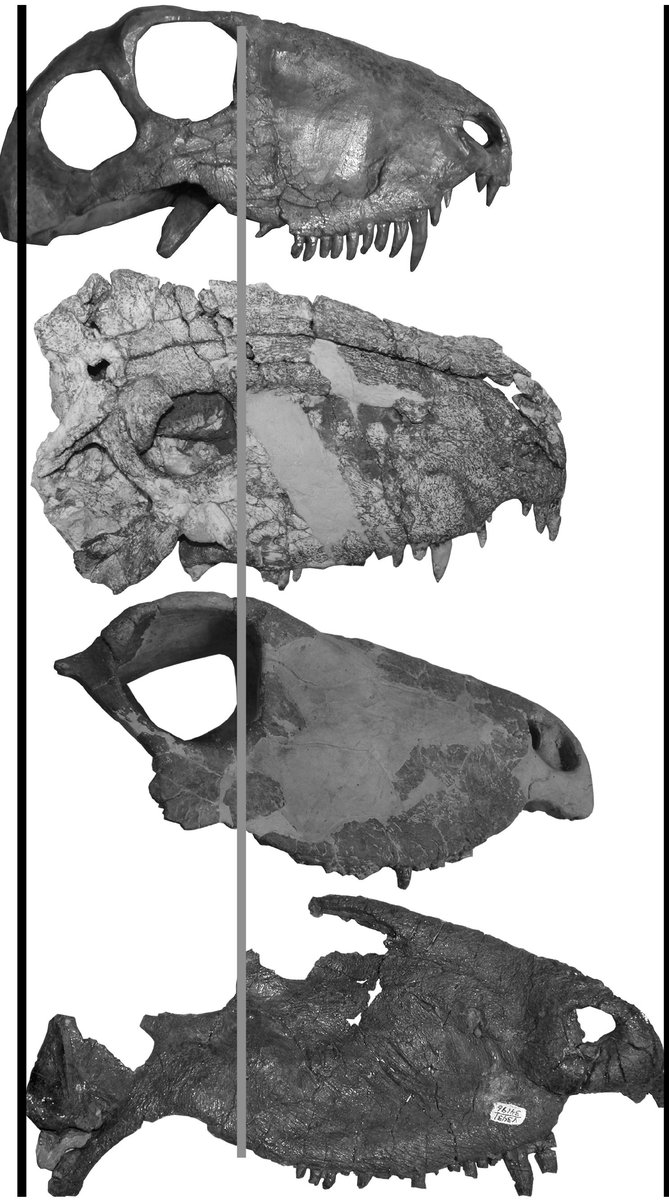
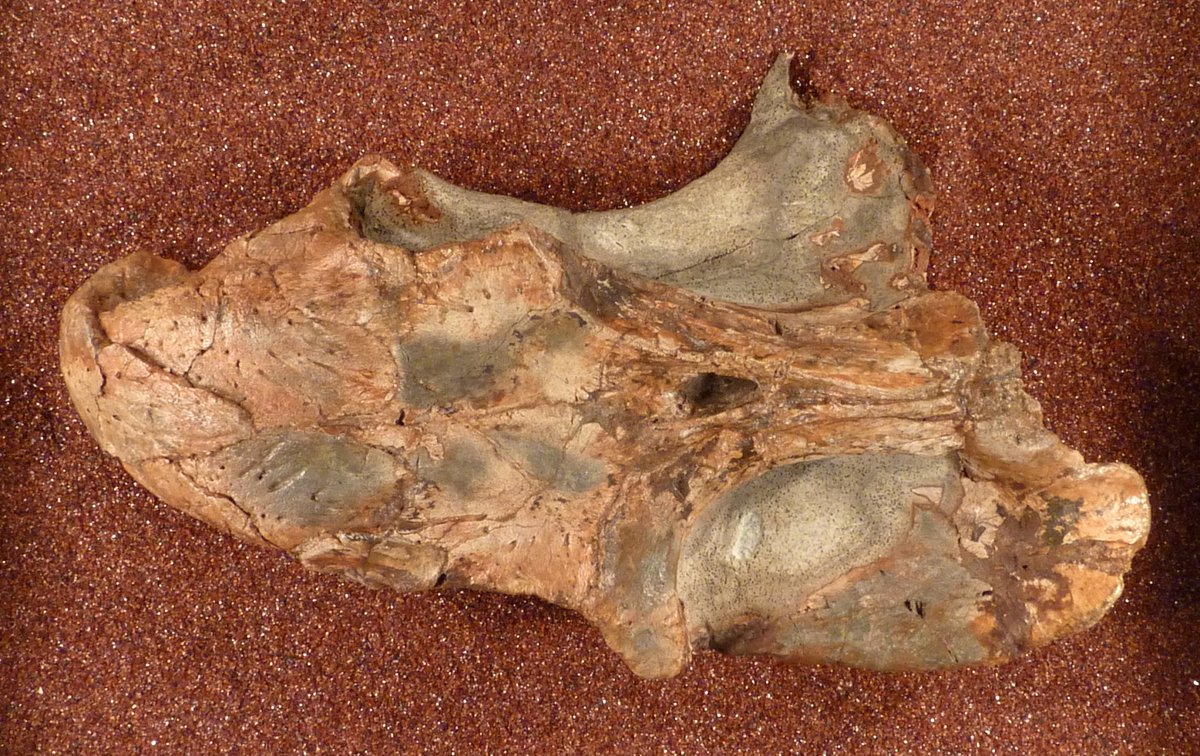
Kannemeyeria was a robustly built animal, reaching lengths of up to 3 meters (about 10 feet) and weighing an estimated 1,000 kilograms (2,200 pounds), making it comparable in size to a modern rhinoceros or a large cow. Its most distinctive feature was its massive, broad skull, which could be over 60 centimeters (2 feet) long. The skull was heavily constructed, with a short, deep snout and a powerful, toothless beak at the front, likely covered in a horny sheath similar to that of a tortoise. Protruding from its upper jaw were two prominent, tusk-like canines, which were present in both males and females, though possibly larger in males. These tusks may have been used for defense against predators, intraspecific combat for mates or territory, or for digging up roots and tubers. The skull possessed enormous temporal fenestrae (openings behind the eye sockets), which provided attachment points for massive jaw muscles, indicating a very powerful bite. Its skeleton was stout and heavily built. The vertebral column was strong, and the limb girdles were massive, particularly the pectoral girdle, which supported powerful forelimbs. The legs were held in a semi-sprawling posture, more erect than primitive reptiles but not fully underneath the body like later mammals or dinosaurs. This powerful build suggests an animal adapted for strength and stability rather than speed.
The paleobiology of Kannemeyeria reveals a successful herbivorous lifestyle. Its powerful beak was perfectly suited for shearing tough plant material, such as cycads, ferns, and horsetails, which were abundant in the Triassic landscape. The backward-and-forward motion of its lower jaw, combined with the shearing action of the beak, allowed it to efficiently process fibrous vegetation. The large tusks were likely multi-purpose tools. While useful for defense, their primary function may have been foraging, allowing Kannemeyeria to uproot plants or strip bark from trees. Isotopic analysis of its tooth enamel could potentially reveal more specific dietary preferences. Locomotion was likely slow and deliberate, a ponderous walk rather than a run. Its semi-sprawling gait and heavy build were not conducive to high speeds, suggesting it relied on its size and formidable tusks for defense rather than flight. Inferences about social behavior are speculative, but the widespread and common nature of its fossils might suggest it lived in herds, a strategy common among large herbivores for mutual protection and efficient grazing. Growth patterns, studied through bone histology, would likely show a relatively rapid growth rate to reach its large adult size, a necessary adaptation to outgrow potential predators. As a therapsid, its metabolism was likely more active than that of a typical reptile, possibly approaching a primitive form of endothermy, allowing it to maintain a more consistent level of activity.
Kannemeyeria lived in a world recovering from the greatest mass extinction in Earth's history. During the Middle Triassic, the climate was generally hot and dry, with strong seasonality, particularly in the interior of the supercontinent Pangaea where Kannemeyeria thrived. The environment of the Karoo Basin in South Africa, where many of its fossils are found, was a vast, semi-arid floodplain with braided river systems and seasonal lakes. Vegetation was dominated by hardy, drought-resistant plants like Dicroidium seed ferns, cycads, and ginkgoes. In this ecosystem, Kannemeyeria occupied the niche of a large, bulk-feeding primary consumer. It shared this world with a variety of other animals. Its primary predators were likely large, carnivorous archosaurs, such as the formidable rauisuchian Erythrosuchus, a fearsome predator with a massive skull and powerful jaws. Co-existing herbivores included other, smaller dicynodonts and rhynchosaurs. The presence of Kannemeyeria as a common, large herbivore indicates it was a keystone species, shaping the plant communities through its grazing and providing a crucial food source for the top predators of the Triassic food web. Its success highlights the resilience of the dicynodont lineage in the post-extinction world.
The discovery history of Kannemeyeria is rooted in the rich fossil beds of the Karoo Supergroup in South Africa. The genus was named in 1903 by the British paleontologist Harry Govier Seeley. The name 'Kannemeyeria' honors Dr. Daniel Rossouw Kannemeyer, a South African medical doctor and amateur fossil collector who discovered the first significant specimens in the late 19th century near Burghersdorp in the Eastern Cape. Kannemeyer was a prolific collector who corresponded with prominent paleontologists like Robert Broom and Seeley, providing them with many of the fossils that formed the basis of our understanding of the Karoo ecosystem. The type species, *Kannemeyeria simocephalus*, translates to 'snub-nosed Kannemeyer's animal', a reference to its short, deep skull. One of the most important early specimens is the holotype skull, which is housed in the Natural History Museum in London. Over the decades, numerous skeletons, both complete and partial, have been unearthed, making Kannemeyeria one of the best-represented large Triassic therapsids. These discoveries, largely from the Burgersdorp Formation, have been instrumental in defining the 'Kannemeyeria Assemblage Zone', a biostratigraphic layer characterized by the abundance of its fossils, which helps date and correlate rock layers across southern Gondwana.
Kannemeyeria holds immense evolutionary significance as a prime example of the Kannemeyeriiformes, the last and most successful radiation of dicynodonts. Dicynodonts were a group of anomodont therapsids, part of the larger synapsid lineage that includes modern mammals. Kannemeyeria's anatomy showcases the peak of dicynodont adaptation for large-bodied herbivory before the dinosaurs came to dominate these niches. It demonstrates how therapsids, not dinosaurs, were the dominant large terrestrial vertebrates during the Early and Middle Triassic. The success of Kannemeyeria and its relatives across Pangaea—with related forms found in South America, India, and China—illustrates the cosmopolitan distribution of fauna on the single supercontinent. While not a direct ancestor of mammals (that honor belongs to a different therapsid group, the cynodonts), Kannemeyeria is a crucial member of our extended evolutionary family. It represents a highly successful 'cousin' lineage that showcases an alternative evolutionary path for synapsids, one that ultimately ended in extinction by the Late Triassic, paving the way for the ecological ascendancy of archosaurs and their dinosaur descendants. Its existence underscores the complex and dynamic nature of the Triassic biotic turnover.
While the general understanding of Kannemeyeria is well-established, some scientific debates and revisions continue to shape our view of this animal. One area of ongoing research is the precise number of valid species within the genus. Over the years, several species were named based on fossils from different parts of the world, such as 'Kannemeyeria' erithrea from Russia and 'Kannemeyeria' latifrons from China. However, many of these have since been re-evaluated and assigned to different, albeit closely related, genera like Uralokannemeyeria and Sinokannemeyeria. Current consensus largely restricts the genus Kannemeyeria to the African species, primarily *K. simocephalus*, recognizing that other large Triassic dicynodonts represent a global radiation of distinct but related forms. Another point of discussion involves the exact function of the tusks and the degree of sexual dimorphism. While it is generally accepted they were used for foraging and defense, the extent to which they were used for display or combat between males is still debated, as clear evidence of tusk-related injuries is rare. Newer analytical techniques, such as finite element analysis of the skull, are being used to better understand the biomechanics of its powerful bite and how it processed tough vegetation.
The fossil record of Kannemeyeria is extensive and geographically significant. The vast majority of specimens have been discovered in the Karoo Basin of South Africa, specifically within the Burgersdorp Formation of the Beaufort Group. This geological unit is so rich in its remains that it defines the Kannemeyeria Assemblage Zone, a key biostratigraphic marker for the Anisian age of the Middle Triassic. Fossils are relatively common, consisting of numerous skulls and partial to nearly complete skeletons. The preservation quality is generally good, with robust bones that have fossilized well, allowing for detailed anatomical study. Skulls are particularly common finds, given their dense and durable construction. Besides South Africa, fossils of very closely related kannemeyeriiforms have been found in Argentina (the Ischigualasto Formation), India (the Yerrapalli Formation), and China, demonstrating the widespread, Pangean distribution of this group of large herbivores. Famous fossil sites include the area around Burgersdorp in the Eastern Cape, South Africa, which has consistently yielded high-quality specimens since the late 19th century. These widespread and abundant fossils make Kannemeyeria a cornerstone for understanding Middle Triassic terrestrial ecosystems globally.
Despite its scientific importance, Kannemeyeria has a relatively modest cultural impact compared to dinosaurs. It is not a household name, but it is a staple in museum exhibits focusing on the 'Age Before Dinosaurs' or the evolution of mammals. Notable displays featuring impressive skeletons or skull casts of Kannemeyeria can be found in major natural history museums, including the Iziko South African Museum in Cape Town, the Natural History Museum in London, and the American Museum of Natural History in New York. These exhibits serve an important educational role, showcasing the diversity of life in the Triassic and highlighting that the ancestors of mammals were once the dominant large land animals. It occasionally appears in documentary series about prehistoric life, such as 'Walking with Monsters', where it is often depicted as a key herbivore in the Triassic ecosystem, preyed upon by fearsome archosaurs. Its unusual appearance, with its bulky body, beaked face, and prominent tusks, makes it a memorable creature for those who encounter it, serving as a powerful reminder of the strange and wonderful forms life has taken throughout Earth's history.
Classification
Time Period
Discovery
Location
South Africa
Formation
Burgersdorp Formation (Beaufort Group)
Frequently Asked Questions
What is Kannemeyeria?
Kannemeyeria was a large, herbivorous dicynodont therapsid that roamed the supercontinent of Pangaea during the Middle Triassic period, approximately 247 to 235 million years ago. As one of the most successful and widespread large herbivores of its time, it represents a crucial component of the terr...
When did Kannemeyeria live?
Kannemeyeria lived during the triassic period of the mesozoic era approximately 247-235 million years ago.
Where was Kannemeyeria discovered?
Fossils of Kannemeyeria were discovered in South Africa in the Burgersdorp Formation (Beaufort Group).
What did Kannemeyeria eat?
Kannemeyeria was a herbivore. It lived in terrestrial habitats.
What type of fossil is Kannemeyeria?
Kannemeyeria is preserved as a body fossil. The preservation quality is good.
Related Specimens
From the mesozoic era · body fossils