Hyolithes
Hyolithes carinatus
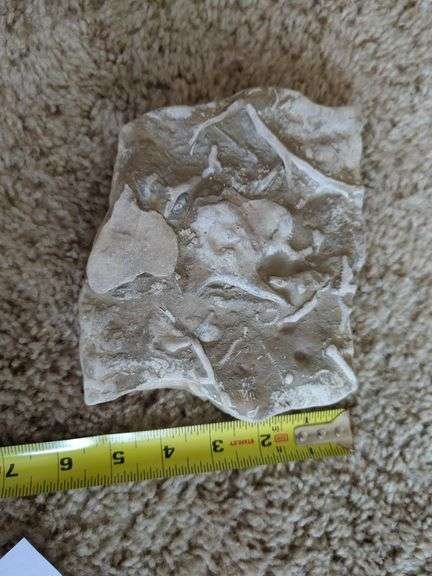
Image: Image sourced via web search (Fair use / Educational)
About Hyolithes
Hyolithes is an enigmatic genus of extinct marine invertebrates that flourished during the Paleozoic Era, particularly prominent throughout the Cambrian Period. These small, shelled animals represent one of the many evolutionary experiments that characterized the Cambrian Explosion, a time of rapid diversification of animal life. Their fossils are abundant and globally distributed, yet their precise biological identity and evolutionary relationships remained a profound paleontological puzzle for over 175 years, making Hyolithes a classic example of a problematic fossil taxon whose secrets are slowly being revealed through exceptional fossil discoveries.
Hyolithes possessed a distinctive three-part skeleton, a feature unique among known animal groups. The primary component was an elongated, conical shell, known as the conch, which was typically straight or slightly curved and bilaterally symmetrical. This conch, composed of calcium carbonate, could range in length from a few millimeters to over 15 centimeters in larger species. For comparison, most were about the size of a small carrot or a large pen. The cross-section of the conch was often subtriangular or ovoid. At the wider, open end of the conch was a lid-like structure called the operculum, which functioned like a trapdoor to seal the aperture, presumably for protection. The third skeletal component, and the most revealing, was a pair of long, curved spines called helens, which projected outwards from near the aperture. For many years, the function and even the correct orientation of the helens were debated. However, exceptionally preserved fossils from sites like the Burgess Shale have shown they were attached ventrally and likely served as stilts, elevating the animal slightly above the muddy seafloor. Soft tissue preservation is exceedingly rare, but a few remarkable specimens have revealed a U-shaped digestive tract, with the mouth and anus located near each other, and most importantly, a lophophore—a crown of ciliated tentacles surrounding the mouth, used for feeding.
The discovery of the lophophore in a 2017 study by Joseph Moysiuk, Martin Smith, and Jean-Bernard Caron revolutionized our understanding of hyolith paleobiology. This structure strongly indicates that Hyolithes was a suspension feeder, using its tentacles to filter organic particles and plankton from the water column. The animal was likely sessile or semi-sessile, living on the soft, muddy bottoms of shallow to mid-depth marine environments. Its helens would have acted as stabilizers or stilts, lifting the feeding apparatus just above the substrate to avoid ingesting sediment and to access clearer water currents. This feeding strategy is common in modern lophophorates like brachiopods and phoronids. Locomotion was probably very limited; while some have speculated the helens could be used for a clumsy form of crawling, their primary function appears to have been static support. There is no direct evidence of social behavior, but their fossils are often found in large assemblages, suggesting they lived in dense benthic communities, similar to modern shellfish beds. Growth occurred through the incremental addition of new material at the aperture of the conch, resulting in visible growth lines on well-preserved specimens. Their metabolism was likely slow, consistent with a sedentary, filter-feeding lifestyle in low-oxygen Cambrian seas.
Hyolithes lived in the bustling, alien seas of the Cambrian Period, a world teeming with new and experimental body plans. The climate was generally warmer than today, with higher sea levels creating vast, shallow epicontinental seas that were ideal habitats for these creatures. They shared their benthic environment with a diverse cast of organisms, including trilobites, brachiopods, sponges, priapulid worms, and early arthropods like Anomalocaris, the apex predator of the time. Hyolithes occupied a low trophic level, serving as a primary consumer that fed on suspended organic detritus and microorganisms. Their hard, protective shells and opercula were crucial adaptations for survival in a world with increasing predation pressure. They were likely prey for various Cambrian predators, including trilobites and the formidable Anomalocaris, whose powerful grasping appendages could have easily crushed their conical shells. The dense aggregations in which they lived may have offered some protection through safety in numbers, and their ability to seal their shells with the operculum was a key defensive mechanism. Their abundance made them a significant component of the Cambrian seafloor ecosystem, contributing to bioturbation and nutrient cycling on the seabed.
The discovery history of Hyolithes dates back to the early days of paleontology. The genus was first formally described by the German naturalist Heinrich Georg Bronn in 1846, although specimens had been noted earlier. The type species, *Hyolithes carinatus*, was established based on fossils found in the Cambrian strata of Bohemia, specifically the Jince Formation in what is now the Czech Republic. For decades, these fossils were little more than curiosities—simple conical shells whose biological affinity was completely unknown. They were variously classified as cephalopods, pteropods (sea snails), or annelid worms. The discovery of the operculum associated with the conch provided a crucial clue, but it was the discovery of the helens that further complicated the picture. The name 'Hyolithes' itself is derived from Greek, referencing the glassy appearance of some fossil shells. The most significant breakthrough came not from a single 'named' specimen like a dinosaur, but from a collection of exceptionally preserved fossils from the Burgess Shale in Canada and the Spence Shale in Utah. It was these specimens, meticulously studied by Moysiuk and his colleagues, that finally revealed the presence of the lophophore and the true arrangement of the helens, solving a puzzle that had persisted for nearly two centuries.
The evolutionary significance of Hyolithes lies in its unique position within the animal tree of life. For over 175 years, their classification was a major point of contention, with paleontologists placing them in or near Mollusca, Annelida, or Sipuncula, or in their own isolated phylum, Hyolitha. The 2017 discovery of a lophophore provided the strongest evidence yet for their phylogenetic placement. The lophophore is a complex feeding structure characteristic of the superphylum Lophophorata, which includes brachiopods, phoronids (horseshoe worms), and bryozoans. This finding suggests that hyoliths are not molluscs, but are instead early members or a sister group to the lophophorates. This placement helps to fill a gap in our understanding of early animal evolution, providing a new body plan within this major branch of life. Hyolithes demonstrates the extensive morphological experimentation that occurred during the Cambrian Explosion, showcasing a unique combination of features—a conical shell, an operculum, stabilizing helens, and a lophophore—not seen in any other animal group, living or extinct. They represent a successful, albeit ultimately extinct, lineage that diverged early in the history of the lophophorates.
Despite the recent breakthrough, scientific debates surrounding Hyolithes continue. The primary debate has shifted from 'what are they?' to 'where exactly do they fit among the lophophorates?'. Some researchers argue they are a stem-group brachiopod, while others suggest they are more closely related to phoronids, or perhaps represent a distinct class within the Lophophorata phylum. The precise function of the helens is also still discussed; while their role as stilts is widely accepted, secondary functions like sensory perception or aiding in righting the animal if it was knocked over are also considered. Furthermore, the internal soft anatomy, apart from the digestive tract and lophophore, remains almost entirely unknown. How they respired, circulated fluids, and reproduced are still matters of speculation based on analogies with modern lophophorates. The classification of the two major orders, Hyolithida and Orthothecida (which lack helens), and their relationship to each other is another area of active research, with some questioning if they represent a single, monophyletic group.
Hyolithes fossils are globally distributed and are often extremely common, making them important index fossils for dating Cambrian and Ordovician rock layers. They are found in Paleozoic marine sedimentary rocks on every continent, including Antarctica. Major fossil sites yielding abundant Hyolithes include the classic Cambrian localities of the Czech Republic (Jince Formation), North America (Burgess Shale in Canada, Spence Shale and Wheeler Formation in Utah), China (Chengjiang biota), and Siberia. The quality of preservation varies dramatically. In most locations, only the durable calcareous conchs and opercula are found, often as disarticulated pieces. However, in Konservat-Lagerstätten—sites of exceptional preservation like the Burgess Shale—the delicate helens and, in very rare cases, carbonaceous films representing soft tissues like the lophophore and gut, are preserved. The sheer number of fossilized shells found in some rock layers indicates that Hyolithes was a numerically dominant component of many Paleozoic benthic communities for tens of millions of years before their eventual decline and extinction during the end-Permian mass extinction event.
Due to their enigmatic nature and historically uncertain classification, Hyolithes has not achieved the same level of public recognition as dinosaurs or trilobites. They are rarely featured in popular media or films. However, they are staples in paleontology textbooks and museum collections as a prime example of a 'problematicum'—a fossil that long defied classification. Major museums with significant Cambrian fossil collections, such as the Royal Ontario Museum in Toronto (which houses many Burgess Shale specimens), the Smithsonian National Museum of Natural History in Washington, D.C., and the Natural History Museum in London, hold excellent specimens of Hyolithes. The 2017 discovery garnered significant media attention, highlighting the ongoing process of scientific discovery and how new fossils can solve long-standing mysteries. For students of geology and paleontology, Hyolithes serves as a crucial case study in phylogenetic reconstruction and the importance of exceptional fossil preservation.
Classification
Time Period
Discovery
Location
Bohemia (modern-day Czech Republic)
Formation
Jince Formation
Frequently Asked Questions
What is Hyolithes?
Hyolithes is an enigmatic genus of extinct marine invertebrates that flourished during the Paleozoic Era, particularly prominent throughout the Cambrian Period. These small, shelled animals represent one of the many evolutionary experiments that characterized the Cambrian Explosion, a time of rapid ...
When did Hyolithes live?
Hyolithes lived during the cambrian period of the paleozoic era approximately 540-480 million years ago.
Where was Hyolithes discovered?
Fossils of Hyolithes were discovered in Bohemia (modern-day Czech Republic) in the Jince Formation.
What did Hyolithes eat?
Hyolithes was a detritivore, suspension-feeder. It lived in marine, benthic habitats.
What type of fossil is Hyolithes?
Hyolithes is preserved as a body fossil. The preservation quality is exceptional.
Related Specimens
From the paleozoic era · body fossils