Williamsonia
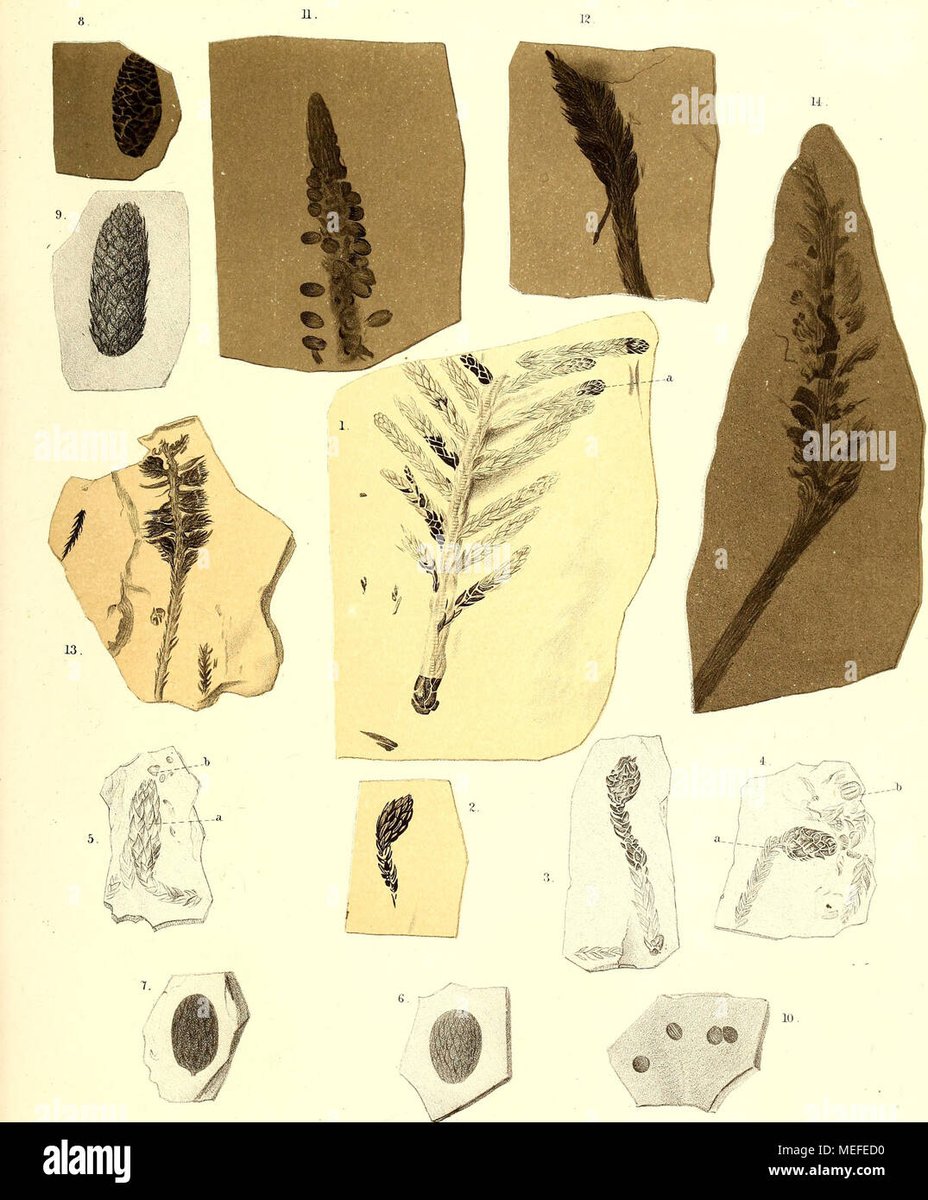
Williamsonia sewardiana
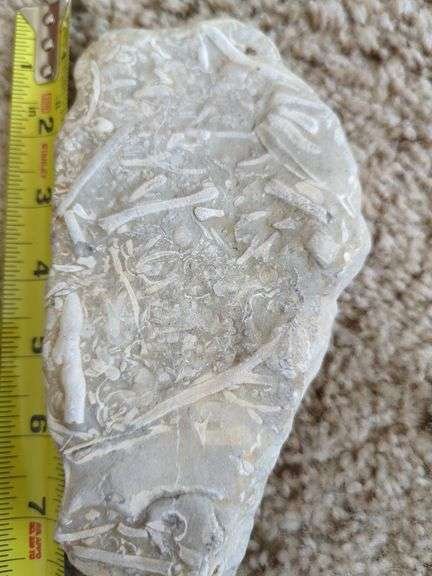
Image: Image sourced via web search (Fair use / Educational)
About Williamsonia
Williamsonia is an extinct genus of plant that flourished during the Mesozoic Era, particularly prominent throughout the Jurassic and Cretaceous periods. As a key member of the order Bennettitales, often called cycadeoids, Williamsonia represents a significant lineage of seed-bearing plants that shared superficial similarities with modern cycads but possessed a distinct and more complex reproductive biology. These plants were a vital component of terrestrial ecosystems for over 100 million years, serving as a primary food source for herbivorous dinosaurs and playing a foundational role in the floral landscapes that dominated the age of reptiles.
Williamsonia plants were typically small to medium-sized, woody shrubs or small trees, generally reaching heights of 2 to 3 meters. The overall morphology resembled that of a modern cycad, featuring a sturdy, often slender, columnar trunk that was typically unbranched or sparsely branched. The trunk was covered in a characteristic armor of persistent leaf bases, remnants of shed foliage that created a diamond-shaped pattern along its surface. At the apex of the trunk, a crown of large, pinnately compound leaves, similar in appearance to palm or fern fronds, would have unfurled. These leaves are often found fossilized separately and are assigned to the form genus Ptilophyllum. The most distinctive feature of Williamsonia, however, was its reproductive structures. Unlike modern cycads, which bear cones, Williamsonia produced elaborate, flower-like structures. These reproductive organs were borne on lateral branches that emerged from between the leaf bases on the main trunk. Each structure consisted of a central receptacle, or ovule-bearing cone, surrounded by a whorl of modified leaves or bracts that formed a protective, cup-like involucre. In some species, these bracts were fleshy and may have been brightly colored, suggesting an early form of animal-mediated pollination, a significant evolutionary step. The entire plant, from its robust trunk to its frond-like leaves and unique reproductive organs, paints a picture of a hardy, well-adapted Mesozoic plant.
The paleobiology of Williamsonia reveals a sophisticated photosynthetic organism adapted to the warm, seasonally dry climates of the Jurassic. As a primary producer, its entire existence was fueled by converting sunlight into energy through its large, leathery Ptilophyllum leaves. The plant's reproductive strategy was particularly advanced for its time. The flower-like structures were unisexual or bisexual, depending on the species. The central cone contained numerous ovules, while surrounding microsporophylls produced pollen. The arrangement of these parts, often protected by the outer bracts, suggests a more controlled and specialized pollination mechanism than the simple wind dispersal common in many contemporary gymnosperms. Some paleontologists theorize that the bracts may have attracted insects, such as early beetles or flies, which would inadvertently transfer pollen while feeding on nectar or pollen, a precursor to the complex pollination syndromes seen in modern angiosperms. Growth was likely slow, consistent with many modern cycads, with the plant adding height and girth incrementally over many years. Its tough, armored trunk and leathery leaves suggest it was well-defended against casual herbivory, though it was undoubtedly a primary food source for large sauropods and other herbivorous dinosaurs equipped to process such tough plant material.
During the Jurassic period, Williamsonia inhabited a world vastly different from our own. The supercontinent of Pangaea was actively breaking apart, creating new seaways and altering global climate patterns. The climate was generally warmer and more equable than today, with high atmospheric carbon dioxide levels supporting lush vegetation across much of the globe. Williamsonia was a dominant component of the flora in many regions, forming extensive open woodlands and thickets, particularly in subtropical and tropical latitudes. It shared its habitat with a diverse array of other plants, including true cycads, conifers like Araucaria, ginkgoes, and vast forests of tree ferns. This rich floral landscape supported an equally diverse fauna. Herbivorous dinosaurs such as the giant sauropods (e.g., Brachiosaurus) and armored stegosaurs would have browsed on Williamsonia and its contemporaries. In its ecological niche, Williamsonia served as a crucial primary producer, forming the base of the food web that sustained these colossal herbivores. In turn, these herbivores were prey for large theropod dinosaurs like Allosaurus, placing Williamsonia at the very foundation of the classic Jurassic ecosystem. Its success and widespread distribution underscore its importance in structuring these ancient terrestrial environments.
The discovery and study of Williamsonia have a history deeply rooted in the foundations of paleobotany. The genus was formally named in 1870 by the Scottish geologist and paleobotanist William Crawford Williamson, a pioneer in the study of fossil plants using thin-section microscopy. He named the genus in honor of his father, John Williamson, who was the first curator of the Scarborough Museum. However, the fossils themselves had been known for some time before this formal description. The type species, Williamsonia sewardiana, was established based on exceptionally well-preserved fossils from the Rajmahal Hills in India, a region that has become a classic locality for Jurassic flora. The specific epithet 'sewardiana' honors Sir Albert Seward, another giant in the field of paleobotany who made extensive contributions to the understanding of Mesozoic plants, including the Bennettitales. The initial discoveries were primarily impression fossils of the distinctive reproductive structures. It was only through decades of subsequent research, meticulously piecing together evidence from disparate fossil sites around the world, that paleobotanists were able to associate the Williamsonia reproductive organs with the Ptilophyllum foliage and the characteristic armored trunks, reconstructing the appearance of the whole plant. This process of reconstruction, linking different fossil 'form genera' to a single biological organism, is a common challenge and triumph in paleobotany.
Williamsonia holds immense evolutionary significance as a prime example of the Bennettitales, a group that represents a fascinating chapter in plant evolution. The Bennettitales are often considered a sister group to the Gnetophytes, cycads, and angiosperms (flowering plants). For many years, their flower-like reproductive structures led some scientists to propose them as direct ancestors of the angiosperms. While this view is no longer widely supported, the parallel evolution of these complex reproductive organs is a remarkable case of convergent evolution. Williamsonia demonstrates that many of the traits we associate with flowering plants—such as protective bracts, potential insect pollination, and enclosed ovules—evolved independently in gymnosperm lineages long before the rise of true flowers. This highlights the intense selective pressures during the Mesozoic that favored more efficient and protected reproductive strategies. The Bennettitales, with Williamsonia as a key representative, showcase a highly successful evolutionary experiment that dominated global flora for millions of years before eventually succumbing to extinction at the end of the Cretaceous, likely due to changing climates and competition from the rapidly diversifying and more reproductively efficient angiosperms.
Despite being a well-established genus, Williamsonia is still the subject of scientific debate, primarily concerning its precise reproductive biology and its exact placement within the broader evolutionary tree of seed plants. The primary controversy revolves around the method of pollination. While the morphology of the reproductive structures strongly suggests insect involvement, direct fossil evidence, such as preserved insects with Williamsonia pollen, remains elusive. Therefore, the degree to which these plants relied on biotic versus abiotic (wind) pollination is still debated. Furthermore, the exact phylogenetic relationship between the Bennettitales and other seed plant groups, particularly the angiosperms, is an area of active research. New molecular and cladistic analyses of both fossil and living plant data continually refine our understanding, with some studies suggesting a closer link to cycads and ginkgoes, while others maintain a sister relationship to the angiosperm clade. The discovery of new, exceptionally preserved specimens could provide the key details needed to resolve these long-standing questions about one of the Mesozoic's most important plant groups.
The fossil record of Williamsonia is extensive and geographically widespread, attesting to its global success during the Mesozoic. Fossils are found on nearly every continent, with particularly famous and productive sites located in the Rajmahal Hills of India, the Jurassic Coast of Yorkshire in the United Kingdom, and parts of Mexico and North America. The fossils are most commonly preserved as impressions or compressions in sedimentary rocks like sandstone and shale. The most frequently found parts are the detached, robust leaves (Ptilophyllum) and the distinctive, flower-like reproductive structures. Finding these parts in direct physical connection to the trunk is exceptionally rare, which is why the reconstruction of the whole plant took so many years of research. The quality of preservation varies, but sites like those in Yorkshire are renowned for yielding fossils with fine cellular detail, allowing for microscopic study of the plant's anatomy. The abundance of Williamsonia fossils makes it an index fossil for certain Jurassic and Cretaceous strata, helping geologists date rock layers.
While not as famous as a Tyrannosaurus rex or a Triceratops, Williamsonia holds a significant place in paleontological education and museum displays worldwide. It is a staple in exhibits on Mesozoic life, used to reconstruct the ancient environments inhabited by dinosaurs. Dioramas in institutions like the Natural History Museum in London or the American Museum of Natural History in New York often feature meticulously crafted models of Williamsonia to accurately portray the Jurassic flora. For the public, it serves as a powerful visual reminder that the world of dinosaurs was not just about the animals, but also about the strange and wonderful plants that formed the foundation of their ecosystems. It challenges the common misconception of a primitive, unchanging plant world, revealing a dynamic history of botanical innovation and diversity.
Classification
Time Period
Discovery
Location
India
Formation
Rajmahal Formation
Frequently Asked Questions
What is Williamsonia?
Williamsonia is an extinct genus of plant that flourished during the Mesozoic Era, particularly prominent throughout the Jurassic and Cretaceous periods. As a key member of the order Bennettitales, often called cycadeoids, Williamsonia represents a significant lineage of seed-bearing plants that sha...
When did Williamsonia live?
Williamsonia lived during the jurassic period of the mesozoic era approximately 175-145 million years ago.
Where was Williamsonia discovered?
Fossils of Williamsonia were discovered in India in the Rajmahal Formation.
What did Williamsonia eat?
Williamsonia was a photosynthetic. It lived in terrestrial habitats.
What type of fossil is Williamsonia?
Williamsonia is preserved as a impression fossil. The preservation quality is good.
Related Specimens
From the mesozoic era · impression fossils