Meiolania
Meiolania platyceps
Image: Image sourced via web search (Fair use / Educational)
About Meiolania
Meiolania platyceps was a remarkable genus of large, terrestrial turtle that inhabited Australia and various islands of the southwest Pacific during the Cenozoic Era, persisting until the very recent geological past. As a member of the extinct family Meiolaniidae, it represents a unique and highly specialized lineage of turtles that diverged early from the main groups of modern turtles. Its most striking features were its heavily armored body, a distinctively horned skull that prevented it from retracting its head, and a massive, clubbed tail, making it a prime example of megafaunal herbivores that thrived before the widespread expansion of humans.
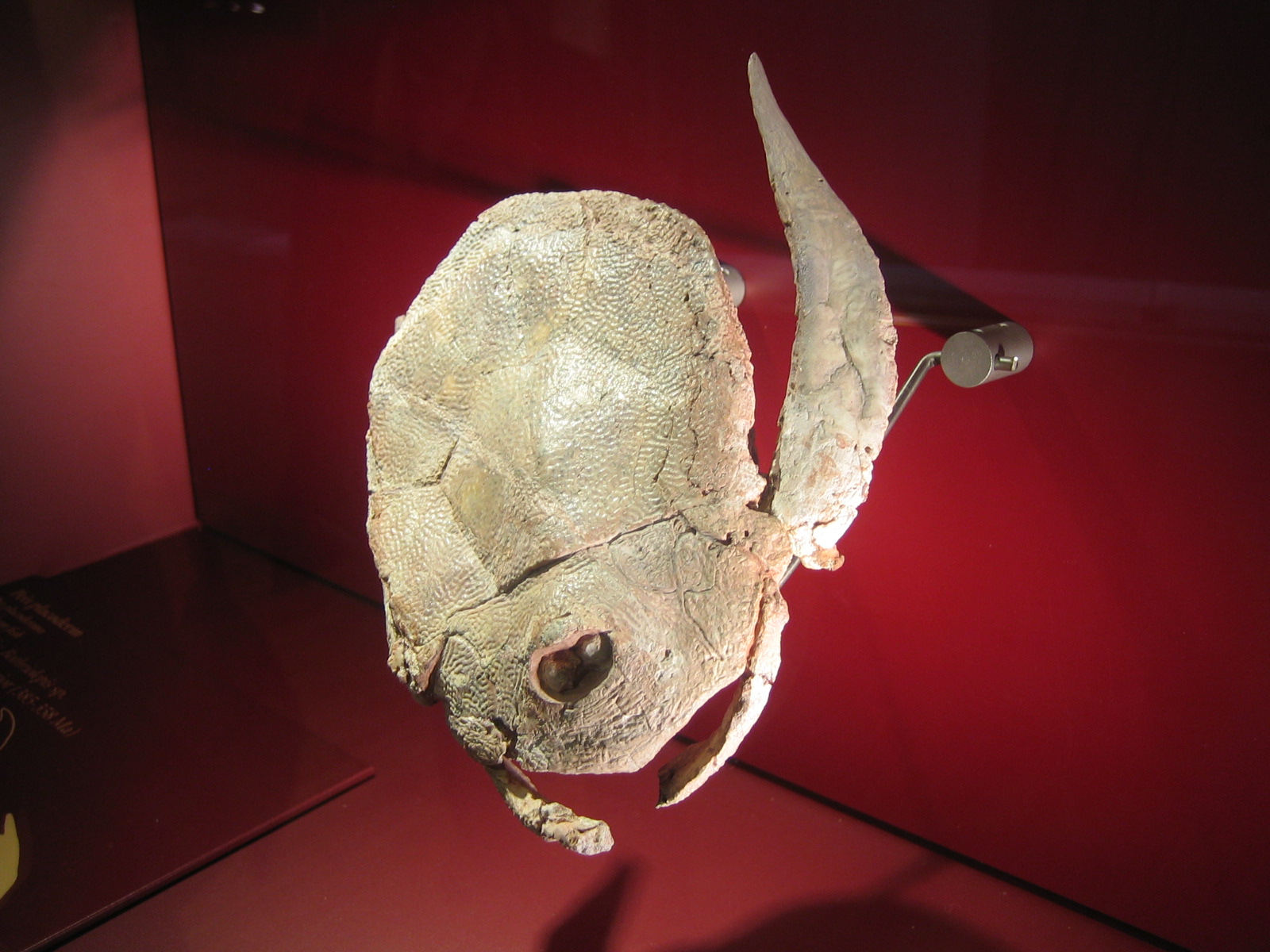
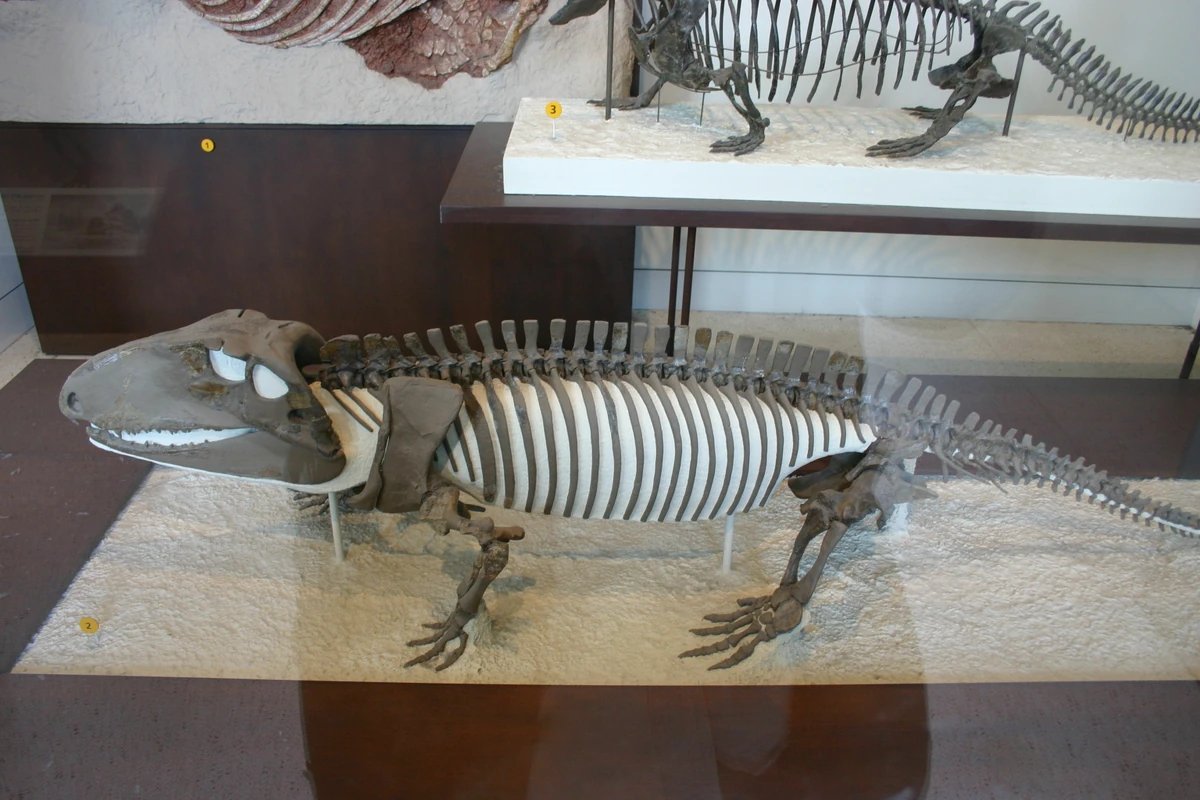
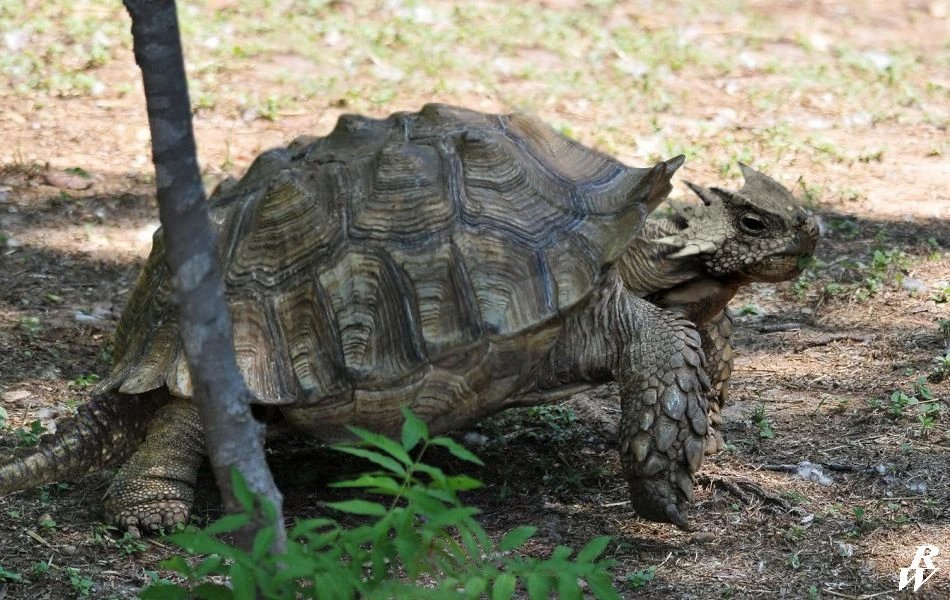
Meiolania was a formidable animal, reaching a total body length of approximately 2.5 meters (250 cm), making it one of the largest terrestrial turtles known to have existed. Its carapace, or upper shell, was broad, low-domed, and measured up to 1.5 meters in length. Unlike modern turtles, Meiolania's skull was adorned with a pair of large, backward-curving, bull-like horns, which could span up to 60 cm from tip to tip. These horns, along with smaller hornlets and protuberances on the snout and cheeks, gave its head a bizarre, almost demonic appearance. This elaborate cranial armor meant that Meiolania could not withdraw its head into its shell for protection, a fundamental defensive mechanism for most other turtles. To compensate, it evolved other defensive structures. Its tail was exceptionally long and robust, encased in a series of bony rings and culminating in a heavy, spiked club, reminiscent of the tails of ankylosaurian dinosaurs or glyptodonts. The limbs were stout and pillar-like, adapted for supporting its considerable weight, estimated to be around 1,000 kilograms. The overall skeletal structure was massively built, indicating a slow-moving, heavily defended terrestrial animal, comparable in ecological role, if not size, to a small armored vehicle.
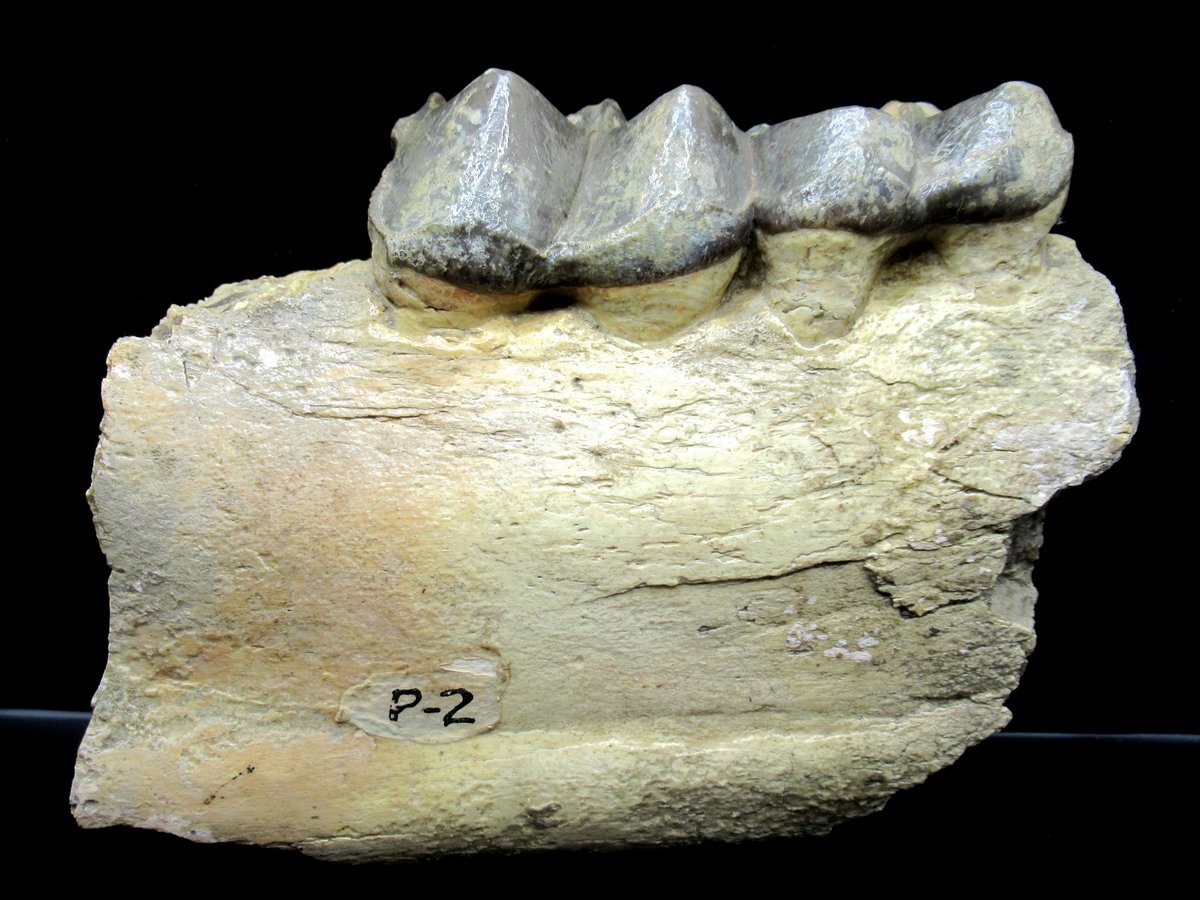
Based on its robust beak, lack of sharp cutting edges, and broad, grinding surfaces within the mouth, Meiolania is universally considered to have been a herbivore. Its powerful jaws were well-suited for processing tough, fibrous plant matter. It likely browsed on a variety of vegetation, including low-lying shrubs, ferns, and cycads that were common in its environment. Its slow, deliberate locomotion, dictated by its heavy armor and stout limbs, suggests it was not an active forager but rather a grazer or browser that consumed large quantities of plant material within a defined territory. The elaborate head horns were likely not used for active combat against predators, as they pointed backwards, but may have served as intraspecific display structures for mating rituals or territorial disputes between males, similar to the horns and antlers of modern ungulates. The powerful, clubbed tail, however, was almost certainly an active defensive weapon, capable of delivering bone-shattering blows to the legs of potential predators like the marsupial lion (Thylacoleo) or giant monitor lizards (Varanus priscus). Inferred social behavior is minimal, but it is plausible they were solitary animals, coming together primarily for mating.
Meiolania lived in a world very different from modern Australia. During the Pleistocene, its habitat consisted of a mosaic of woodlands, open forests, and grasslands, with a climate that fluctuated but was generally wetter and more temperate than today's arid interior. It was a key component of the Australian megafauna, a collection of giant animals that dominated the continent. Meiolania shared this landscape with other large herbivores such as the giant wombat-like Diprotodon, massive kangaroos like Procoptodon, and the giant flightless bird Genyornis. As a large, low-browsing herbivore, it occupied a specific ecological niche, likely influencing plant communities through its feeding habits. Its primary predators would have been the formidable apex carnivores of the time, including the aforementioned Thylacoleo carnifex and the giant goanna, Varanus priscus (formerly Megalania). The turtle's immense size and formidable armor would have made it a challenging target for these predators, with only the largest and most powerful individuals likely able to successfully hunt an adult Meiolania. The arrival of the first humans in Australia around 65,000 years ago introduced a new and highly effective predator into this ecosystem, which is believed to have been a major factor in the extinction of Meiolania and other megafauna.
The discovery history of Meiolania is intertwined with the early days of paleontology in Australia. The first fossils were found in the 1870s in Pleistocene deposits at King's Creek in the Darling Downs region of Queensland, Australia. These initial remains, consisting of vertebrae and skull fragments, were sent to the renowned British anatomist Sir Richard Owen. In 1881, Owen initially misinterpreted the horned skull fragments, believing they belonged to a giant monitor lizard even larger than the true 'Megalania' (Varanus priscus), and he named it Meiolania, meaning 'small wanderer' in a convoluted reference to Megalania. The specific name, platyceps, means 'flat head'. It was only with the discovery of more complete material, including carapaces and tail clubs, that its true identity as a giant turtle was established. A particularly significant discovery was made on Lord Howe Island in the 1880s, which yielded exceptionally well-preserved skulls and other skeletal elements of a smaller species, Meiolania mackayi. This find was crucial in reconstructing the animal's full appearance and confirming its bizarre anatomy. No single 'celebrity' specimen exists, but the collective material from the Darling Downs and Lord Howe Island form the basis of our understanding of the genus.
Meiolania holds a crucial position in understanding turtle evolution. It belongs to the extinct family Meiolaniidae, which is considered a stem-group of Testudines, meaning it represents a lineage that diverged very early from the branch leading to all modern turtles (the crown-group). Meiolaniids are not closely related to either of the two major modern turtle groups, the Cryptodira (hidden-necked turtles) or the Pleurodira (side-necked turtles). Their inability to retract the head is a primitive trait, but their highly specialized horns and tail club are unique, derived features. The family has a long and widespread history, with related genera found in South America (e.g., Niolamia) and even Antarctica from the Cretaceous and Eocene periods. This distribution across the southern continents provides strong evidence for their origin in the supercontinent of Gondwana before its final breakup. Meiolania itself represents the last and most recent survivor of this ancient and noble lineage, persisting long after its relatives elsewhere had vanished. Its existence into the late Pleistocene highlights the unique, relictual nature of Australia's fauna before the arrival of humans.
Despite a century of study, several aspects of Meiolania's biology remain subjects of scientific debate. The precise function of its elaborate cranial horns is still discussed. While a role in intraspecific display or ritualized combat is the leading hypothesis, some researchers have suggested they may have offered some passive protection to the neck region from predator attacks from above. Another area of ongoing research is the exact cause of its extinction. While the arrival of humans and subsequent 'overkill' or habitat alteration is the most widely accepted theory, some scientists argue that climate change at the end of the Pleistocene, which led to increased aridity across Australia, played a more significant role by altering the vegetation on which these large herbivores depended. The debate often centers on the timing of extinction events relative to human arrival and major climate shifts. The discovery of a very recent population on the island of Vanuatu, which survived until just 2,800 years ago, strongly implicates human activity, as their extinction coincides precisely with the arrival of the Lapita people.
The fossil record of Meiolania is quite extensive, though complete, articulated skeletons are exceptionally rare. Fossils are found primarily in Pleistocene deposits across eastern Australia, particularly in Queensland and New South Wales. The Darling Downs region remains a key locality. Additionally, distinct species or subspecies have been identified from various islands, including the aforementioned Lord Howe Island (M. mackayi), New Caledonia (Meiolania mackayi), and most recently, Vanuatu (Meiolania damelipi). The preservation quality is generally good, with robust skeletal elements like skulls, shell fragments, vertebrae, and tail clubs being the most commonly recovered fossils. These durable bones were more likely to survive the processes of fossilization. The discovery of fossils on these remote islands is particularly significant, as it indicates that Meiolania, despite being a terrestrial animal, was capable of significant oceanic dispersal, a remarkable feat for such a large, heavily armored creature.
Meiolania has captured the public imagination due to its bizarre and formidable appearance, often being described as a real-life equivalent to a Pokémon or a mythical beast. It is a staple in museum exhibits on Australian megafauna, with impressive skeletal reconstructions and life-sized models featured at institutions like the Australian Museum in Sydney and the Queensland Museum. While it has not achieved the same level of pop-culture fame as dinosaurs, it occasionally appears in documentaries about prehistoric life and ice age animals. For many, Meiolania serves as a powerful symbol of the unique and now-lost world of Australian megafauna and a cautionary tale about the impact of humans on pristine ecosystems.
Classification
Time Period
Discovery
Location
Australia
Formation
King's Creek, Darling Downs
Frequently Asked Questions
What is Meiolania?
Meiolania platyceps was a remarkable genus of large, terrestrial turtle that inhabited Australia and various islands of the southwest Pacific during the Cenozoic Era, persisting until the very recent geological past. As a member of the extinct family Meiolaniidae, it represents a unique and highly s...
When did Meiolania live?
Meiolania lived during the quaternary period of the cenozoic era approximately 0.05-0.002 million years ago.
Where was Meiolania discovered?
Fossils of Meiolania were discovered in Australia in the King's Creek, Darling Downs.
What did Meiolania eat?
Meiolania was a herbivore. It lived in terrestrial habitats.
What type of fossil is Meiolania?
Meiolania is preserved as a body fossil. The preservation quality is good.
Related Specimens
From the cenozoic era · body fossils