Ambulocetus
Ambulocetus natans
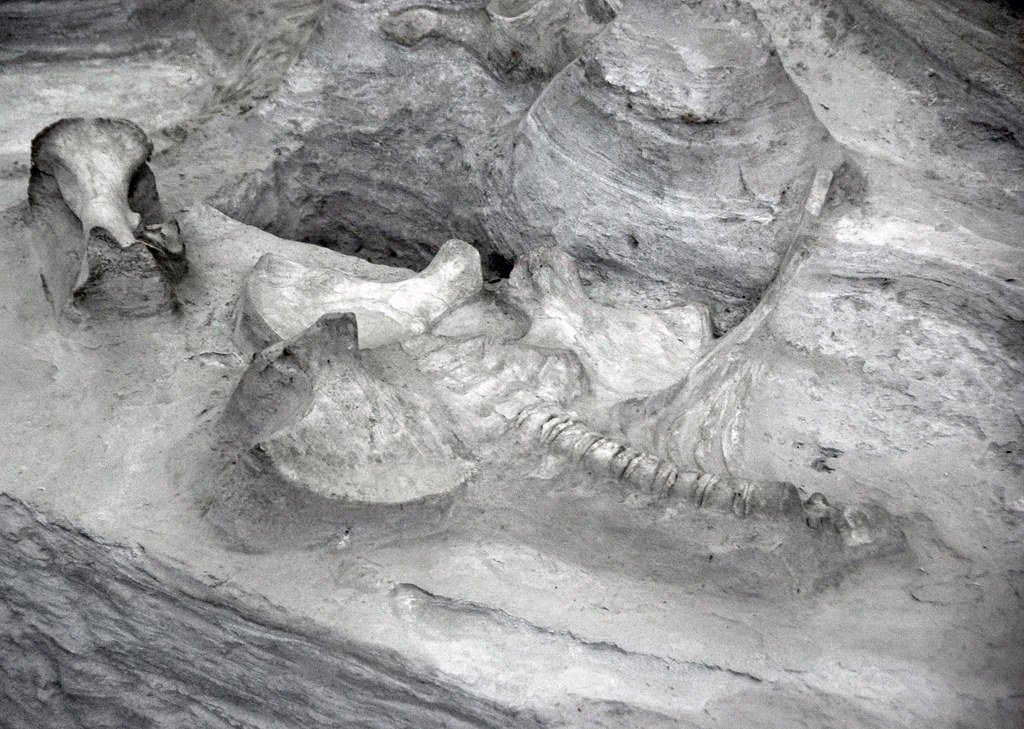
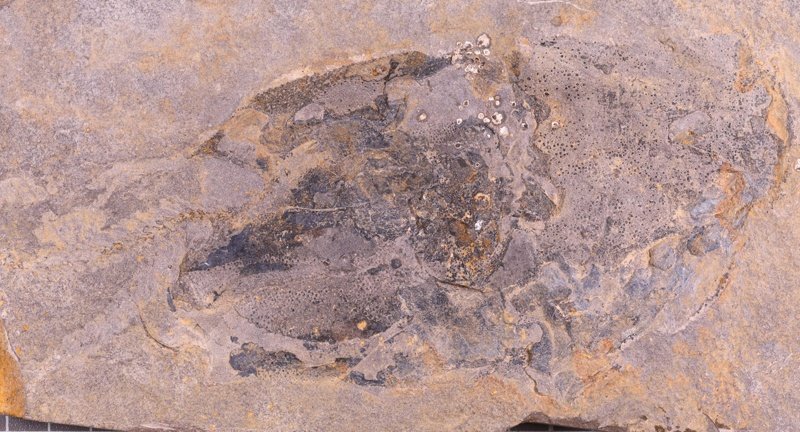
Image: File:Ambulocetus fossil remains.JPG - Wikimedia Commons (CC BY-SA)
About Ambulocetus
Ambulocetus natans, an extinct genus of early cetacean whose binomial name translates directly to the walking whale that swims, represents one of the most profound and celebrated transitional fossils in the history of vertebrate paleontology. Living during the Lutetian stage of the Eocene epoch, approximately forty-eight to forty-seven million years ago, this remarkable creature occupied the coastal regions of the ancient Tethys Ocean in what is now modern-day Pakistan. By perfectly bridging the anatomical and ecological gap between fully terrestrial hoofed mammals and the obligate aquatic whales of the modern era, Ambulocetus provides an unparalleled snapshot of a major macroevolutionary leap in the history of life on Earth.
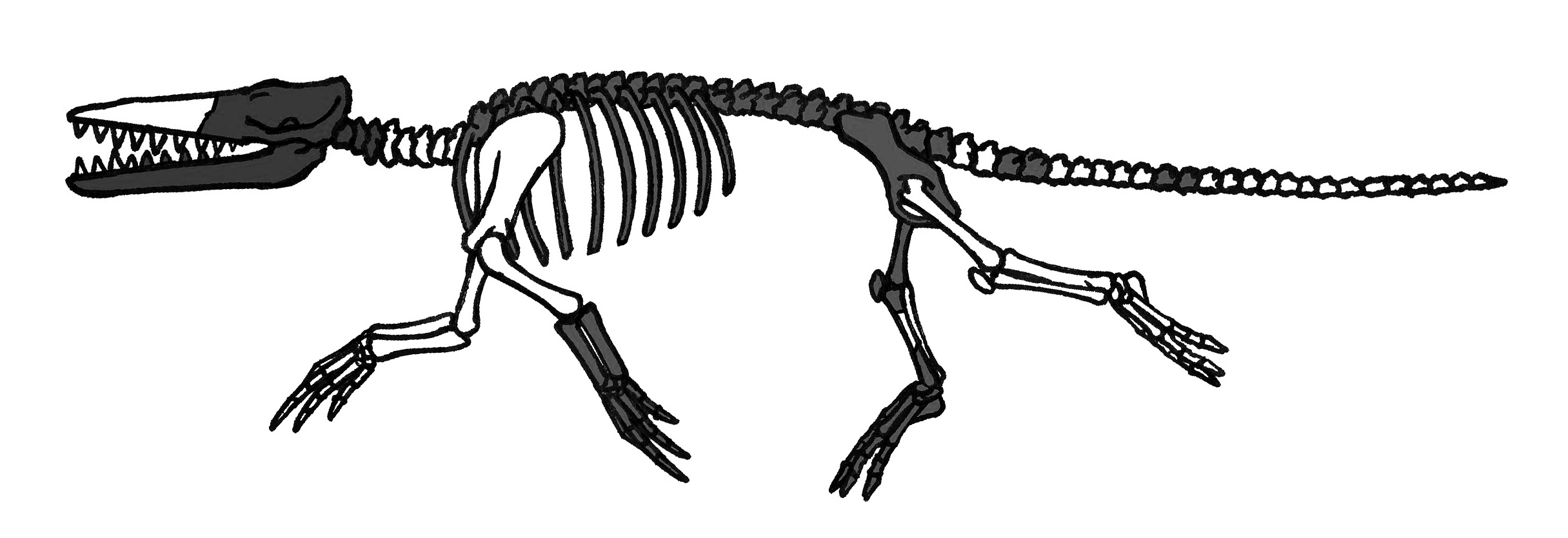
In terms of its physical description, Ambulocetus natans presented a bizarre but highly functional mosaic of terrestrial and aquatic adaptations that made it superficially resemble a heavily built mammalian crocodile. The animal measured approximately three meters, or about ten feet, from the tip of its elongated snout to the end of its robust, muscular tail, and paleontologists estimate its living weight to have been somewhere between one hundred and forty and two hundred and fifty kilograms. Its skull was exceptionally long and narrow, housing a formidable array of sharp, conical teeth that were clearly adapted for seizing and holding struggling prey. Unlike modern cetaceans, which possess highly modified flippers and lack functional hind appendages, Ambulocetus retained four distinct, weight-bearing limbs. The forelimbs were relatively short but heavily muscled, equipped with flexible wrists and distinct digits that likely bore small hooves, a lingering testament to its artiodactyl ancestry. The hind limbs were significantly longer and more powerful, ending in enormous feet that were almost certainly extensively webbed to provide maximum surface area for aquatic propulsion. The vertebral column was highly flexible, particularly in the lumbar and caudal regions, allowing for significant up-and-down movement. While it lacked the specialized tail fluke seen in later whales, its tail was thick and strong, acting as a rudder and secondary source of thrust. Its eyes were positioned near the top of its skull, a classic adaptation for an ambush predator that lies submerged just below the surface of the water while keeping a watchful eye on the shoreline.
The paleobiology of Ambulocetus reveals a creature that was a master of two distinct worlds, utilizing highly specialized feeding strategies and locomotion techniques to dominate the semi-aquatic environments of the Eocene. As a dedicated carnivore, its diet consisted of a diverse array of fish, aquatic invertebrates, and terrestrial animals that ventured too close to the water's edge to drink. Its hunting behavior is widely inferred to have been analogous to that of modern crocodilians, relying on stealth and explosive bursts of speed to ambush unsuspecting prey from the murky depths. Locomotion for Ambulocetus was highly dependent on its environment. On land, its skeletal structure suggests it was somewhat clumsy, likely moving with a sprawling gait similar to that of a modern sea lion or a monitor lizard, dragging its heavy belly across the substrate. However, once submerged, it transformed into a formidable and efficient swimmer. Biomechanical studies indicate that it propelled itself through the water using a combination of pelvic paddling with its massive, webbed hind feet and dorsoventral undulation of its flexible spine, a swimming style reminiscent of modern river otters. Perhaps the most fascinating aspect of its paleobiology comes from the isotopic analysis of its fossilized teeth. The ratio of oxygen isotopes in the enamel varies significantly among different specimens, providing conclusive evidence that Ambulocetus individuals moved freely between freshwater rivers, brackish estuaries, and fully marine coastal environments throughout their lives, demonstrating a remarkable physiological tolerance for varying salinity levels.
The ecological context in which Ambulocetus thrived was vastly different from the arid landscapes that characterize its fossil beds today. During the early to middle Eocene, the region that is now the Punjab province of Pakistan was situated along the shallow, tropical coastal margins of the closing Tethys Sea. The climate was exceptionally warm and humid, a lingering consequence of the Paleocene-Eocene Thermal Maximum, supporting lush, dense mangrove swamps, sprawling river deltas, and rich estuarine ecosystems. This highly productive environment teemed with life, providing an abundant and diverse food web for a top-tier predator. Ambulocetus shared its habitat with a variety of other early cetaceans, such as the more terrestrial Pakicetus, which inhabited the freshwater streams further inland, and the slightly later, more aquatic Remingtonocetids. The surrounding terrestrial landscape was populated by an array of early mammalian groups, including primitive perissodactyls, early proboscideans, and diverse rodent-like mammals, many of which likely served as prey for a hungry Ambulocetus lurking in the shallows. In the water, it competed with large, prehistoric crocodilians and predatory fish, occupying a niche as an apex ambush predator that bridged the energy flow between the terrestrial and aquatic realms. The dynamic, ever-changing nature of these coastal environments, with fluctuating tides and shifting river channels, provided the perfect evolutionary crucible for a species transitioning from land to sea.
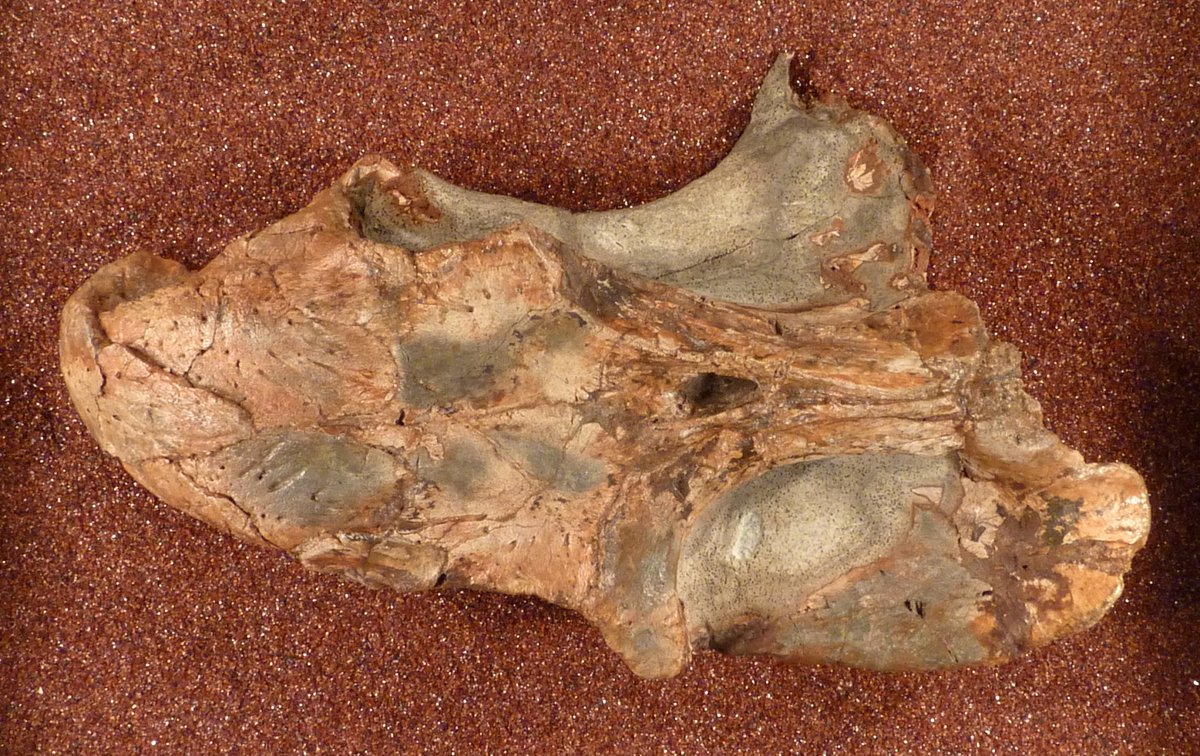
The discovery history of Ambulocetus is a landmark chapter in the annals of vertebrate paleontology, fundamentally altering our understanding of whale evolution. The first and most complete specimen was unearthed in 1991 by a joint American and Pakistani paleontological expedition led by Dr. J.G.M. Hans Thewissen and Dr. Sayed Taseer Hussain. The team was excavating in the Kala Chitta Hills of the Punjab region in northern Pakistan, specifically within the geological strata known as the Kuldana Formation. This formation, composed primarily of red and green mudstones deposited in ancient river systems and shallow coastal marine environments, proved to be a treasure trove of early Cenozoic fossils. The holotype specimen, cataloged as H-GSP 18507, was an exceptionally well-preserved partial skeleton that included a nearly complete skull, the lower jaw, numerous vertebrae, ribs, and crucial elements of both the forelimbs and hind limbs. Thewissen and his colleagues formally described and named the species Ambulocetus natans in a groundbreaking paper published in the journal Science in 1994. The name itself, derived from the Latin words ambulare meaning to walk, cetus meaning whale, and natans meaning swimming, perfectly encapsulated the dual nature of the beast. This discovery was hailed as a monumental breakthrough, as it provided the first nearly complete skeletal evidence of a whale with fully functional legs, filling a massive gap in the fossil record that had puzzled scientists since the days of Charles Darwin.
The evolutionary significance of Ambulocetus cannot be overstated, as it firmly anchors the cetacean lineage within the broader tree of life and clarifies their relationship to modern terrestrial mammals. Before its discovery, the exact origins of whales were shrouded in mystery, with some early theories erroneously linking them to extinct carnivorous mammals called mesonychids based on dental similarities. However, the anatomical features of Ambulocetus, combined with subsequent molecular and fossil evidence, definitively placed whales within the order Artiodactyla, the even-toed ungulates. The presence of a double-pulley astragalus bone in the ankle of early whales, a defining characteristic of artiodactyls, confirmed that marine giants like the blue whale share a common ancestor with cows, deer, pigs, and their closest living relatives, the hippopotamuses. Ambulocetus exhibits a breathtaking array of transitional features that document the step-by-step adaptation to an aquatic lifestyle. Most notably, its skull reveals the early stages of underwater hearing adaptations. While it lacked the fully isolated ear bones of modern whales, the lower jaw of Ambulocetus contained a large cavity that housed a specialized fat pad. This fat pad channeled sound waves from the water directly to the middle ear, a mechanism virtually identical to how modern toothed whales hear today. Furthermore, the posterior migration of its nasal openings, the elongation of its snout, and the reduction of its zygomatic arches all point toward an evolutionary trajectory destined for the open ocean.
Despite the wealth of information provided by the holotype specimen, Ambulocetus remains the subject of ongoing scientific debates and rigorous paleontological inquiry. One of the primary areas of contention revolves around its exact posture and terrestrial locomotion capabilities. While early reconstructions often depicted the animal standing relatively upright on land, more recent biomechanical analyses suggest that its limbs could not support its massive weight in a parasagittal stance. Instead, researchers argue that its terrestrial movement was highly restricted, relying on a sprawling, belly-dragging crawl that would have made it vulnerable if stranded far from the water's edge. Another point of debate concerns the exact nature of its swimming mechanics. While the consensus supports a combination of pelvic paddling and spinal undulation, the precise timing and coordination of these movements remain a topic of biomechanical modeling. Some scientists question the extent of the webbing on its feet, arguing that without soft tissue preservation, the exact surface area of the paddle is speculative. Furthermore, minor taxonomic disputes occasionally arise regarding the precise phylogenetic placement of the family Ambulocetidae in relation to other early whale families like the Pakicetidae and Remingtonocetidae, as new fragmentary fossils are discovered and cladistic matrices are continuously refined.
The fossil record of Ambulocetus is remarkably concentrated, providing a highly localized but incredibly detailed window into its existence. To date, fossils of Ambulocetus natans have been exclusively recovered from the Kuldana Formation in the Punjab province of Pakistan, restricting our knowledge of its geographic distribution to the ancient coastlines of the Indian subcontinent. While the holotype specimen discovered in 1991 remains the most famous and complete representative of the genus, comprising approximately eighty percent of the skeleton, subsequent expeditions have yielded additional fragmentary remains, including isolated teeth, jaw fragments, and postcranial bones. The preservation quality of the holotype is extraordinary, especially considering the high-energy depositional environments of the ancient river deltas where it was buried. The bones exhibit minimal crushing and distortion, allowing for precise three-dimensional reconstruction of the animal's anatomy. The rarity of these fossils highlights the unique geological conditions required for their preservation and underscores the immense value of the Kala Chitta Hills as one of the world's most important paleontological heritage sites for understanding the dawn of the cetacean era.
The cultural impact of Ambulocetus extends far beyond the confines of academic journals, as it has become a global icon of evolutionary biology and a powerful tool for science education. It is frequently featured in museum exhibitions around the world, where life-sized skeletal mounts and fleshed-out models captivate the public imagination and visually demonstrate the reality of macroevolution. Ambulocetus gained widespread popular recognition through its prominent appearance in the acclaimed BBC documentary series Walking with Beasts, which brought the creature to life for millions of viewers, showcasing its amphibious lifestyle and predatory prowess. In educational curricula, it serves as the quintessential textbook example of a transitional fossil, effectively dismantling creationist arguments that demand missing links in the fossil record. By providing a tangible, easily understandable narrative of how a four-legged land mammal transformed into a master of the oceans, Ambulocetus continues to inspire awe and curiosity about the deep history of our planet.
Classification
Time Period
Discovery
Location
Pakistan
Formation
Kuldana Formation
Frequently Asked Questions
What is Ambulocetus?
Ambulocetus natans, an extinct genus of early cetacean whose binomial name translates directly to the walking whale that swims, represents one of the most profound and celebrated transitional fossils in the history of vertebrate paleontology. Living during the Lutetian stage of the Eocene epoch, app...
When did Ambulocetus live?
Ambulocetus lived during the paleogene period of the cenozoic era approximately 48-47 million years ago.
Where was Ambulocetus discovered?
Fossils of Ambulocetus were discovered in Pakistan in the Kuldana Formation.
What did Ambulocetus eat?
Ambulocetus was a carnivore. It lived in semi-aquatic habitats.
What type of fossil is Ambulocetus?
Ambulocetus is preserved as a body fossil. The preservation quality is good.
Related Specimens
From the cenozoic era · body fossils