Macrauchenia
Macrauchenia patachonica
Image: Image sourced via web search (Fair use / Educational)
About Macrauchenia
Macrauchenia patachonica was a large, peculiar, long-necked, and long-limbed South American native ungulate that lived during the Late Miocene to the Late Pleistocene epochs, approximately 7 million to 10,000 years ago. Belonging to the extinct order Litopterna, this remarkable mammal represents one of the most iconic and bizarre members of the Pleistocene megafauna of South America. It roamed the vast plains and pampas of what is now Argentina, Chile, Bolivia, and Uruguay. Its significance in paleontology is immense, as it was one of the first extinct South American mammals to be discovered and scientifically described, playing a crucial role in early discussions of evolution, extinction, and biogeography. The discovery of Macrauchenia by Charles Darwin during the voyage of the HMS Beagle provided early Victorian scientists with a profound puzzle regarding the relationships between extinct and extant species, ultimately contributing to the foundational ideas of evolutionary biology and the recognition of South America's unique, isolated evolutionary history prior to the Great American Biotic Interchange.
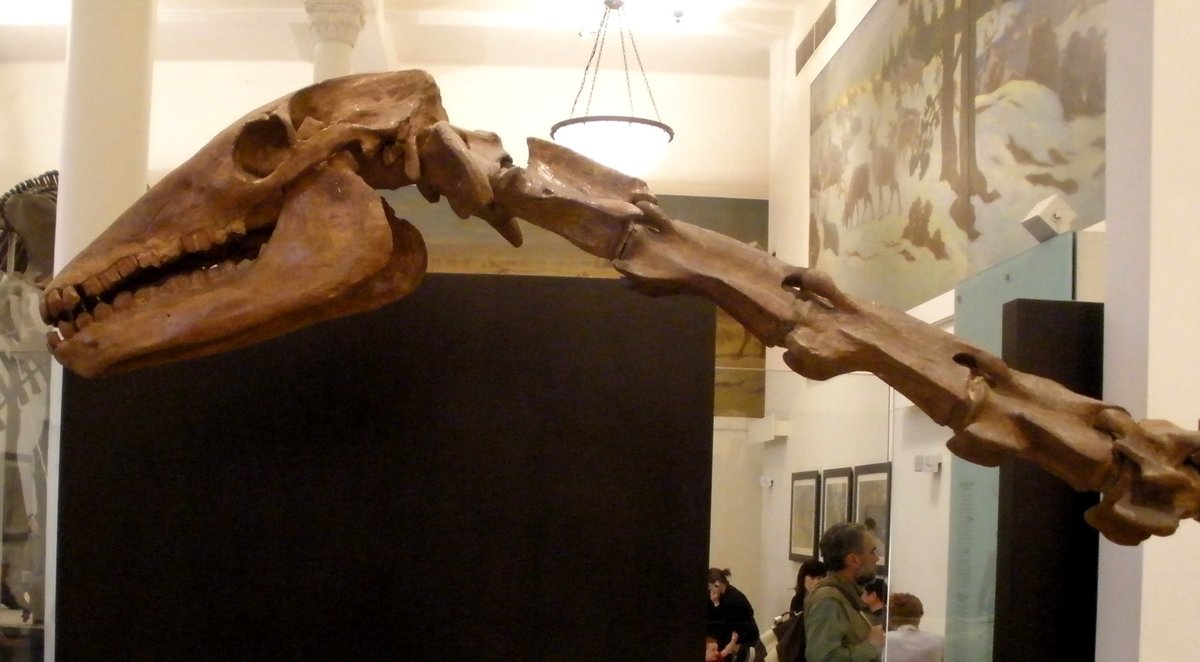
In terms of physical description, Macrauchenia was a robust and highly unusual animal that defied easy comparison to any single modern species, often being described as a chimera of a camel, a rhinoceros, and a tapir. It was a large animal, measuring approximately 3 meters in length and standing about 1.5 to 1.8 meters tall at the shoulder. Weight estimates for fully grown adults range from 900 to 1,050 kilograms, making it comparable in mass to a modern black rhinoceros or a large draft horse. The most striking skeletal feature of Macrauchenia was its skull. The nasal openings were situated far back on the top of the head, between the eyes, rather than at the end of the snout. In modern animals, such retracted nasal bones are typically associated with the presence of a muscular proboscis or a prehensile lip, similar to that of a tapir or a saiga antelope. This has led to the widespread reconstruction of Macrauchenia with a short trunk, although the exact nature of its soft tissue remains a subject of ongoing scientific inquiry. The neck was elongated, resembling that of a llama or camel, which likely allowed it to reach vegetation at various heights. Its limbs were long and relatively slender for an animal of its bulk, terminating in three toes on each foot, a characteristic that convergently resembles the foot structure of modern rhinoceroses. Unlike the hooves of horses, the toes of Macrauchenia bore distinct, separate hoof-like claws. The postcranial skeleton was heavily built, with a strong vertebral column capable of supporting its massive digestive tract. The teeth of Macrauchenia were brachydont (low-crowned), indicating a diet of relatively soft vegetation rather than the tough, abrasive grasses that characterized the diets of many contemporary grazing mammals. The combination of a long neck, retracted nares, and three-toed feet created an anatomical profile that remains entirely unique in the mammalian fossil record.
Paleobiological studies of Macrauchenia have revealed fascinating insights into its lifestyle, diet, and behavior. Given its low-crowned teeth, Macrauchenia is generally classified as a browser or a mixed feeder, primarily consuming leaves, shoots, twigs, and softer herbaceous plants rather than abrasive grasses. Isotopic analysis of carbon and oxygen from Macrauchenia tooth enamel supports this interpretation, suggesting a diet rich in C3 plants, which are typical of trees, shrubs, and temperate vegetation, even as the South American pampas became increasingly dominated by C4 grasses during the Pleistocene. The inferred presence of a prehensile lip or short trunk would have been highly advantageous for this feeding strategy, allowing the animal to selectively strip leaves from branches, much like a modern black rhinoceros. In terms of locomotion, the long, robust limbs of Macrauchenia suggest it was capable of sustained, efficient movement across open landscapes, though it was likely not a rapid runner compared to modern equids or bovids. Its three-toed feet would have provided stability and weight distribution on relatively soft or uneven ground. Socially, it is plausible that Macrauchenia lived in small herds or family groups, similar to modern camelids or certain species of antelope, which would have provided a degree of protection against predators through collective vigilance. Growth patterns inferred from bone histology indicate a relatively slow growth rate compared to modern placental mammals of similar size, a trait often seen in endemic South American ungulates. Metabolism estimates suggest a standard endothermic physiology, though its large body size would have provided significant thermal inertia, helping it to regulate its body temperature in the fluctuating climates of Pleistocene South America.
The ecological context of Macrauchenia was defined by the dynamic and changing landscapes of Pleistocene South America. During the time this animal lived, the continent experienced significant climatic shifts, oscillating between glacial and interglacial periods that dramatically altered the distribution of forests, savannas, and grasslands. Macrauchenia primarily inhabited the Pampas and Patagonia regions, which were characterized by vast, open plains interspersed with riparian forests and scrublands. It shared its environment with a spectacular array of megafauna, including giant ground sloths like Megatherium, massive armored glyptodonts like Doedicurus, the hippo-like toxodonts, and early relatives of modern horses and camelids that had migrated from North America. Macrauchenia occupied a specific ecological niche as a large-bodied browser, partitioning resources with the grazing horses and the mixed-feeding toxodonts. The predator-prey dynamics of its ecosystem were profoundly altered by the Great American Biotic Interchange, which occurred when the Isthmus of Panama formed around 2.7 million years ago, connecting North and South America. This event allowed formidable North American predators to enter the southern continent. Macrauchenia would have been a prime target for apex predators such as the saber-toothed cat Smilodon populator, the dire wolf Aenocyon dirus, and the giant short-faced bear Arctotherium. To survive in this newly dangerous environment, Macrauchenia likely relied on its large size, herd behavior, and potentially a powerful kick from its robust hind legs to defend itself against these formidable carnivores.
The discovery history of Macrauchenia is deeply intertwined with the foundational era of modern paleontology and evolutionary biology. The first fossils of this enigmatic animal were discovered by none other than a young Charles Darwin in January 1834, during the famous voyage of the HMS Beagle. Darwin unearthed the remains, which consisted of limb bones and cervical vertebrae, at Port St. Julian in Patagonia, Argentina. Recognizing the significance of the large, unfamiliar bones, Darwin carefully collected them and eventually sent them back to England for expert analysis. The fossils were examined by the eminent British anatomist Richard Owen, who formally described and named the creature Macrauchenia patachonica in 1838. The genus name, Macrauchenia, translates to 'large llama' or 'long neck,' reflecting Owen's initial, albeit incorrect, belief that the animal was a giant extinct relative of the modern llama, based on the morphology of its neck vertebrae. It was only later, with the discovery of more complete skeletons, including the bizarre skull with its retracted nasal openings, that scientists realized Macrauchenia was not a camelid at all, but a member of an entirely distinct and extinct lineage of South American ungulates. Key specimens discovered in the late 19th and early 20th centuries by Argentine paleontologists like Florentino Ameghino and Carlos Ameghino in the Luján Formation provided the comprehensive skeletal data needed to fully reconstruct the animal's anatomy and understand its true taxonomic affinities, cementing its status as a paleontological icon.
The evolutionary significance of Macrauchenia lies in its representation of the Litopterna, an order of native South American ungulates that evolved in complete isolation for tens of millions of years. Following the breakup of the supercontinent Gondwana, South America became an island continent, much like Australia is today. In the absence of competition from placental mammals evolving elsewhere, the native South American lineages radiated into a wide variety of ecological niches. The litopterns, including Macrauchenia, convergently evolved many features seen in Northern Hemisphere ungulates, such as horses and camels, despite being entirely unrelated to them. Macrauchenia is the last and most specialized known member of the family Macraucheniidae, representing the culmination of millions of years of isolated evolution. For over a century, the exact relationship of litopterns to other mammals remained one of the great mysteries of mammalian evolution. They were often grouped into a wastebasket taxon called 'meridiungulates.' However, groundbreaking research in 2015 and 2017 utilizing ancient collagen sequencing and mitochondrial DNA extracted from Macrauchenia fossils finally resolved this long-standing phylogenetic puzzle. The molecular evidence definitively demonstrated that litopterns are a sister group to the Perissodactyla, the order that includes modern horses, rhinoceroses, and tapirs. This discovery provided a crucial missing link in the mammalian tree of life, proving that the ancestors of Macrauchenia diverged from the ancestors of perissodactyls around 66 million years ago, shortly after the Cretaceous-Paleogene extinction event.
Despite the wealth of fossil material and recent molecular breakthroughs, several scientific debates and controversies continue to surround Macrauchenia. The most prominent and enduring debate concerns the reconstruction of its soft tissue, specifically the presence and shape of a trunk. While the retracted nasal bones strongly suggest some form of proboscis, some researchers have argued that the skull morphology could instead support an enlarged, moose-like prehensile lip or a specialized nasal resonance chamber rather than a true, muscular trunk like that of an elephant or tapir. The exact musculature attachments on the skull are ambiguous, leaving room for multiple interpretations among paleoartists and biomechanists. Another area of ongoing research and debate is the cause of Macrauchenia's extinction. Like many Pleistocene megafauna, Macrauchenia disappeared at the end of the last Ice Age, around 10,000 years ago. Scientists continue to debate the relative impacts of rapid climate change, which altered the distribution of its preferred browsing habitats, versus the pressures of overhunting by newly arrived human populations in South America. It is highly probable that a combination of these factors, perhaps exacerbated by competition with newly arrived North American herbivores, drove this unique lineage to extinction. Furthermore, the exact mechanics of its locomotion and the functional morphology of its three-toed feet remain subjects of biomechanical modeling, as researchers strive to understand how this massive, long-necked animal navigated the diverse terrains of Pleistocene Patagonia.
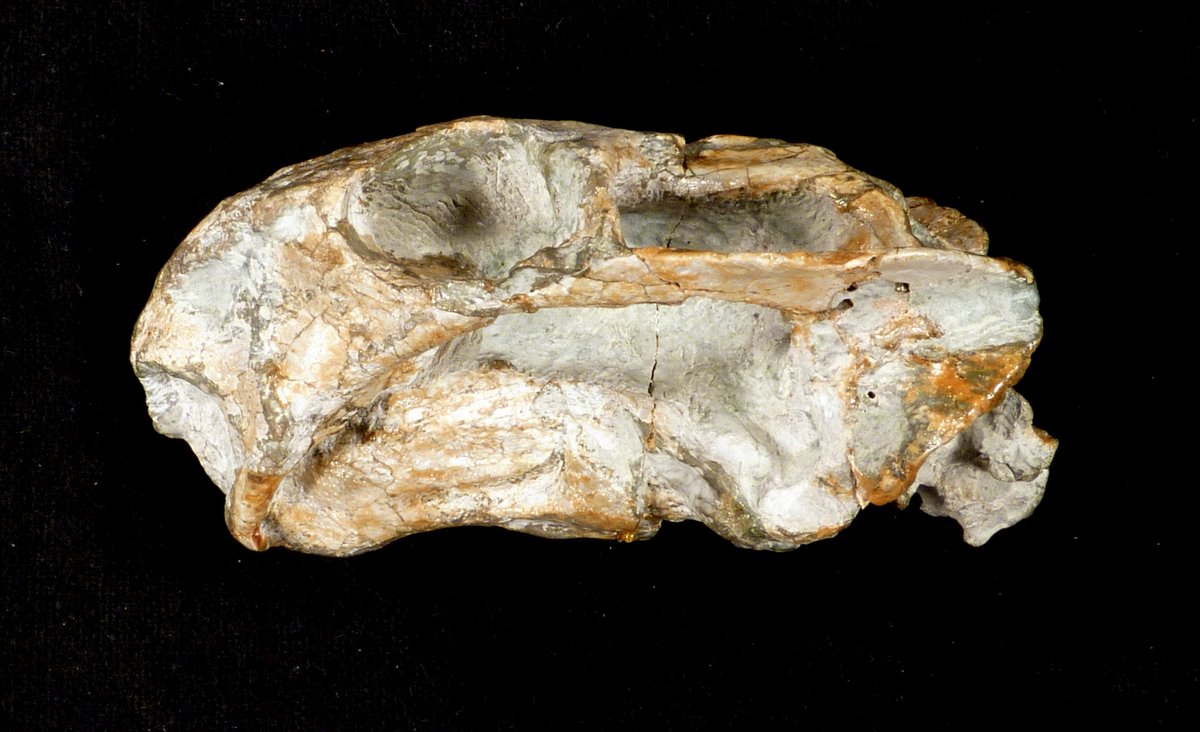
The fossil record of Macrauchenia is relatively robust compared to many other extinct South American mammals, contributing significantly to our detailed understanding of its anatomy. Fossils are predominantly found in the southern cone of South America, with the vast majority of specimens originating from Argentina, particularly within the Pampean region and Patagonia. Important discoveries have also been made in neighboring countries such as Chile, Uruguay, and Bolivia, indicating a widespread distribution across the continent's temperate and semi-arid zones. The preservation quality of Macrauchenia fossils ranges from fragmentary isolated bones to nearly complete, articulated skeletons. The Luján Formation in Buenos Aires Province, Argentina, is perhaps the most famous and prolific fossil site for this genus, yielding numerous exceptionally preserved specimens that have formed the basis for most museum mounts and anatomical studies. Typically, the dense limb bones, vertebrae, and robust mandibles are the most commonly preserved parts, though several beautifully preserved skulls have been recovered, allowing for detailed study of its bizarre cranial anatomy. The abundance of fossils in Late Pleistocene deposits suggests that Macrauchenia was a relatively successful and widespread animal right up until the megafaunal extinction event that wiped it out.
In terms of cultural impact, Macrauchenia has captured the public imagination as one of the quintessential 'weird wonders' of the prehistoric world. Its bizarre, chimeric appearance makes it a popular subject in paleoart, documentaries, and books about extinct animals. It famously appeared in the BBC documentary series 'Walking with Beasts,' which brought its unusual anatomy and the dramatic events of the Great American Biotic Interchange to a global audience. Museums around the world, particularly the Museo de La Plata and the Bernardino Rivadavia Natural Sciences Argentine Museum in Buenos Aires, feature prominent, life-sized skeletal mounts of Macrauchenia, drawing significant public fascination. Educationally, Macrauchenia serves as a textbook example of convergent evolution and the profound effects of continental drift and geographic isolation on the trajectory of animal life, making it a vital tool for teaching evolutionary biology and earth history.
Classification
Time Period
Discovery
Location
Patagonia, Argentina
Formation
Luján Formation
Frequently Asked Questions
What is Macrauchenia?
Macrauchenia patachonica was a large, peculiar, long-necked, and long-limbed South American native ungulate that lived during the Late Miocene to the Late Pleistocene epochs, approximately 7 million to 10,000 years ago. Belonging to the extinct order Litopterna, this remarkable mammal represents one...
When did Macrauchenia live?
Macrauchenia lived during the quaternary period of the cenozoic era approximately 7-0.02 million years ago.
Where was Macrauchenia discovered?
Fossils of Macrauchenia were discovered in Patagonia, Argentina in the Luján Formation.
What did Macrauchenia eat?
Macrauchenia was a herbivore. It lived in terrestrial habitats.
What type of fossil is Macrauchenia?
Macrauchenia is preserved as a body fossil. The preservation quality is good.
Related Specimens
From the cenozoic era · body fossils