Isotelus
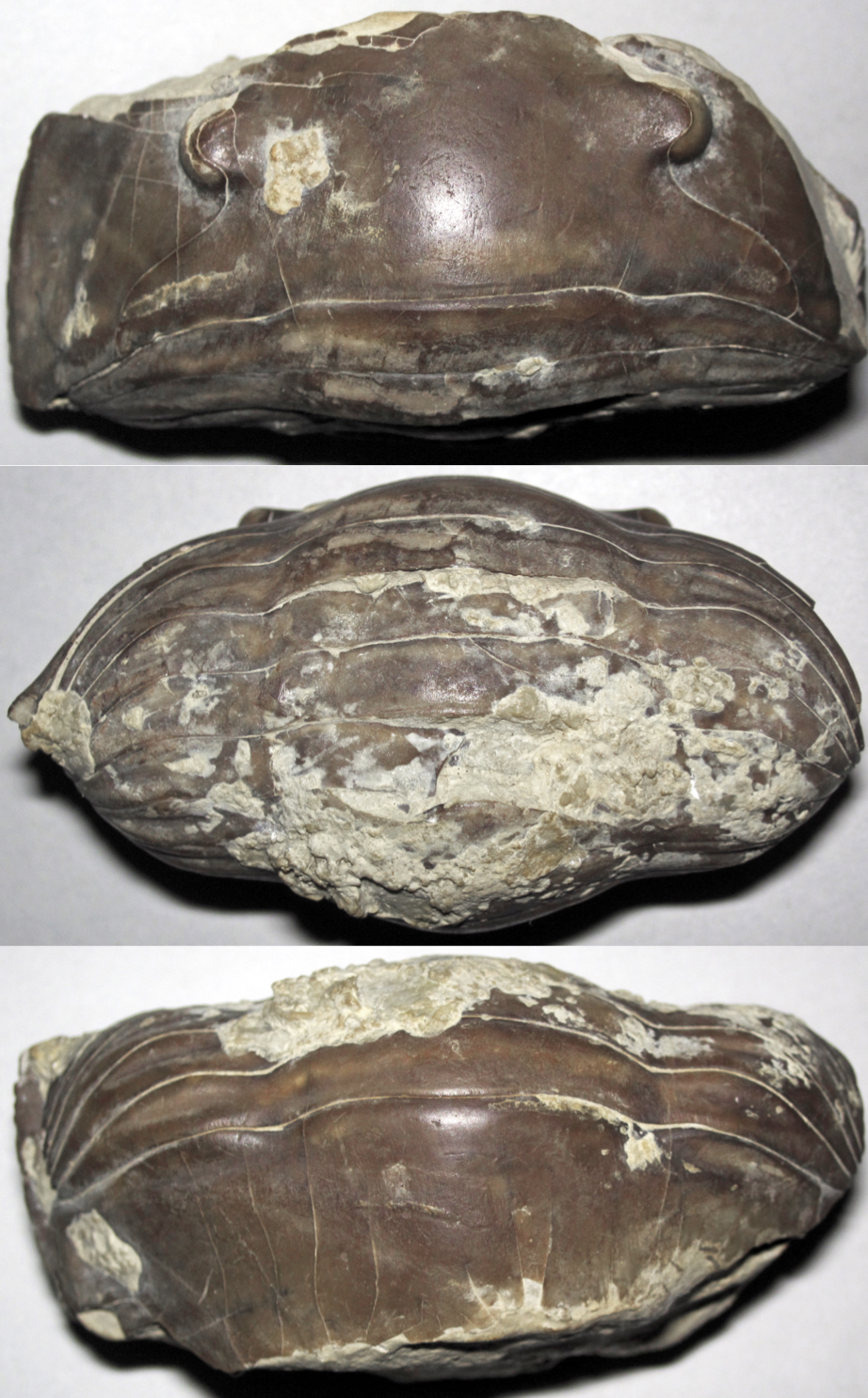
Isotelus maximus
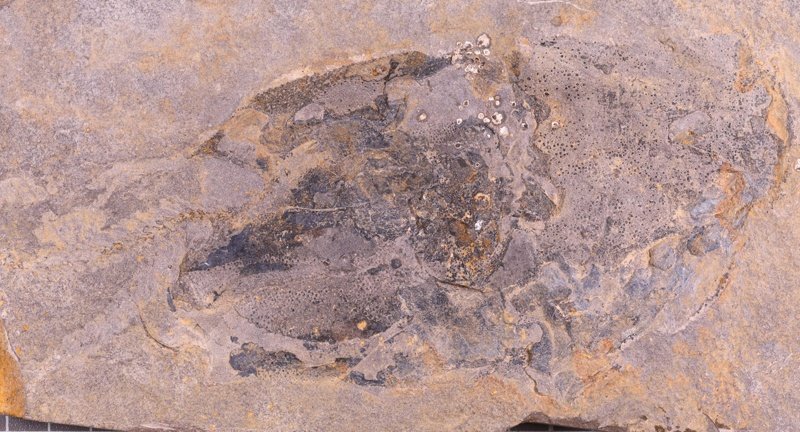
Image: Category:Isotelus maximus fossils - Wikimedia Commons (CC BY-SA)
About Isotelus
Isotelus is a renowned genus of asaphid trilobite, an extinct group of marine arthropods that flourished during the Paleozoic Era. Its most celebrated species, *Isotelus maximus*, represents a pinnacle of trilobite evolution, holding the title of the largest known trilobite and serving as a key index fossil for the Late Ordovician period. These colossal arthropods inhabited the warm, shallow epicontinental seas that covered ancient North America, particularly the region now known as Ohio, USA, between approximately 454 and 443 million years ago, leaving behind an impressive fossil legacy that continues to inform our understanding of ancient marine ecosystems.
The physical anatomy of *Isotelus maximus* was both formidable and highly specialized. Exceptional specimens, most notably one discovered by Thomas T. Johnson in 1999 near Dayton, Ohio, reached a staggering length of 72 centimeters (over 28 inches) and an estimated weight of around 13 kilograms (nearly 30 pounds), a size comparable to a large modern lobster or a small dog. This gigantism stands in stark contrast to the more common, palm-sized trilobites. The exoskeleton, or carapace, of *Isotelus* was characterized by a relatively smooth, low-profile, and broadly oval shape. A key diagnostic feature is its 'isoteliform' condition, where the cephalon (head shield) and the pygidium (tail shield) are of nearly equal size and semi-circular shape, creating a striking symmetry. The central axial lobe, which housed the main body organs, was wide but very low and poorly defined, blending almost seamlessly with the flanking pleural lobes. This effaced or smoothed-out appearance, with indistinct segmentation, is a hallmark of the Asaphida order. Its large, crescent-shaped holochroal eyes were positioned dorsally on the cephalon, providing a wide, panoramic field of view ideal for a benthic creature scanning the seafloor for prey and predators. The underside, rarely preserved, would have featured a series of jointed appendages used for walking, feeding, and respiration, along with a mouthpart structure known as a hypostome.
The paleobiology of *Isotelus* reveals an active and successful benthic predator and scavenger. Its immense size suggests it was an apex invertebrate predator within its immediate environment, likely preying upon soft-bodied worms, primitive mollusks, brachiopods, and other smaller trilobites. Its feeding strategy probably involved a combination of active hunting and opportunistic scavenging of carcasses on the seafloor. The smooth, streamlined, and hydrodynamic shape of its carapace, coupled with its isoteliform symmetry, strongly suggests adaptations for efficient burrowing. *Isotelus* likely used its broad cephalic and pygidial shields like shovels to push its way into the soft carbonate mud and sand of the seabed, either to ambush prey, seek refuge from predators like the giant nautiloid *Cameroceras*, or to rest. Locomotion was achieved via its numerous paired legs, which would have propelled it across the substrate. Like most trilobites, *Isotelus* possessed the ability to enroll, tucking its pygidium tightly against its cephalon to form a defensive, armored ball, protecting its vulnerable soft tissues and appendages from attack. Growth occurred through ecdysis, or molting, where the animal would shed its exoskeleton periodically. The abundance of shed exuviae in the fossil record provides evidence of this process and allows paleontologists to study its ontogeny, or developmental stages from juvenile to adult.
*Isotelus maximus* thrived in the specific ecological context of the Cincinnatian Sea, a warm, shallow, tropical epeiric sea that covered the paleocontinent of Laurentia during the Late Ordovician (specifically the Katian age). The climate was significantly warmer than today, with high sea levels creating vast, stable marine habitats ideal for a flourishing invertebrate fauna. The seafloor was composed of soft carbonate muds and sands, interspersed with shelly debris, which formed the rock layers of the Cincinnatian Series, including the renowned Richmond Formation. This ecosystem was exceptionally biodiverse. *Isotelus* shared its habitat with a dense community of organisms, including vast colonies of bryozoans, extensive beds of brachiopods like *Rafinesquina* and *Hebertella*, crinoids, gastropods, bivalves, and other trilobite genera such as *Flexicalymene* and *Cryptolithus*. As a large carnivore, *Isotelus* occupied a high trophic level in the benthic food web, exerting significant predatory pressure on smaller invertebrates. Its primary predators were likely the colossal orthoconic nautiloids, such as *Cameroceras*, which were the apex predators of the Ordovician seas. The ecological stability of this environment allowed for the evolution of gigantism in lineages like *Isotelus*, a phenomenon that would be abruptly curtailed by the Ordovician-Silurian extinction event that followed.
The discovery history of *Isotelus* is deeply intertwined with the rich fossil beds of the Ohio Valley. The genus was first described by the British paleontologist John William Salter in 1852. However, the specific species *Isotelus maximus* was named earlier by the English-born American naturalist John Locke in 1838, based on specimens found in the hills around Cincinnati, Ohio. For decades, collectors and paleontologists unearthed countless fragments and complete specimens, but the true scale of the animal remained speculative. The watershed moment came in the late 20th century with the discovery of several exceptionally large, complete individuals. The most famous of these is the aforementioned 72-centimeter specimen, nicknamed "Isotelus rex," discovered by amateur paleontologist Thomas T. Johnson on August 24, 1999, in the Richmond Formation strata exposed at a construction site in Montgomery County, Ohio. This specimen, now housed at the Cincinnati Museum Center, cemented the species' status as the world's largest trilobite. In recognition of its scientific and cultural importance, *Isotelus* was designated the official state fossil of Ohio in 1985, a testament to its profound connection to the region's geological heritage and the dedicated work of both professional and amateur fossil hunters who brought its world to light.
From an evolutionary perspective, *Isotelus* is a classic representative of the order Asaphida, a large and diverse group of trilobites that were particularly dominant during the Ordovician. Within this order, it belongs to the family Asaphidae. The genus exemplifies several key evolutionary trends seen in this lineage, including the development of the isoteliform body plan and the effacement, or smoothing, of the exoskeleton's features. This morphology is thought to be a convergent adaptation for a burrowing lifestyle, seen in several unrelated trilobite groups. As arthropods, trilobites are distant relatives of modern crustaceans, insects, and chelicerates (spiders and scorpions). While they left no direct descendants, their body plan, featuring a segmented body, jointed appendages, and a chitinous exoskeleton, places them firmly within the phylum Arthropoda. The study of *Isotelus* and its kin provides crucial data points for understanding the early radiation and diversification of arthropods, which became one of the most successful animal phyla on Earth. Its eventual extinction, along with all other trilobites, at the end of the Permian period marks the closure of a major chapter in the history of life.
Despite its iconic status, *Isotelus* has been the subject of scientific debates, primarily concerning its taxonomy and precise life habits. The genus *Isotelus* itself has a complex taxonomic history, with numerous species assigned to it over the years, some of which have since been reclassified into other genera like *Homotelus* or *Anatelson*. The distinction between *Isotelus maximus* and other large, similar species such as *Isotelus gigas* has been a point of contention, with some researchers suggesting they may represent different growth stages or regional variations of the same species, a concept known as synonymy. Furthermore, while the burrowing hypothesis is widely accepted, the exact nature of its feeding behavior remains inferential. Whether it was primarily an active predator that pursued prey or a more passive scavenger that relied on carrion is difficult to determine definitively from the fossil evidence alone. Ongoing research using trace fossils and functional morphology continues to refine our understanding of how this giant arthropod truly lived and interacted with its environment.
The fossil record of *Isotelus*, particularly *Isotelus maximus*, is exceptionally rich, though geographically concentrated. The vast majority of high-quality specimens have been recovered from the Cincinnatian Series of southwestern Ohio, northern Kentucky, and southeastern Indiana. These Upper Ordovician rocks, especially the Richmond, Liberty, and Waynesville Formations, are world-famous for their abundance and exquisite preservation of marine invertebrate fossils. Complete, articulated specimens of *Isotelus* are prized finds, but disarticulated parts of their exoskeletons, such as cephalons, pygidia, and thoracic segments, are extremely common components of the fossil hash in these layers. The preservation is often so fine that details like the lenses of the compound eyes and terrace lines (fine ridges on the carapace) are visible. Famous localities include road cuts, quarries, and creek beds around Cincinnati, Dayton, and Richmond, Indiana, which have collectively yielded thousands of specimens, making *Isotelus* one of the most thoroughly studied of all trilobites.
The cultural impact of *Isotelus maximus* extends far beyond paleontological circles. As the official state fossil of Ohio, it is a celebrated symbol of the state's deep geological history and is prominently featured in regional educational materials and museum exhibits. Major institutions like the Cincinnati Museum Center, the Orton Geological Museum at The Ohio State University, and the Smithsonian National Museum of Natural History display impressive specimens of *Isotelus*, captivating the public with their immense size and alien beauty. Its status as the "king" of trilobites has made it a popular subject in books, documentaries, and paleoart, serving as an accessible and awe-inspiring ambassador for the often-overlooked world of Paleozoic invertebrates and the rich biodiversity of Earth's ancient oceans.
Classification
Time Period
Discovery
Location
Ohio, USA (specifically the Cincinnatian Series)
Formation
Richmond Formation
Frequently Asked Questions
What is Isotelus?
Isotelus is a renowned genus of asaphid trilobite, an extinct group of marine arthropods that flourished during the Paleozoic Era. Its most celebrated species, *Isotelus maximus*, represents a pinnacle of trilobite evolution, holding the title of the largest known trilobite and serving as a key inde...
When did Isotelus live?
Isotelus lived during the ordovician period of the paleozoic era approximately 454-443 million years ago.
Where was Isotelus discovered?
Fossils of Isotelus were discovered in Ohio, USA (specifically the Cincinnatian Series) in the Richmond Formation.
What did Isotelus eat?
Isotelus was a carnivore. It lived in marine habitats.
What type of fossil is Isotelus?
Isotelus is preserved as a body fossil. The preservation quality is excellent.
Related Specimens
From the paleozoic era · body fossils