Minmi
Minmi paravertebra
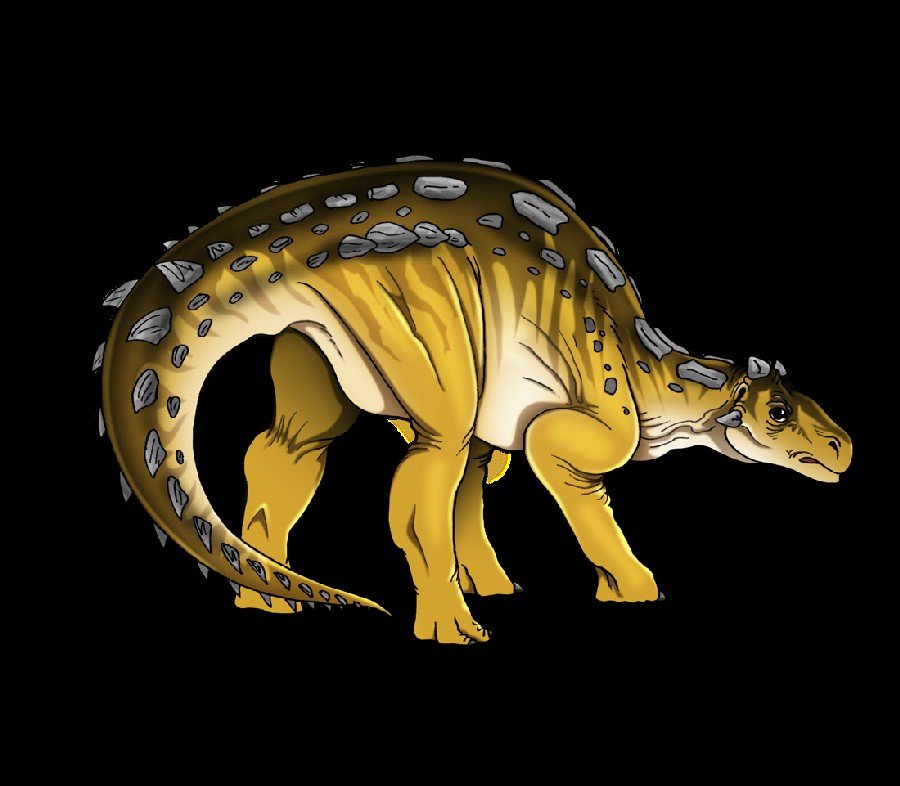
Image: Image sourced via web search (Fair use / Educational)
About Minmi
Minmi paravertebra is a small, armored dinosaur that inhabited the floodplains of what is now northeastern Australia during the Early Cretaceous period, approximately 120 to 112 million years ago. As one of the earliest and most complete ankylosaurian dinosaurs discovered in the Southern Hemisphere, Minmi holds significant paleontological importance, offering a rare window into the unique dinosaur faunas that evolved on the isolated continent of Gondwana. Its distinctive armor and relatively simple body plan provide crucial insights into the early evolution and diversification of the heavily protected thyreophoran dinosaurs.
Minmi was a relatively small dinosaur, especially when compared to its later, more massive ankylosaurid relatives like Ankylosaurus. It measured approximately 3 meters (about 10 feet) in length and stood about 1 meter (3.3 feet) tall at the hips, with an estimated body weight of around 300 kilograms (660 pounds). Its overall build was low-slung and quadrupedal, resembling a modern-day armadillo or a small, heavily built pig. The most striking feature of Minmi was its extensive body armor, or osteoderms. These bony plates were embedded in its skin, forming a protective shield over its back, neck, and tail. The armor consisted of small, button-like scutes (ossicles) and larger, keeled plates arranged in rows along its body. Unlike many later ankylosaurs, Minmi lacked a prominent tail club, instead possessing a more flexible tail also covered in protective armor. Its skull was short and broad, with a small, toothless beak at the front for cropping vegetation. Small, leaf-shaped teeth lined the sides of its jaws, adapted for shredding plant material. A key diagnostic feature, which gave the species its name 'paravertebra', is the presence of unique, rod-like bony elements running alongside the vertebrae of its back, which likely served to stiffen the spine and support the weight of its armor. Its limbs were stout and robust, indicating a slow, deliberate gait.
As a herbivore, Minmi's diet consisted of low-growing vegetation such as ferns, cycads, and primitive flowering plants that were abundant in the Early Cretaceous landscape. Its broad beak would have been effective for nipping off plant matter, while its simple, leaf-shaped cheek teeth were suited for slicing and shredding rather than extensive grinding. Fossilized gut contents from one exceptional specimen (the 'Minmi sp.' specimen from Marathon Station) provide direct evidence of its diet, revealing fragments of fibrous plant tissue, seeds, and fruiting bodies, confirming its role as a selective browser of soft vegetation. Its low-slung posture and short neck would have restricted it to foraging on plants close to the ground. Locomotion in Minmi was quadrupedal and likely slow, a consequence of its heavy armor and stout limbs. It was not built for speed, relying instead on its passive defense system for protection. There is no direct fossil evidence for social behavior, but like many herbivorous dinosaurs, it is plausible that Minmi lived in small groups or as solitary individuals, browsing through the undergrowth. Its armor would have developed as the animal grew, providing increasing protection as it reached maturity.
The world of Minmi during the Aptian-Albian stages of the Early Cretaceous was vastly different from modern Australia. At this time, Australia was still part of the supercontinent Gondwana and was located much farther south, within the Antarctic Circle. The climate, however, was surprisingly temperate, characterized by a cool, wet environment with distinct seasons, including periods of polar darkness in winter. The landscape was dominated by vast, braided river systems and floodplains, interspersed with lush conifer forests, fern prairies, and cycad groves. Minmi shared this unique polar ecosystem with a variety of other dinosaurs. Predators included the large megaraptoran theropod Australovenator and smaller coelurosaurs, which would have posed a significant threat, making Minmi's armor a critical survival tool. It coexisted with other ornithischians, such as the small, bipedal ornithopods Muttaburrasaurus and Weewarrasaurus, with which it likely competed for low-growing plant resources. The presence of these diverse herbivores and their predators indicates a complex and stable food web in this high-latitude environment. Minmi occupied the niche of a small, armored, low-browsing herbivore, a role common in dinosaur ecosystems worldwide but filled in Australia by this unique, early ankylosaur.
The discovery of Minmi is a cornerstone of Australian paleontology. The holotype specimen, QM F10329, was found in 1964 by a local grazier, D. M. Patterson, on his property near Minmi Crossing in the Roma district of Queensland. The fossils were recovered from the Bungil Formation, a marine-influenced geological unit. Paleontologist Ralph Molnar formally described and named the dinosaur in 1980. The genus name, 'Minmi', is a direct reference to the discovery location, while the species name, 'paravertebra', is Latin for 'beside the vertebrae', highlighting the distinctive bony rods found along its spine. This initial find was significant but fragmentary. A far more complete and exceptionally preserved specimen, QM F18101, was discovered in 1989 at Marathon Station near Richmond, Queensland. This second specimen, often referred to as 'Minmi sp.' due to some anatomical differences, is one of the best-preserved dinosaur skeletons ever found in Australia, including articulated armor, skin impressions, and even fossilized gut contents. This remarkable find provided a wealth of information about the animal's anatomy, diet, and appearance, making Minmi one of the most well-understood dinosaurs from the continent.
Minmi's position in the evolutionary tree of armored dinosaurs has been a subject of study and revision. It is classified within the infraorder Ankylosauria, a major group of ornithischian dinosaurs known for their extensive body armor. Initially, its simple anatomy led paleontologists to consider it a very primitive or 'basal' member of the group, potentially falling outside the two main ankylosaur families, the Nodosauridae and the Ankylosauridae. However, more recent and comprehensive phylogenetic analyses, particularly those conducted by researchers like Victoria Arbour and Philip Currie, have placed Minmi and its close relative Kunbarrasaurus firmly within the family Ankylosauridae. This placement suggests that it is one of the earliest known members of this family, providing crucial data on the initial stages of ankylosaurid evolution. Its features, such as a relatively unspecialized skull and the lack of a tail club, represent an ancestral condition from which the more derived and heavily armored Late Cretaceous ankylosaurids evolved. As one of the few well-known Gondwanan ankylosaurs, Minmi demonstrates that this group had a global distribution early in its history and was not just a Laurasian phenomenon.
Despite the quality of the known fossils, some scientific debates surround Minmi. The primary controversy revolves around the classification of the highly complete Marathon Station specimen (QM F18101). While initially assigned to 'Minmi sp.', detailed analysis of its skull and inner ear anatomy by Lucy Leahey and colleagues in 2015 revealed significant differences from the holotype of Minmi paravertebra. These distinctions were deemed substantial enough to warrant the creation of a new genus and species, Kunbarrasaurus ieversi. This reclassification means that much of what was popularly understood about 'Minmi'—including its diet from gut contents and its detailed armor arrangement—actually pertains to Kunbarrasaurus. The original Minmi paravertebra is now known from less complete material, making its precise anatomy more difficult to reconstruct. This taxonomic split highlights the ongoing process of scientific refinement and underscores the importance of re-examining key specimens as new analytical techniques become available. The relationship between these two closely related Australian ankylosaurs continues to be an area of active research.
The fossil record of Minmi paravertebra, in its strict definition, is based on the holotype from the Bungil Formation near Roma, Queensland. The more famous and complete specimen, now known as Kunbarrasaurus, was found in the Allaru Mudstone formation near Richmond, Queensland. Together, these finds establish the presence of small, early ankylosaurids in Early Cretaceous Australia. While fossils of these animals are considered rare, the quality of preservation, particularly of the Kunbarrasaurus specimen, is exceptional. This specimen includes a nearly complete, articulated skeleton, an almost entirely intact skull, armor in its life position, and carbonized soft tissues, making it a globally significant find. Most ankylosaur fossils from other parts of the world are disarticulated, so the Australian specimens provide an unparalleled look at the complete armor arrangement and biology of an early ankylosaur. These fossils are primarily housed and studied at the Queensland Museum, with replicas and displays featured in other Australian institutions.
Minmi has achieved a notable level of recognition, particularly within Australia, where it is celebrated as one of the country's most famous dinosaurs. Its small size and distinctive, tank-like appearance have made it a popular subject in children's books, documentaries, and educational materials about prehistoric life. The exceptional Kunbarrasaurus fossil is a centerpiece exhibit at the Queensland Museum in Brisbane, where it serves as a powerful educational tool to engage the public with Australia's unique paleontological heritage. Its short, memorable name has also contributed to its popularity, making it one of the few dinosaurs known to the general public by a name other than Tyrannosaurus or Triceratops. Through these displays and media appearances, Minmi and its close relative Kunbarrasaurus continue to inspire fascination with the lost world of Gondwana.
Classification
Time Period
Discovery
Location
Australia
Formation
Bungil Formation
Frequently Asked Questions
What is Minmi?
Minmi paravertebra is a small, armored dinosaur that inhabited the floodplains of what is now northeastern Australia during the Early Cretaceous period, approximately 120 to 112 million years ago. As one of the earliest and most complete ankylosaurian dinosaurs discovered in the Southern Hemisphere,...
When did Minmi live?
Minmi lived during the cretaceous period of the mesozoic era approximately 120-112 million years ago.
Where was Minmi discovered?
Fossils of Minmi were discovered in Australia in the Bungil Formation.
What did Minmi eat?
Minmi was a herbivore. It lived in terrestrial habitats.
What type of fossil is Minmi?
Minmi is preserved as a body fossil. The preservation quality is good.
Related Specimens
From the mesozoic era · body fossils