Nipponites
Nipponites mirabilis
Image: Image sourced via web search (Fair use / Educational)
About Nipponites
Nipponites mirabilis is an extinct species of heteromorphic ammonite, a type of marine cephalopod, that lived during the Late Cretaceous period, approximately 90 to 84 million years ago. Renowned for its bizarre and seemingly chaotic shell coiling, it represents one of the most extreme examples of uncoiled ammonite morphology. Its fossils, found primarily in the marine deposits of Japan and the Pacific Northwest of North America, have long fascinated paleontologists, serving as a key subject for studying the functional morphology, developmental biology, and evolutionary pressures that shaped these ancient mollusks.
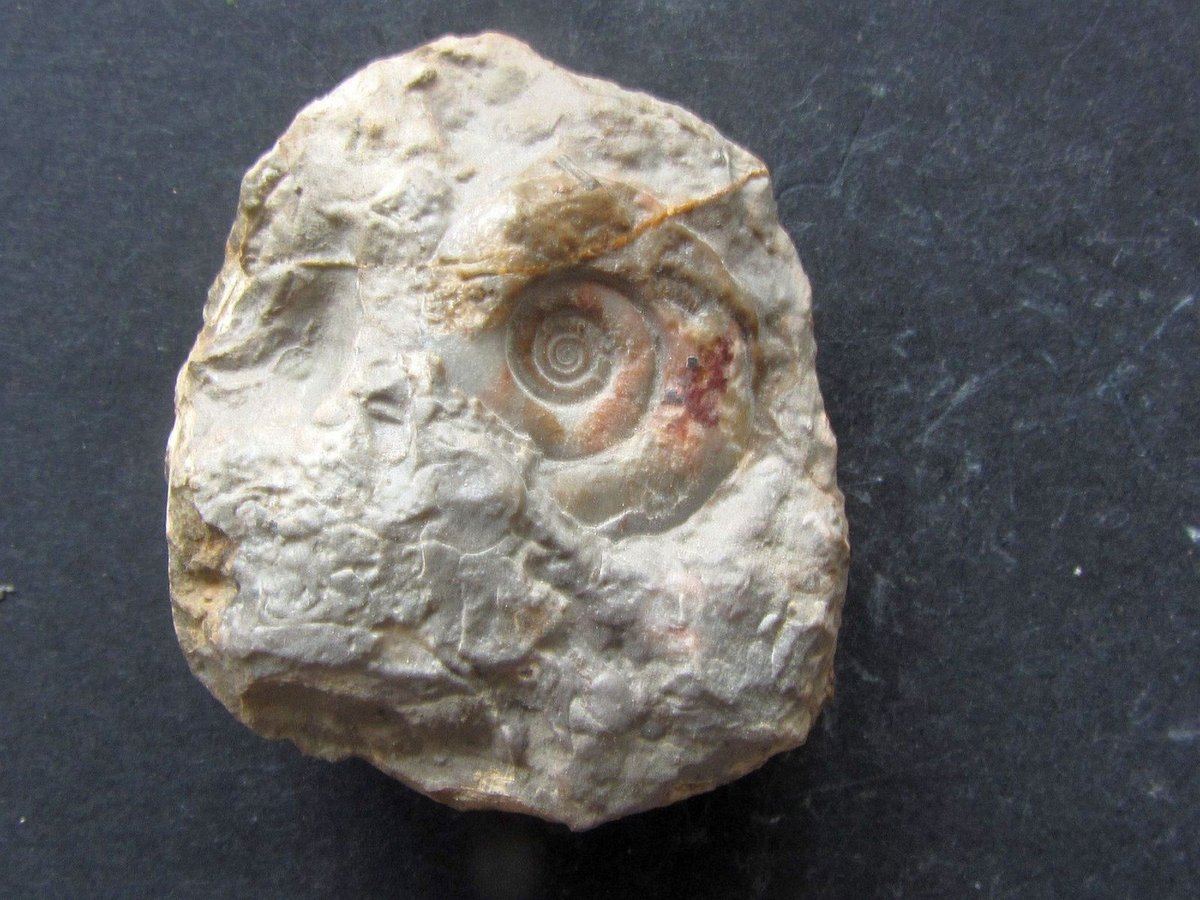
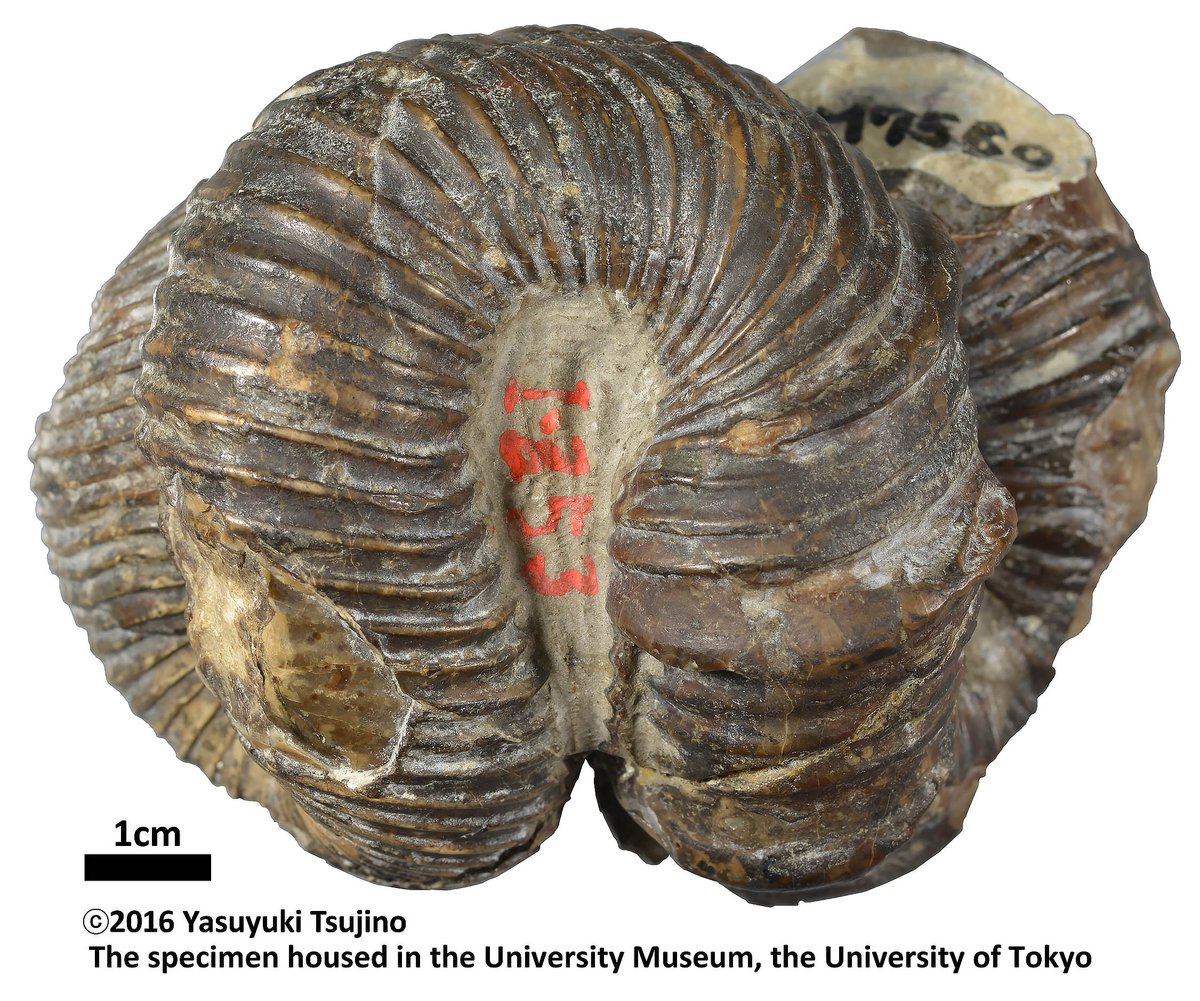
Nipponites mirabilis possessed a shell that defies the typical logarithmic spiral seen in most ammonites, instead forming a complex, three-dimensional tangle of U-shaped bends. The complete shell, or conch, typically reached a diameter of about 6 to 10 centimeters, making it a relatively small ammonite. The initial juvenile portion of the shell, the protoconch, began with a few normal, planispiral whorls. However, the subsequent growth stage, the teleoconch, embarked on a radical departure. The shell tube would grow in one direction, then execute a sharp, 180-degree U-turn, and continue growing in the opposite direction for a short distance before making another U-turn, often in a different plane. This process repeated, creating a labyrinthine structure that appears almost randomly coiled, resembling a tangled ball of yarn. The shell itself was ornamented with fine ribs and, in some specimens, small nodes or tubercles, which likely provided structural reinforcement and may have served a defensive purpose. The final section of the shell, the living chamber, was a larger, open-ended tube where the soft-bodied animal resided. Like other ammonites, it would have had a head with large eyes and a ring of tentacles surrounding a beak-like mouth, similar to a modern nautilus or squid, though no soft tissues have ever been preserved.
Reconstructing the life habits of such an unusually shaped creature presents a significant challenge. The intricate, non-streamlined shell of Nipponites makes it highly unlikely that it was an active, fast-swimming predator like many other cephalopods. Its complex geometry would have created immense drag, rendering rapid pursuit of prey impossible. Instead, paleontologists widely agree that Nipponites was a planktonic or nektonic drifter. It likely floated passively in the mid-water column, using its tentacles to capture small prey, such as zooplankton, small crustaceans, or larval fish, that drifted within reach. The shell's bizarre coiling may have been an ingenious adaptation for stability and buoyancy control. Computer modeling studies by researchers like Kazushige Tanabe and Yoshio Fukuda have suggested that the convoluted structure, despite its chaotic appearance, oriented the shell's aperture (the opening of the living chamber) consistently downwards. This orientation would have been ideal for a passive, vertically-oriented ambush predator, allowing it to hang in the water column and snag prey from below. The animal would have regulated its position in the water by adjusting the gas and liquid levels within the shell's sealed inner chambers, or phragmocone, connected by a tube called a siphuncle, much like a modern nautilus.
Nipponites lived in the temperate to cool waters of the Western Interior Seaway in North America and the ancient seas surrounding what is now Japan during the Turonian and Coniacian stages of the Late Cretaceous. This was a time of globally high sea levels, creating vast epicontinental seas teeming with life. The climate was warmer than today, with no polar ice caps. Nipponites shared its marine ecosystem with a diverse array of organisms. It would have floated alongside other ammonites, including both normally coiled forms like Damesites and other heteromorphs like Scaphites and Pravitoceras. The water column was also home to large marine reptiles such as mosasaurs (e.g., Platecarpus) and plesiosaurs, which were likely the primary predators of Nipponites. Its complex shell, while poor for swimming, may have offered some structural defense against crushing bites. The seafloor below was inhabited by bivalves like Inoceramus, sea urchins, and various crustaceans. As a small carnivore, Nipponites occupied a mid-level position in the food web, feeding on plankton and in turn being preyed upon by larger nektonic predators.
The discovery of this remarkable ammonite is credited to Japanese paleontologist Hisakatsu Yabe, who first described the species in 1904. The fossils were found in the Upper Cretaceous deposits of the Yezo Group in Hokkaido, Japan. Yabe named the genus Nipponites, with 'Nippon' being the Japanese name for Japan. The species name, mirabilis, is Latin for 'wonderful' or 'extraordinary,' a fitting descriptor for its astonishingly complex shell. Yabe's initial publication in the 'Journal of the College of Science, Imperial University of Tokyo' introduced this paleontological puzzle to the world. For decades, the seemingly random coiling baffled scientists, with some even speculating it was a pathological or aberrant form. However, the consistent discovery of multiple specimens with the same unique coiling pattern confirmed it was a natural, genetically controlled morphology. The holotype specimen, curated at the University of Tokyo, remains a cornerstone for ammonite research, and subsequent discoveries in places like Vancouver Island, British Columbia, and the U.S. state of Oregon have expanded its known geographic range.
Nipponites belongs to the family Nostoceratidae, a group of heteromorphic ammonites known for their irregular coiling. Its existence provides profound insight into the evolutionary plasticity of the ammonite shell. While the classic, tightly coiled planispiral shell was a highly successful form for over 300 million years, the Late Cretaceous saw a remarkable explosion of evolutionary experimentation, giving rise to a wide variety of 'uncoiled' heteromorphs. Nipponites represents the apex of this trend, demonstrating that extreme deviation from the ancestral form could be a viable and successful evolutionary strategy. The development of its shell is thought to be governed by a complex interplay of genetic factors controlling the growth rate and orientation of the aperture. It serves as a powerful case study in morphogenesis, illustrating how simple, periodic changes in growth direction can generate highly complex, seemingly random final structures. It shows that natural selection can favor forms that optimize for stability and feeding strategy over hydrodynamic efficiency, a crucial lesson in understanding the diverse pressures that drive evolution.
Despite general agreement on its passive, planktonic lifestyle, some aspects of Nipponites' biology remain subjects of scientific debate. The precise mechanism and advantage of its unique coiling are still being explored through advanced computer simulations and biomechanical modeling. While the downward-facing aperture hypothesis is widely accepted, the exact hydrodynamic stability and rotational properties of the shell during movement or in currents are complex variables. Some researchers have proposed that the tangled shape could have acted as a sort of 'baffle,' creating micro-currents that might have funneled small food particles toward the tentacles. Another area of discussion involves its growth rate and lifespan. The intricate shell suggests a potentially slower, more complex growth process compared to planispiral ammonites, but definitive evidence from isotopic analysis is still needed to resolve how long these animals lived and how they reached their final, convoluted form.
The fossil record of Nipponites mirabilis is relatively sparse, making it a prized find for collectors and paleontologists. The primary localities are the Upper Cretaceous marine shales and sandstones of the Yezo Group in Hokkaido, Japan. Additional well-preserved specimens have been recovered from the Nanaimo Group on Vancouver Island, British Columbia, and other contemporaneous formations along the Pacific coast of North America. Fossils are typically preserved as internal molds (steinkerns) of the shell, often composed of mudstone or siltstone. The original aragonitic shell is rarely preserved, but the intricate three-dimensional structure of the mold faithfully captures its external shape and ornamentation. The quality of preservation is often good, allowing for detailed study of the suture lines—the complex, fractal-like patterns where the internal chamber walls met the outer shell wall—which are critical for ammonite classification.
While not a household name like Tyrannosaurus or Triceratops, Nipponites mirabilis holds a special place in the hearts of paleontologists and fossil enthusiasts. Its mind-bending shape makes it an icon of evolutionary creativity and a centerpiece in museum exhibits on ammonites and marine life. Notable displays can be found at the National Museum of Nature and Science in Tokyo and other major natural history museums with significant fossil collections. It is often used in educational contexts to challenge simplistic notions of evolution and to illustrate the concept of adaptive radiation, showing how a single ancestral body plan can diversify into a vast array of forms to exploit different ecological niches. Its almost sculptural quality has also made it a subject of artistic and mathematical fascination, embodying the complex beauty that can arise from simple developmental rules.
Classification
Time Period
Discovery
Location
Japan
Formation
Yezo Group (specifically, the Upper Turonian to Santonian strata)
Frequently Asked Questions
What is Nipponites?
Nipponites mirabilis is an extinct species of heteromorphic ammonite, a type of marine cephalopod, that lived during the Late Cretaceous period, approximately 90 to 84 million years ago. Renowned for its bizarre and seemingly chaotic shell coiling, it represents one of the most extreme examples of u...
When did Nipponites live?
Nipponites lived during the cretaceous period of the mesozoic era approximately 90-84 million years ago.
Where was Nipponites discovered?
Fossils of Nipponites were discovered in Japan in the Yezo Group (specifically, the Upper Turonian to Santonian strata).
What did Nipponites eat?
Nipponites was a carnivore. It lived in marine habitats.
What type of fossil is Nipponites?
Nipponites is preserved as a body fossil. The preservation quality is good.
Related Specimens
From the mesozoic era · body fossils