Homo habilis
Image: Image sourced via web search (Fair use / Educational)
About Homo habilis
Homo habilis, whose name translates to 'handy man,' is a pivotal species of early human that lived in eastern and southern Africa during the early Pleistocene epoch, approximately 2.8 to 1.5 million years ago. It represents a significant milestone in the story of human evolution, primarily recognized for being one of the earliest members of our own genus, Homo, and for its association with the first widespread stone tool industry, the Oldowan. The emergence of Homo habilis marks a critical transition from the more ape-like australopithecines, signaling key evolutionary shifts in brain size, diet, and behavior that set the stage for all subsequent human evolution.
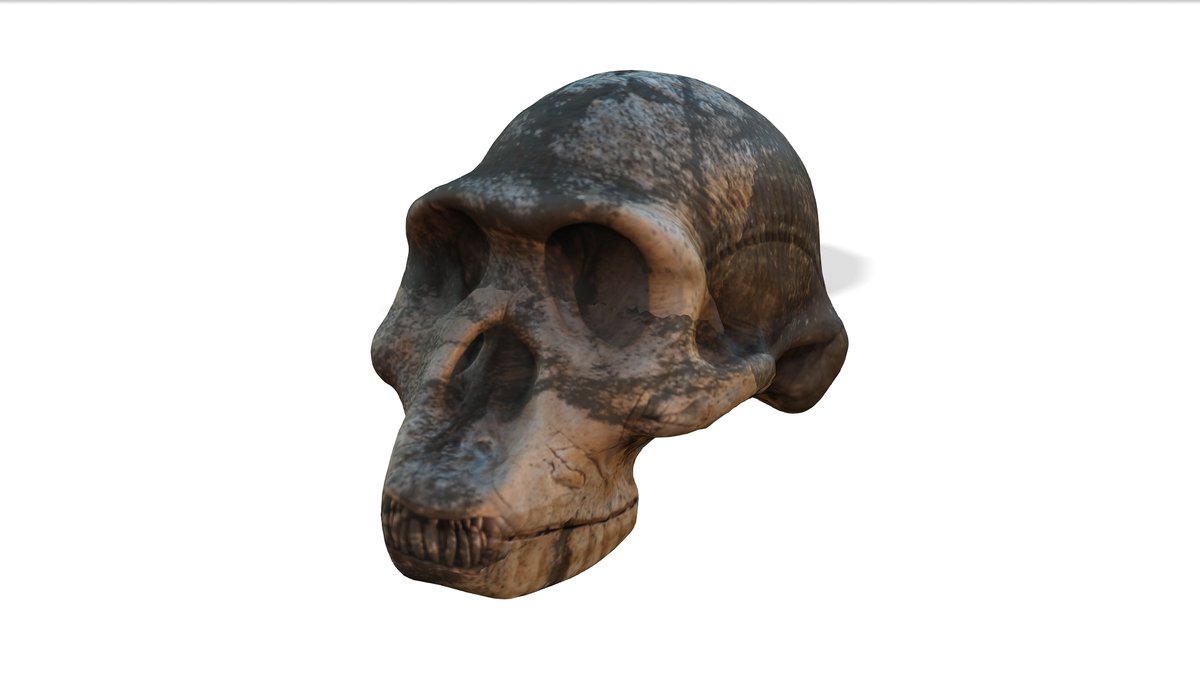
Physically, Homo habilis presented a mosaic of primitive and more modern traits, standing as a clear intermediary between its australopithecine ancestors and later Homo species like Homo erectus. On average, individuals were relatively small and gracile, with an estimated height of 100 to 135 centimeters (about 3 feet 3 inches to 4 feet 5 inches) and a body weight of around 32 kilograms (70 pounds). This stature is comparable to that of a modern 10-year-old child. Sexual dimorphism was likely pronounced, with males being significantly larger than females. The most defining characteristic of Homo habilis was its expanded cranial capacity, which ranged from 550 to 687 cubic centimeters. While this is only about half the size of a modern human brain, it represented a notable increase—up to 45% larger—than the brains of contemporary australopithecines like Australopithecus africanus. The skull itself was less prognathic (had a less projecting jaw) than its predecessors, and the dental arcade was more parabolic, similar to modern humans. The teeth, particularly the molars and premolars, were smaller and narrower, suggesting a dietary shift away from tough, fibrous plant matter. However, its postcranial skeleton retained many ape-like features. It had long arms and relatively short legs, indicating it was still well-adapted for climbing trees, perhaps for safety or foraging.
Inferences about the paleobiology of Homo habilis paint a picture of an adaptable and resourceful hominid. Its dentition and the associated archaeological evidence strongly suggest an omnivorous diet. While it likely consumed a variety of plant materials like fruits, nuts, and tubers, the key innovation was the increased inclusion of meat and marrow in its diet. This was made possible by the use of Oldowan stone tools—simple choppers, scrapers, and flakes expertly struck from river cobbles. It is debated whether Homo habilis was an active hunter of small game or primarily a scavenger, using these tools to butcher carcasses left by larger predators and to break open long bones to access nutrient-rich marrow. This dietary expansion provided a concentrated source of calories and protein, which many paleoanthropologists believe was a crucial factor in fueling the energetic demands of a larger brain. Locomotion was bipedal, as evidenced by the structure of its foot and leg bones, but the long arms and curved finger bones suggest it retained significant climbing abilities. Socially, it is presumed that Homo habilis lived in cooperative groups, a necessary structure for foraging, defense against predators like saber-toothed cats and hyenas, and the transmission of tool-making knowledge across generations.
The world of Homo habilis during the early Pleistocene was one of significant environmental fluctuation and increasing aridity in Africa. The climate was cooler and drier than in preceding epochs, leading to the expansion of open savanna grasslands at the expense of dense woodlands. Homo habilis thrived in these mixed environments, often near lakes and river systems which provided water, raw materials for tools, and a diverse array of plant and animal life. It shared this landscape with a variety of other hominins, including robust australopithecines like Paranthropus boisei, creating a complex ecological tapestry of early human diversity. The fauna was rich and formidable, including giant baboons, early elephants (Deinotherium), three-toed horses (Hipparion), and a host of formidable predators such as Megantereon (a saber-toothed cat) and Dinofelis. In this ecosystem, Homo habilis occupied a new niche as a tool-wielding, meat-eating omnivore. It was both predator to smaller animals and prey to larger carnivores, using its intelligence, social cooperation, and burgeoning technology to survive and compete in a challenging and dangerous environment.
The discovery history of Homo habilis is intrinsically linked to the Leakey family and the rich fossil beds of Olduvai Gorge in Tanzania. In 1960, a team led by Louis and Mary Leakey discovered the fossilized remains of a juvenile individual, designated OH 7 (Olduvai Hominid 7). This specimen consisted of a partial lower jaw, cranial fragments, and several hand bones. The hand bones were particularly significant, showing a precision grip capability not seen in australopithecines. In 1964, Louis Leakey, Phillip Tobias, and John Napier formally named the species Homo habilis, citing its larger brain and its association with the Oldowan tools found in the same geological layers. The name 'handy man' was chosen to reflect this tool-making ability. Other key specimens include OH 24 ('Twiggy'), a crushed but relatively complete cranium found in 1968, and KNM-ER 1813, a small-brained but otherwise characteristic skull from Koobi Fora, Kenya. The discoveries fundamentally altered the understanding of our genus, pushing back the origin of Homo and firmly linking the evolution of human intelligence with the advent of technology.
As one of the earliest members of our genus, Homo habilis holds immense evolutionary significance. It serves as a crucial transitional form, bridging the gap between the more ape-like australopithecines and the more human-like Homo erectus. The key evolutionary trends it embodies are encephalization (the increase in brain size relative to body size) and the development of a sophisticated tool-making culture. These two traits are believed to have created a positive feedback loop: better tools allowed for a higher-quality diet (more meat and marrow), which in turn provided the necessary energy to support a larger, more complex brain. A larger brain then enabled the development of even better tools and more complex social behaviors. While its body plan remained somewhat primitive, the changes in its skull, teeth, and inferred behavior represent the foundational adaptations of the genus Homo. It is the first hominin to demonstrate a clear and consistent reliance on manufactured technology to exploit its environment, a hallmark of the human lineage.
Despite its importance, the classification and evolutionary position of Homo habilis remain subjects of intense scientific debate. Some researchers argue that the variation seen in fossils attributed to H. habilis is too great for a single species. They propose splitting the sample into at least two species: a smaller-brained form, represented by fossils like KNM-ER 1813, which they retain in Homo habilis, and a larger-brained, more robust form, represented by fossils like KNM-ER 1470, which they place in a separate species, Homo rudolfensis. Proponents of this view argue the differences are as significant as those between modern chimpanzees and bonobos. Other paleoanthropologists maintain that the variation can be explained by sexual dimorphism or regional differences within a single, variable species. Another ongoing debate concerns whether H. habilis should be classified within the genus Homo at all, with some suggesting its postcranial anatomy is too primitive and that it should be reclassified as Australopithecus habilis.
The fossil record of Homo habilis, while fragmentary, provides a critical window into early human evolution. Fossils are primarily found in the Great Rift Valley of East Africa, with major sites including Olduvai Gorge in Tanzania, Koobi Fora in Kenya, and the Omo River basin in Ethiopia. A significant mandible (LD 350-1) found in Ledi-Geraru, Ethiopia, dated to 2.8 million years ago, may represent the earliest known trace of the genus Homo and potentially an early H. habilis or its direct ancestor. The fossil record consists mostly of fragmented skulls, jaws, and teeth, as these are the most durable parts of the skeleton. More complete postcranial remains, like the partial skeleton OH 62, are exceptionally rare. This scarcity of complete skeletons makes it difficult to definitively reconstruct its body proportions and locomotion, fueling many of the ongoing scientific debates. The preservation quality is generally fair, often subject to distortion from geological pressure over millions of years.
Homo habilis, the 'handy man,' has captured the public imagination as the first toolmaker and a direct ancestor who took the first definitive steps on the path to becoming human. It is a staple in museum exhibits on human evolution worldwide, with famous displays at the Smithsonian National Museum of Natural History in Washington, D.C., and the Natural History Museum in London. Casts of key fossils like OH 7 and KNM-ER 1813 are used in educational settings to illustrate the tangible evidence of human origins. Its image as a small, clever hominid using simple stone tools to survive on the African savanna is a powerful and enduring symbol of the dawn of human ingenuity and technology.
Classification
Time Period
Discovery
Location
Tanzania
Formation
Olduvai Gorge (Beds I and II), Koobi Fora Formation
Frequently Asked Questions
What is Homo habilis?
Homo habilis, whose name translates to 'handy man,' is a pivotal species of early human that lived in eastern and southern Africa during the early Pleistocene epoch, approximately 2.8 to 1.5 million years ago. It represents a significant milestone in the story of human evolution, primarily recognize...
When did Homo habilis live?
Homo habilis lived during the quaternary period of the cenozoic era approximately 2.8-1.5 million years ago.
Where was Homo habilis discovered?
Fossils of Homo habilis were discovered in Tanzania in the Olduvai Gorge (Beds I and II), Koobi Fora Formation.
What did Homo habilis eat?
Homo habilis was a omnivore. It lived in terrestrial habitats.
What type of fossil is Homo habilis?
Homo habilis is preserved as a body fossil. The preservation quality is fair.
Related Specimens
From the cenozoic era · body fossils