Mosasaurus
Mosasaurus hoffmannii
About Mosasaurus
Mosasaurus hoffmannii, whose name translates to 'Meuse River Lizard', was a colossal marine reptile that reigned as the apex predator of the world's oceans during the final stages of the Late Cretaceous period. This immense creature, one of the last and largest of the mosasaurs, lived between approximately 70 and 66 million years ago, its fossils first unearthed in the chalk quarries near Maastricht in the Netherlands. The discovery and subsequent study of its remains were pivotal moments in the nascent fields of paleontology and geology, fundamentally shaping early scientific understanding of extinction and the concept of a prehistoric world inhabited by creatures unlike any living today.
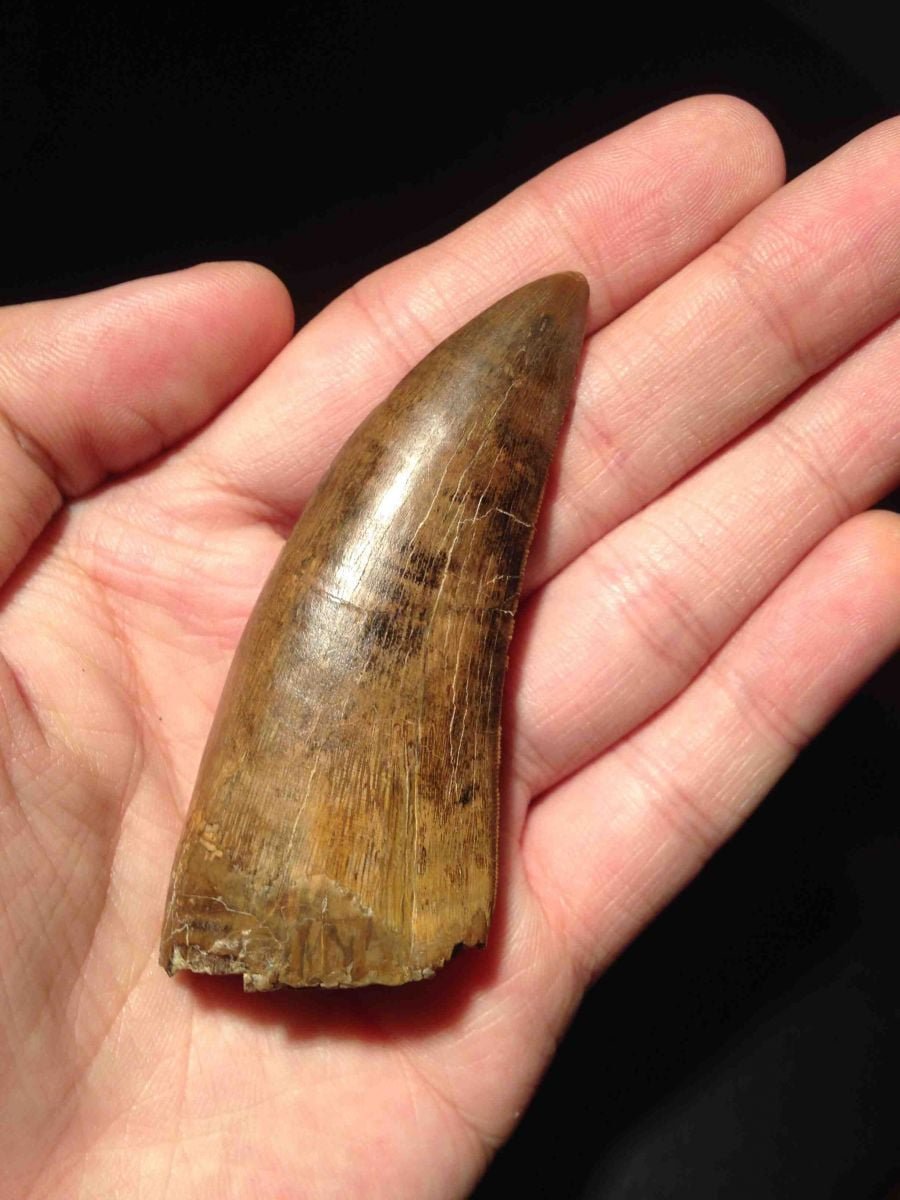
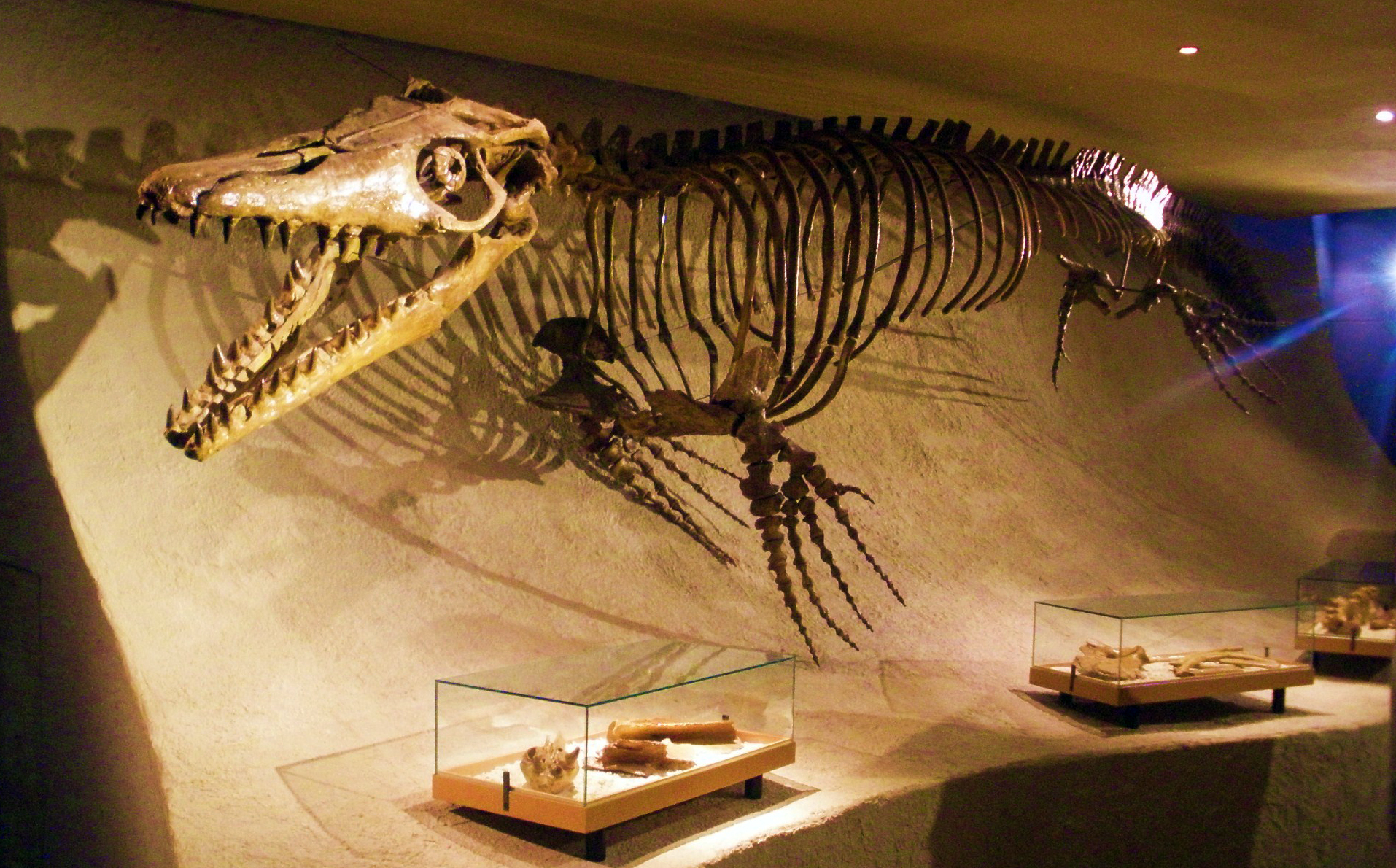
As the type species of the entire Mosasauridae family, Mosasaurus hoffmannii represents the pinnacle of this group's evolutionary development in terms of sheer size and power. Estimates of its maximum length have varied over the centuries, but modern scientific consensus, based on more complete skeletal material, places large adult individuals at lengths of up to 13 meters (approximately 43 feet), with some less conservative estimates suggesting lengths approaching 15 meters. Its mass is estimated to have been in the range of 10 to 15 metric tons, making it comparable in bulk to a modern humpback whale, though far more predatory in nature. The animal's overall body plan was fusiform, or torpedo-shaped, an adaptation for efficient movement through water. It possessed four powerful, paddle-like flippers, with the front pair being slightly larger than the rear, which were likely used for steering and stability rather than primary propulsion. The most significant feature for locomotion was its formidable tail. Early reconstructions depicted a long, eel-like tail, but fossil evidence, including skin impressions from related species, has revealed that Mosasaurus possessed a bilobed, or crescent-shaped, caudal fin, much like that of a shark. This structure, with a larger upper lobe supported by the vertebral column, would have provided immense thrust for rapid acceleration and sustained cruising. The skull of Mosasaurus was massive and robust, measuring up to 1.5 meters (nearly 5 feet) in length. It was akinetic, meaning it had limited internal mobility, but its jaws were a marvel of predatory engineering. Like modern snakes and their varanid lizard relatives, Mosasaurus possessed a streptostylic quadrate bone and an intramandibular hinge, creating a double-hinged jaw mechanism. This allowed for extreme mandibular depression, enabling it to open its mouth incredibly wide and engulf prey of considerable size. Its jaws were lined with dozens of large, conical, and slightly recurved teeth, deeply rooted in the jawbones, perfectly designed for seizing and holding onto large, struggling animals. Furthermore, a second set of smaller, hooked teeth, known as pterygoid teeth, were present on the palate, which would have functioned like a ratchet to prevent prey from escaping and to help pull it down the throat.
The paleobiology of Mosasaurus hoffmannii reveals a creature perfectly adapted to its role as a superpredator. Its powerful build, formidable jaws, and keen senses, likely including good vision and a well-developed sense of smell, made it a highly effective hunter. Its diet was undoubtedly varied and opportunistic, reflecting its position at the top of the marine food web. Isotopic analysis of its tooth enamel and direct fossil evidence in the form of stomach contents from related mosasaurs suggest a broad predatory scope. It would have preyed upon large fish such as the saber-toothed Xiphactinus, ammonites with their hard shells, sea turtles like Allopleuron, and various marine reptiles. It is highly probable that its prey included long-necked plesiosaurs, such as Elasmosaurus, and even other, smaller species of mosasaurs. The powerful, robust skull and teeth suggest a feeding strategy that involved seizing prey with a crushing bite and then swallowing it whole or in large sections, rather than complex chewing. Its powerful, fin-like tail indicates it was a pursuit predator capable of great bursts of speed to ambush or chase down swift-moving prey in open water. As an air-breathing reptile, it would have needed to surface regularly for oxygen, but its large lung capacity likely allowed for extended dive times while hunting in the depths of the epicontinental seas it inhabited. Growth studies based on bone histology indicate that Mosasaurus, like many large reptiles and dinosaurs, experienced rapid juvenile growth rates, allowing it to reach a formidable size relatively quickly and thus reduce its own vulnerability to predation.
Mosasaurus lived during the Maastrichtian age, the very end of the Cretaceous period, a time of significant geological and climatic activity. Global temperatures were warmer than today, and sea levels were exceptionally high, resulting in the formation of vast, shallow epicontinental seas that flooded continental interiors. One of the most prominent of these was the Western Interior Seaway in North America and the extensive chalk seas that covered much of modern-day Europe. It was in these warm, productive marine environments that Mosasaurus hoffmannii thrived. The ecosystem of the Maastricht Formation, where its fossils are most famously found, was incredibly diverse. The waters teemed with a rich array of life, forming a complex food web. The primary producers were phytoplankton, which supported a vast population of zooplankton, ammonites, and belemnites. These, in turn, were prey for numerous species of fish, from small schooling varieties to larger predators. The top tiers of the food web were occupied by a host of large marine reptiles. Alongside Mosasaurus, the seas were home to other mosasaur genera like Plioplatecarpus and Prognathodon, long-necked plesiosaurs, and giant sea turtles. The presence of multiple large predators suggests a degree of niche partitioning, with different species perhaps specializing in different prey or hunting at different depths. However, as the largest known predator in its environment, Mosasaurus hoffmannii undoubtedly sat at the apex of this food web, a dominant force capable of preying on any other creature in its habitat, its only potential rivals being other large individuals of its own species.
The discovery of Mosasaurus is a cornerstone in the history of paleontology. The first significant remains, a partial skull, were unearthed in a subterranean chalk quarry in the St. Pietersberg hill near Maastricht, Netherlands, sometime between 1764 and 1770. This specimen, initially thought to be a crocodile or a whale, was acquired by Martinus van Marum, the first director of the Teylers Museum in Haarlem. A second, more famous skull was discovered in the same quarry around 1780 and was collected by the quarry's physician, Johann Leonard Hoffmann, after whom the species would later be named. This spectacular fossil became a subject of intense scientific interest and local fame. During the French Revolutionary Wars, the French army besieged Maastricht in 1794. Aware of the fossil's value, French geologist Barthélemy Faujas de Saint-Fond, who was with the army, allegedly directed his grenadiers to secure the specimen, which was then confiscated and taken to Paris as war booty. There, it was studied by the great comparative anatomist Georges Cuvier. In 1808, Cuvier concluded it was a gigantic marine lizard, an "animal of a new genus," and his work on this and other fossils led him to champion the revolutionary concept of extinction, arguing that the Earth was once populated by creatures that no longer exist. The animal was not formally named until 1822, when William Daniel Conybeare dubbed it Mosasaurus, combining the Latin 'Mosa' for the Meuse River and the Greek 'sauros' for lizard. The species name, hoffmannii, was added by Gideon Mantell in 1829 in honor of the original collector.
Mosasaurus and its kin hold a crucial position in the evolutionary history of reptiles. They belong to the order Squamata, the same group that includes modern lizards and snakes, and are placed within the clade Mosasauroidea. For many years, their precise origins were debated, with theories linking them to either monitor lizards (varanids) or snakes. The modern consensus, supported by extensive cladistic analysis and fossil discoveries, strongly places mosasaurs as a sister group to snakes within a larger clade known as Pythonomorpha. This implies that mosasaurs and snakes share a more recent common ancestor with each other than either group does with monitor lizards. The evolutionary transition from a terrestrial, lizard-like ancestor to a fully aquatic marine predator was remarkably rapid, occurring over a period of about 25 million years during the Cretaceous. Early, semi-aquatic relatives like Aigialosaurus show the initial stages of this transition, with bodies that were still very lizard-like but with adaptations for swimming. Later forms show the progressive elongation of the body, the transformation of limbs into paddles, and the development of a powerful swimming tail. Mosasaurus hoffmannii represents the culmination of these trends, a fully pelagic animal completely divorced from the land. Its double-hinged jaw, a feature it shares with snakes, is a key synapomorphy (shared derived trait) that underscores this close evolutionary relationship, providing a fascinating example of how a specific anatomical feature can be adapted for different predatory functions in different environments.
Despite its long history of study, Mosasaurus hoffmannii is still the subject of scientific debate and revision. For many years, the genus Mosasaurus became a "wastebasket taxon," with numerous species from around the world being assigned to it, often based on fragmentary remains. Modern paleontological practice has led to a significant revision of the genus. Many species previously assigned to Mosasaurus have been reclassified into new genera, such as the robust-jawed Prognathodon or the slender-bodied Plotosaurus. Today, the genus is considered to contain only a handful of valid species, with M. hoffmannii from Europe and M. missouriensis from North America being the most well-established. Another area of ongoing research and debate concerns its physiology. While traditionally viewed as a classic cold-blooded ectotherm, like modern lizards, some researchers have proposed that mosasaurs may have been endothermic, or warm-blooded, to some degree. An elevated metabolic rate would have been necessary to sustain the active, predatory lifestyle of such a large animal in cooler waters. Isotopic studies of their bones have provided some evidence supporting this hypothesis, suggesting a body temperature higher than the surrounding seawater, a trait known as regional endothermy, similar to that seen in great white sharks and tuna today. This remains an active area of investigation, challenging our long-held assumptions about the biology of these ancient marine reptiles.
The fossil record of Mosasaurus hoffmannii is primarily concentrated in the Maastrichtian-age chalk deposits of Europe, particularly in the Netherlands and Belgium, where the type specimens were found. However, fossils attributed to the genus Mosasaurus have a much wider geographic distribution, reflecting their global dominion over the Late Cretaceous oceans. Remains have been found in North America, particularly from the Western Interior Seaway deposits in states like South Dakota, Kansas, and Texas, as well as in the Middle East, Africa, and even Antarctica. This cosmopolitan distribution highlights their success as highly mobile, pelagic predators. The quality of preservation varies widely. The chalk quarries of Maastricht have yielded some exceptionally well-preserved skulls, which have been central to our understanding of the species. Elsewhere, fossils often consist of isolated teeth, vertebrae, or jaw fragments, which are more durable and more likely to survive the fossilization process. Complete or even partially articulated skeletons are exceptionally rare, making every such discovery scientifically significant. Famous fossil sites, beyond the type locality at St. Pietersberg, include the Niobrara Formation and Pierre Shale in North America, which have produced a wealth of mosasaur fossils, including those of closely related genera, painting a detailed picture of the marine ecosystems they inhabited.
Since its discovery, Mosasaurus has captured the public imagination and has had a significant cultural impact. The original Paris specimen remains a prized exhibit at the Muséum national d'Histoire naturelle, and casts and original fossils are displayed in major museums worldwide, including the Teylers Museum and the Natural History Museum of Maastricht. Its immense size and fearsome appearance have made it a recurring figure in popular culture, most notably its dramatic and oversized portrayal in the "Jurassic World" film franchise, which introduced the creature to a new generation, albeit with significant scientific inaccuracies. Beyond entertainment, Mosasaurus serves as a powerful educational tool, a prime example of an apex predator, marine adaptation, and the concept of extinction, illustrating the dramatic changes life on Earth has undergone over geological time.
Classification
Time Period
Discovery
Location
Maastricht, Netherlands
Formation
Maastricht Formation
Frequently Asked Questions
What is Mosasaurus?
Mosasaurus hoffmannii, whose name translates to 'Meuse River Lizard', was a colossal marine reptile that reigned as the apex predator of the world's oceans during the final stages of the Late Cretaceous period. This immense creature, one of the last and largest of the mosasaurs, lived between approx...
When did Mosasaurus live?
Mosasaurus lived during the cretaceous period of the mesozoic era approximately 70-66 million years ago.
Where was Mosasaurus discovered?
Fossils of Mosasaurus were discovered in Maastricht, Netherlands in the Maastricht Formation.
What did Mosasaurus eat?
Mosasaurus was a carnivore. It lived in marine (shallow epicontinental seas) habitats.
What type of fossil is Mosasaurus?
Mosasaurus is preserved as a body fossil. The preservation quality is good.
Related Specimens
From the mesozoic era · body fossils