Procoptodon
Procoptodon goliah
Image: Image sourced via web search (Fair use / Educational)
About Procoptodon
Procoptodon goliah, the largest kangaroo known to have ever existed, was a giant marsupial that roamed the Australian continent during the Pleistocene epoch. As a member of the megafauna, its immense size and unique adaptations make it a subject of significant paleontological interest, offering insights into the evolution of macropods and the dynamics of prehistoric Australian ecosystems. Its extinction, part of a wider Quaternary extinction event, continues to fuel scientific debate about the roles of climate change and human activity in shaping the continent's modern fauna.
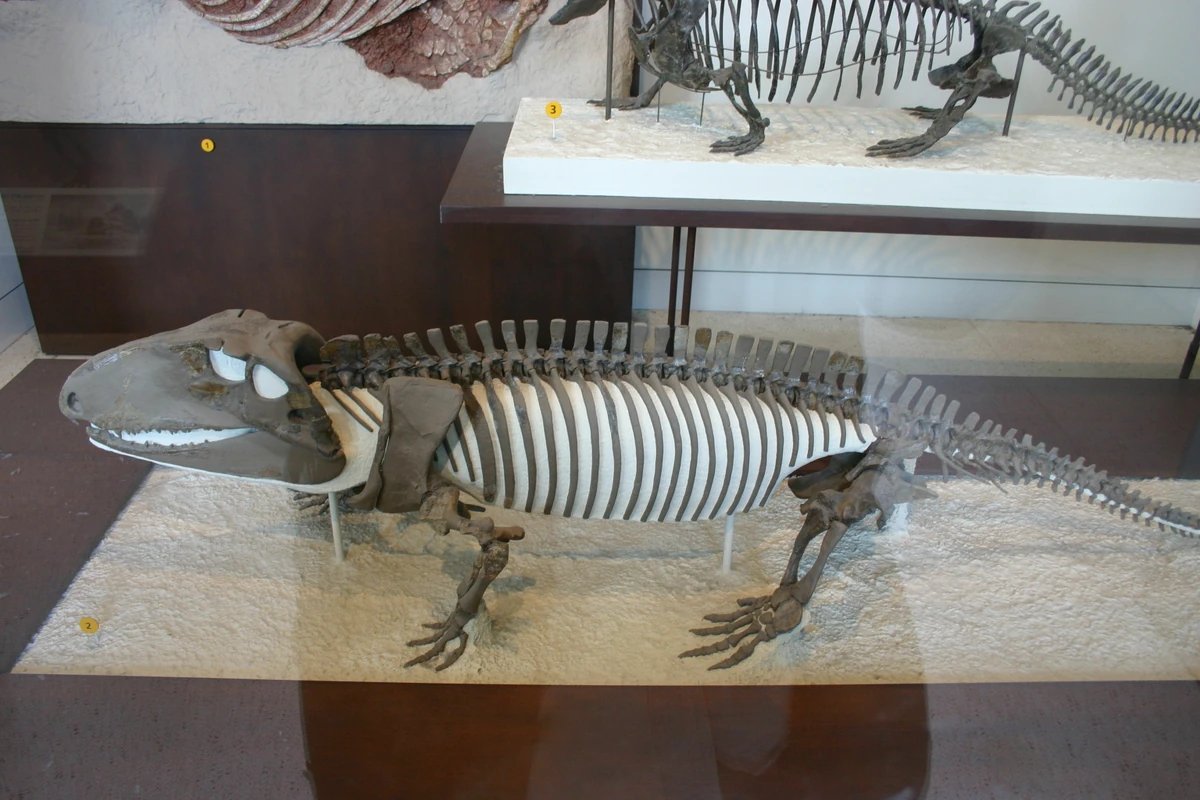
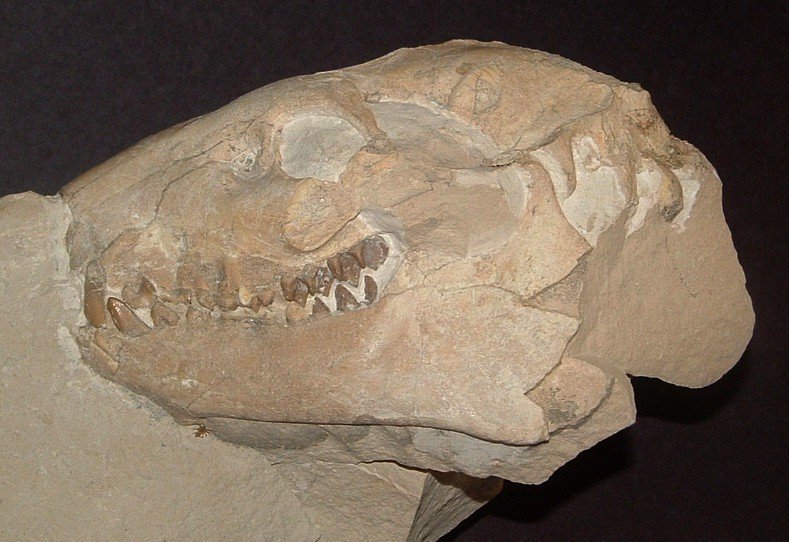
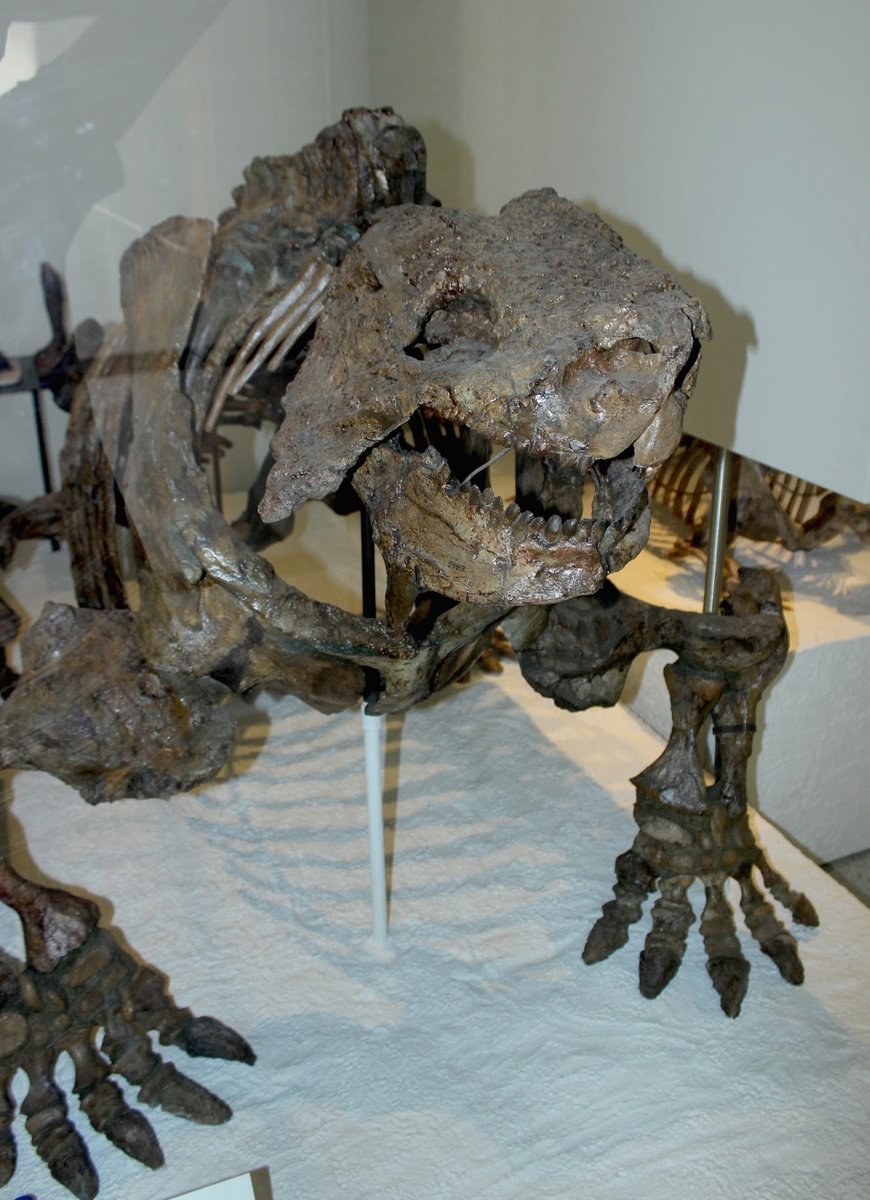
Procoptodon goliah was a truly massive animal, far exceeding the size of any living kangaroo. Standing approximately 2 meters (6.6 feet) tall, with some estimates suggesting it could reach up to 2.7 meters (8.9 feet), it was a formidable presence in the Pleistocene landscape. Weight estimates vary, but a consensus places it around 230-240 kilograms (510-530 pounds), more than twice the mass of the largest modern red kangaroos. Its most striking feature was its unusually short, flat face, resembling that of a primate, which earned it the common name 'short-faced kangaroo'. This brachycephalic skull housed powerful jaw muscles, indicating a strong bite force. The dentition was specialized for a tough, fibrous diet, with large, complex molars for grinding coarse vegetation. Unlike modern kangaroos, which have five toes on their hind feet, Procoptodon possessed a single, large, hoof-like toe on each hind foot, an adaptation known as monodactyly. This robust central toe, along with a heavily built pelvic girdle and massive leg bones, suggests a skeletal structure designed to support immense weight rather than for rapid, bounding locomotion. Its forelimbs were also unusual, featuring two elongated fingers with prominent claws, which may have been used to grasp and pull down high branches.
The unique anatomy of Procoptodon goliah points to a distinct paleobiology compared to its modern relatives. Its robust, monodactyl hindlimbs and rigid lumbar spine have led to significant debate about its method of locomotion. While early theories suggested it was capable of great leaps, more recent biomechanical analyses by researchers like Christine Janis indicate that its heavy build made traditional high-speed hopping inefficient and potentially damaging to its joints. Instead, it is now widely believed that Procoptodon moved via a bipedal striding gait, similar to a hominid, particularly at slower speeds. This would have made it a powerful but not necessarily fast-moving animal. Its diet consisted of tough, arid-adapted vegetation. Isotopic analysis of its tooth enamel confirms it was a browser, feeding on leaves, stems, and shrubs from trees. The powerful jaw and specialized molars were well-suited for processing this coarse browse, and its long-fingered forelimbs would have been instrumental in manipulating branches to bring food within reach of its short snout. There is little direct evidence for its social behavior, but like modern large herbivores, it may have lived in small social groups, or 'mobs', for protection and foraging efficiency.
Procoptodon lived in a Pleistocene Australia characterized by dramatic climatic fluctuations, shifting between cooler, drier glacial periods and warmer, wetter interglacials. It inhabited a range of environments, from semi-arid woodlands to open grasslands and savannas, across much of the mainland. The landscape was dominated by eucalyptus and acacia, providing the tough foliage that formed the core of its diet. Procoptodon was a key primary consumer in this ecosystem, sharing its habitat with a remarkable assembly of other megafauna. These included the giant wombat-like Diprotodon, the marsupial 'lion' Thylacoleo carnifex, the giant flightless bird Genyornis, and the massive monitor lizard Megalania. As a large herbivore, an adult Procoptodon would have had few natural predators, though juveniles or infirm individuals would have been vulnerable to attacks from Thylacoleo and Megalania. Its position in the food web was that of a high-browse specialist, likely occupying a niche that is now largely vacant in Australian ecosystems, shaping the vegetation structure through its feeding habits.
The discovery history of Procoptodon began in the 19th century, a period of burgeoning paleontological exploration in Australia. The genus was first described by the eminent British anatomist Sir Richard Owen in 1873, based on fossil fragments sent to him from Pleistocene deposits in the Darling Downs region of Queensland. Owen, who named many of Australia's most famous megafauna, chose the name Procoptodon, meaning 'forward-cutting tooth', in reference to its dental characteristics, and the species name 'goliah' to reflect its gigantic size. Some of the most significant and complete fossil discoveries were made much later at sites like Lake Callabonna in South Australia. In the 1970s, paleontologist R. A. Stirton's expeditions to this dry salt lake uncovered remarkable skeletons, including nearly complete individuals that had become mired in the lakebed mud. Another crucial site is the Victoria Fossil Cave at the Naracoorte Caves World Heritage Area, which has yielded a wealth of well-preserved Procoptodon remains, providing invaluable data on its anatomy, age, and paleoenvironment. Unlike dinosaurs, individual megafauna specimens are not typically given popular nicknames, so there is no 'Sue' or 'Lucy' equivalent for Procoptodon.
Procoptodon's place in the evolutionary tree of life is firmly within the Macropodidae family, which includes all modern kangaroos, wallabies, and their relatives. It belongs to the extinct subfamily Sthenurinae, a group commonly known as the short-faced kangaroos. This subfamily represents a distinct and highly successful evolutionary radiation of macropods that diverged from the lineage leading to modern kangaroos (Macropodinae). The sthenurines were characterized by their robust skeletons, short, deep skulls, and specialized browsing dentition. Procoptodon represents the pinnacle of this lineage in terms of size and specialization. Its development of a monodactyl foot is a fascinating example of convergent evolution, paralleling the evolution of hoofed mammals like horses, where limb simplification is linked to supporting a large body mass. The study of Procoptodon and its relatives provides crucial insights into the adaptive diversity of marsupials and demonstrates how they evolved to fill large herbivore niches in Australia, analogous to the roles of ungulates on other continents. Its extinction marks the end of this unique evolutionary experiment in macropod gigantism.
The primary scientific debate surrounding Procoptodon centers on its locomotion. The traditional view of it as a giant hopping kangaroo has been largely overturned by biomechanical studies in the 21st century. Research by Christine Janis and her colleagues, published in 2014, argued strongly that its anatomy—particularly the single large toe, rigid back, and broad hips—was ill-suited for hopping and instead pointed towards a bipedal striding or 'walking' gait. This reinterpretation has profound implications for understanding its behavior and ecology, suggesting it was a slower, less agile animal than previously imagined. Another area of ongoing research and debate is the cause of its extinction around 40,000 years ago. Scientists are divided on the relative importance of two main drivers: climate change, which led to increased aridity and altered vegetation, versus the impact of the first humans arriving in Australia, through hunting ('overkill hypothesis') or landscape modification via fire-stick farming. The timing of its disappearance, shortly after human arrival, lends weight to the anthropogenic argument, but conclusive evidence remains elusive.
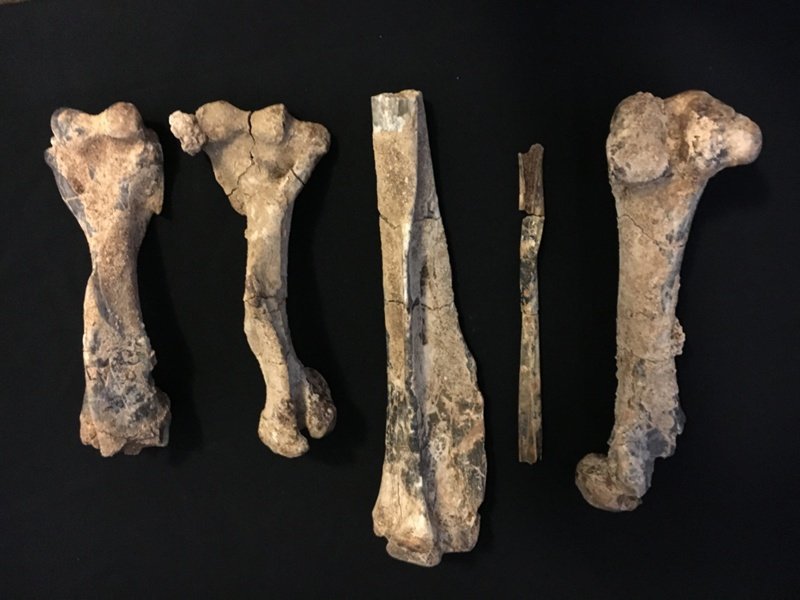
The fossil record of Procoptodon goliah is relatively robust for an extinct megafauna species. Its remains have been found across a wide swath of mainland Australia, from Queensland and New South Wales to South Australia and Western Australia, indicating a continent-wide distribution. Fossils are typically recovered from Pleistocene-aged deposits in caves, lakebeds, and river systems. Famous fossil localities include the Darling Downs in Queensland, the Wellington Caves in New South Wales, and most notably, the dry lake bed of Lake Callabonna and the cave deposits of the Naracoorte Caves in South Australia. The preservation quality at these sites is often good, with Lake Callabonna yielding several articulated, near-complete skeletons. The Naracoorte Caves have produced thousands of individual bones from numerous individuals, allowing for detailed population-level studies. While complete skulls are rare, postcranial elements like limb bones, pelvic girdles, and foot bones are more commonly found, providing the key evidence for reconstructing its size and locomotion.
Although not as famous as dinosaurs, Procoptodon goliah has a notable cultural impact as one of the most impressive examples of Australia's prehistoric megafauna. It is a centerpiece exhibit in many Australian museums, including the Australian Museum in Sydney and the South Australian Museum in Adelaide, where life-sized reconstructions captivate the public and serve as powerful educational tools about evolution and extinction. It has been featured in numerous television documentaries on prehistoric life, such as 'Walking with Beasts', and its striking appearance has made it a popular subject for paleoartists. For many, Procoptodon symbolizes the lost world of giant animals that once dominated the Australian continent, highlighting the continent's unique evolutionary history and the fragility of its ecosystems.
Classification
Time Period
Discovery
Location
Australia
Formation
Various Pleistocene deposits, including Lake Callabonna and Naracoorte Caves
Frequently Asked Questions
What is Procoptodon?
Procoptodon goliah, the largest kangaroo known to have ever existed, was a giant marsupial that roamed the Australian continent during the Pleistocene epoch. As a member of the megafauna, its immense size and unique adaptations make it a subject of significant paleontological interest, offering insi...
When did Procoptodon live?
Procoptodon lived during the quaternary period of the cenozoic era approximately 1.6-0.015 million years ago.
Where was Procoptodon discovered?
Fossils of Procoptodon were discovered in Australia in the Various Pleistocene deposits, including Lake Callabonna and Naracoorte Caves.
What did Procoptodon eat?
Procoptodon was a herbivore. It lived in terrestrial habitats.
What type of fossil is Procoptodon?
Procoptodon is preserved as a body fossil. The preservation quality is good.
Related Specimens
From the cenozoic era · body fossils