Short-faced Bear
Arctodus simus
Image: Image sourced via web search (Fair use / Educational)
About Short-faced Bear
INTRODUCTION: Arctodus simus, commonly known as the giant short-faced bear, was an extinct species of bear that inhabited North America during the Pleistocene epoch, from approximately 1.8 million to 11,000 years ago. It is widely considered one of the largest known terrestrial mammalian carnivores to have ever existed, representing a pinnacle of predatory evolution during the Ice Age. Its remains are primarily found across the North American continent, ranging from the high arctic regions of Alaska and the Yukon down to the central regions of Mexico, demonstrating an incredible adaptability to various Pleistocene environments. As a prominent member of the Pleistocene megafauna, Arctodus simus holds immense significance in paleontology, offering crucial insights into the ecological dynamics of Ice Age North America and the evolutionary trajectory of the ursid family. Its sudden disappearance at the end of the Pleistocene, alongside many other large mammals, continues to be a subject of intense scientific study regarding extinction mechanisms.
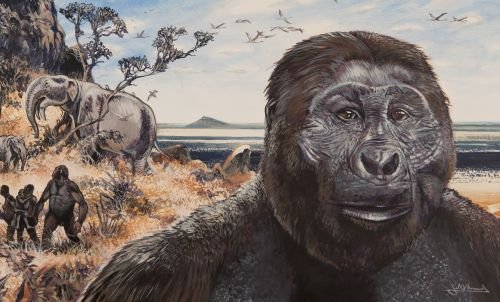
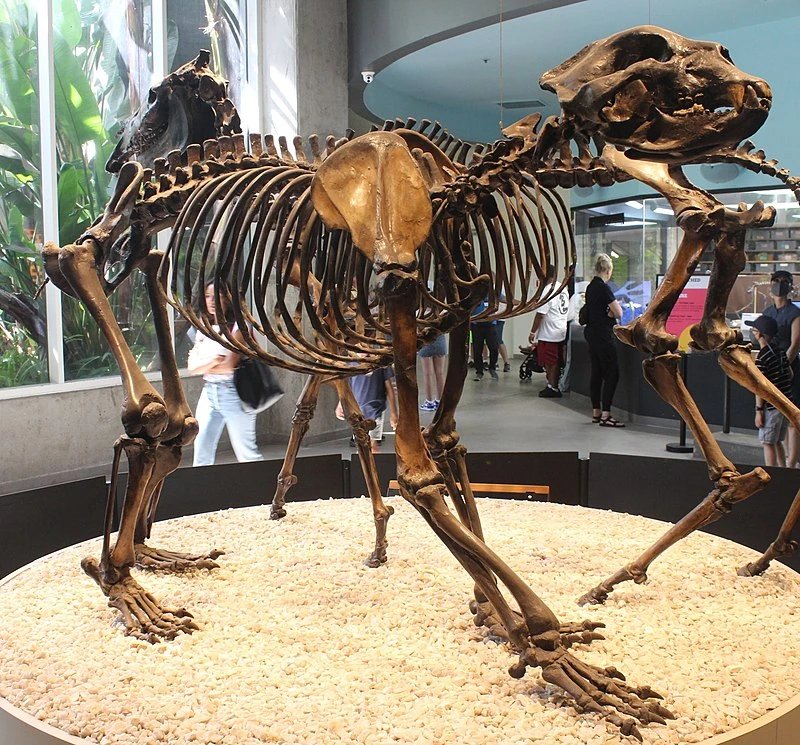
PHYSICAL DESCRIPTION: The physical proportions of Arctodus simus were truly staggering, setting it apart from any extant bear species. When standing on its hind legs, a large male could reach heights of 3 to 3.7 meters (10 to 12 feet), towering over modern grizzly and polar bears. Its vertical reach was estimated to be up to 4.3 meters (14 feet), allowing it to easily access food sources unavailable to other predators. Weight estimates for the largest individuals range from 900 to over 1,000 kilograms (2,000 to 2,200 pounds). The most distinctive anatomical feature of Arctodus simus was its disproportionately short, broad snout, which gave the animal its common name. This shortened rostrum, combined with massive jaw muscles and robust carnassial teeth, provided an incredibly powerful bite force capable of crushing thick bones. Unlike modern bears, which typically have a somewhat pigeon-toed, plantigrade stance suited for varied terrain and foraging, Arctodus simus possessed unusually long, slender limbs with toes pointing straight forward. This cursorial adaptation suggests a body built for efficient, long-distance movement rather than the lumbering gait characteristic of contemporary ursids. The rib cage was deep and capacious, indicating large lungs for sustained oxygen intake, further supporting the hypothesis of a highly active, wide-ranging lifestyle.
PALEOBIOLOGY: The paleobiology of Arctodus simus has been a subject of extensive research, particularly regarding its diet and feeding strategies. Isotopic analysis of its fossilized bones, specifically the high levels of nitrogen-15, indicates a diet heavily reliant on meat, making it highly carnivorous compared to most modern bears, which are largely omnivorous. Its long legs and forward-pointing toes suggest it was capable of efficient locomotion, perhaps allowing it to cover vast territories in search of widely dispersed prey or carcasses. While its top speed might not have matched that of specialized pursuit predators like wolves or big cats, its endurance would have been exceptional. This cursorial build has led to two primary hypotheses regarding its feeding behavior: it was either an active predator capable of running down large Pleistocene herbivores, or a highly specialized, wide-ranging scavenger. As a scavenger, its immense size and intimidating presence would have allowed it to easily kleptoparasitize kills from other predators like dire wolves or saber-toothed cats. Its powerful jaws were perfectly adapted for cracking open large bones to access the nutrient-rich marrow inside, a resource often left behind by other carnivores. Growth patterns derived from bone histology suggest a rapid growth rate, allowing individuals to reach their massive adult size relatively quickly, a necessary adaptation in the highly competitive Pleistocene ecosystem.
ECOLOGICAL CONTEXT: During the Pleistocene epoch, the world of Arctodus simus was characterized by dramatic climatic shifts, with advancing and retreating ice sheets shaping the landscape. The North American continent featured a mosaic of environments, including vast mammoth steppes, boreal forests, and open grasslands, supporting an incredible diversity of megafauna. Arctodus simus shared its habitat with an array of iconic Ice Age animals, including the Columbian mammoth, mastodons, giant ground sloths, ancient bison, and wild horses. In this complex food web, the giant short-faced bear occupied a position as an apex predator or dominant scavenger. It competed directly with other formidable carnivores, such as the dire wolf (Aenocyon dirus), the saber-toothed cat (Smilodon fatalis), and the American lion (Panthera atrox). The presence of such a massive, bone-crushing carnivore would have exerted significant evolutionary pressure on the behavior and morphology of contemporary herbivores. The open environments of the Pleistocene were ideal for a wide-ranging animal like Arctodus simus, allowing it to utilize its efficient locomotion to track migrating herds or locate carrion across vast distances. As the climate began to warm at the end of the Pleistocene, leading to the expansion of dense forests and the decline of large herbivore populations, the ecological niche of the short-faced bear gradually vanished.
DISCOVERY HISTORY: The discovery and formal scientific recognition of Arctodus simus date back to the late 19th century. The species was first described by the eminent American paleontologist Edward Drinker Cope in 1879. Cope based his description on fossil material recovered from Potter Creek Cave in Shasta County, California. The generic name Arctodus translates to bear tooth, while the specific epithet simus means snub-nosed or pug-nosed, perfectly encapsulating the animal's most distinctive facial feature. Following Cope's initial description, numerous other specimens were unearthed across North America, gradually revealing the true scale and geographic range of this magnificent creature. One of the most significant sources of Arctodus simus fossils has been the La Brea Tar Pits in Los Angeles, California. The asphalt seeps at La Brea acted as deadly predator traps, preserving the remains of dozens of short-faced bears alongside thousands of other Pleistocene animals. These exceptionally well-preserved specimens have provided paleontologists with an unparalleled wealth of anatomical data. Other notable discoveries include massive, nearly complete skeletons found in permafrost deposits in Alaska and the Yukon, as well as remains recovered from extensive cave systems in the Ozarks and the American West. Each new discovery has added a crucial piece to the puzzle of this giant bear's life and times.
EVOLUTIONARY SIGNIFICANCE: Arctodus simus belongs to the subfamily Tremarctinae, a distinct lineage of bears that evolved and diversified exclusively in the Americas. This subfamily is separate from the Ursinae, which includes most modern bears such as the grizzly, polar, and black bears. The evolutionary history of the Tremarctinae is marked by a trend toward large size and specialized diets, culminating in giants like Arctodus simus in North America and its close relative, Arctotherium, in South America. Studying Arctodus simus provides critical insights into the adaptive radiation of bears and the morphological extremes they can achieve under specific ecological pressures. The only living representative of the Tremarctinae subfamily is the spectacled bear (Tremarctos ornatus) of South America. By comparing the anatomy and genetics of the extinct short-faced bear with the extant spectacled bear, scientists can trace the evolutionary changes that occurred within this unique lineage over millions of years. The divergence of the tremarctine bears from other ursids highlights the role of geographic isolation in driving evolutionary innovation. Furthermore, the extinction of Arctodus simus and the survival of smaller, more generalized bears underscore the evolutionary advantages of dietary flexibility and adaptability during periods of rapid environmental change.
SCIENTIFIC DEBATES: The paleobiology of Arctodus simus has been the center of vigorous scientific debate, primarily focusing on its diet and foraging behavior. For decades, the prevailing view depicted the short-faced bear as a terrifying, high-speed apex predator, the cheetah of the bear world, capable of running down fast-moving prey like horses and bison. This interpretation was based on its long legs and forward-facing toes. However, recent biomechanical studies and re-evaluations of its skeletal structure have challenged this hyper-predatory model. Many paleontologists now argue that its long legs were adapted for efficient, low-energy walking over vast distances rather than high-speed sprinting. This has led to the widespread acceptance of the kleptoparasite or specialized scavenger hypothesis, suggesting that Arctodus simus used its massive size to intimidate other predators and steal their kills, relying on its powerful jaws to consume bone marrow. Additionally, some recent isotopic analyses suggest that while highly carnivorous in northern regions, populations in the southern parts of its range may have incorporated more plant matter into their diet, indicating a degree of omnivory. These ongoing debates highlight the dynamic nature of paleontological research and the challenges of interpreting the behavior of extinct megafauna.
FOSSIL RECORD: The fossil record of Arctodus simus is remarkably robust, providing a detailed picture of its anatomy and geographic distribution. Fossils have been discovered at over one hundred distinct sites across North America, ranging from the permafrost of Beringia to the caves of Mexico. The preservation quality varies significantly depending on the depositional environment. Specimens recovered from the permafrost of Alaska and the Yukon are often exceptionally well-preserved, sometimes retaining traces of ancient DNA, which has been instrumental in resolving the bear's phylogenetic relationships. Cave deposits, such as those in the Ozarks and the American Southwest, frequently yield complete or nearly complete articulated skeletons, protected from weathering and scavenging. The La Brea Tar Pits remain one of the most famous and prolific fossil sites for this species, having yielded the disarticulated remains of numerous individuals, allowing for extensive statistical studies on population variation and sexual dimorphism. Typically, the most commonly preserved parts are the massive skulls, robust mandibles, and the large, dense long bones of the limbs. This extensive fossil record makes Arctodus simus one of the best-understood large carnivores of the Pleistocene epoch.
CULTURAL IMPACT: Arctodus simus has captured the public imagination, frequently appearing in documentaries, books, and media focused on the Ice Age. Its sheer size and intimidating appearance make it a staple of paleoart and a popular subject in natural history museums. Notable, life-sized skeletal mounts and dramatic dioramas can be seen at institutions like the George C. Page Museum at the La Brea Tar Pits and the Field Museum in Chicago. These exhibits play a crucial educational role, vividly illustrating the concept of megafauna and the dramatic ecological changes that have occurred since the Pleistocene. The giant short-faced bear serves as a powerful symbol of the lost world of the Ice Age, fostering public fascination with paleontology and the natural history of North America.
Classification
Time Period
Discovery
Location
United States
Formation
La Brea Tar Pits
Frequently Asked Questions
What is Short-faced Bear?
INTRODUCTION: Arctodus simus, commonly known as the giant short-faced bear, was an extinct species of bear that inhabited North America during the Pleistocene epoch, from approximately 1.8 million to 11,000 years ago. It is widely considered one of the largest known terrestrial mammalian carnivores ...
When did Short-faced Bear live?
Short-faced Bear lived during the quaternary period of the cenozoic era approximately 1.8-0.011 million years ago.
Where was Short-faced Bear discovered?
Fossils of Short-faced Bear were discovered in United States in the La Brea Tar Pits.
What did Short-faced Bear eat?
Short-faced Bear was a carnivore. It lived in terrestrial habitats.
What type of fossil is Short-faced Bear?
Short-faced Bear is preserved as a body fossil. The preservation quality is excellent.
Related Specimens
From the cenozoic era · body fossils