Neohibolites
Neohibolites minimus
Image: Image sourced via web search (Fair use / Educational)
About Neohibolites
Neohibolites minimus was a small, highly successful species of belemnite, an extinct group of squid-like cephalopods that thrived in the shallow, warm seas of the Mesozoic Era. Living during the Albian stage of the Early Cretaceous period, approximately 113 to 100 million years ago, this organism was a vital component of the marine ecosystem. Belemnites like Neohibolites are characterized by their internal skeletons, the most robust part of which is the bullet-shaped rostrum or guard. Neohibolites minimus is particularly significant in the field of paleontology because it serves as an excellent index fossil. Its widespread distribution across the Boreal and Tethyan realms, combined with its rapid evolutionary turnover and high abundance, allows geologists and paleontologists to accurately date and correlate marine sedimentary rocks from the mid-Cretaceous period across vast geographic distances. The sheer volume of Neohibolites minimus fossils recovered from European deposits has provided scientists with a profound understanding of Cretaceous marine environments, paleoclimatology, and the evolutionary trajectory of coleoid cephalopods.
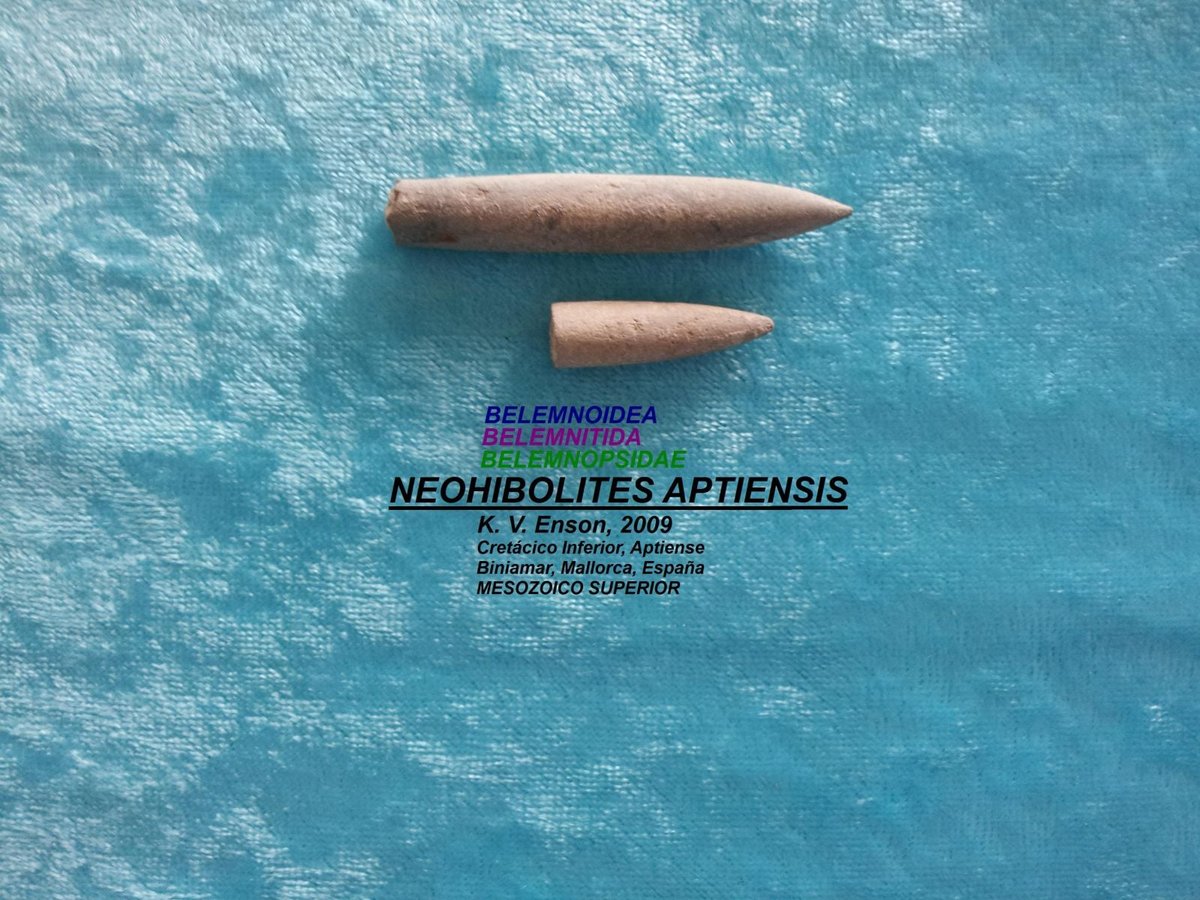
In terms of physical description, Neohibolites minimus was a relatively diminutive creature compared to some of its gigantic cephalopod cousins. The entire living animal is estimated to have measured between 10 and 15 centimeters in length, with the fossilized rostrum typically measuring only 3 to 5 centimeters. The rostrum, which is the part most commonly preserved, is composed of dense, radially arranged calcite crystals. It is distinctively slender, spindle-shaped, and features a ventral groove that is characteristic of the family Belemnopseidae. In life, this heavy calcite guard was situated at the posterior end of the animal, serving as a crucial counterweight to the buoyant, gas-filled chambers of the phragmocone located just anterior to it. This internal skeletal arrangement allowed the animal to maintain a horizontal orientation in the water column. Extending forward from the phragmocone was the pro-ostracum, a thin, tongue-like projection of the shell that supported the dorsal part of the mantle. While soft tissues are exceedingly rare in the fossil record, exceptional discoveries of related belemnites allow paleontologists to infer the soft anatomy of Neohibolites minimus with high confidence. It possessed a streamlined, muscular mantle, large, highly developed eyes for spotting prey in dimly lit waters, and ten arms equipped not with suckers, but with rows of sharp, chitinous hooks designed to grapple and secure slippery prey. In scale and general appearance, a living Neohibolites minimus would have closely resembled a modern small squid, darting agilely through the water.
The paleobiology of Neohibolites minimus reveals a highly active, nektonic (free-swimming) predator. Like modern squids, it utilized jet propulsion for locomotion, drawing water into its mantle cavity and expelling it forcefully through a muscular funnel to achieve rapid bursts of speed. This method of movement was essential both for ambushing prey and for evading the numerous predators that shared its environment. Its diet consisted primarily of small fish, crustaceans, and potentially other smaller cephalopods. The chitinous hooks on its arms were perfectly adapted for snagging the soft bodies of fish or penetrating the thin exoskeletons of small crustaceans, which were then drawn toward a sharp, parrot-like beak located at the center of the arm crown. Based on the immense concentrations of their fossils found in specific sedimentary layers, paleontologists strongly suspect that Neohibolites minimus was a highly social animal that lived and traveled in massive schools, much like many extant pelagic squids. This schooling behavior would have provided a degree of protection against predators through the confusion effect and facilitated mass spawning events. Isotopic analysis of the growth rings within the calcite rostra of Neohibolites has provided fascinating insights into their metabolism and growth patterns. These studies suggest that they grew rapidly, likely reaching maturity within a year or two, and possessed a relatively high metabolic rate suited to an active, predatory lifestyle in warm waters.
The ecological context in which Neohibolites minimus existed was dramatically different from the modern world. The Albian stage of the Early Cretaceous was characterized by a profound greenhouse climate, with global temperatures significantly higher than today and no permanent polar ice caps. This resulted in exceptionally high sea levels, which flooded continental margins and created vast, shallow epicontinental seas across much of Europe, North America, and Asia. Neohibolites minimus thrived in these warm, sunlit, nutrient-rich waters. The specific environment represented by the famous Gault Clay Formation of England and France, where this species is overwhelmingly abundant, was a relatively calm, muddy-bottomed shelf sea. In this vibrant ecosystem, Neohibolites minimus occupied a crucial middle tier in the food web. It was a voracious consumer of primary consumers and small secondary consumers, but it was also a primary food source for a terrifying array of apex predators. The oceans of the Early Cretaceous were patrolled by massive marine reptiles, including fast-swimming ichthyosaurs, long-necked plesiosaurs, and formidable pliosaurs. Additionally, a diverse array of early neoselachian sharks and large predatory bony fishes heavily preyed upon belemnites. Fossilized stomach contents of these marine reptiles and fish frequently contain thousands of belemnite hooklets and indigestible rostra, underscoring the vital role Neohibolites played in sustaining the higher trophic levels of the Cretaceous marine ecosystem.
The discovery history of Neohibolites minimus is deeply intertwined with the birth of paleontology as a formal science in Europe. For centuries before they were scientifically described, the bullet-shaped fossils of belemnites were known in European folklore as "thunderbolts" or "thunderstones," believed to have been cast down from the heavens during violent storms. They were often used in folk medicine, ground into powders to treat various ailments. The species was formally recognized and described by the British naturalist J.S. Miller in 1826, who originally named it Belemnites minimus in his seminal work on the belemnites of the British strata. Miller recognized the distinct, diminutive nature of these fossils found abundantly in the Gault Clay of Folkestone, Kent. As the science of taxonomy evolved and the diversity of belemnites became more apparent, the need for more precise classification arose. In 1911, the German paleontologist Ernst Stolley erected the genus Neohibolites to accommodate a specific lineage of belemnopseid belemnites characterized by their specific groove patterns and rostrum shapes, moving Miller's species to its current designation, Neohibolites minimus. Since then, millions of specimens have been collected by both amateur fossil hunters and professional paleontologists, making it one of the most thoroughly documented invertebrate fossils in the world. Key specimens reside in the collections of the Natural History Museum in London and the Muséum national d'Histoire naturelle in Paris, serving as vital reference points for ongoing research.
The evolutionary significance of Neohibolites minimus lies in its representation of the peak success of the belemnite lineage before their eventual decline and extinction. Belemnites belong to the subclass Coleoidea, which includes all modern soft-bodied cephalopods like squids, octopuses, and cuttlefish. The evolutionary innovation of internalizing the shell—a process that began in the Paleozoic era—provided coleoids with immense advantages in speed and maneuverability compared to their externally shelled relatives, the ammonites and nautiloids. Neohibolites minimus represents a highly derived form of this internal skeletal structure, optimized for a balance of buoyancy control and hydrodynamic efficiency. Studying the morphological variations within the Neohibolites genus across different stratigraphic layers allows paleontologists to trace fine-scale evolutionary changes and speciation events driven by shifting sea levels and climatic fluctuations during the Cretaceous. Furthermore, because belemnites share a common ancestor with modern squids and cuttlefish, understanding the anatomy and functional morphology of Neohibolites helps scientists reconstruct the evolutionary pathways that led to the diverse array of cephalopods in today's oceans. Their eventual extinction at the end of the Cretaceous period, alongside the non-avian dinosaurs and ammonites, highlights the vulnerability of even the most abundant and globally distributed organisms to catastrophic environmental changes.
Despite being one of the most common fossils, Neohibolites minimus is still the subject of ongoing scientific debates and research. One major area of contention involves the interpretation of morphological variation within the species. Because the rostra can vary slightly in thickness and length, some paleontologists have historically attempted to split Neohibolites minimus into multiple subspecies or even distinct species. However, modern statistical analyses of large population samples suggest that much of this variation may be attributed to sexual dimorphism—differences between males and females—or simply natural phenotypic plasticity within a single, widespread species. Another fascinating area of modern research involves the use of the dense calcite rostra as paleothermometers. By analyzing the ratios of oxygen and carbon isotopes preserved in the growth rings of the rostrum, scientists can reconstruct the exact temperature and salinity of the seawater in which the animal lived. However, there is ongoing debate about whether belemnites migrated between different water depths or latitudes during their lifetimes, which could skew these isotopic readings. Resolving these debates is crucial for refining our understanding of the Cretaceous climate.
The fossil record of Neohibolites minimus is nothing short of spectacular in its abundance. Geographically, fossils of this species are found predominantly across Western and Central Europe, with massive concentrations in the United Kingdom, France, Germany, and extending into parts of Eastern Europe and the Caucasus. The preservation quality of the rostra is generally excellent; the dense, stable calcite is highly resistant to diagenetic alteration, meaning the fossils retain their original chemical composition and microscopic structure. While the rostrum is by far the most typically preserved part, the delicate phragmocone is occasionally found crushed or filled with sediment. Soft tissue preservation is virtually non-existent for this specific species, requiring scientists to rely on comparative anatomy with rarer, exceptionally preserved belemnites from sites like the Posidonia Shale or Solnhofen Limestone. The most famous fossil site for Neohibolites minimus is undoubtedly the Gault Clay exposures at Folkestone in Kent, England, where the fossils constantly weather out of the coastal cliffs, littering the beaches and providing an inexhaustible supply for study.
The cultural impact of Neohibolites minimus, while perhaps less dramatic than that of a Tyrannosaurus rex, is nonetheless significant. As the quintessential "thunderbolt" of ancient folklore, it holds a unique place in the history of human interaction with the fossil record. Today, because of their immense abundance and durability, Neohibolites minimus rostra are often the very first fossils discovered by children and amateur collectors exploring the beaches of Western Europe. They are ubiquitous in museum displays worldwide, often used in dioramas to illustrate the sheer density of life in Mesozoic seas. Educationally, they are invaluable tools; their clear growth rings and distinct morphology make them perfect subjects for teaching students about biostratigraphy, fossilization processes, and the principles of paleoclimatology. They remain a humble but profoundly important ambassador to the ancient world.
Classification
Time Period
Discovery
Location
Western Europe
Formation
Gault Clay Formation
Frequently Asked Questions
What is Neohibolites?
Neohibolites minimus was a small, highly successful species of belemnite, an extinct group of squid-like cephalopods that thrived in the shallow, warm seas of the Mesozoic Era. Living during the Albian stage of the Early Cretaceous period, approximately 113 to 100 million years ago, this organism wa...
When did Neohibolites live?
Neohibolites lived during the cretaceous period of the mesozoic era approximately 113-100 million years ago.
Where was Neohibolites discovered?
Fossils of Neohibolites were discovered in Western Europe in the Gault Clay Formation.
What did Neohibolites eat?
Neohibolites was a carnivore. It lived in marine habitats.
What type of fossil is Neohibolites?
Neohibolites is preserved as a body fossil. The preservation quality is excellent.
Related Specimens
From the mesozoic era · body fossils
-tooth/7fb56d2cf543.png)