Argentavis
Argentavis magnificens
Image: Image sourced via web search (Fair use / Educational)
About Argentavis
Argentavis magnificens, often referred to as the giant teratorn, stands as one of the most awe-inspiring and colossal flying birds ever to have graced the skies of our planet. Living during the Late Miocene epoch, approximately nine to six million years ago, this magnificent avian behemoth soared over the vast, ancient landscapes of what is now South America, primarily within the boundaries of modern-day Argentina. As a prominent member of the extinct family Teratornithidae, Argentavis represents a pinnacle of aerial gigantism, pushing the absolute biological and physical limits of powered flight in vertebrates. Its discovery and subsequent study have profoundly impacted the field of paleontology, offering unprecedented insights into the biomechanics of large-scale flight, the evolutionary trajectory of predatory birds, and the complex ecological dynamics of Miocene South America. By examining the fossilized remains of this incredible creature, scientists have been able to reconstruct a world where shadows cast by wingspans rivaling those of small airplanes swept across the prehistoric plains, establishing Argentavis not merely as a fascinating extinct species, but as a crucial keystone for understanding the extreme possibilities of avian evolution and adaptation.
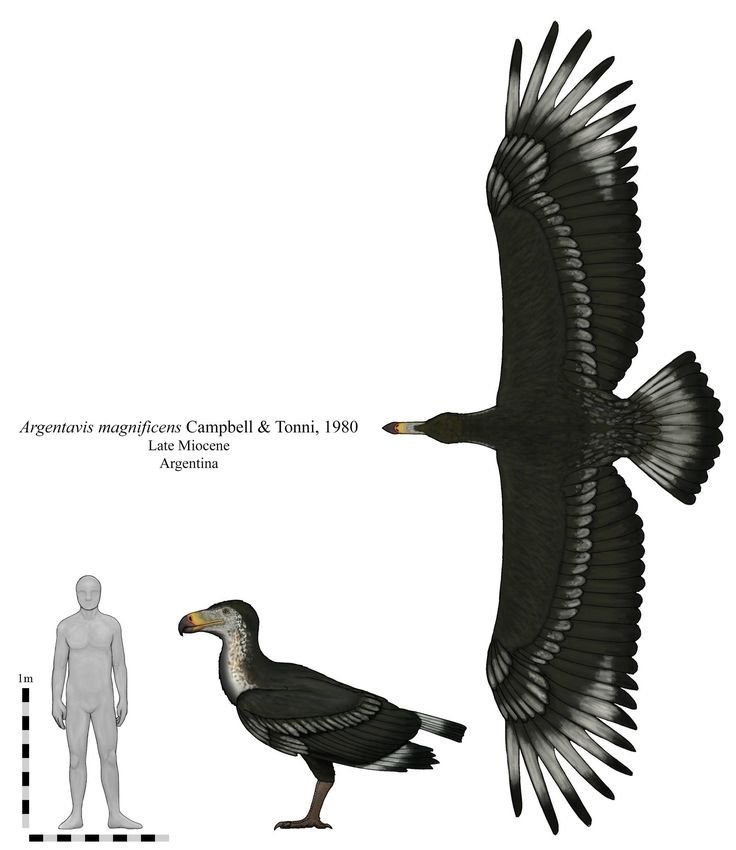
The physical dimensions of Argentavis magnificens are nothing short of staggering, making it one of the largest flying birds known to science, rivaled only by the extinct pelagornithid Pelagornis sandersi. Estimates based on the available fossil material, particularly the robust humerus and other wing bones, suggest a wingspan that reached an astonishing 5.5 to 7 meters (18 to 23 feet). To put this into perspective, the wandering albatross, which boasts the largest wingspan of any living bird today, reaches only about 3.5 meters. The body length of Argentavis from the tip of its formidable beak to the end of its tail is estimated to have been around 1.5 to 2 meters, while its standing height on the ground would have been roughly 1.5 to 1.8 meters, making it as tall as an average human. Weight estimates for this massive bird range from 70 to 72 kilograms (154 to 159 pounds), a mass that approaches the theoretical maximum limit for avian flight. The skeletal structure of Argentavis was heavily adapted to support this immense bulk. Its wing bones were incredibly stout and elongated, featuring large muscle attachment sites that indicate powerful, albeit slow, wing beats. The skull was large and robust, equipped with a formidable, hooked beak that was relatively longer and deeper than those of modern vultures, suggesting a capacity to tear through tough hides and flesh with ease. While no soft tissue or feathers have been preserved, paleontologists infer that its primary flight feathers could have been up to 1.5 meters long, and its overall plumage likely resembled that of modern condors, perhaps featuring a bare head and neck to prevent the accumulation of gore during feeding. The sheer scale of Argentavis challenges our understanding of aerodynamics, presenting a creature that was a master of the air despite its tremendous size.
Understanding the paleobiology of Argentavis requires a deep dive into the mechanics of flight and the ecological strategies necessary to sustain such a massive organism. Given its estimated weight of over 70 kilograms, active, continuous flapping flight would have been metabolically impossible; the power required to keep such a heavy body aloft through muscle exertion alone would have far exceeded the bird's physiological capabilities. Instead, Argentavis was undoubtedly a master of soaring, relying heavily on environmental energy to stay airborne. It is hypothesized that the bird utilized the strong thermal updrafts generated over the sun-baked plains of Miocene Argentina, as well as the steady, powerful winds sweeping off the nascent Andes mountains, to gain altitude and glide over vast territories with minimal energy expenditure. Taking off would have presented a significant challenge. Unlike smaller birds that can simply leap into the air, Argentavis likely required a running start down a slope or a strong headwind to achieve the necessary lift, much like a modern hang glider. Once aloft, it could patrol territories covering hundreds of square kilometers in search of food. The diet of Argentavis is a subject of considerable interest. While its massive, hooked beak and robust skull suggest a carnivorous lifestyle, it was likely an opportunistic scavenger and a predator of small to medium-sized animals. It may have fed on the carcasses of large mammalian megafauna, using its size to intimidate and drive away smaller scavengers. Alternatively, it could have actively hunted prey such as large rodents, juvenile ungulates, or armadillo relatives, swooping down to dispatch them with its powerful beak rather than grasping them with its talons, as teratorn feet were relatively weak and better suited for walking than for clutching prey. Its social behavior remains speculative, but given the vast territories required to sustain a bird of this size, it is likely that Argentavis was a solitary creature or lived in widely dispersed pairs, coming together only for breeding and raising slow-growing, highly dependent chicks.
The ecological context in which Argentavis lived was a dynamic and transitional period in Earth's history. During the Late Miocene, the South American continent was an island landmass, isolated from North America, which allowed for the evolution of a highly unique and endemic fauna. The landscape of Argentina, particularly the regions where Argentavis fossils have been found, was characterized by vast, open environments such as savannas, grasslands, and lightly wooded steppes, often referred to as the ancient Pampas. The climate was generally warmer and drier than it is today, creating ideal conditions for the formation of the strong thermal updrafts that Argentavis relied upon for soaring. This environment was populated by a bizarre and diverse array of mammalian megafauna that provided a plentiful food source for a giant scavenger or predator. Co-existing species included massive, ground-dwelling sloths, heavily armored glyptodonts, bizarre ungulates like the camel-like macraucheniids and the rhino-like toxodonts, as well as large, flightless terror birds (phorusrhacids) that dominated the terrestrial apex predator niches. The mammalian predators of the time were primarily sparassodonts, a group of extinct metatherians that included the saber-toothed Thylacosmilus. In this complex food web, Argentavis occupied a unique niche as the supreme aerial scavenger and opportunistic predator. Its ability to cover vast distances allowed it to quickly locate carcasses across the open plains, likely arriving at kill sites before terrestrial scavengers. The presence of such a massive flying predator also suggests that the ecosystem was highly productive, capable of supporting the significant biomass required to sustain viable populations of these giant birds. The eventual uplift of the Andes and subsequent climate cooling likely altered these wind patterns and habitats, contributing to the eventual decline of this spectacular ecosystem.
The discovery history of Argentavis magnificens is a relatively recent chapter in the annals of paleontology, but one that immediately captured the attention of the scientific community and the public alike. The first and most significant fossil remains were unearthed in 1979 by a joint expedition of paleontologists from the Natural History Museum of Los Angeles County and the Museo de La Plata in Argentina. The team, led by Dr. Kenneth E. Campbell Jr. and Dr. Eduardo P. Tonni, was conducting fieldwork in the Salinas Grandes de Hidalgo region of La Pampa Province, Argentina. The fossils were discovered within the sediments of the Epecuén Formation, which dates back to the Huayquerian age of the Late Miocene. The initial find included a substantial portion of the skull, a nearly complete left humerus, fragments of the radius and ulna, and parts of the leg bones. The sheer size of the humerus, which measured over half a meter in length, immediately indicated to the researchers that they had found a flying bird of unprecedented proportions. In 1980, Campbell and Tonni formally described and named the species Argentavis magnificens, which translates to 'magnificent Argentine bird.' The announcement of the discovery made international headlines, as it shattered previous records for the maximum size of flying birds. Since the initial discovery, additional fragmentary remains have been found in other Miocene localities in Argentina, such as the Cerro Azul Formation, but the original holotype specimen remains the most complete and informative. The meticulous study of these fossils over the decades has involved advanced biomechanical modeling and comparative anatomy, cementing the legacy of Campbell and Tonni's discovery as a landmark moment in avian paleontology.
The evolutionary significance of Argentavis is profound, as it provides a critical data point for understanding the extremes of avian evolution and the history of the Teratornithidae family. Teratorns were a highly successful group of large predatory and scavenging birds that flourished in the Americas from the Miocene until the end of the Pleistocene epoch, roughly 10,000 years ago. Taxonomically, teratorns are closely related to the New World vultures and condors (family Cathartidae), and both groups are currently placed within the order Cathartiformes, though some debate remains regarding their exact relationship to Accipitriformes (hawks and eagles). Argentavis represents the earliest and largest known member of the teratorn family, indicating that the group achieved its maximum size relatively early in its evolutionary history. The existence of Argentavis demonstrates the incredible morphological plasticity of birds and their ability to exploit specific ecological niches—in this case, the niche of a giant, soaring scavenger/predator over open plains. Furthermore, the study of Argentavis has forced scientists to re-evaluate the theoretical limits of powered flight. Prior to its discovery, biomechanical models suggested that a bird weighing more than 20 to 25 kilograms could not fly. Argentavis, weighing nearly three times that amount, proved that under the right environmental conditions and with specific anatomical adaptations, the boundaries of flight could be pushed much further. As the Miocene gave way to the Pliocene and Pleistocene, teratorns continued to evolve, giving rise to smaller, though still massive, species like Teratornis merriami, whose fossils are famously abundant in the La Brea Tar Pits of California. Argentavis thus stands as a monumental ancestral figure in a lineage of formidable avian giants.
Despite decades of study, Argentavis remains the subject of several ongoing scientific debates and controversies, primarily centered around its flight capabilities and feeding behavior. The most intense debate involves the exact mechanics of its flight. While there is a consensus that it was primarily a soaring bird, the specific methods it used for takeoff and landing are highly contested. Some biomechanical experts argue that Argentavis could not have taken off from flat ground under any circumstances and must have relied entirely on elevated perches or strong, continuous headwinds. Others suggest that a running start, combined with its powerful legs, might have been sufficient to achieve the necessary initial lift. Another area of active debate is its diet and foraging strategy. Early interpretations often cast Argentavis strictly as a scavenger, a scaled-up version of a modern condor. However, more recent analyses of teratorn skull morphology and neck musculature suggest they were capable of active predation. The beak of Argentavis is relatively longer and more eagle-like than that of a vulture, leading some researchers to propose that it actively hunted small to medium-sized mammals, swallowing them whole or tearing them apart with its beak, as its feet lacked the grasping power of true raptors. These debates are continually refined as new biomechanical modeling software and aerodynamic simulations become available, ensuring that Argentavis remains a dynamic subject of paleontological inquiry.
The fossil record of Argentavis magnificens is frustratingly sparse, a common issue with avian paleontology due to the fragile, hollow nature of bird bones, which do not fossilize as readily as the robust bones of mammals or reptiles. To date, fossils of Argentavis have been found exclusively in Argentina, primarily within the Epecuén and Cerro Azul formations in the provinces of La Pampa, Buenos Aires, and Entre Ríos. The known specimens represent only a handful of individuals. The preservation quality is generally fair to good, but remains are highly fragmentary. The most commonly preserved parts are the massive limb bones, particularly the humerus, radius, and ulna, as well as portions of the robust skull and the lower jaw. Delicate structures like the ribs, vertebrae, and the smaller bones of the wings and feet are rarely found intact. The holotype specimen, housed at the Museo de La Plata, remains the gold standard for the species. The rarity of Argentavis fossils suggests that, like many apex predators and giant scavengers, it naturally existed at low population densities. The specific geological conditions required to quickly bury and preserve such large, fragile skeletons were likely uncommon on the open Miocene plains, making every new fragment discovered a significant event in the scientific community.
The cultural impact of Argentavis magnificens has been substantial, capturing the public imagination as a symbol of prehistoric extremes. It frequently appears in popular science books, documentaries, and paleontology-focused media, often depicted casting massive shadows over the Miocene landscape. Life-sized models and skeletal reconstructions of Argentavis are popular exhibits in natural history museums around the world, including the Natural History Museum of Los Angeles County and various institutions in Argentina. These displays serve a crucial educational purpose, visually communicating the immense scale of prehistoric life and the fascinating principles of aerodynamics and biomechanics. The sheer awe inspired by a bird with the wingspan of a small aircraft continues to make Argentavis a powerful ambassador for the science of paleontology and the wonders of Earth's deep past.
Classification
Time Period
Discovery
Location
Argentina
Formation
Epecuén Formation
Frequently Asked Questions
What is Argentavis?
Argentavis magnificens, often referred to as the giant teratorn, stands as one of the most awe-inspiring and colossal flying birds ever to have graced the skies of our planet. Living during the Late Miocene epoch, approximately nine to six million years ago, this magnificent avian behemoth soared ov...
When did Argentavis live?
Argentavis lived during the neogene period of the cenozoic era approximately 9-6 million years ago.
Where was Argentavis discovered?
Fossils of Argentavis were discovered in Argentina in the Epecuén Formation.
What did Argentavis eat?
Argentavis was a carnivore. It lived in aerial habitats.
What type of fossil is Argentavis?
Argentavis is preserved as a body fossil. The preservation quality is fair.
Related Specimens
From the cenozoic era · body fossils