Nigersaurus
Nigersaurus taqueti
Image: Image sourced via web search (Fair use / Educational)
About Nigersaurus
Nigersaurus taqueti was a highly specialized sauropod dinosaur that lived during the middle Cretaceous Period, approximately 115 to 105 million years ago, in what is now the Republic of Niger in Africa. This unusual herbivore is renowned for its bizarre cranial anatomy, featuring a wide, straight-edged snout lined with hundreds of tiny, replaceable teeth, earning it the nickname 'Mesozoic cow.' Its discovery has provided profound insights into the diversity of feeding adaptations among sauropods and the unique ecosystems of Cretaceous North Africa.
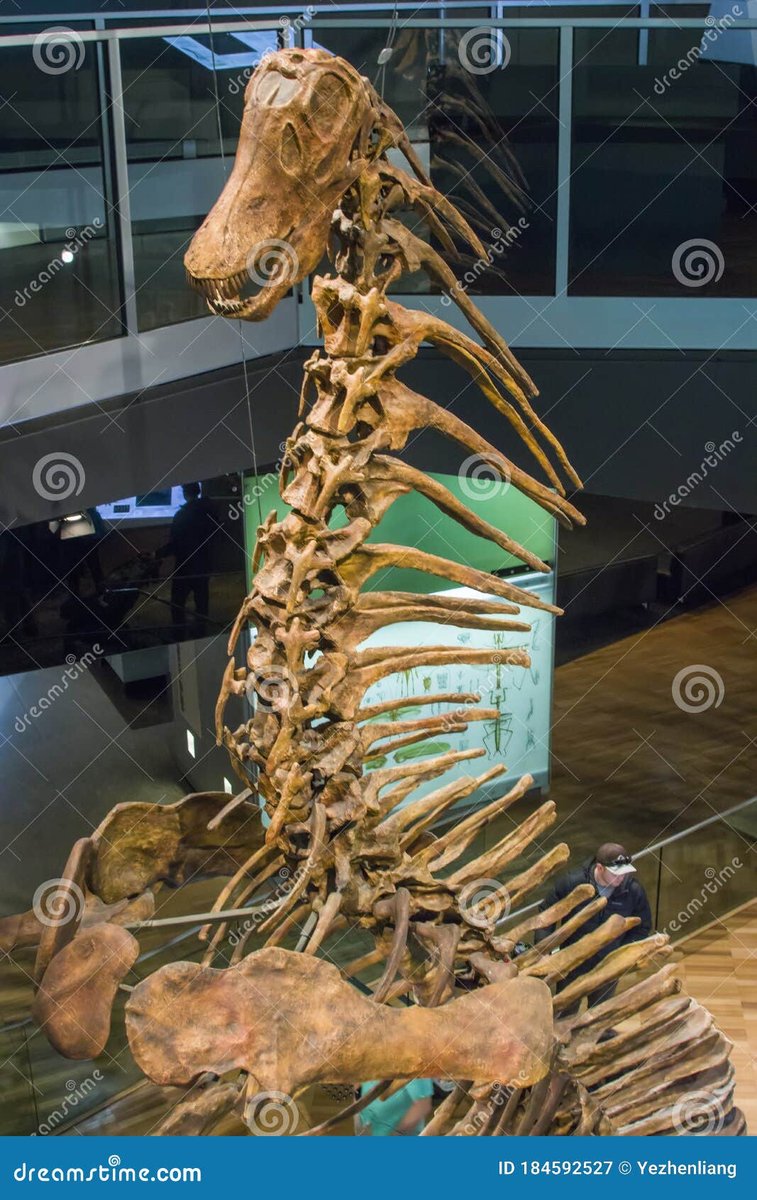
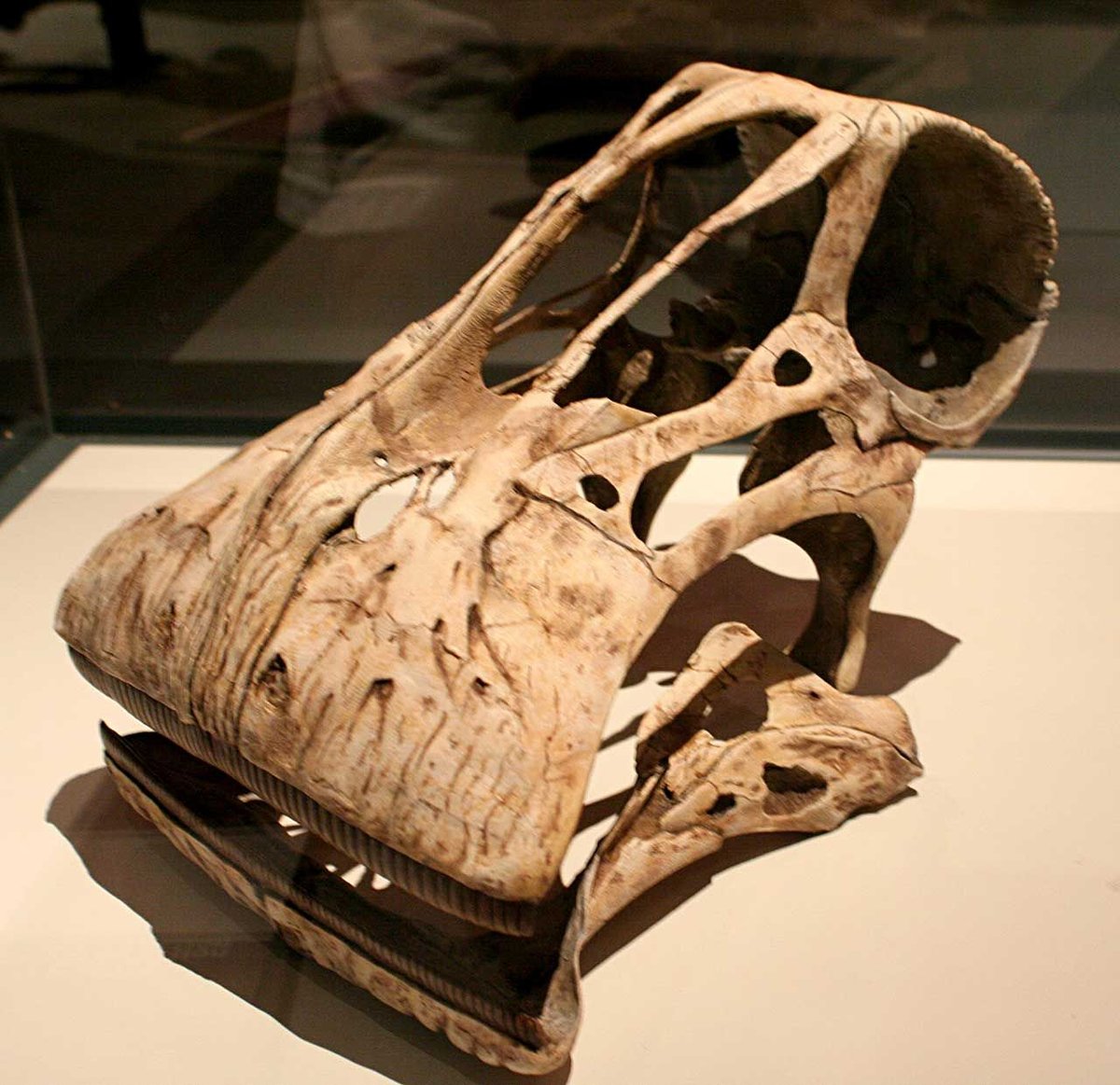
Nigersaurus was a relatively small sauropod, measuring approximately 9 meters (30 feet) in length and weighing an estimated 4 metric tons (4.4 short tons), comparable in size to a modern elephant but with a much longer neck and tail. Its most striking feature was its skull, which was exceptionally delicate and highly fenestrated, meaning it was filled with large openings separated by thin struts of bone. This lightweight construction contrasts sharply with the robust skulls of many other dinosaurs. The snout was remarkably wide and shovel-like, flaring out to a breadth greater than the rest of the skull. Inside this unique mouth were more than 500 slender, needle-like teeth, arranged in dense batteries. Unlike the complex grinding batteries of hadrosaurs, Nigersaurus had simple replacement columns, with up to nine replacement teeth stacked vertically behind each of the 68 active teeth in its lower jaw. This resulted in an astonishingly high tooth replacement rate, with each tooth being replaced perhaps as frequently as every 14 days, the fastest known for any dinosaur. The orientation of the teeth was also unusual; the tooth rows were directed transversely across the front of the jaws, forming a shear-like cutting edge. Its neck was proportionally short for a sauropod, containing only thirteen cervical vertebrae. The vertebrae themselves were highly pneumatized, filled with air sacs connected to the respiratory system, which significantly reduced the weight of its skeleton without compromising strength. The rest of its postcranial skeleton was typical of a rebbachisaurid sauropod, with a stocky torso, columnar limbs, and a long, tapering tail.
Nigersaurus's unique anatomy points to a highly specialized feeding strategy. Paleontologist Paul Sereno, who led the team that described the dinosaur, famously characterized it as a 'Mesozoic cow' that engaged in low-level browsing or grazing. The wide, square muzzle was perfectly adapted for cropping vegetation close to the ground, functioning like a pair of 30-centimeter-wide shears. The rapid tooth replacement was a necessary adaptation for a diet of abrasive, low-lying plants like ferns, horsetails, and cycads, which would have quickly worn down its teeth. The orientation of its inner ear's semicircular canals suggests that its head was habitually held in a downward-facing posture, with the snout pointing almost directly at the ground, reinforcing the hypothesis of a ground-level feeding habit. This posture is unlike that of many other sauropods, which are often depicted with their heads held high. Its locomotion was quadrupedal, with stout, pillar-like legs supporting its body. While direct evidence of social behavior is lacking, like many other sauropods, it is plausible that Nigersaurus lived in herds for protection and foraging efficiency. Its relatively small size and specialized diet suggest it occupied a specific ecological niche, avoiding direct competition with the larger, high-browsing sauropods that may have coexisted in its environment. Its metabolism was likely intermediate between that of modern cold-blooded reptiles and warm-blooded mammals, a condition known as mesothermy, which is thought to have been common among dinosaurs.
During the Aptian and Albian stages of the Cretaceous, the world of Nigersaurus was a lush, riverine floodplain environment. The Elrhaz Formation, where its fossils are found, represents a vast inland delta system, crisscrossed by braided rivers and dotted with lakes and wetlands. The climate was warm and seasonal, with distinct wet and dry periods, supporting a rich flora of ferns, horsetails, and conifers, but notably lacking in grasses, which had not yet evolved. Nigersaurus shared this vibrant ecosystem with a diverse array of other dinosaurs. It would have been prey for formidable predators such as the spinosaurid Suchomimus, a large fish-eating theropod with crocodile-like jaws, and the carcharodontosaurid Eocarcharia, a powerful terrestrial carnivore. The skies were patrolled by pterosaurs, and the waterways teemed with Sarcosuchus, a colossal crocodilian relative that could have easily ambushed a drinking Nigersaurus. Other herbivores in this environment included the iguanodontian Lurdusaurus, a heavily built ornithopod, and Ouranosaurus, a distinctive sail-backed hadrosauriform. This assemblage of fauna indicates a complex and competitive food web where Nigersaurus occupied the niche of a specialized, low-browsing primary consumer, likely relying on safety in numbers to survive amidst a host of large predators.
The history of Nigersaurus's discovery began in 1976 when French paleontologist Philippe Taquet first reported fragmentary remains from the Gadoufaoua region of Niger. However, these initial fossils were not sufficient to fully understand the animal. The dinosaur's true nature was revealed decades later during expeditions led by American paleontologist Paul Sereno from the University of Chicago. Between 1997 and 2000, Sereno's team uncovered a wealth of more complete material, including a remarkably well-preserved skull and associated skeleton. This key specimen, cataloged as MNN GAD512, formed the basis for the formal description of the new genus and species, Nigersaurus taqueti, which Sereno and his colleagues published in 1999. The species name, taqueti, honors Philippe Taquet for his pioneering paleontological work in the region. The discovery of the complete skull was a watershed moment, as its bizarre and delicate structure was unlike anything seen before in a sauropod. The material collected by Sereno's team was so extensive that it included bones from individuals of various ages, from juveniles to adults, allowing for a comprehensive understanding of the dinosaur's anatomy and growth.
Nigersaurus holds a significant place in the evolutionary history of sauropods. It belongs to the family Rebbachisauridae, a group of diplodocoid sauropods that were particularly common in South America, Africa, and Europe during the Cretaceous. Rebbachisaurids are characterized by their relatively small size (for sauropods), broad muzzles, and complex vertebral anatomy. Within this family, Nigersaurus is a member of the subfamily Rebbachisaurinae. Its extreme adaptations, particularly its wide mouth and dental batteries, represent a pinnacle of specialization for low-browsing within this lineage. It demonstrates the remarkable evolutionary plasticity of sauropods, showing that they were not all simply high-browsing giants as traditionally conceived. Instead, they evolved a wide range of feeding mechanisms to exploit different vegetational resources. The discovery of Nigersaurus and other rebbachisaurids like it has helped paleontologists understand how multiple sauropod species could coexist in the same environment by partitioning niches, with some browsing high in the trees and others, like Nigersaurus, grazing on the ground. It provides a crucial data point for understanding the radiation and diversification of sauropods on the southern continents of Gondwana after the breakup of Pangaea.
Despite the completeness of the known fossil material, some aspects of Nigersaurus's paleobiology remain subjects of scientific discussion. The primary debate has centered on the exact life posture of its head and neck. While the orientation of the semicircular canals in the inner ear strongly supports a habitual downward-facing head posture, some researchers have questioned whether this was the only or even primary feeding position. They argue that the neck, while short for a sauropod, still offered a degree of flexibility that might have allowed for browsing at intermediate heights. The precise nature of its diet is also debated; while it was clearly a low-level herbivore, the specific plants it consumed are unknown. Analysis of microscopic wear patterns on its teeth (microwear analysis) could provide more direct evidence of its diet and jaw mechanics, but such studies are ongoing. The extreme fenestration of the skull has also prompted discussion about its function, with most agreeing it was for weight reduction, but the biomechanical trade-offs between a lightweight head and the stresses of feeding are still being explored. These debates highlight the dynamic nature of paleontological science, where new evidence and analytical techniques continually refine our understanding of these ancient animals.
The fossil record of Nigersaurus is geographically restricted to the Elrhaz Formation in the Ténéré Desert of Niger. This formation has proven to be a rich source of Cretaceous vertebrate fossils. Dozens of Nigersaurus specimens have been recovered, representing a significant portion of the skeleton from multiple individuals of different growth stages. This abundance of material makes Nigersaurus one of the best-understood rebbachisaurid sauropods. The preservation quality is generally good, although the bones themselves are often delicate and highly pneumatized, making them fragile and challenging to excavate and prepare. The most significant finds include the nearly complete skull and neck that allowed for the detailed reconstruction of its head. The Gadoufaoua locality within the Elrhaz Formation is particularly famous for its 'dinosaur graveyards,' where the remains of many different species, including Nigersaurus, are found concentrated, likely the result of seasonal floods that washed carcasses together.
Nigersaurus has achieved a notable level of public recognition due to its highly unusual appearance. Its wide, vacuum-cleaner-like mouth and incredible number of teeth have made it a popular subject in dinosaur books, documentaries, and online media. It was prominently featured in the 2006 television special 'Bizarre Dinos' and gained further fame through Paul Sereno's 2007 National Geographic documentary, 'Dinosaurs: Giants of Patagonia,' and a related article titled 'The 500-Tooth, Vacuum-Mouthed Dinosaur.' Reconstructed skeletons and skull casts of Nigersaurus are displayed in museums around the world, including the National Museum of Natural History in Washington, D.C., and are used to educate the public about the surprising diversity and specialization that existed within the sauropod group.
Classification
Time Period
Discovery
Location
Niger, Africa
Formation
Elrhaz Formation
Frequently Asked Questions
What is Nigersaurus?
Nigersaurus taqueti was a highly specialized sauropod dinosaur that lived during the middle Cretaceous Period, approximately 115 to 105 million years ago, in what is now the Republic of Niger in Africa. This unusual herbivore is renowned for its bizarre cranial anatomy, featuring a wide, straight-ed...
When did Nigersaurus live?
Nigersaurus lived during the cretaceous period of the mesozoic era approximately 115-105 million years ago.
Where was Nigersaurus discovered?
Fossils of Nigersaurus were discovered in Niger, Africa in the Elrhaz Formation.
What did Nigersaurus eat?
Nigersaurus was a herbivore. It lived in terrestrial habitats.
What type of fossil is Nigersaurus?
Nigersaurus is preserved as a body fossil. The preservation quality is good.
Related Specimens
From the mesozoic era · body fossils