Diplocaulus
Diplocaulus magnicornis
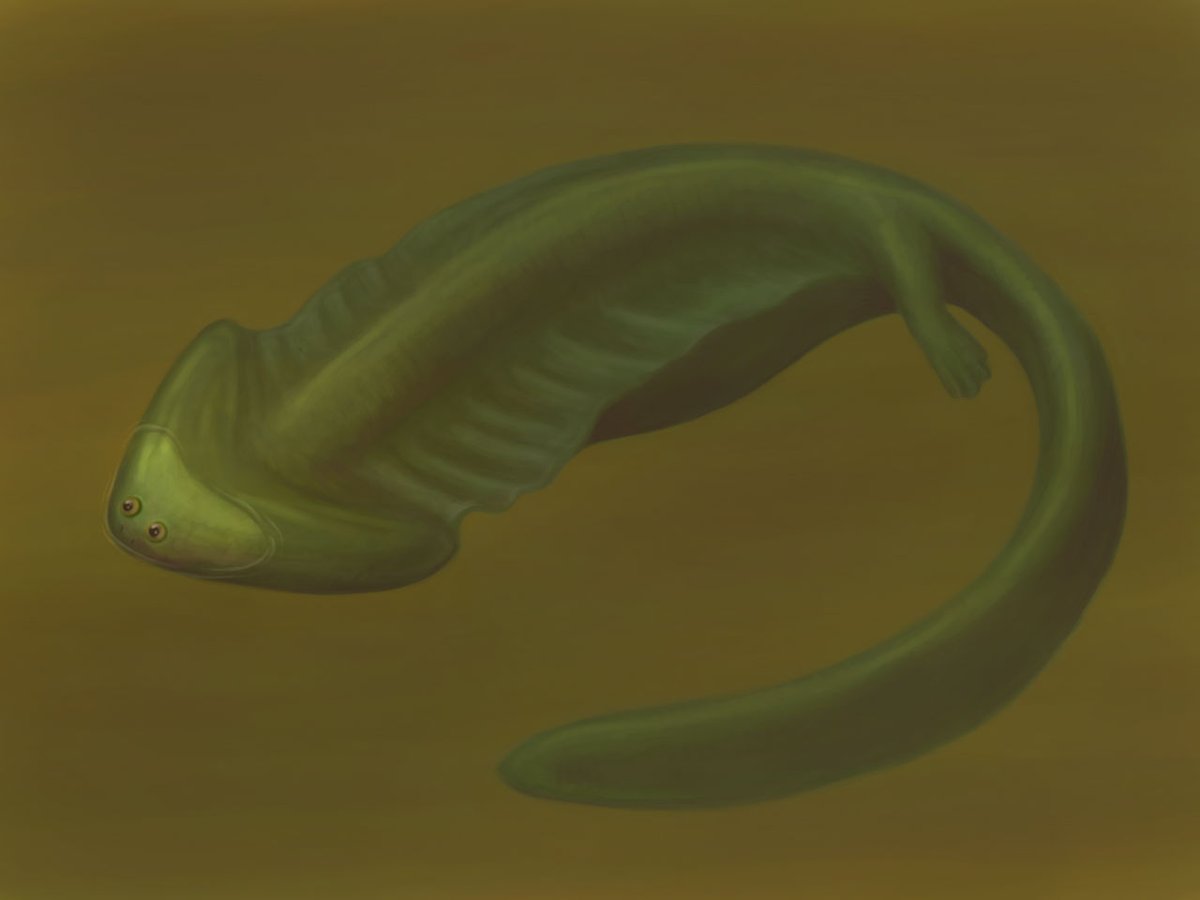
Image: Image sourced via web search (Fair use / Educational)
About Diplocaulus
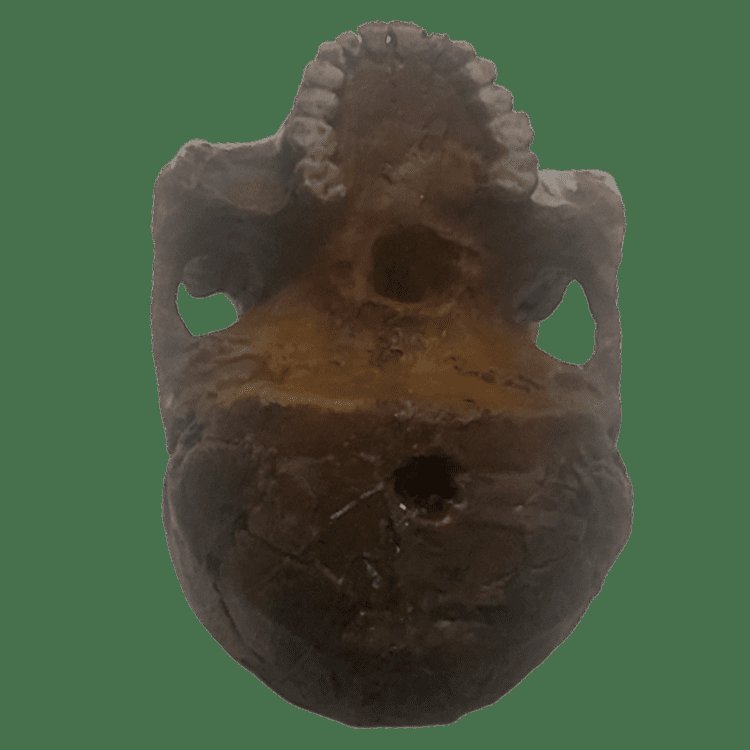
Diplocaulus magnicornis is an extinct species of lepospondyl amphibian that lived during the Permian period, approximately 299 to 252 million years ago. Primarily found in the fossil-rich red beds of North America, particularly in Texas and Oklahoma, this remarkable creature is one of the most visually distinctive animals in the entire fossil record. It is most famous for its enormous, boomerang-shaped skull, a bizarre evolutionary adaptation that has puzzled and fascinated paleontologists for over a century. As a prominent member of the order Nectridea, Diplocaulus represents a highly specialized branch of early tetrapod evolution that flourished in the ancient freshwater ecosystems of the Paleozoic era before ultimately going extinct. Its unique morphology provides critical insights into the diverse and often experimental nature of early amphibian evolution, serving as a testament to the incredible anatomical extremes that life on Earth has produced. The physical description of Diplocaulus is dominated by its extraordinary cranial anatomy. Reaching lengths of up to 1 meter (approximately 3.3 feet), it was a relatively large amphibian for its time, though its body proportions were highly unusual. The most striking feature was, undoubtedly, its skull, which featured massive lateral protrusions formed by the tabular and squamosal bones. These bony extensions grew outward and backward, giving the head its iconic boomerang or crescent shape. In fully grown adults, the width of the skull could exceed the length of the animal's entire torso. The body itself was dorsoventrally flattened, meaning it was wide and low to the ground, resembling the profile of a modern stingray or a highly compressed salamander. Its limbs were disproportionately small and weak, suggesting they were of little use for terrestrial locomotion and were likely used merely for steering or punting along the muddy bottoms of ponds and streams. The tail was long, muscular, and laterally compressed, indicating that it was the primary organ of propulsion, functioning much like the tail of a modern crocodilian or eel. Soft tissue inferences suggest that the skin was likely smooth and glandular, typical of amphibians, though some researchers have proposed the existence of fleshy flaps connecting the tips of the cranial horns to the body, potentially aiding in hydrodynamics. The paleobiology of Diplocaulus paints a picture of a highly specialized, bottom-dwelling aquatic predator. Given its weak limbs and heavy, flattened skull, it is almost certain that Diplocaulus was entirely aquatic, rarely, if ever, venturing onto land. Its diet likely consisted of small fish, aquatic insects, crustaceans, and perhaps smaller amphibians. Its hunting strategy is thought to have been heavily reliant on ambush tactics. Lying motionless on the murky bottom of a Permian swamp or river, its flattened body and mottled skin would have provided excellent camouflage. When a potential prey item swam near, Diplocaulus could have used its muscular tail to launch a sudden upward strike. The biomechanics of its boomerang-shaped head have been the subject of extensive study. Wind tunnel and water flume tests on scale models have demonstrated that the skull acted as a hydrofoil. When the animal faced into a current or swam forward, the shape of the head generated significant hydrodynamic lift, allowing it to rise swiftly from the substrate with minimal effort. This lift mechanism would have been highly advantageous for an ambush predator, enabling rapid, energy-efficient strikes. Furthermore, the wide mouth suggests it may have employed a gape-and-suck feeding mechanism, creating a sudden vacuum to draw prey into its jaws. Growth patterns observed in fossil series indicate that the distinctive horns were not present in juveniles; rather, they grew allometrically, becoming progressively larger and more pronounced as the animal matured, suggesting they may have also played a role in sexual dimorphism or species recognition. The ecological context of the Permian period provides the necessary backdrop for understanding the life and times of Diplocaulus. During this era, the Earth's landmasses were coalescing into the supercontinent of Pangea. The climate was undergoing a significant transition, shifting from the humid, swampy conditions of the preceding Carboniferous period to a much drier, more arid global environment. However, the regions where Diplocaulus fossils are found, such as the Texas Red Beds, represented localized oases—vast deltaic systems, meandering rivers, and ephemeral lakes that supported rich ecosystems. Diplocaulus shared its habitat with a diverse array of Paleozoic fauna. The apex predators of these waterways were the xenacanth sharks, freshwater elasmobranchs armed with distinctively shaped teeth and dorsal spines. Large, crocodile-like temnospondyl amphibians, such as Eryops, also patrolled the banks and shallows. On land, the early synapsids, including the famous sail-backed Dimetrodon and the herbivorous Edaphosaurus, dominated the terrestrial landscape. In this complex food web, Diplocaulus occupied a middle-tier predatory niche. While it fed on smaller aquatic organisms, it was undoubtedly preyed upon by larger amphibians and freshwater sharks. Its bizarre head shape may have offered a secondary defensive benefit; the sheer width of the skull would have made it incredibly difficult for a predator to swallow Diplocaulus whole, effectively acting as a biological deterrent against being eaten. The discovery history of Diplocaulus is deeply intertwined with the early, tumultuous days of American paleontology. The genus was first described in 1877 by the eminent paleontologist Edward Drinker Cope, based on fragmentary remains discovered in the Permian strata of Texas. This period, known as the Bone Wars, was characterized by a fierce and often bitter rivalry between Cope and his contemporary, Othniel Charles Marsh. In their rush to name new species, many early descriptions were brief and based on incomplete material. It was not until later expeditions in the late 19th and early 20th centuries that more complete specimens, including the magnificent skulls of Diplocaulus magnicornis, were unearthed. The name Diplocaulus translates to 'double stalk' or 'double caul,' referring to the distinctive structure of its vertebrae, while the specific epithet magnicornis aptly means 'large-horned.' Over the decades, numerous specimens have been collected, primarily from the Clear Fork Group in Texas. One of the most significant contributions to our understanding of the animal came from the work of paleontologist E.C. Olson in the mid-20th century, who conducted extensive studies on the stratigraphy and paleoecology of the Texas red beds, providing a detailed framework for the evolutionary history of Diplocaulus and its relatives. The evolutionary significance of Diplocaulus lies in its position within the Lepospondyli, a diverse and somewhat enigmatic group of early tetrapods. The lepospondyls are characterized by their simple, spool-shaped vertebrae, which differ markedly from the complex, multi-part vertebrae of the larger temnospondyl amphibians. Diplocaulus represents the evolutionary zenith of the Nectridea, a specific order of lepospondyls that trended toward extreme aquatic specialization. By studying the fossil record of nectrideans, paleontologists can trace a clear evolutionary lineage from earlier, more generalized forms like Batrachiderpeton, which had only modest cranial extensions, to the highly derived and exaggerated morphology of Diplocaulus. This lineage provides a classic example of directional selection and evolutionary specialization. However, despite their success in the Permian swamps, the lepospondyls, including Diplocaulus, were an evolutionary dead end. They left no modern descendants. The exact relationship of lepospondyls to modern amphibians (Lissamphibia) and amniotes (reptiles, birds, and mammals) remains one of the most hotly debated topics in vertebrate paleontology. Some researchers argue that lepospondyls are closely related to the ancestors of modern salamanders and caecilians, while others place them closer to the amniote stem. Regardless of its exact phylogenetic placement, Diplocaulus stands as a spectacular example of the morphological experimentation that characterized the early evolution of four-legged life. Scientific debates surrounding Diplocaulus have largely centered on the function of its bizarre cranial horns and its respiratory physiology. While the hydrodynamic lift theory, proposed by researchers such as Arthur Cruickshank and B.W. Skews in the 1980s, is widely accepted, other hypotheses have been fiercely debated. Some scientists have argued that the horns primarily served a defensive purpose, making the animal unswallowable to predators like Eryops. Others have suggested that the broad head housed expanded sensory organs, such as lateral line systems or electroreceptors, to help detect prey in murky water. Another significant controversy involves the animal's respiratory system. Some paleontologists have hypothesized that the trailing edges of the horns supported external gills, similar to those seen in modern axolotls, which would have been necessary for a fully aquatic animal of its size. However, no direct fossil evidence of gills has been found, and others argue that its large surface area and lungs would have been sufficient for gas exchange. Additionally, the taxonomy of the genus has undergone revisions; several species were once named based on size differences, but modern consensus suggests that many of these are simply different growth stages (ontogenetic variations) of Diplocaulus magnicornis. The fossil record of Diplocaulus is exceptionally rich compared to many other Paleozoic amphibians, though it is geographically restricted. The vast majority of specimens have been recovered from the Lower Permian red beds of Texas and Oklahoma, specifically within formations like the Arroyo Formation of the Clear Fork Group. Recently, fragmentary remains attributed to Diplocaulus have been reported from the Late Permian of Morocco, suggesting that the genus may have survived longer and had a wider geographic distribution than previously thought. The preservation quality of Diplocaulus fossils varies significantly. Because the skull is composed of thick, heavily ossified bone, it is frequently preserved in excellent condition and is a common find for paleontologists working in the region. In contrast, the postcranial skeleton—the vertebrae, ribs, and particularly the tiny limbs—is fragile and often found disarticulated or completely missing. Consequently, while we have dozens of perfectly preserved skulls, complete articulated skeletons are exceedingly rare. The abundance of skulls has allowed for detailed morphometric studies, providing insights into population dynamics and growth rates that are rarely possible for animals of this antiquity. The cultural impact of Diplocaulus is surprisingly robust for an animal that predates the dinosaurs by tens of millions of years. Its unmistakable silhouette has made it a staple of paleoart, frequently depicted lurking in the primordial swamps of the Permian alongside Dimetrodon. It is a popular subject in natural history museums; notable displays featuring Diplocaulus skulls or full skeletal reconstructions can be found at the American Museum of Natural History in New York and the Field Museum in Chicago. In recent years, it has gained a new wave of popularity through appearances in video games, most notably in 'ARK: Survival Evolved,' where it is depicted as a rideable, oxygen-providing companion for underwater exploration. This enduring public fascination underscores the educational importance of Diplocaulus, serving as a captivating gateway for teaching students and the public about the deep history of life on Earth, the reality of extinction, and the boundless creativity of evolutionary processes.
Classification
Time Period
Discovery
Location
Texas, United States
Formation
Clear Fork Group
Frequently Asked Questions
What is Diplocaulus?
Diplocaulus magnicornis is an extinct species of lepospondyl amphibian that lived during the Permian period, approximately 299 to 252 million years ago. Primarily found in the fossil-rich red beds of North America, particularly in Texas and Oklahoma, this remarkable creature is one of the most visua...
When did Diplocaulus live?
Diplocaulus lived during the permian period of the paleozoic era approximately 299-252 million years ago.
Where was Diplocaulus discovered?
Fossils of Diplocaulus were discovered in Texas, United States in the Clear Fork Group.
What did Diplocaulus eat?
Diplocaulus was a carnivore. It lived in freshwater habitats.
What type of fossil is Diplocaulus?
Diplocaulus is preserved as a body fossil. The preservation quality is good.
Related Specimens
From the paleozoic era · body fossils