Vetulicola
Vetulicola cuneata
Image: Image sourced via web search (Fair use / Educational)
About Vetulicola
Vetulicola cuneata is one of the most enigmatic and fascinating marine invertebrates to emerge from the spectacular fossil deposits of the early Cambrian period. Living approximately 520 to 515 million years ago, this bizarre organism is a hallmark of the Chengjiang biota found in Yunnan Province, China. It represents a critical piece of the puzzle in understanding the Cambrian Explosion, a period of rapid evolutionary innovation when most major animal phyla first appeared in the fossil record. Vetulicola's highly unusual bipartite body plan—featuring a voluminous, carapace-like anterior section and a segmented, muscular posterior tail—has puzzled paleontologists for decades, making it a central figure in debates regarding the early evolution of deuterostomes and the origins of chordates. Its significance in paleontology cannot be overstated, as it serves as a morphological bridge between seemingly disparate groups of early animals, offering profound insights into the foundational architecture of complex marine life.
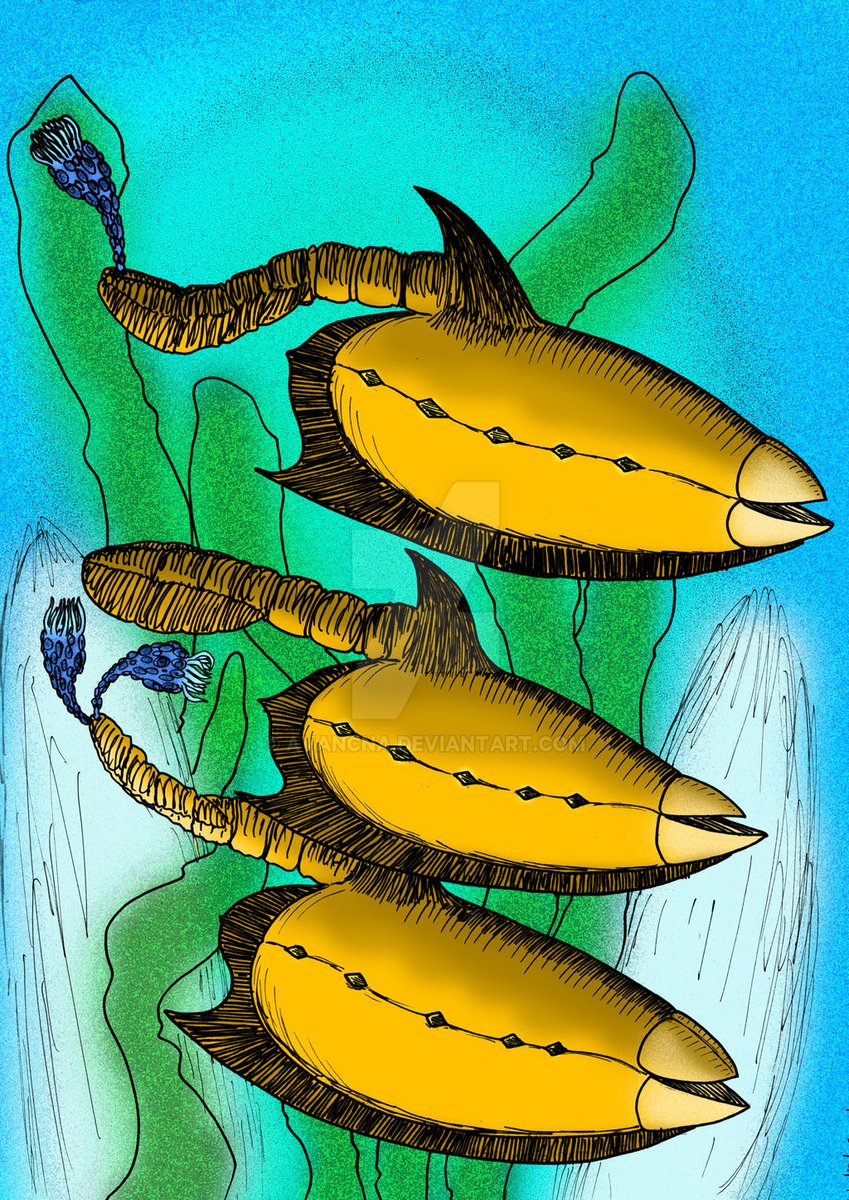
The physical description of Vetulicola cuneata reveals an organism that looks almost alien when compared to modern marine fauna, yet its anatomy is perfectly adapted to its ancient environment. Adult specimens typically measure between 7 and 10 centimeters in length, making them relatively large compared to many of the microscopic or millimeter-scale organisms of the early Cambrian, though they would fit comfortably in the palm of a human hand. The body is distinctly divided into two main parts: an inflated, laterally compressed anterior region and a slender, articulated posterior region. The anterior body is enclosed in a bivalved, cuticle-like carapace that is somewhat rectangular or wedge-shaped (hence the specific epithet 'cuneata'). This carapace features a prominent mouth at the very front, which lacks any complex jaw structures or grasping appendages, suggesting a passive feeding mechanism. Running along the sides of this anterior section are a series of five distinct, oval-shaped openings or pouches. These structures are widely interpreted as gill slits, which would have been used for both respiration and the expulsion of water during feeding. The posterior section, often referred to as the tail, is composed of seven distinct segments covered by a tough cuticle. Unlike the appendages of arthropods, this tail lacks any jointed legs or swimming paddles; instead, it is a highly muscular, flexible structure that likely provided propulsion through lateral undulations. Soft tissue preservation in exceptional specimens has occasionally revealed traces of a straight gut running from the anterior mouth through to the terminal anus at the end of the tail, as well as hints of a possible rudimentary circulatory system. When compared to modern animals, Vetulicola somewhat resembles a cross between a heavily armored tadpole and a tunicate larva, though its exact proportions and rigid anterior casing are entirely unique to its extinct lineage.
In terms of paleobiology, Vetulicola cuneata is generally understood to have been a free-swimming (nektonic) or near-bottom-dwelling (nektobenthic) filter-feeder. Its lack of grasping appendages, jaws, or complex visual organs strongly indicates that it was not an active predator. Instead, it likely swam continuously through the water column or hovered just above the seafloor, taking in water and suspended organic matter through its anterior mouth. As water passed into the voluminous anterior chamber, food particles—such as phytoplankton, zooplankton, and organic detritus—would have been trapped, possibly by a mucous net or specialized internal cilia, before the filtered water was expelled through the five lateral gill slits. This method of feeding is highly efficient and is analogous to the strategies employed by modern tunicates (sea squirts) and lancelets. Locomotion was achieved entirely through the action of the segmented posterior tail. Biomechanical modeling suggests that the tail moved in a side-to-side, undulating motion, propelling the rigid anterior body forward. The lateral compression of the anterior carapace would have provided hydrodynamic stability, preventing the animal from rolling as it swam. Because of the relatively rigid nature of its front half, Vetulicola was likely not a highly agile swimmer, but rather a steady, continuous cruiser. Growth patterns inferred from various fossil specimens of different sizes suggest a direct development process, with juveniles resembling miniature adults and growing through gradual molting or continuous expansion of their cuticular covering, though the exact mechanism of growth remains a subject of ongoing study. Metabolism estimates, based on the presence of prominent gill slits, suggest a relatively active lifestyle requiring a steady supply of oxygen, which was abundant in the shallow, well-aerated Cambrian seas.
The ecological context of Vetulicola cuneata places it in a vibrant, rapidly diversifying marine ecosystem during the early Cambrian period. The world at this time was vastly different from today; the supercontinent Pannotia was breaking apart, and global climates were generally warm, with high sea levels creating extensive, shallow epicontinental seas. The Maotianshan Shales, where Vetulicola is found, represent a tropical to subtropical muddy marine environment, likely a shallow shelf or a protected bay subject to occasional storm surges or underwater mudslides. These mudslides were crucial, as they rapidly buried the local fauna in fine, anoxic sediment, preserving them in exquisite detail. Vetulicola shared its habitat with a staggering array of early animals, including the fearsome apex predator Anomalocaris, various early arthropods like trilobites and Fuxianhuia, lobopodians such as Hallucigenia, and early chordates like Myllokunmingia. In this complex food web, Vetulicola occupied the role of a primary consumer, feeding on the abundant microscopic life that thrived in the sunlit waters. Its position in the water column likely offered some protection from strictly benthic predators, but its relatively slow swimming speed and lack of defensive armor or spines would have made it vulnerable to large, fast-moving nektonic predators like the anomalocaridids. The presence of Vetulicola and other filter-feeders indicates a well-established pelagic ecosystem, demonstrating that the Cambrian Explosion was not limited to the seafloor but extended throughout the water column, creating dynamic predator-prey relationships and complex ecological tiering.
The discovery history of Vetulicola cuneata is intimately tied to one of the most important paleontological breakthroughs of the 20th century: the unearthing of the Chengjiang biota. The first fossils of Vetulicola were discovered in 1987 by the renowned Chinese paleontologist Hou Xianguang, who had initially discovered the Chengjiang fossil site in Yunnan Province just three years earlier in 1984. The fossils were found in the highly fossiliferous yellow and olive-colored mudstones of the Qiongzhusi Formation (specifically the Maotianshan Shale member). When Hou and his colleagues first examined these specimens, their bizarre, bipartite anatomy defied easy classification. The genus Vetulicola, meaning 'ancient dweller', and the species cuneata, referring to its wedge-shaped anterior, were formally described and named by Hou in 1987. Initially, due to its bivalved carapace and segmented posterior, it was tentatively classified as an unusual bivalved arthropod, perhaps related to phyllocarid crustaceans. However, as more specimens were unearthed—some showing incredible soft-tissue preservation including the lateral pouches and gut tract—it became clear that Vetulicola lacked the jointed appendages characteristic of arthropods. Throughout the 1990s and early 2000s, international teams of paleontologists, including Richard Aldridge, David Siveter, and Shu Degan, conducted extensive re-examinations of the growing collection of Vetulicola specimens. These collaborative efforts led to a paradigm shift in its classification, moving it away from the arthropod lineage and placing it squarely in the center of the debate over early deuterostome evolution, cementing its status as one of the most critical taxa of the Cambrian period.
The evolutionary significance of Vetulicola cuneata lies in its controversial but increasingly accepted position near the base of the deuterostome family tree—the major superphylum that includes echinoderms, hemichordates, and chordates (including vertebrates). For many years, the origin of chordates was shrouded in mystery, with a massive morphological gap between simple, worm-like ancestors and more complex, swimming chordates. Vetulicola provides a crucial transitional morphology. Its segmented, muscular tail is reminiscent of the post-anal tail seen in chordates, while its anterior gill slits are a defining characteristic of early deuterostomes, used for both feeding and respiration. In 2001, a landmark paper by Shu Degan and colleagues proposed the creation of a completely new phylum, Vetulicolia, to accommodate Vetulicola and its close relatives. They argued that vetulicolians represent a stem-group deuterostome, or perhaps a sister group to the tunicates (urochordates). This hypothesis suggests that the ancestral deuterostome may have been a free-swimming, filter-feeding organism with a bipartite body and gill slits, rather than a benthic, worm-like creature as previously thought. By studying Vetulicola, scientists can trace the evolutionary steps that led to the development of the chordate body plan, including the centralization of the nervous system, the development of a propulsive tail, and the evolution of pharyngeal slits. While it left no direct modern descendants, Vetulicola stands as a profound evolutionary experiment, a highly specialized offshoot from the lineage that would eventually give rise to all fishes, amphibians, reptiles, birds, and mammals.
Scientific debates surrounding Vetulicola cuneata have been among the most vigorous in modern Cambrian paleontology. The primary controversy has always centered on its taxonomic affinity. While the consensus has largely shifted toward a deuterostome identity, this was not achieved without fierce opposition. In the late 1990s and early 2000s, some researchers argued that the 'gill slits' were actually artifacts of preservation or structures related to arthropod limbs, maintaining that Vetulicola was an aberrant crustacean or a stem-group arthropod. Others proposed it might be related to kinorhynchs (mud dragons) or other ecdysozoans due to its tough cuticular covering. The debate was further complicated by the discovery of related genera like Didazoon and Xidazoon, which showed similar body plans but different anterior details. Recent high-resolution imaging, including micro-CT scanning of exceptionally preserved specimens, has strongly supported the presence of true pharyngeal gill slits and a lack of arthropod-like appendages, bolstering the deuterostome hypothesis. However, exactly where within the deuterostomes Vetulicolia belongs remains a subject of active research. Some phylogenetic analyses place them as stem-chordates, while others suggest they are stem-tunicates, pointing to the tunicate-like 'house' or tunic as an analog to Vetulicola's anterior carapace. These ongoing revisions continually refine our understanding of the deep roots of our own evolutionary lineage.
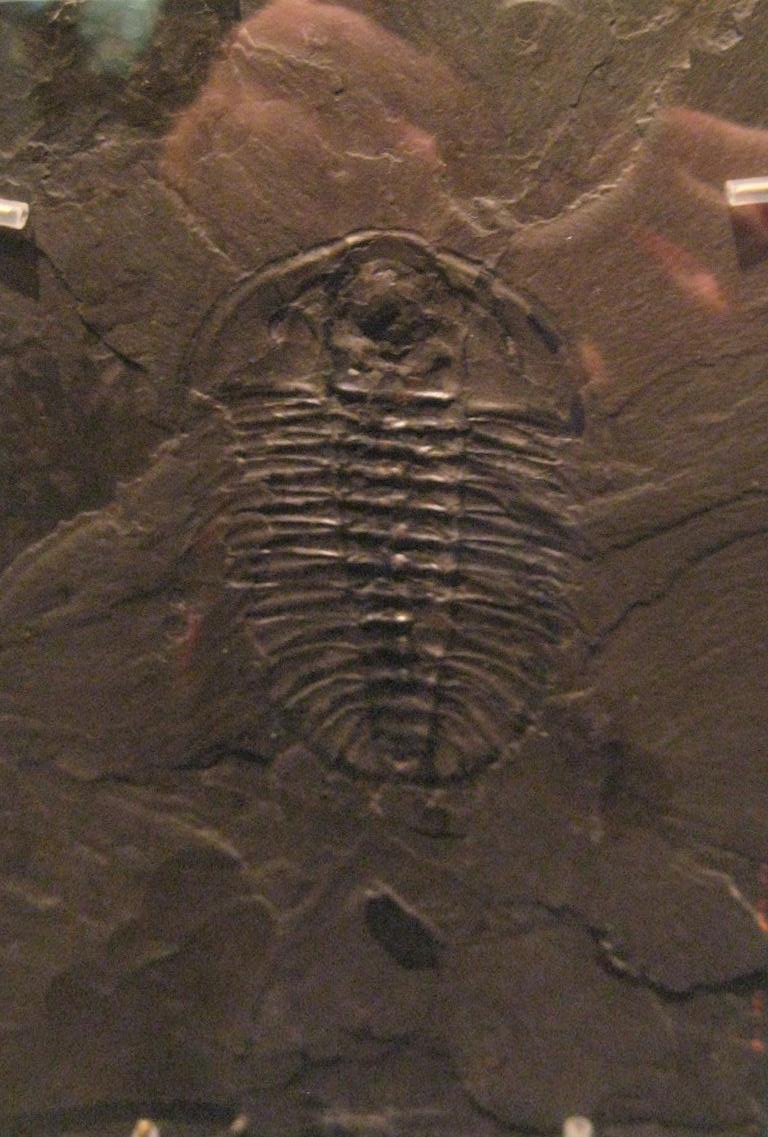
The fossil record of Vetulicola cuneata is geographically restricted but remarkably rich in terms of specimen quality. Fossils are almost exclusively found in the early Cambrian Maotianshan Shales of Yunnan Province, China, specifically around the town of Chengjiang. To date, hundreds of specimens have been collected, making it a relatively uncommon but well-represented component of the Chengjiang biota. The preservation quality is frequently exceptional, a hallmark of Burgess Shale-type preservation. The fossils are typically preserved as flattened, two-dimensional compressions on the bedding planes of the fine-grained shale. Despite this flattening, the preservation is so pristine that it often captures the delicate cuticular structures of the anterior carapace, the precise segmentation of the posterior tail, and the crucial lateral pouches or gill slits. In the most extraordinary specimens, dark stains indicate the presence of the gut tract and other internal soft tissues, preserved through complex taphonomic processes involving early mineralization, often by iron pyrite which later oxidized. This high-fidelity preservation is what has allowed scientists to reconstruct the anatomy and biomechanics of Vetulicola in such detail, overcoming the challenges posed by its lack of a fully biomineralized skeleton.
The cultural impact of Vetulicola cuneata, while perhaps not as globally recognized as dinosaurs like Tyrannosaurus rex, is highly significant within the realms of science communication and paleontology enthusiasm. It frequently features in documentaries, books, and articles discussing the Cambrian Explosion, often highlighted as a prime example of the 'weird wonders' of early evolution. Its bizarre, almost mechanical appearance has captured the public imagination, earning it a reputation as one of the 'alien' creatures of the ancient past. Notable, high-quality specimens are prominently displayed in major natural history museums, particularly the Paleontological Museum of Liaoning and the natural history museums in Beijing and London. Educationally, Vetulicola serves as a powerful teaching tool to illustrate the concepts of deep time, evolutionary experimentation, and the origins of the vertebrate lineage, demonstrating how radically different life on Earth was half a billion years ago.
Classification
Time Period
Discovery
Location
Yunnan Province, China
Formation
Maotianshan Shales
Frequently Asked Questions
What is Vetulicola?
Vetulicola cuneata is one of the most enigmatic and fascinating marine invertebrates to emerge from the spectacular fossil deposits of the early Cambrian period. Living approximately 520 to 515 million years ago, this bizarre organism is a hallmark of the Chengjiang biota found in Yunnan Province, C...
When did Vetulicola live?
Vetulicola lived during the cambrian period of the paleozoic era approximately 520-515 million years ago.
Where was Vetulicola discovered?
Fossils of Vetulicola were discovered in Yunnan Province, China in the Maotianshan Shales.
What did Vetulicola eat?
Vetulicola was a filter-feeder. It lived in marine habitats.
What type of fossil is Vetulicola?
Vetulicola is preserved as a body fossil. The preservation quality is exceptional.
Related Specimens
From the paleozoic era · body fossils
-slab/453736fb9032.jpg)