Sahelanthropus tchadensis
Image: Image sourced via web search (Fair use / Educational)
About Sahelanthropus tchadensis
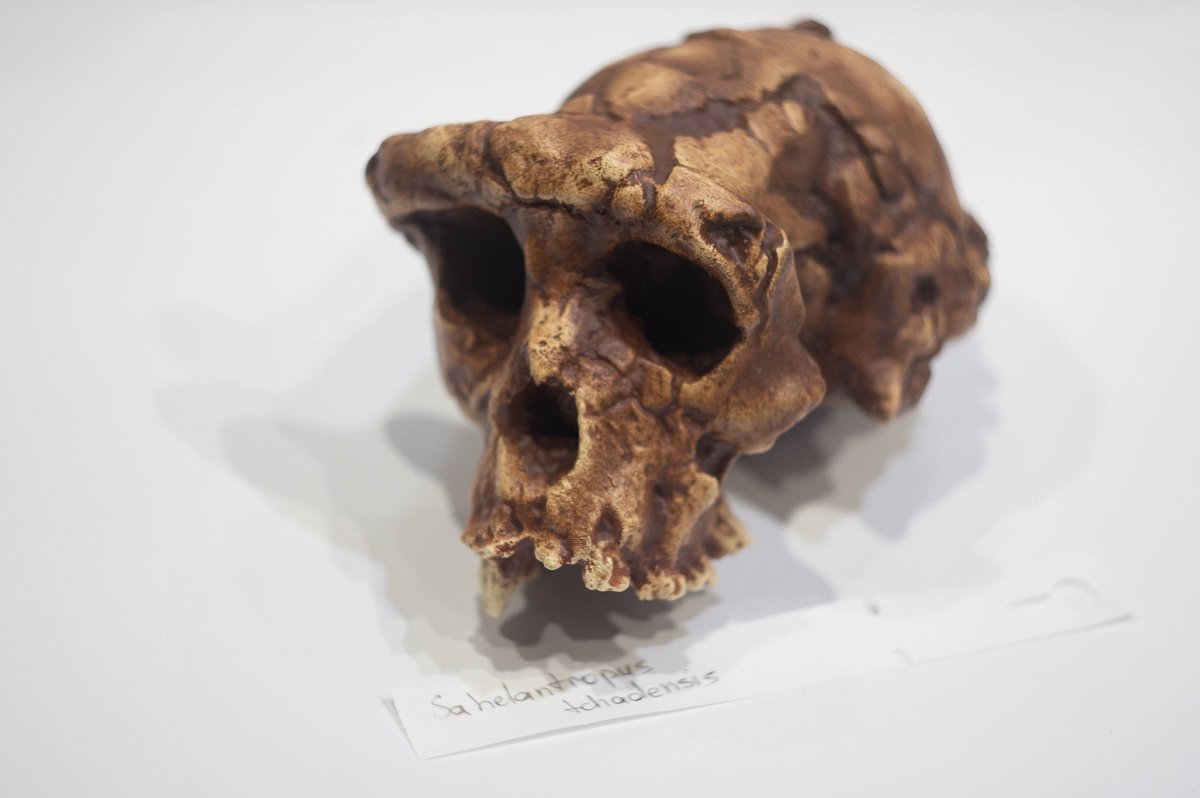
Sahelanthropus tchadensis is a pivotal and enigmatic species of extinct hominid that lived approximately 7 to 6 million years ago during the Miocene epoch of the Neogene period. Its discovery in the Djurab Desert of Chad, Central Africa, dramatically shifted the geographical focus of early human evolution research, which had previously been concentrated in Eastern and Southern Africa. Representing one of the earliest known potential ancestors on the human lineage after the split from the lineage leading to modern chimpanzees, Sahelanthropus holds profound significance in paleontology for its unique blend of ape-like and human-like features, which challenge and refine our understanding of the very dawn of hominin evolution.
Based on the limited fossil evidence, primarily a nearly complete but distorted cranium and some postcranial remains, Sahelanthropus tchadensis was a relatively small primate. Its body size is estimated to have been comparable to that of a modern chimpanzee, with an approximate height of 100 to 120 centimeters and a body weight estimated between 23 and 40 kilograms. The most striking feature is its cranium, which exhibits a fascinating mosaic of primitive and derived traits. The cranial capacity was small, estimated at around 320 to 380 cubic centimeters, squarely within the range of modern chimpanzees and much smaller than later hominins like Australopithecus. The face, however, was surprisingly flat (orthognathic) compared to the prognathic (projecting) faces of apes. It possessed a massive, continuous brow ridge, thicker than any seen in other hominins or modern apes. The dentition is particularly telling; it had small, incisor-like canines with reduced sexual dimorphism and apical wear (wear on the tip), a feature characteristic of hominins rather than the large, sharp, shearing canines of male apes. The molars had thicker enamel than those of chimpanzees, suggesting a diet that included tougher, more abrasive foods. Perhaps the most debated feature is the position of the foramen magnum—the opening at the base of the skull where the spinal cord connects. In Sahelanthropus, this opening is positioned more anteriorly (forward) than in apes, a key anatomical trait strongly associated with an upright, bipedal posture.
Reconstructing the paleobiology of Sahelanthropus tchadensis involves careful inference from its anatomy and the environment it inhabited. The combination of dental features, such as smaller canines and thicker molar enamel, suggests a generalized omnivorous diet. This likely included fruits, leaves, seeds, roots, and possibly insects, a dietary flexibility that would have been advantageous in a variable environment. The thick enamel points to the consumption of harder or more abrasive food items than those typically eaten by chimpanzees, perhaps tough-skinned fruits or gritty tubers. The question of locomotion is central to its biology. The anteriorly placed foramen magnum is the primary evidence cited for habitual bipedalism, suggesting it walked upright on two legs on the ground. However, analysis of a partial femur, published in 2022, indicated that while it was not an obligate quadruped like apes, its primary mode of locomotion in trees was likely a form of climbing and clambering distinct from both modern apes and later hominins. This suggests a facultative bipedalism, where it could walk upright when on the ground but was still well-adapted for an arboreal lifestyle. Social structure remains speculative, but the reduced canine size might hint at a decrease in male-to-male aggression and a social system less reliant on dominance displays compared to many other primates, a trend seen throughout hominin evolution.
The ecological context of Sahelanthropus is crucial for understanding the selective pressures that shaped its evolution. The fossils were recovered from sediments in the Djurab Desert, which during the late Miocene was a far different environment than it is today. Paleoenvironmental reconstructions based on the associated fossil fauna and sedimentology indicate a mosaic landscape. It was likely a lakeside environment, featuring a patchwork of gallery forests along waterways, wooded savannas, and more open grasslands. This diverse habitat would have provided a variety of food sources and refuges. Sahelanthropus shared this world with a rich array of animals, including early elephants (anthracotheres), giraffes, horses, crocodiles, fish, and various carnivores. Its position in the food web would have been that of a mid-sized omnivore, foraging for plant matter and small animals while also being a potential prey item for large predators of the time, such as saber-toothed cats. The emergence of bipedalism in such a mosaic environment is consistent with theories that upright walking evolved as an efficient way to travel between scattered food resources in a landscape that was becoming less densely forested.
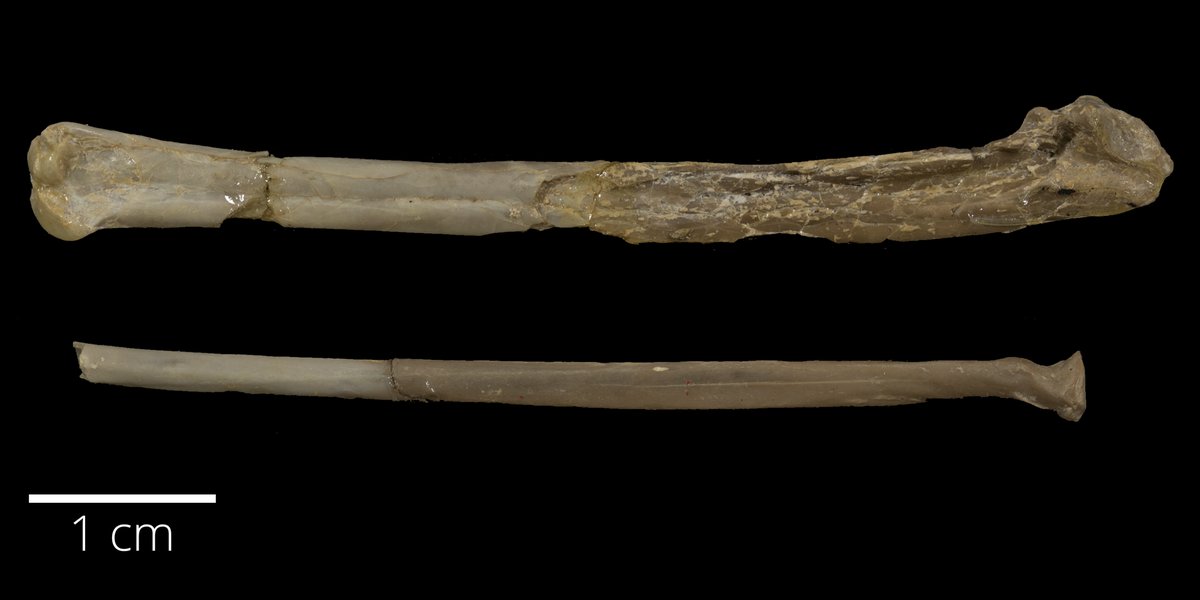
The discovery of Sahelanthropus tchadensis is a story of perseverance and a significant geographical expansion of the search for human origins. The key fossils were found by a Chadian-French research team, the Mission Paléoanthropologique Franco-Tchadienne (MPFT), led by French paleontologist Michel Brunet. The pivotal discovery occurred on July 19, 2001, when a Chadian team member, Ahounta Djimdoumalbaye, unearthed a remarkably complete cranium at the Toros-Menalla 266 (TM 266) locality in the Djurab Desert of northern Chad. This cranium, cataloged as TM 266-01-060-1, was nicknamed "Toumaï," a name from the local Goran language meaning "hope of life," often given to babies born just before the dry season. The discovery was announced to the world in a 2002 publication in the journal Nature. Besides the cranium, the initial finds included several jaw fragments and teeth. Subsequent discoveries at other nearby sites have yielded additional mandibular and dental remains, as well as the controversial postcranial elements—a partial femur and two ulnae—which were found in 2001 but not fully described and analyzed until two decades later.
The evolutionary significance of Sahelanthropus is immense, as it potentially represents the oldest known member of the hominin clade, living very close to the time of the divergence between the human and chimpanzee lineages, an event estimated by genetic studies to have occurred between 8 and 6 million years ago. Its unique combination of features complicates a simple, linear model of human evolution. The anterior foramen magnum and small canines are derived hominin traits, suggesting it is a direct ancestor or a close relative of that lineage. However, its small brain and massive brow ridge are primitive, ape-like features. The presence of such a derived, flat face so early in the fossil record is particularly surprising, as later hominins like Australopithecus had more prognathic faces. This suggests that the evolution of the hominin skull was not a straightforward progression but a more complex mosaic pattern, with some features appearing early, disappearing, and perhaps reappearing later. If its status as a bipedal hominin is confirmed, Sahelanthropus pushes back the origin of upright walking by over a million years and places this critical adaptation in Central Africa, challenging the long-held "East Side Story" hypothesis which posited that hominins evolved exclusively in the rift valleys of East Africa.
Despite its importance, the interpretation of Sahelanthropus tchadensis is fraught with scientific debate. The central controversy revolves around its placement in the evolutionary tree. While its discoverers, led by Michel Brunet, strongly advocate for its status as the earliest hominin, other prominent researchers, such as Milford Wolpoff, Brigitte Senut, and Martin Pickford, have challenged this view. They argue that Sahelanthropus may instead be an early member of the gorilla lineage or a representative of a separate, extinct ape lineage that is not ancestral to any living primate. Critics point to the severe distortion of the Toumaï cranium, arguing that the apparent forward position of the foramen magnum could be an artifact of post-mortem crushing and geological pressure. They also suggest that the dental and facial features could be examples of convergent evolution in an ape adapting to a similar diet. The 2022 analysis of the femur, which suggested a form of climbing different from modern apes and a capacity for bipedalism, added fuel to the debate rather than settling it, with some scientists interpreting it as strong support for hominin status and others seeing it as evidence of a unique locomotor adaptation in a non-hominin ape.
The fossil record for Sahelanthropus tchadensis is extremely limited, contributing to the ongoing debates. All known specimens have been recovered from the Toros-Menalla fossiliferous area in the Djurab Desert of northern Chad. To date, the fossil inventory consists of the type specimen cranium (Toumaï), several lower jaw fragments, isolated teeth, a partial left femur, and two ulnae (forearm bones). In total, these remains represent at least six, and possibly up to nine, individuals. The preservation quality is generally fair; the Toumaï cranium is nearly complete but has been significantly crushed and distorted, requiring extensive digital reconstruction to approximate its original shape. The postcranial bones are fragmentary. The scarcity of remains, particularly the lack of associated pelvic, hand, or foot bones, makes definitive conclusions about its locomotion and behavior difficult. No other fossil sites for this species are currently known, making the Chadian discoveries uniquely important for understanding this crucial period of primate evolution.
Sahelanthropus tchadensis, and specifically the Toumaï skull, has had a notable cultural impact, primarily within the scientific and educational communities. It is celebrated as a national treasure in Chad and has been featured on the country's postage stamps. The original Toumaï cranium is a centerpiece exhibit at the Musée National du Tchad in N'Djamena. Replicas and detailed descriptions are featured in major natural history museums worldwide, including the American Museum of Natural History in New York and the Muséum National d'Histoire Naturelle in Paris. For the public, Toumaï represents a tangible, face-like connection to the deepest roots of human ancestry, capturing the imagination and highlighting the vast, branching nature of our evolutionary story. Its controversial status serves as a powerful educational tool, demonstrating how science works through debate, evidence, and the continuous revision of hypotheses.
Classification
Time Period
Discovery
Location
Chad, Central Africa
Formation
Djourab Desert (Toros-Menalla fossiliferous area)
Frequently Asked Questions
What is Sahelanthropus tchadensis?
Sahelanthropus tchadensis is a pivotal and enigmatic species of extinct hominid that lived approximately 7 to 6 million years ago during the Miocene epoch of the Neogene period. Its discovery in the Djurab Desert of Chad, Central Africa, dramatically shifted the geographical focus of early human evo...
When did Sahelanthropus tchadensis live?
Sahelanthropus tchadensis lived during the neogene period of the cenozoic era approximately 7-6 million years ago.
Where was Sahelanthropus tchadensis discovered?
Fossils of Sahelanthropus tchadensis were discovered in Chad, Central Africa in the Djourab Desert (Toros-Menalla fossiliferous area).
What did Sahelanthropus tchadensis eat?
Sahelanthropus tchadensis was a omnivore. It lived in terrestrial (mosaic of gallery forest, savanna, and lake) habitats.
What type of fossil is Sahelanthropus tchadensis?
Sahelanthropus tchadensis is preserved as a body fossil. The preservation quality is fair.
Related Specimens
From the cenozoic era · body fossils