Fossil Ginkgo
Ginkgo huttoni
Image: Image sourced via web search (Fair use / Educational)
About Fossil Ginkgo
Ginkgo huttoni is an extinct species of gymnosperm tree belonging to the ancient order Ginkgoales, representing a crucial chapter in the evolutionary history of one of Earth's most resilient plant lineages. Thriving during the Middle to Late Jurassic period, approximately 175 to 155 million years ago, this prehistoric plant was a prominent component of the lush, temperate forests that blanketed much of the Northern Hemisphere, particularly in what is now the Yorkshire coast of the United Kingdom. As a close relative of the modern Ginkgo biloba, often famously referred to as a living fossil, Ginkgo huttoni holds immense significance in the field of paleobotany. It provides critical insights into the morphological evolution, ecological adaptability, and historical biogeography of a plant family that once dominated Mesozoic landscapes before experiencing a dramatic decline. The discovery and subsequent study of Ginkgo huttoni have allowed scientists to trace the deep-time lineage of ginkgophytes, offering a rare window into the terrestrial ecosystems of the Jurassic world and the environmental pressures that shaped the survival of this extraordinary botanical group.
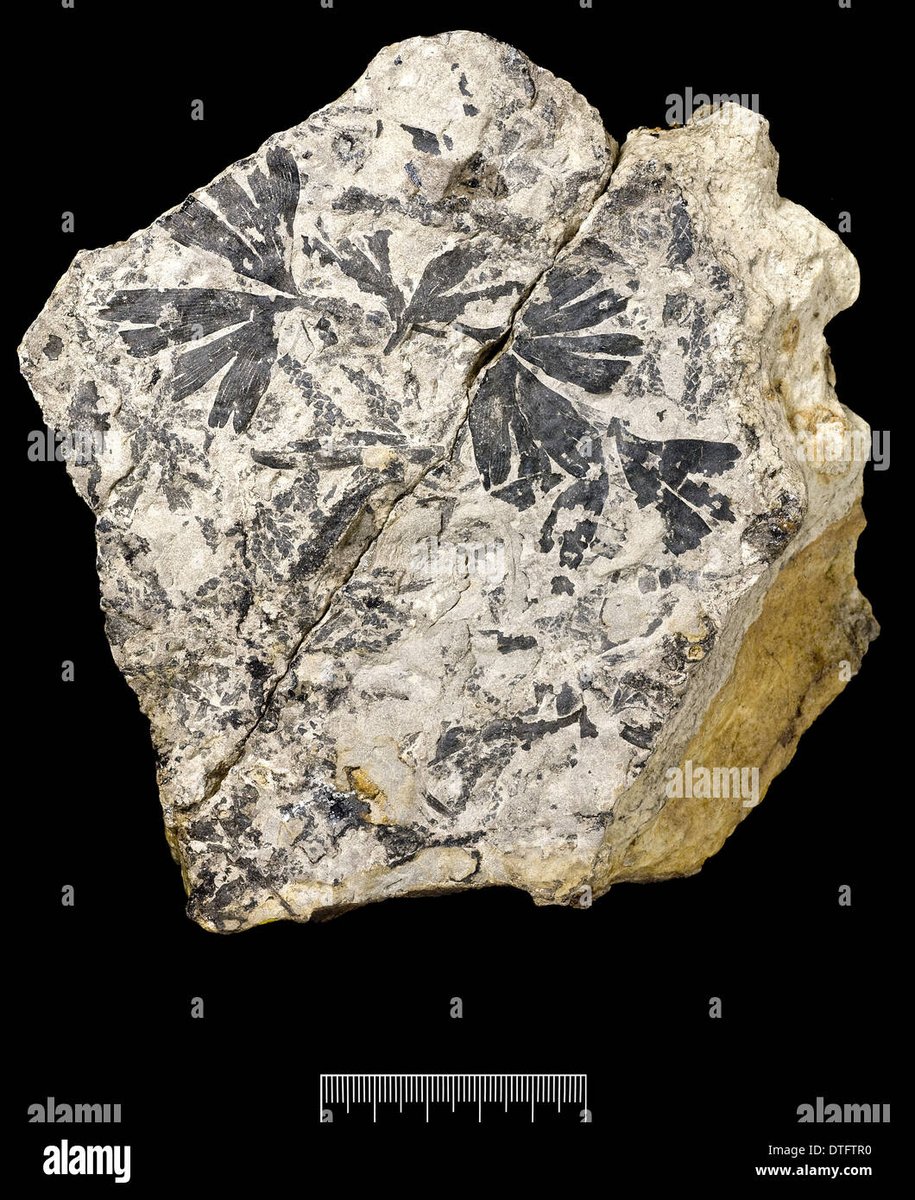
The physical description of Ginkgo huttoni is primarily derived from the abundant fossilized leaves, seeds, and reproductive structures preserved as carbonaceous compressions and impressions in sedimentary rocks. The leaves of Ginkgo huttoni exhibit the characteristic fan-like, or flabellate, shape that is instantly recognizable to anyone familiar with the modern maidenhair tree, yet they possess distinct morphological differences that set them apart. Typically measuring between 5 and 10 centimeters in length and width, the leaves of G. huttoni are notably more deeply dissected and lobed than those of the extant Ginkgo biloba. While modern ginkgo leaves usually feature a single central cleft dividing the leaf into two distinct lobes, the leaves of Ginkgo huttoni are often divided into multiple, deeply incised segments, sometimes numbering up to six or eight distinct lobes per leaf. These lobes radiate from a sturdy petiole, or leaf stalk, and feature the classic dichotomous, or forking, venation pattern characteristic of the Ginkgoales. The veins run parallel to one another, branching repeatedly as they extend toward the distal margin of the leaf, lacking any cross-connections or reticulation. Although the entire tree has never been found completely intact, paleobotanists estimate that Ginkgo huttoni grew as a medium to large deciduous tree, potentially reaching heights of 20 to 30 meters, with a branching architecture similar to modern conifers and ginkgos. The wood, known from petrified remains assigned to the form genus Ginkgoxylon, suggests a slow-growing, robust trunk capable of withstanding the dynamic environmental conditions of the Jurassic. Soft tissue inferences, drawn from the exceptional preservation of leaf cuticles, reveal microscopic details such as the arrangement of stomata, which were primarily confined to the lower surface of the leaf, and the presence of specialized epidermal cells that helped the plant regulate water loss and gas exchange.
In terms of paleobiology, Ginkgo huttoni was a photosynthetic autotroph, utilizing sunlight, water, and atmospheric carbon dioxide to produce the energy required for its growth and reproduction. Like its modern descendant, it is highly probable that Ginkgo huttoni was a deciduous tree, shedding its deeply lobed leaves in a synchronized seasonal event, likely in response to changing light levels or the onset of cooler, drier seasons. This deciduous habit would have been an advantageous adaptation, allowing the tree to conserve water and energy during less favorable growing periods. The reproductive strategy of Ginkgo huttoni involved the production of separate male and female reproductive structures on different trees, a condition known as dioecy. Male trees produced pollen cones containing numerous microsporangia, which released wind-borne pollen designed to drift through the Jurassic forests. Female trees bore ovules at the ends of specialized stalks. Following pollination and fertilization, these ovules developed into fleshy, seed-bearing structures. The growth patterns of Ginkgo huttoni, as inferred from fossilized wood exhibiting distinct growth rings, indicate that the tree experienced seasonal variations in growth rates, consistent with a temperate climate characterized by distinct growing and dormant seasons. The metabolism of this Jurassic ginkgo was likely comparable to modern gymnosperms, optimized for steady, long-term growth rather than rapid colonization.
The ecological context of Ginkgo huttoni is rooted in the dynamic and diverse terrestrial ecosystems of the Middle to Late Jurassic period. During this time, the Earth's climate was generally warmer and more equable than today, with higher atmospheric carbon dioxide levels and a lack of polar ice caps. The geography of the era was dominated by the gradual breakup of the supercontinent Pangaea, creating extensive coastal plains, river valleys, and deltaic environments. Ginkgo huttoni flourished in these well-watered, temperate to subtropical habitats, often growing alongside rivers, lakes, and floodplains where the soil was moist and nutrient-rich. The flora of these Jurassic forests was incredibly diverse, with Ginkgo huttoni co-existing alongside a wide array of other gymnosperms, including towering conifers, cycads, bennettitales, and seed ferns, as well as an understory rich in true ferns and horsetails. In this complex food web, Ginkgo huttoni served as a primary producer, its abundant foliage providing a potential food source for the diverse array of herbivorous dinosaurs that roamed the Jurassic landscape, such as early sauropods, stegosaurs, and ornithopods. However, like modern ginkgos, it is possible that the leaves of G. huttoni contained defensive chemical compounds, such as ginkgolides, which may have deterred excessive herbivory. The fleshy seeds produced by female trees might have been consumed and dispersed by various animals, including early mammals, birds, or small dinosaurs, establishing a mutualistic relationship that aided in the plant's reproduction and geographic spread.
The discovery history of Ginkgo huttoni is deeply intertwined with the early days of paleobotany and the exploration of the rich fossil beds of the Yorkshire coast in England. The species was first formally described and named in the 1830s by the pioneering British paleobotanists William Hutton and John Lindley in their seminal work, The Fossil Flora of Great Britain. The specific epithet, huttoni, honors William Hutton, whose extensive collection of fossil plants formed the basis for much of their research. The initial discoveries were made in the Middle Jurassic sedimentary rocks of the Cleveland Basin, specifically within the Saltwick Formation and the Cloughton Formation, which are renowned for their exceptionally preserved fossil floras. These early finds consisted primarily of isolated leaves and fragmented branchlets, preserved as dark, carbonaceous compressions against the lighter-colored sandstone and shale matrices. Over the subsequent decades, numerous additional specimens were collected by amateur geologists and professional paleontologists alike, gradually building a comprehensive picture of the plant's morphology. Key specimens, including beautifully preserved leaves with intact cuticles, are now housed in major institutions such as the Natural History Museum in London and the Yorkshire Museum, serving as critical reference materials for ongoing research into the Ginkgoales.
The evolutionary significance of Ginkgo huttoni cannot be overstated, as it occupies a pivotal position in the evolutionary tree of the Ginkgoales. The ginkgophyte lineage is ancient, with its origins tracing back to the Permian period, over 270 million years ago. During the Mesozoic era, particularly the Jurassic and Cretaceous periods, the Ginkgoales reached their zenith in terms of diversity and global distribution, with numerous genera and species occupying a wide range of ecological niches. Ginkgo huttoni represents a classic example of this Mesozoic radiation, showcasing the morphological experimentation that occurred within the group, particularly in the deep lobing of its leaves. By comparing Ginkgo huttoni to older, more primitive ginkgophytes and to the sole surviving species, Ginkgo biloba, scientists can trace the gradual simplification of leaf morphology over millions of years. The transition from the deeply dissected leaves of G. huttoni to the relatively entire, fan-shaped leaves of G. biloba is thought to reflect adaptations to changing environmental conditions, perhaps related to water conservation or aerodynamic efficiency in wind dispersal. Furthermore, the study of Ginkgo huttoni reinforces the concept of Ginkgo biloba as a living fossil, demonstrating the remarkable morphological conservatism of the genus Ginkgo over the past 170 million years.
Despite its long history of study, Ginkgo huttoni remains the subject of ongoing scientific debates and revisions within the paleobotanical community. One of the primary controversies revolves around the taxonomy and species boundaries within the fossil Ginkgoales. Because fossil leaves can exhibit significant morphological variation even within a single tree depending on their position on the branch, age, and environmental factors some researchers argue that the numerous fossil species of Ginkgo described from the Mesozoic, including G. huttoni, may actually represent a smaller number of highly variable biological species. This debate highlights the challenges of classifying extinct plants based solely on isolated vegetative organs. In recent years, advances in cuticular analysis the microscopic examination of the waxy outer layer of the leaf have provided new tools for distinguishing between closely related fossil species. By analyzing the shape, size, and distribution of epidermal cells and stomata, scientists have been able to refine the classification of Ginkgo huttoni and better understand its relationship to other Jurassic ginkgophytes. Additionally, ongoing discoveries of new fossil sites in Asia and North America continue to expand our understanding of the global distribution and ecological adaptability of the Ginkgoales during the Mesozoic.
The fossil record of Ginkgo huttoni is exceptionally rich, particularly in the Middle Jurassic deposits of the Yorkshire coast in the United Kingdom, which remains the most famous and prolific locality for this species. Thousands of specimens have been collected from this region over the past two centuries, ranging from isolated, fragmentary leaves to large slabs of rock covered in dense mats of Ginkgo foliage, suggesting that the trees grew in dense stands or that their leaves accumulated in quiet, slow-moving bodies of water. The preservation quality is generally good to excellent, with many specimens preserved as carbonaceous compressions that retain the original organic material of the plant. This exceptional preservation allows for the extraction and study of the leaf cuticle, providing invaluable microscopic data. While leaves are by far the most commonly preserved parts of Ginkgo huttoni, rare discoveries of fossilized wood, pollen cones, and seed-bearing structures attributed to the same biological plant have helped to complete our understanding of its anatomy and reproductive biology. Beyond the United Kingdom, similar deeply lobed Ginkgo leaves have been found in Jurassic deposits across Eurasia, indicating that plants closely related to or synonymous with Ginkgo huttoni had a widespread distribution across the Northern Hemisphere.
The cultural impact of Ginkgo huttoni, while perhaps less pronounced than that of iconic dinosaurs, is nonetheless significant in the realm of science education and public appreciation of deep time. As a prominent representative of the living fossil narrative, Ginkgo huttoni is frequently featured in museum dioramas, paleontology textbooks, and popular science articles illustrating the flora of the Jurassic period. Notable displays of Ginkgo huttoni fossils can be found in natural history museums worldwide, where they serve as tangible links to a bygone era. The story of the Ginkgo lineage surviving the extinction of the dinosaurs, the ice ages, and countless other environmental upheavals to persist in modern botanical gardens and city streets captures the public imagination, highlighting the incredible resilience of life on Earth and the enduring legacy of the Mesozoic era.
Classification
Time Period
Discovery
Location
United Kingdom
Formation
Saltwick Formation
Frequently Asked Questions
What is Fossil Ginkgo?
Ginkgo huttoni is an extinct species of gymnosperm tree belonging to the ancient order Ginkgoales, representing a crucial chapter in the evolutionary history of one of Earth's most resilient plant lineages. Thriving during the Middle to Late Jurassic period, approximately 175 to 155 million years ag...
When did Fossil Ginkgo live?
Fossil Ginkgo lived during the jurassic period of the mesozoic era approximately 175-155 million years ago.
Where was Fossil Ginkgo discovered?
Fossils of Fossil Ginkgo were discovered in United Kingdom in the Saltwick Formation.
What did Fossil Ginkgo eat?
Fossil Ginkgo was a photosynthetic. It lived in terrestrial habitats.
What type of fossil is Fossil Ginkgo?
Fossil Ginkgo is preserved as a impression fossil. The preservation quality is good.
Related Specimens
From the mesozoic era · impression fossils