Seymouria
Seymouria baylorensis
Image: Image sourced via web search (Fair use / Educational)
About Seymouria
Seymouria is a genus of extinct tetrapods that lived during the Early Permian period, approximately 290 to 272 million years ago. Its fossils, primarily found in North America and Europe, represent a crucial stage in vertebrate evolution, showcasing a mosaic of features that blur the lines between amphibians and reptiles. For decades, Seymouria was considered a quintessential 'missing link,' an animal perfectly intermediate between these two major groups, providing a textbook example of a transitional fossil that illuminated the path vertebrates took as they conquered terrestrial environments.
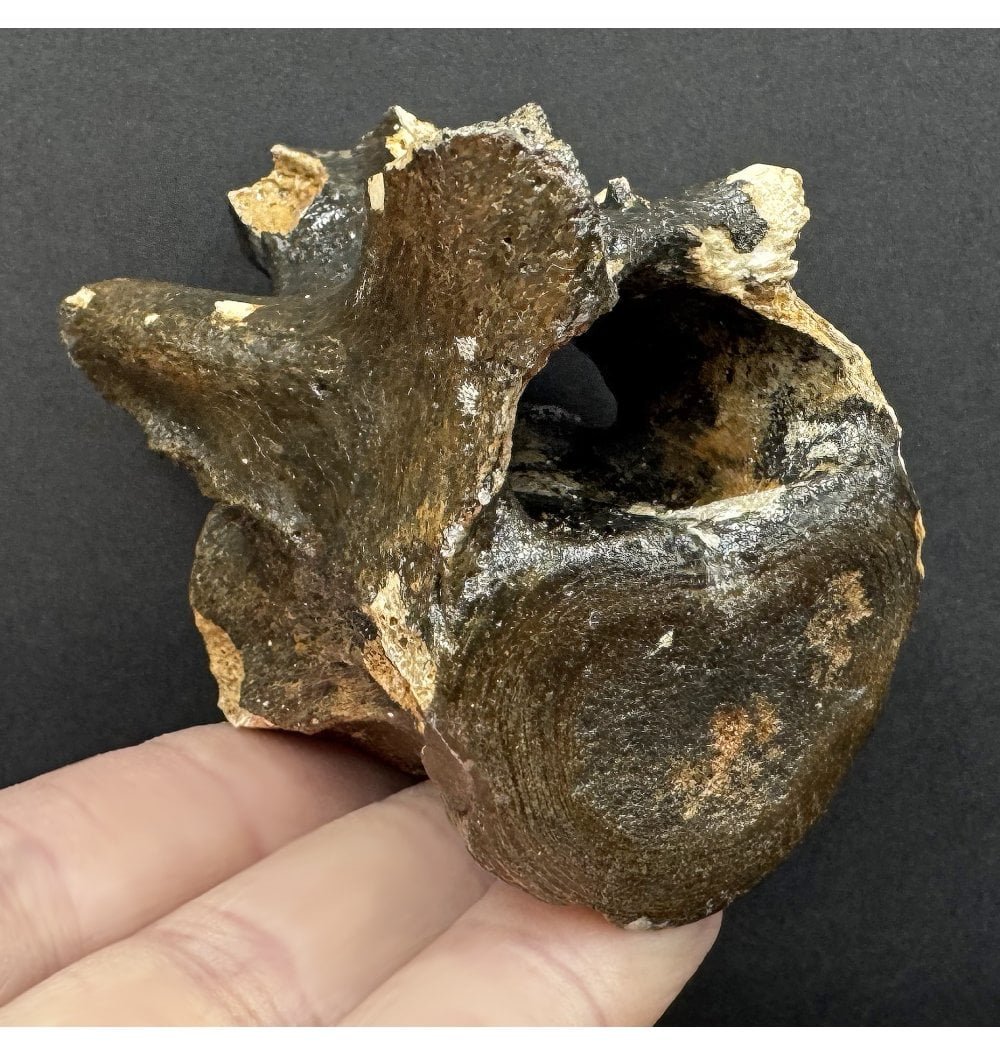
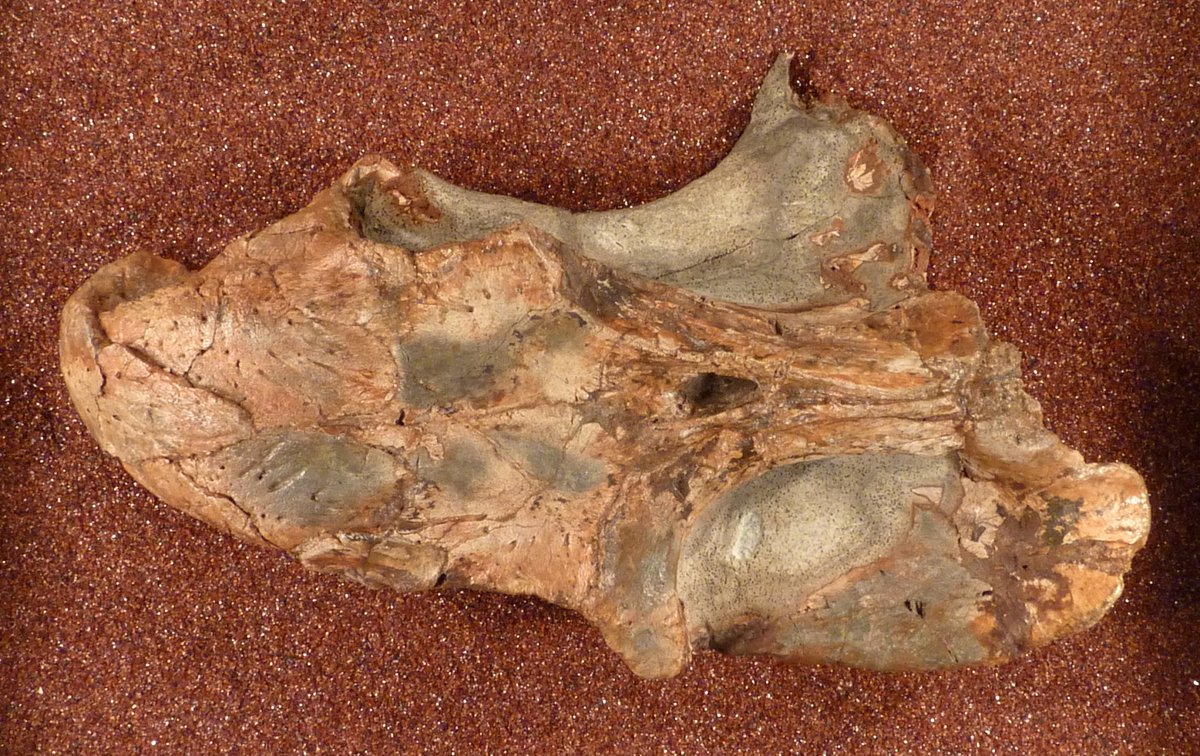
Seymouria was a medium-sized, robustly built animal, typically measuring between 60 to 90 centimeters (about 2 to 3 feet) in length, comparable in size to a modern-day large monitor lizard or a small alligator. Its weight is estimated to have been around 5 to 10 kilograms. The skull was large, deep, and somewhat triangular when viewed from above, possessing a solid, well-ossified structure reminiscent of early reptiles. It featured large orbits (eye sockets) and a prominent otic notch at the back, a feature associated with a tympanum (eardrum) in many amphibians and early amniotes, suggesting it had some capacity for hearing airborne sounds. The dentition consisted of numerous small, sharp, conical teeth lining the jaws, indicative of a carnivorous or insectivorous diet. The postcranial skeleton was equally robust. The vertebral column was strong, with well-developed zygapophyses (interlocking processes) that would have provided significant support against gravity, a key adaptation for life on land. The limbs were stout and powerful, held in a sprawling posture typical of early tetrapods, but were well-muscled and capable of supporting the body for extended periods out of water. The feet were equipped with five digits, and the overall skeletal anatomy suggests an animal that was well-adapted for terrestrial locomotion, though perhaps not particularly agile or fast compared to later reptiles.
Based on its anatomy, the paleobiology of Seymouria points to a versatile and predatory lifestyle. Its sharp, simple teeth were not suited for chewing but were ideal for seizing and holding onto prey, which was likely swallowed whole. The diet probably consisted of a wide range of smaller animals available in its environment, including large insects, other arthropods, smaller amphibians, and perhaps even small early reptiles. Its sturdy build and powerful limbs suggest it was an active terrestrial predator, likely hunting in the dense undergrowth of the Permian forests. Locomotion would have been a deliberate, sprawling walk, similar to that of a modern crocodile on land. While its adult form was clearly adapted for a terrestrial existence, a crucial discovery of larval fossils in the 1990s, attributed to the related genus Discosauriscus (once thought to be a larval Seymouria), revealed the presence of external gills. This finding confirmed that seymouriamorphs, including Seymouria, retained a fundamentally amphibious life cycle. They laid their eggs in water, and the young passed through an aquatic larval stage before metamorphosing into terrestrial adults, much like modern salamanders or frogs. This dual lifestyle, straddling both aquatic and terrestrial worlds, is a hallmark of its transitional nature. Its metabolism was likely ectothermic, or 'cold-blooded,' relying on external sources of heat to regulate its body temperature, a common trait for both amphibians and early reptiles of the time.
Seymouria inhabited the vast supercontinent of Pangaea during the Early Permian. The climate of this period was becoming progressively drier and more seasonal than the preceding Carboniferous, with large arid regions expanding. Seymouria fossils are often found in red bed deposits, which are indicative of environments with distinct wet and dry seasons, such as floodplains, river deltas, and semi-arid scrublands. It shared its world with a diverse and complex ecosystem. The flora was dominated by hardy plants like conifers, seed ferns, and cycads. The vertebrate fauna included a variety of other tetrapods. It would have competed for resources with, and also been preyed upon by, larger predators such as the formidable fin-backed synapsids (pelycosaurs) like Dimetrodon and Edaphosaurus. The waters were home to large amphibians like Eryops and Diplocaulus, while the terrestrial landscape teemed with a growing diversity of early amniotes. Seymouria occupied a mid-level predatory niche in this food web, a crucial link between the smaller insectivores and the apex predators that dominated the Permian landscape. Its ability to operate effectively both near water and further inland would have given it a competitive advantage in these fluctuating environments.
The history of Seymouria's discovery begins in the late 19th century, a period of intense fossil hunting in North America. The first fossils were unearthed in the red beds of Baylor County, Texas, a region rich in Permian-era remains. American paleontologist Ferdinand von Springer first described the animal in 1904, though it was his colleague, German paleontologist Ferdinand Broili, who formally named the genus Seymouria in 1904. The name is a direct reference to the town of Seymour in Baylor County, near where the initial specimens were found. The species name, baylorensis, honors the county itself. For many years, only adult specimens were known, and their highly terrestrial, reptile-like features led paleontologists like Alfred Romer to classify Seymouria as a very primitive reptile, a member of the 'stem-reptile' group Cotylosauria. This classification held for decades. One of the most significant specimens is AMNH 4341, a well-preserved skeleton housed at the American Museum of Natural History, which has been instrumental in studying its anatomy. The discovery of aquatic larvae with gills, first in the related Discosauriscus and later inferred for Seymouria, was a pivotal moment that forced a re-evaluation of its classification, ultimately shifting it back across the amphibian-reptile divide.
Seymouria's evolutionary significance cannot be overstated; it is a classic example of a transitional form that illuminates a major evolutionary event: the vertebrate transition to a fully terrestrial life. For much of the 20th century, it was hailed as the ideal ancestor of all reptiles (and thus, all subsequent amniotes including birds and mammals). Its skeleton displays a remarkable mosaic of traits. Amphibian-like features include its larval stage with gills, aspects of its skull structure (like the otic notch), and certain details of its palate and limb bones. Conversely, its reptile-like characteristics are numerous and compelling: a robust, well-ossified skeleton; a strong vertebral column for support on land; a deep, solid skull; and limb proportions suited for terrestrial locomotion. This combination led to the long-held belief that it was a 'cotylosaur,' a basal reptile. However, the confirmation of its aquatic larval stage proved that it had not yet evolved the key reptilian innovation: the amniotic egg. This type of egg, with its protective membranes, freed vertebrates from their dependence on water for reproduction. Because Seymouria still required water to breed, it is now classified as a highly advanced, reptile-like amphibian, a member of the group Seymouriamorpha, which is considered a sister group to the amniotes. It represents a grade of organization just before the final step to becoming a true reptile, showcasing what the immediate ancestors of amniotes might have looked like.
Despite its fame, Seymouria has been at the center of significant scientific debates, primarily concerning its precise phylogenetic position. The central controversy for over a century was whether it was a primitive reptile or an advanced amphibian. The discovery of larval forms definitively settled this, placing it on the amphibian side of the divide. However, the exact relationship of Seymouriamorpha to other tetrapod groups is still a subject of ongoing research. Some phylogenetic analyses place them as the sister taxon to all amniotes, while others suggest they may be more closely related to other Permian amphibian groups like the diadectomorphs. The debate highlights the difficulty of classifying 'mosaic' creatures that don't fit neatly into modern categories. Furthermore, the function of the otic notch is still debated; while often interpreted as holding a tympanum for hearing, some researchers suggest it may have served other functions, such as a spiracle for breathing, especially in its larval stage. These ongoing discussions underscore the dynamic nature of paleontological science, where new evidence continually refines our understanding of the deep past.
The fossil record of Seymouria is quite robust, though not exceptionally common. The majority of high-quality specimens, including nearly complete articulated skeletons, come from the Early Permian red beds of Texas and Oklahoma in the United States, specifically from geological strata like the Clear Fork Group (which includes the Arroyo, Vale, and Choza Formations). These sites have yielded numerous adult skeletons that provide a comprehensive picture of its adult anatomy. Fossils attributed to Seymouria or closely related seymouriamorphs have also been found in Europe, particularly in Germany (the Tambach Formation), indicating a wide geographic distribution across the northern parts of Pangaea. The preservation quality is often good, with bones showing fine detail, though soft tissues are not preserved. The discovery of multiple individuals in some localities allows for studies of population structure and ontogenetic (growth) changes. The Tambach Formation, in particular, is famous for preserving entire terrestrial ecosystems, providing invaluable context for how animals like Seymouria lived and interacted with their environment.
Seymouria holds a special place in the public's understanding of evolution, often featured in textbooks, museum exhibits, and documentaries as a prime example of a transitional fossil. Its compelling story as the 'reptile-like amphibian' makes it an excellent educational tool for explaining macroevolutionary patterns. Major museums, such as the American Museum of Natural History in New York and the Field Museum in Chicago, often include casts or original fossils of Seymouria in their Paleozoic life displays. While it has not achieved the celebrity status of dinosaurs, its crucial position on the vertebrate family tree ensures its continued importance and fascination for anyone interested in the history of life on Earth and the epic story of the conquest of the land.
Classification
Time Period
Discovery
Location
Texas, USA
Formation
Clear Fork Group (Arroyo, Vale, and Choza Formations)
Frequently Asked Questions
What is Seymouria?
Seymouria is a genus of extinct tetrapods that lived during the Early Permian period, approximately 290 to 272 million years ago. Its fossils, primarily found in North America and Europe, represent a crucial stage in vertebrate evolution, showcasing a mosaic of features that blur the lines between a...
When did Seymouria live?
Seymouria lived during the permian period of the paleozoic era approximately 290-272 million years ago.
Where was Seymouria discovered?
Fossils of Seymouria were discovered in Texas, USA in the Clear Fork Group (Arroyo, Vale, and Choza Formations).
What did Seymouria eat?
Seymouria was a carnivore. It lived in terrestrial, semi-aquatic habitats.
What type of fossil is Seymouria?
Seymouria is preserved as a body fossil. The preservation quality is good.
Related Specimens
From the paleozoic era · body fossils