-bark/c858d48fc5cb.jpg)
Lepidodendron (Scale tree) bark
Lepidodendron
About Lepidodendron (Scale tree) bark
Lepidodendron, commonly known as the "scale tree," was a colossal, primitive vascular plant that dominated the tropical swamp forests of the Paleozoic Era. Flourishing throughout the Carboniferous Period, approximately 358.9 to 298.9 million years ago, these arborescent lycopods were not true trees but rather giant, tree-like clubmosses, representing a distinct and now-extinct evolutionary path for plant life. Their immense size and abundance made them a cornerstone of the vast coal swamps that characterized the era, and their fossilized remains, particularly their distinctive bark, are among the most common and recognizable plant fossils from this time, providing invaluable insights into the ancient world's flora and climate.
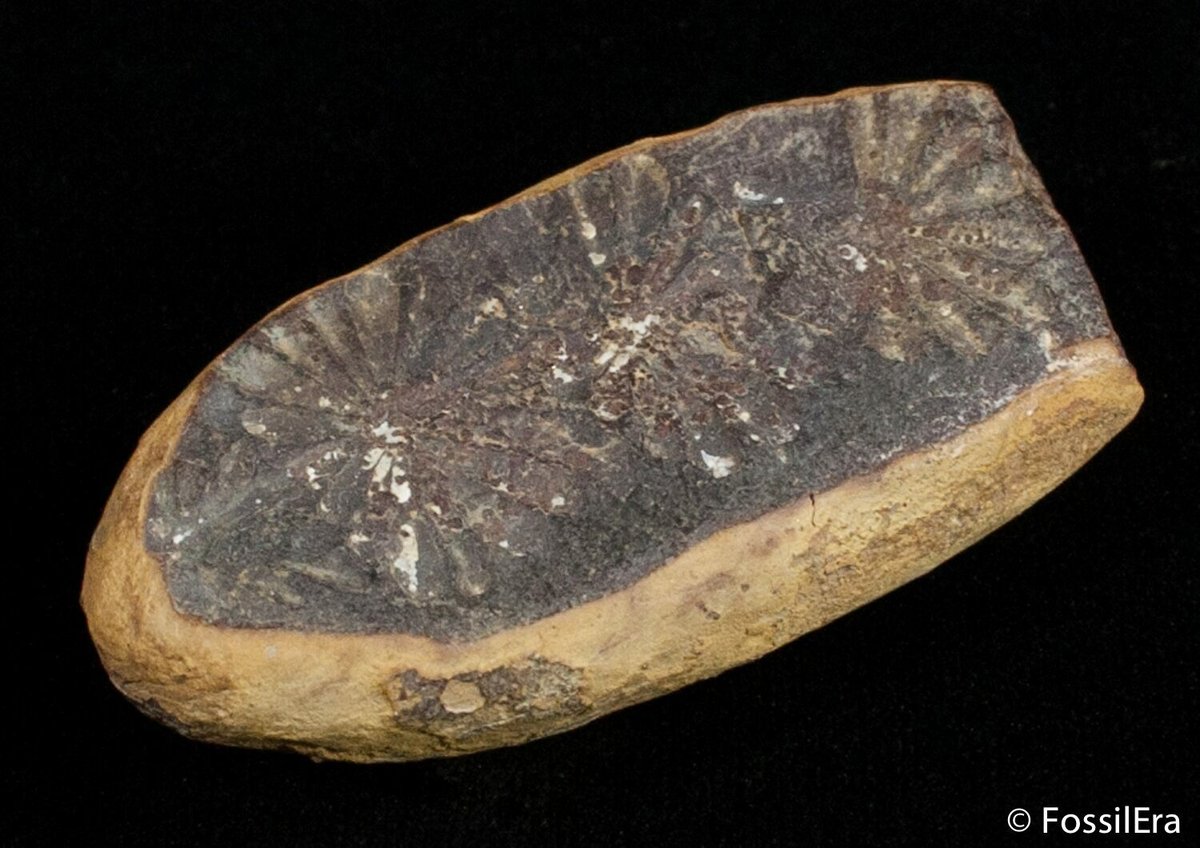
The physical appearance of Lepidodendron was unlike any plant alive today, a testament to its ancient and unique lineage. Mature individuals were towering giants, reaching heights of over 30 meters (100 feet), with some estimates suggesting they could grow as tall as 50 meters (165 feet). Their trunks, which could exceed 2 meters (6.5 feet) in diameter at the base, were typically unbranched for most of their height, culminating in a dichotomously branching crown of frond-like branches tipped with elongated, needle-like leaves. The most defining feature, and the source of its name "scale tree," was its bark. The surface of the trunk and branches was covered in a distinctive, tessellated pattern of diamond-shaped leaf cushions, or bolsters. These were the scars left behind after leaves were shed as the plant grew. Each scar contained three smaller marks within it: a central vascular bundle scar flanked by two parichnos scars, which are thought to have been associated with gas exchange. This scaly, reptilian-like texture is beautifully preserved in fossil impressions, such as the described specimen measuring approximately 8 cm by 3 cm, which clearly shows the characteristic helical arrangement of these leaf scars. Unlike modern trees that grow thicker year after year through secondary growth, Lepidodendron had a determinate growth pattern, reaching its maximum size relatively quickly and then dying after a reproductive cycle. Its structural support came not from dense wood but from a thick, bark-like periderm, with a relatively small central vascular column.
As an autotroph, Lepidodendron derived its energy from sunlight through photosynthesis, a process carried out by the dense canopy of simple, grass-like leaves. These leaves, often preserved as fossils themselves under the form taxon name Lepidophyllum, were microphylls—small leaves with a single, unbranched vein, a characteristic feature of lycopods. The plant's life cycle was complex and fundamentally different from that of modern seed-bearing trees. It reproduced via spores, not seeds. The crown of the plant produced cones, known as Lepidostrobus, which released vast quantities of spores. This reproductive strategy, requiring moist conditions for fertilization, tied Lepidodendron inextricably to its wetland habitat. Its growth was likely rapid and determinate, a "live fast, die tall" strategy. It would grow to its full, towering height in a relatively short period, perhaps only 10 to 15 years, reproduce a single time in a massive spore-releasing event (a strategy known as monocarpy), and then die. The root system, known as Stigmaria, was also unique. It consisted of several large, dichotomously branching rhizophores that spread out just below the ground surface, anchoring the massive trunk in the soft, waterlogged substrate of the swamp floor.
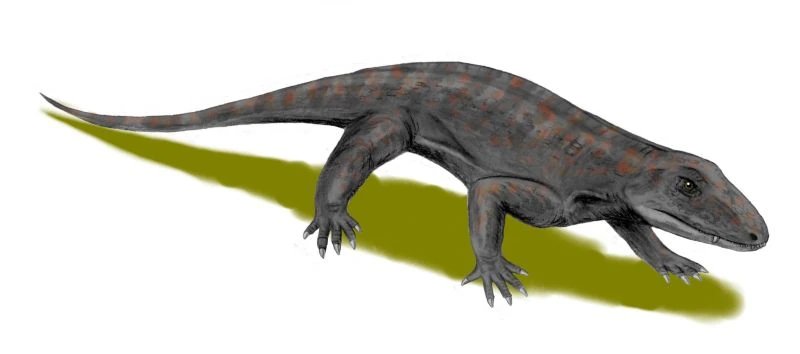
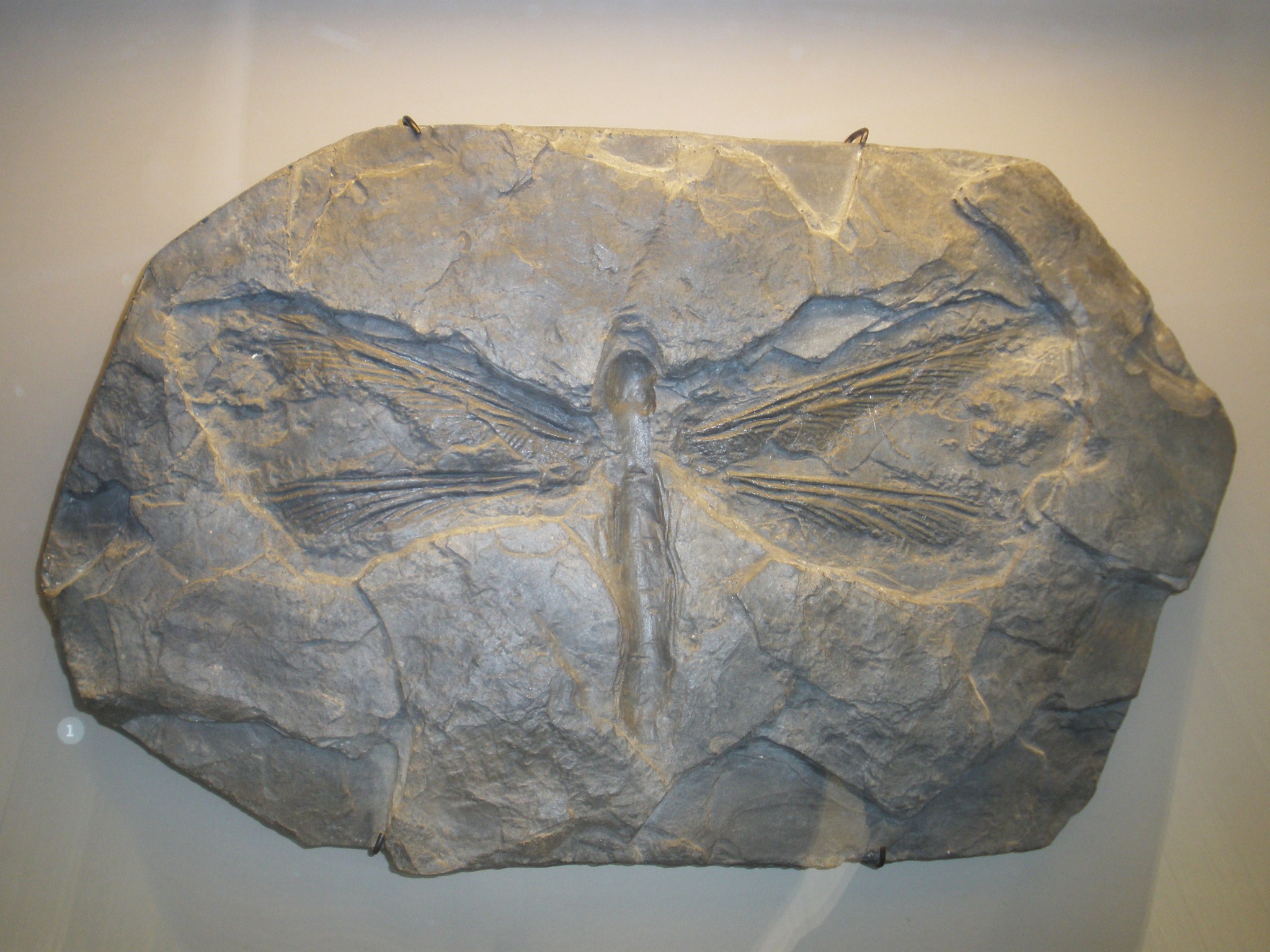
Lepidodendron was the undisputed keystone species of the Carboniferous coal swamp ecosystem. These forests grew in vast, low-lying coastal plains near the equator during a period of high atmospheric oxygen levels (up to 35%) and a warm, humid, greenhouse climate. The geography of the time was dominated by the supercontinent of Pangaea, with extensive tropical wetlands fringing the Tethys Sea. Within these swamps, Lepidodendron grew in dense, almost monotypic stands, forming the upper canopy and creating a shaded, humid understory. It co-existed with other giant lycopods like its close relative Sigillaria, towering sphenopsids (horsetails) like Calamites, and an undergrowth of large ferns and smaller seed ferns (pteridosperms). This lush vegetation supported a unique fauna, including giant arthropods like the millipede-like Arthropleura, which could reach over two meters in length, and the dragonfly-like Meganeura with a wingspan of 75 centimeters. Early tetrapods, such as amphibians like Eryops, patrolled the murky waters, navigating the maze of Stigmaria roots. When these giant scale trees died, they fell into the anoxic, acidic swamp water, where decomposition was inhibited, allowing vast quantities of organic matter to accumulate and eventually form the massive coal seams that give the Carboniferous Period its name.
The discovery and study of Lepidodendron fossils were central to the birth of paleobotany in the early 19th century. Miners in the coal fields of Europe and North America had long been familiar with the strange, scaly patterns found on rocks associated with coal seams, often referring to them as "fossil fish scales" or "serpent skins." The formal scientific description began with the work of French naturalist Adolphe-Théodore Brongniart, often called the "father of paleobotany." In his seminal work "Histoire des végétaux fossiles" (1828–1837), Brongniart systematically described and classified these remains, coining the genus name Lepidodendron from the Greek words 'lepis' (scale) and 'dendron' (tree). Another key figure was the British geologist William Hutton, who, along with John Lindley, published "The Fossil Flora of Great Britain" (1831–1837), which provided detailed illustrations and descriptions of British Carboniferous plants, including numerous Lepidodendron specimens. Because different parts of the same plant—roots, trunk, leaves, cones—were often found separately, they were initially given different scientific names (Stigmaria for roots, Lepidophyllum for leaves, etc.). It took decades of painstaking work by paleobotanists like William Crawford Williamson in the late 19th century to piece together these "form taxa" and reconstruct the whole organism, revealing the true nature of this bizarre and magnificent ancient plant.
Lepidodendron occupies a critical position in the evolutionary history of plant life. It belongs to the division Lycopodiophyta, a group that includes modern, but much smaller, clubmosses, spikemosses, and quillworts. The scale trees represent the pinnacle of this lineage, an evolutionary experiment in gigantism that ultimately proved less successful than the seed-bearing plants that would later dominate terrestrial ecosystems. They demonstrate how early vascular plants, without the benefit of true wood or the complex reproductive strategy of seeds, could achieve tree-like stature and form vast forests. The development of a thick, supportive periderm and a shallow but extensive Stigmaria root system were key innovations that allowed for this immense size. Lepidodendron and its relatives were transitional in the sense that they were spore-bearing plants that achieved the ecological role of trees, a role now almost exclusively filled by gymnosperms and angiosperms. Their eventual decline and extinction at the end of the Carboniferous and into the Permian was linked to climate change, specifically the drying of their swamp habitats as Pangaea consolidated, a shift that favored the more drought-resistant seed plants.
Despite being one of the most well-known fossil plants, Lepidodendron is still the subject of scientific debate. The precise number of species within the genus is a point of contention. Early paleobotanists named dozens of species based on slight variations in the size, shape, and arrangement of the leaf scars. Many modern researchers, however, believe that much of this variation could be due to the age of the plant (scars stretched as the trunk grew), the position on the trunk, or simple individual variation, suggesting the actual number of species was far lower. The exact mechanism of its rapid growth and its monocarpic (single reproduction) life cycle is also an area of active research, with scientists modeling its biomechanics and physiology to understand how such a structure could be supported and sustained. Revisions to the classification of the broader group of arborescent lycopods are ongoing, as new fossil evidence helps clarify the relationships between Lepidodendron, Sigillaria, and other related genera, refining our understanding of this extinct but once-dominant branch of the plant kingdom.
The fossil record of Lepidodendron is exceptionally rich and globally distributed, reflecting its dominance during the Carboniferous. Its remains are most famously found in the Coal Measures of Europe (particularly Great Britain, Germany, and Belgium) and North America (especially in the Appalachian Basin states of Pennsylvania, Ohio, and West Virginia), as well as in deposits in China and Russia. Because different parts of the plant fossilized under different conditions, the record is composed of various form taxa. The bark impressions are the most common and are often found as large, flattened sheets in shale and sandstone layers above coal seams. Three-dimensionally preserved trunk casts, known as "kettles," can sometimes be found standing upright in the position they grew, forming remarkable "fossil forests," such as the famous site in Victoria Park, Glasgow, Scotland. The quality of preservation can be extraordinary, with cellular-level detail sometimes visible in coal balls—calcareous petrifactions that formed within the peat swamps, preserving the plant tissues in three dimensions without compression.
Although extinct for nearly 300 million years, Lepidodendron has left a lasting cultural and scientific legacy. Its distinctive and aesthetically pleasing bark patterns make it a prized fossil for collectors and a centerpiece in museum exhibits on Paleozoic life worldwide, from the Smithsonian National Museum of Natural History to the Field Museum in Chicago. It serves as a powerful educational tool, illustrating the concept of deep time and showcasing a world where familiar-looking plants were absent and giant clubmosses formed the forests. Its image is frequently used in paleoart and documentary reconstructions of the Carboniferous period, often depicted alongside giant insects and early amphibians, becoming an iconic symbol of the strange and wonderful ecosystems of the ancient Earth. More fundamentally, the immense biomass of Lepidodendron and its contemporaries formed the coal that fueled the Industrial Revolution, meaning our modern world is, in a very real sense, built upon the fossilized remains of these ancient scale trees.
Time Period
Frequently Asked Questions
What is Lepidodendron (Scale tree) bark?
Lepidodendron, commonly known as the "scale tree," was a colossal, primitive vascular plant that dominated the tropical swamp forests of the Paleozoic Era. Flourishing throughout the Carboniferous Period, approximately 358.9 to 298.9 million years ago, these arborescent lycopods were not true trees ...
When did Lepidodendron (Scale tree) bark live?
Lepidodendron (Scale tree) bark lived during the carboniferous period of the paleozoic era approximately 358.9 - 298.9 million years ago.
What did Lepidodendron (Scale tree) bark eat?
Lepidodendron (Scale tree) bark was a autotroph (photosynthetic). It lived in tropical and subtropical coal swamps, wetlands habitats.
What type of fossil is Lepidodendron (Scale tree) bark?
Lepidodendron (Scale tree) bark is preserved as a impression fossil. The preservation quality is good.
Related Specimens
From the paleozoic era · impression fossils