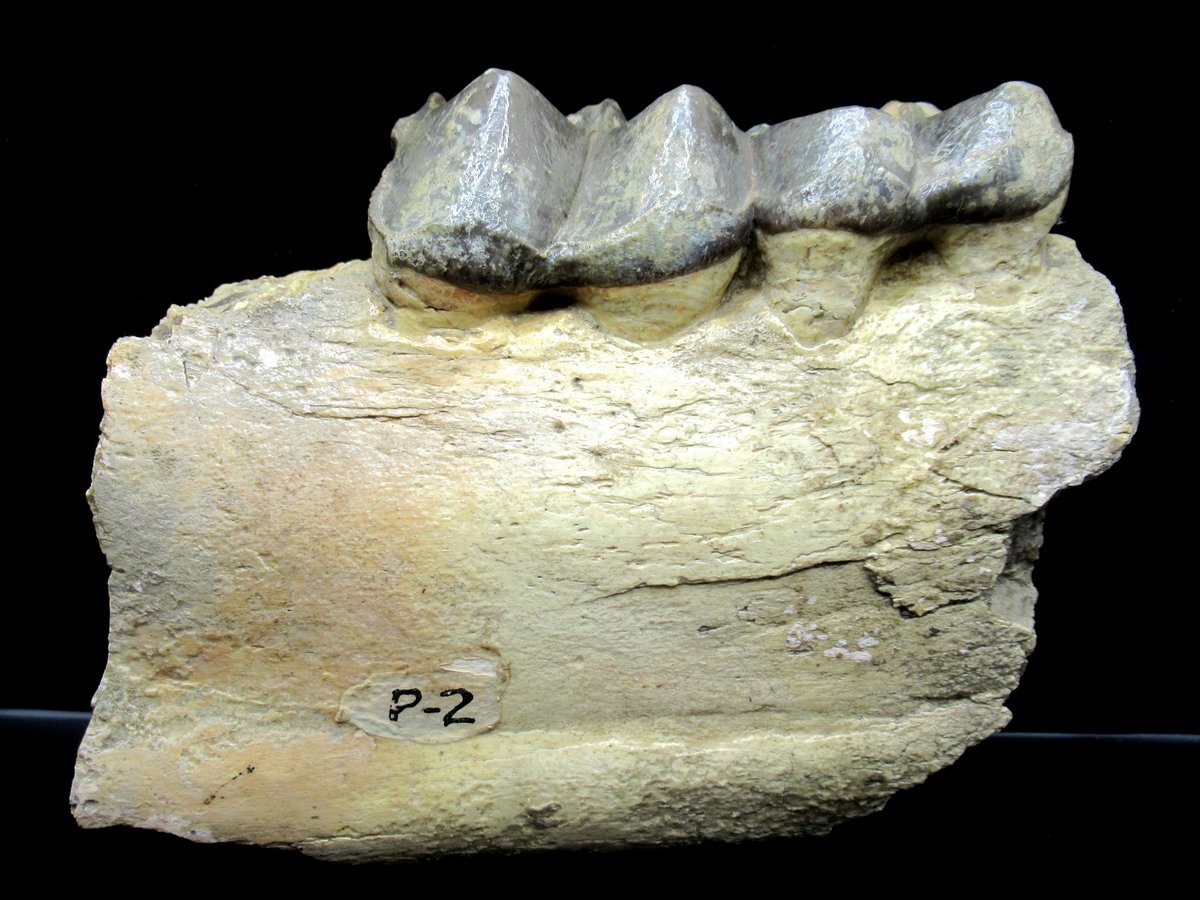
Sphenacodon
Sphenacodon ferox
Image: Image sourced via web search (Fair use / Educational)
About Sphenacodon
Sphenacodon ferox was a formidable apex predator of the Early Permian period, roaming the terrestrial landscapes of what is now North America approximately 299 to 280 million years ago. As a prominent member of the synapsid lineage, this basal mammal-like reptile holds immense significance in paleontology for illustrating the early evolutionary steps that eventually led to modern mammals, showcasing transitional anatomical features that bridge the gap between early amniotes and more advanced therapsids. Its existence provides a crucial window into the complex terrestrial ecosystems that developed long before the dawn of the dinosaurs.
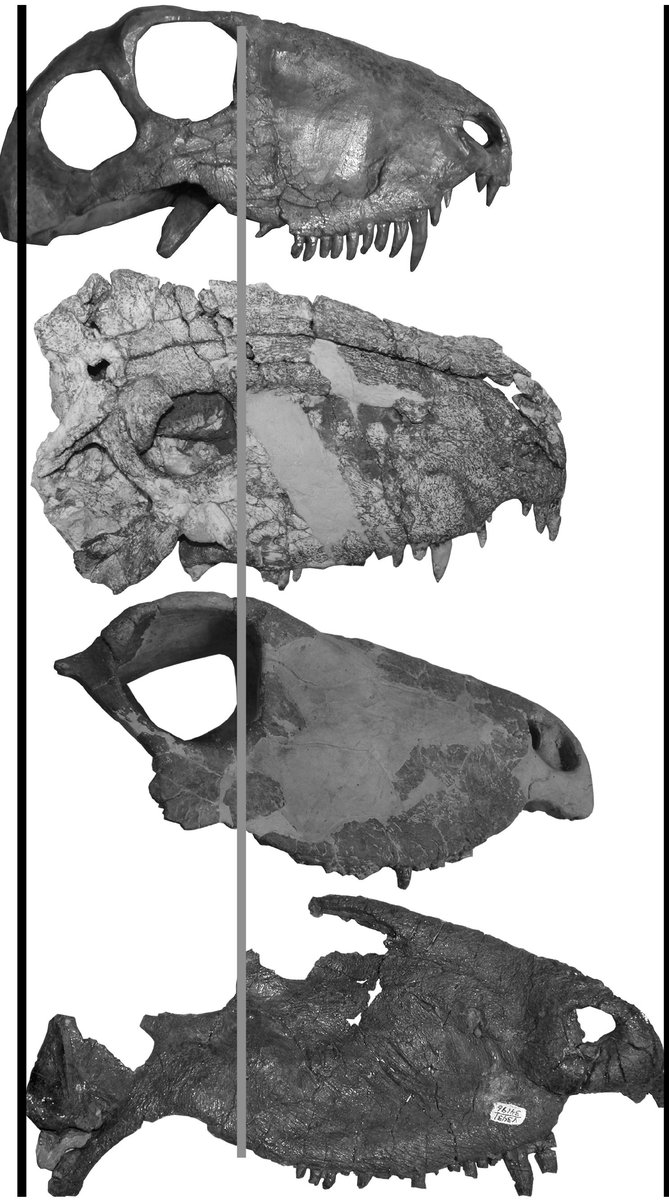
In terms of physical description, Sphenacodon ferox was a heavily built, robust animal that could reach lengths of up to 3 meters (approximately 10 feet) and weigh an estimated 100 to 150 kilograms, making it one of the largest terrestrial predators of its time. Unlike its famous close relative Dimetrodon, Sphenacodon did not possess a towering dorsal sail; however, it did feature noticeably elongated neural spines along its back. These spines were flattened and broadened at their bases, likely serving as attachment points for massive epaxial muscles rather than supporting a web of skin for thermoregulation. The skull of Sphenacodon was large, deep, and narrow, equipped with a highly specialized, heterodont dentition that is characteristic of early synapsids. The front of the jaw housed large, dagger-like incisiform teeth designed for piercing and gripping struggling prey, followed by a distinct diastema, and then massive, enlarged caniniform teeth that functioned much like the saber-teeth of later mammalian predators. Behind these canines were smaller, sharp, recurved teeth used for slicing flesh. Its postcranial skeleton reveals a sprawling posture typical of early tetrapods, with short, powerful limbs extending outward from the body and a long, heavy tail that helped balance its massive anterior bulk. When compared to modern animals, Sphenacodon would have resembled a heavily armored, oversized monitor lizard with a disproportionately large, mammalian-like head, moving with a side-to-side undulating gait that belied its capacity for sudden, explosive bursts of speed.
The paleobiology of Sphenacodon paints a picture of a highly specialized, terrestrial ambush predator. Given its sprawling limb posture and heavy build, it is unlikely that Sphenacodon was capable of sustained, high-speed pursuit. Instead, it likely relied on stealth and the dense vegetation of its habitat to ambush slower-moving prey, utilizing its massive jaw musculature and deeply rooted caniniform teeth to deliver fatal, bone-crushing bites. The structure of its jaw, featuring a strong lower mandible and an enlarged temporal fenestra, allowed for the attachment of powerful adductor muscles, granting it a bite force capable of subduing heavily armored amphibians and early reptiles. Socially, there is little evidence to suggest that Sphenacodon lived in cooperative packs; it was more likely a solitary hunter, highly territorial, and aggressive toward conspecifics, as suggested by healed bite marks on some sphenacodontid skulls. The metabolism of Sphenacodon is a subject of intense interest. While it was undoubtedly an ectotherm (cold-blooded), relying on environmental temperatures to regulate its body heat, its large body mass would have conferred a degree of inertial homeothermy. This means that once it warmed up in the Permian sun, its sheer bulk would have allowed it to retain heat for extended periods, giving it a metabolic advantage over smaller prey during the cooler hours of the day or night. Growth patterns inferred from bone histology suggest a slow, continuous growth rate typical of basal amniotes, taking several years to reach full maturity.
The ecological context of the Early Permian was one of dramatic climatic and geographic transformation. Sphenacodon lived on the supercontinent of Pangaea, specifically in the equatorial regions of what is now the American Southwest. The climate was becoming increasingly arid and seasonal, transitioning away from the lush, humid coal swamps of the preceding Carboniferous period. The landscape was characterized by vast floodplains, meandering river systems, and seasonally dry upland areas, dominated by early seed ferns, conifers, and drought-resistant flora. In this environment, Sphenacodon occupied the very top of the food web. It shared its habitat with a diverse array of fauna, including large, heavily armored herbivorous tetrapods like Diadectes, early herbivorous synapsids such as Edaphosaurus, and massive, semi-aquatic amphibians like Eryops. Sphenacodon likely preyed upon the juveniles of these larger herbivores, as well as smaller pelycosaurs, early reptiles, and terrestrial amphibians. The evolutionary arms race between predators like Sphenacodon and their prey drove the development of thicker dermal armor in herbivores and increasingly specialized, powerful dentition in the carnivores. The seasonal aridity of the environment meant that life was often concentrated around shrinking water sources during dry periods, creating intense competition and frequent predator-prey interactions along the muddy banks of Permian rivers.
The discovery history of Sphenacodon is deeply intertwined with the early days of American paleontology and the famous fossil rushes of the late 19th century. The genus was first described by the eminent paleontologist Othniel Charles Marsh in 1878, during the height of the infamous 'Bone Wars' between Marsh and his bitter rival, Edward Drinker Cope. The type specimen was discovered in the rugged, red-rock terrain of New Mexico, specifically within the fossil-rich beds of El Cobre Canyon. The fossils were originally collected by David Baldwin, a prolific fossil hunter who worked for both Marsh and Cope at different times. Marsh coined the name Sphenacodon, which translates to 'wedge-point tooth,' in reference to the distinctive shape of its lateral teeth. For many decades, Sphenacodon was known only from fragmentary jaw pieces and isolated vertebrae, leading to some early confusion regarding its exact appearance and relationship to the more famous Dimetrodon, which was being discovered in the slightly younger red beds of Texas. It wasn't until the early 20th century, with more comprehensive expeditions led by institutions like the University of Chicago and the American Museum of Natural History, that more complete, articulated skeletons of Sphenacodon ferox and the larger, closely related species Sphenacodon ferocior were unearthed. These later discoveries, particularly those from the Abo Formation and the Cutler Group in New Mexico, provided the crucial postcranial material needed to fully reconstruct the animal and understand its unique, sail-less anatomy.
The evolutionary significance of Sphenacodon cannot be overstated, as it occupies a critical transitional node in the vast tree of life. It belongs to the family Sphenacodontidae, a group of advanced pelycosaurs that are the direct ancestors of the therapsids, which in turn gave rise to true mammals. Sphenacodon exhibits several key morphological innovations that foreshadow mammalian anatomy. Most notably, the differentiation of its teeth into distinct incisors, canines, and postcanines (heterodonty) marks a significant departure from the uniform, peg-like teeth of earlier reptiles and amphibians. This dental specialization allowed for more efficient processing of food, a trait that would become a hallmark of mammalian evolution. Furthermore, the enlargement of the temporal fenestra—the opening in the skull behind the eye socket—provided increased space for the attachment of complex jaw muscles, an early step toward the highly modified mammalian jaw and middle ear complex. While Sphenacodon itself did not leave direct modern descendants, its close relatives within the sphenacodontid family were the rootstock from which the entire mammalian lineage blossomed. Studying Sphenacodon allows paleontologists to trace the stepwise accumulation of mammalian traits, demonstrating how features we associate with modern mammals, such as specialized chewing and upright posture, had their humble, rudimentary beginnings in the sprawling, cold-blooded predators of the Permian.
Scientific debates surrounding Sphenacodon have historically focused on the function of its elongated neural spines and its precise taxonomic relationship to Dimetrodon. For years, researchers debated whether the thickened, blade-like spines of Sphenacodon supported a low, fleshy ridge used for fat storage, a rudimentary sail for thermoregulation, or simply served as robust anchor points for massive back and neck muscles required to tear apart large prey. Modern biomechanical analyses strongly favor the muscle attachment hypothesis, suggesting that Sphenacodon required immense epaxial musculature to stabilize its heavy head and deliver powerful, tearing bites. Additionally, there has been ongoing taxonomic debate regarding the division of species within the genus. While Sphenacodon ferox is the type species, the larger, more robust Sphenacodon ferocior is sometimes argued by certain researchers to represent a distinct genus, or conversely, merely a sexually dimorphic or older, larger morph of S. ferox. Recent histological studies of the bone tissue have also sparked debates about the metabolic rates of sphenacodontids, with some scientists arguing that the highly vascularized bone suggests a metabolism that was slightly more elevated than that of typical modern reptiles, hinting at the very earliest, nascent stages of endothermy.
The fossil record of Sphenacodon is primarily restricted to the southwestern United States, with the vast majority of specimens recovered from the Early Permian red bed formations of New Mexico, Utah, and Arizona. The Abo Formation and the Cutler Group are the most famous and productive sites for Sphenacodon remains. To date, dozens of specimens have been collected, ranging from isolated teeth and fragmented jawbones to nearly complete, articulated skeletons. The preservation quality in these red beds is generally good to excellent, as the arid, floodplain environments of the Permian were conducive to rapid burial by seasonal floodwaters, protecting the bones from extensive scavenging and weathering. Skulls, jaws, and the distinctive neural spines are the most commonly preserved elements, owing to their robust nature. The abundance of Sphenacodon fossils in New Mexico, compared to the dominance of Dimetrodon in the contemporary deposits of Texas, has led paleontologists to propose that these two apex predators were geographically isolated by subtle environmental or physical barriers, such as ancient mountain ranges or differing microclimates, preventing them from directly competing in the same ecosystems.
In terms of cultural impact, Sphenacodon has historically been overshadowed by its spectacular, sail-backed cousin, Dimetrodon, which has become a staple of dinosaur toy lines and popular media despite predating dinosaurs by millions of years. However, Sphenacodon holds a special place in the regional pride of the American Southwest. It is prominently featured in the paleontology halls of the New Mexico Museum of Natural History and Science, where beautifully mounted skeletons serve as educational centerpieces to teach the public about the Permian world and the deep evolutionary history of mammals. For paleontology enthusiasts and students of evolutionary biology, Sphenacodon remains a fascinating and highly respected subject, symbolizing the raw, experimental nature of early terrestrial evolution and the fierce predators that ruled the Earth long before the Mesozoic era.
Classification
Time Period
Discovery
Location
United States
Formation
Abo Formation
Frequently Asked Questions
What is Sphenacodon?
Sphenacodon ferox was a formidable apex predator of the Early Permian period, roaming the terrestrial landscapes of what is now North America approximately 299 to 280 million years ago. As a prominent member of the synapsid lineage, this basal mammal-like reptile holds immense significance in paleon...
When did Sphenacodon live?
Sphenacodon lived during the permian period of the paleozoic era approximately 299-280 million years ago.
Where was Sphenacodon discovered?
Fossils of Sphenacodon were discovered in United States in the Abo Formation.
What did Sphenacodon eat?
Sphenacodon was a carnivore. It lived in terrestrial habitats.
What type of fossil is Sphenacodon?
Sphenacodon is preserved as a body fossil. The preservation quality is good.
Related Specimens
From the paleozoic era · body fossils