Moschops
Moschops capensis
Image: Image sourced via web search (Fair use / Educational)
About Moschops
Moschops capensis was a large, heavily-built synapsid that roamed the ancient landscapes of what is now South Africa during the Middle Permian Period, approximately 260 to 255 million years ago. As a prominent member of the therapsids, the group that includes the ancestors of mammals, Moschops represents a crucial stage in vertebrate evolution, showcasing adaptations that foreshadowed later mammalian traits. Its fossils, abundant in the Karoo Basin, have provided paleontologists with a detailed window into a terrestrial ecosystem that existed long before the dinosaurs rose to dominance.
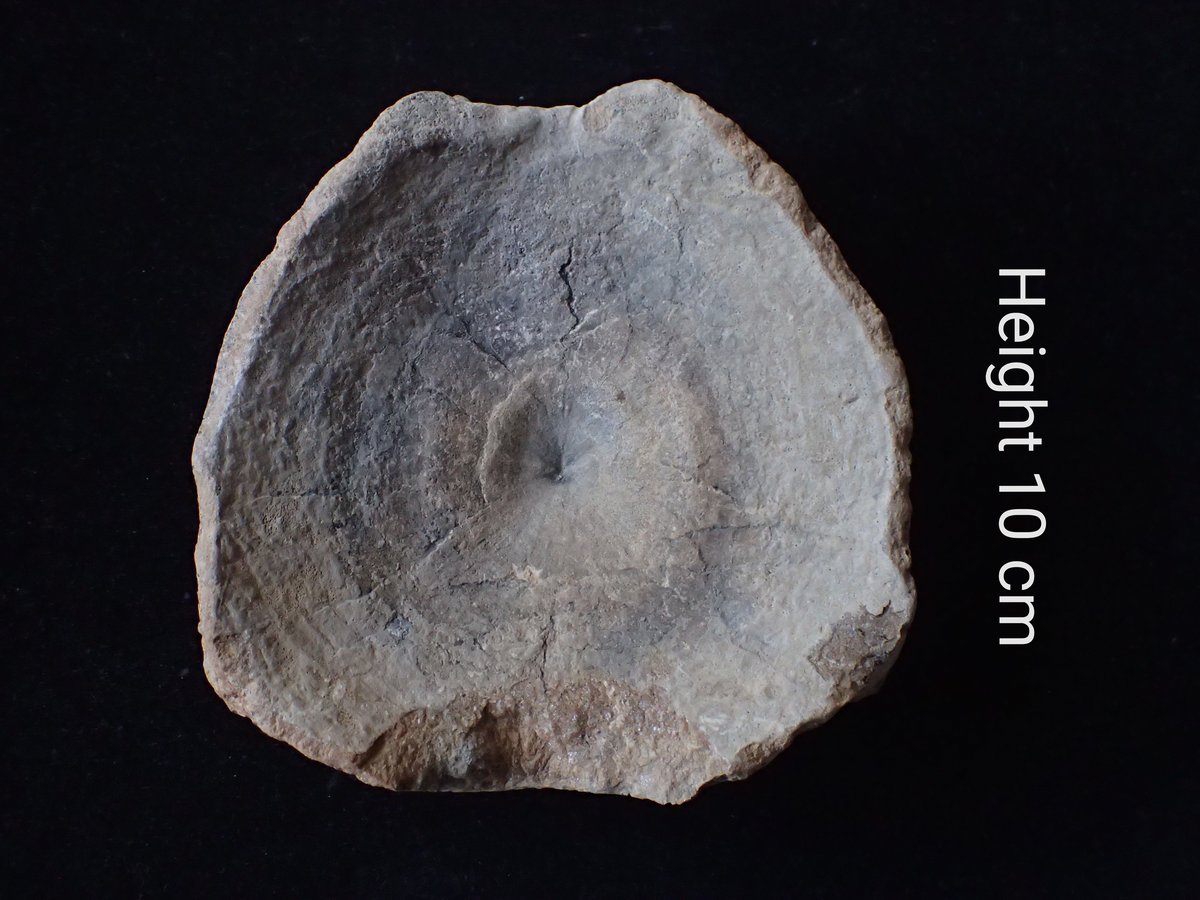
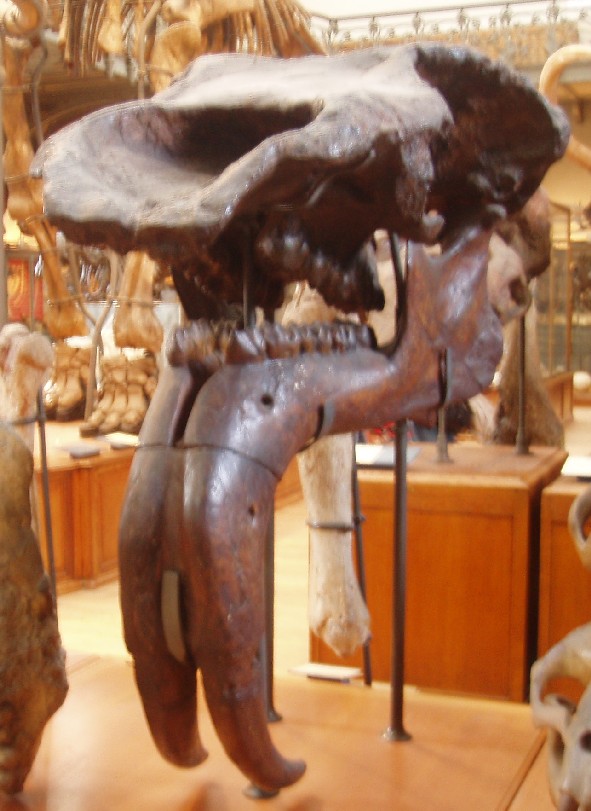
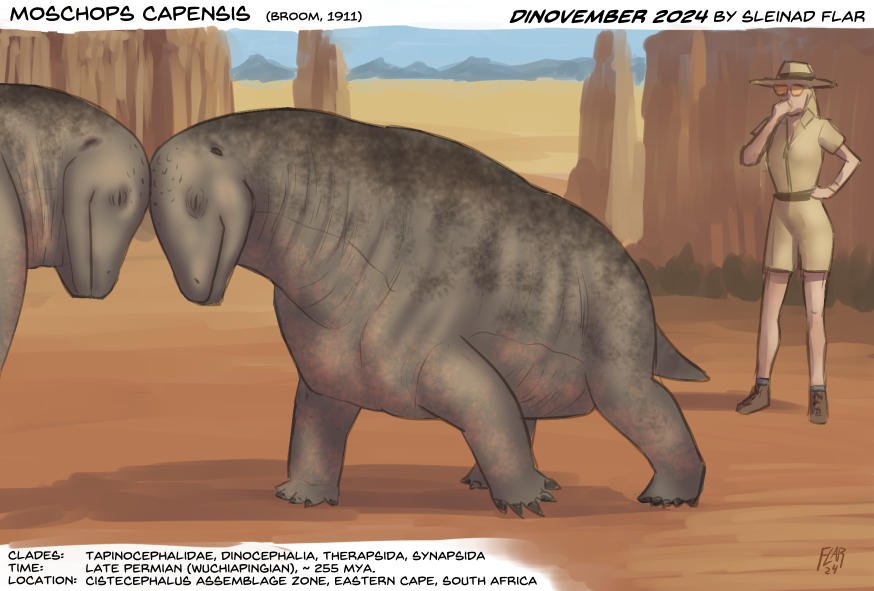
Moschops was a robust and imposing animal, reaching an approximate body length of 2.7 meters (about 9 feet) and weighing an estimated 500 to 1,000 kilograms (1,100 to 2,200 pounds), comparable in size to a modern dairy cow or a small rhinoceros. Its most distinctive feature was its massively thickened skull, a condition known as pachyostosis. The skull roof, particularly in the frontal and parietal regions above the eyes, could be up to 10 centimeters thick, composed of dense, solid bone. This cranial reinforcement has led to significant debate about its function, with theories ranging from defense against predators to intraspecific combat, such as head-butting for mates or territory, similar to modern bighorn sheep. The skull was short and deep, with large temporal fenestrae (openings behind the eye sockets) that provided attachment points for powerful jaw muscles. Its teeth were simple and peg-like at the front, transitioning to more complex, leaf-shaped teeth with serrated edges in the cheek region, well-suited for processing tough plant material. The skeleton was equally stout, with a barrel-shaped torso, short, thick limbs splayed out to the sides in a semi-sprawling posture, and a relatively short tail. This powerful build suggests an animal designed for strength and stability rather than speed.
Based on its dental morphology and large, voluminous gut cavity, Moschops was unequivocally a herbivore. Its simple incisors were likely used for nipping or cropping vegetation, while the more complex cheek teeth would have shredded fibrous plant matter, such as cycads, ferns, and glossopterids, which were common flora of the Permian. The powerful jaw musculature, inferred from the skull's structure, indicates a strong bite force necessary for breaking down tough plant tissues. Locomotion in Moschops was likely slow and deliberate. Its sprawling limb posture, with the upper arm and leg bones held horizontally, was less efficient than the upright stance of later mammals and dinosaurs, requiring significant muscular effort to support its heavy body. This gait would have made it a plodding walker, incapable of high-speed running. There is indirect evidence to suggest Moschops may have exhibited social behavior. The abundance of fossils found in close proximity could indicate herding, a strategy that would have offered protection from the large predators of its time. The thickened skulls are also a strong indicator of social interaction, as such structures in modern animals are almost exclusively used for ritualized combat with members of the same species. It is hypothesized that Moschops males engaged in head-butting contests, a complex social behavior. Its metabolism was likely intermediate between that of a modern reptile and a mammal, a condition known as mesothermy, allowing for more sustained activity than a purely cold-blooded animal but without the high energy costs of full endothermy.
Moschops lived during the Capitanian age of the Middle Permian, a time when the world's landmasses were consolidated into the supercontinent of Pangaea. The interior of Pangaea was characterized by a harsh, semi-arid climate with pronounced seasonal variations, including long dry spells and monsoonal rains. Moschops inhabited the vast floodplains of what is now South Africa's Karoo Basin, a region crisscrossed by ephemeral rivers and dotted with sparse vegetation. It was a key primary consumer in one of the most well-documented Paleozoic ecosystems. The dominant predators in this environment were the formidable dinocephalians, such as the saber-toothed Anteosaurus, which likely preyed upon Moschops, especially the young or infirm. The thickened skull of Moschops may have served as a crucial defense against such attackers. It shared its habitat with a diverse array of other synapsids, including other large tapinocephalid herbivores like Jonkeria and the carnivorous Titanosuchus. The ecosystem also included smaller synapsids, early reptiles, and large amphibians like Rhinesuchus, which inhabited the waterways. Moschops occupied a niche similar to that of large modern herbivores like wildebeest or buffalo, playing a vital role in the food web by converting plant biomass into a food source for the apex predators of the Permian.
The discovery of Moschops is intrinsically linked to the pioneering paleontological work in South Africa's Karoo Basin. The genus was first described and named by the renowned Scottish physician and paleontologist Robert Broom in 1911. Broom, a prolific and sometimes controversial figure, was instrumental in exploring the Karoo's rich fossil beds and establishing the evolutionary connection between therapsids and mammals. The name Moschops, derived from Greek, means 'calf face,' likely a reference to its short, deep snout. The type species is Moschops capensis, with the specific name referring to the Cape Province of South Africa where the fossils were found. The initial discoveries consisted of several well-preserved skulls and partial skeletons collected from the Tapinocephalus Assemblage Zone of the Beaufort Group, a geological layer famous for its abundance of dinocephalian therapsid fossils. Over the decades, numerous additional specimens have been unearthed, making Moschops one of the best-represented therapsids from the Permian period. These finds have allowed for detailed anatomical studies and have cemented the Karoo Basin's status as a globally significant site for understanding vertebrate life before the age of dinosaurs. No single specimen has achieved a popular nickname like 'Sue,' but the collective fossil material provides an exceptionally complete picture of the animal.
Moschops holds a significant position in the evolutionary history of life. As a therapsid, it belongs to the synapsid lineage, the group that ultimately gave rise to all mammals, including humans. Moschops itself was part of a side-branch called Dinocephalia ('terrible heads'), which flourished during the Middle Permian but went extinct before the end of the period. While not a direct ancestor of mammals, it showcases an important stage in the transition from pelycosaur-grade synapsids (like Dimetrodon) to more advanced, mammal-like forms. It possessed several derived features compared to its ancestors, such as more differentiated teeth (heterodonty) and a more developed secondary palate, which are key mammalian characteristics. However, it retained primitive traits like a sprawling posture and a relatively simple braincase. The dinocephalians, including Moschops, represent an early, explosive radiation of large-bodied terrestrial herbivores and carnivores, demonstrating how synapsids came to dominate terrestrial ecosystems long before dinosaurs. The study of Moschops and its relatives provides crucial data points for understanding the stepwise acquisition of mammalian traits and the ecological dynamics of Paleozoic terrestrial faunas. Its eventual extinction, along with all other dinocephalians, paved the way for other therapsid groups, like the gorgonopsians and dicynodonts, to rise to prominence.
Despite being known for over a century, Moschops is still the subject of scientific debate. The primary controversy revolves around the function of its pachyostotic skull. While the head-butting hypothesis, proposed by paleontologists like Herbert Barghusen, is widely supported, some researchers argue that the bone structure was not ideal for absorbing high-impact forces and may have been for species recognition or display. Another area of discussion is its posture. Early reconstructions depicted Moschops with a fully sprawling, lizard-like stance. More recent analyses by Gregory S. Paul and others suggest a more semi-erect or 'semi-sprawling' posture, with the hind limbs held more directly beneath the body than the forelimbs, allowing for more efficient locomotion than previously thought. This reinterpretation changes our understanding of its mobility and energy expenditure. Taxonomic debates have also occurred, with several other proposed tapinocephalid genera now considered by many paleontologists to be junior synonyms of Moschops, possibly representing different growth stages or sexes of the same animal. These ongoing discussions highlight how scientific understanding evolves as new analytical techniques and fossil evidence become available.
The fossil record of Moschops is remarkably robust, though geographically restricted. Its remains are found almost exclusively within the Tapinocephalus Assemblage Zone of the Beaufort Group in the Karoo Basin of South Africa. This geological zone is named after the abundance of tapinocephalid fossils, and Moschops is one of the most common taxa found within it. Dozens of specimens are known, ranging from isolated skulls to nearly complete, articulated skeletons. The quality of preservation is generally good, with the thick, dense bones of the skull and limbs being particularly well-represented in the fossil record. The completeness of these fossils has enabled detailed studies of its anatomy, growth, and potential behavior. Major institutions holding significant Moschops collections include the Iziko South African Museum in Cape Town and the Evolutionary Studies Institute at the University of the Witwatersrand in Johannesburg. The sheer number of fossils has allowed paleontologists to reconstruct the paleoecology of the Middle Permian Karoo with a high degree of confidence, making it one of the best-understood pre-dinosaur ecosystems in the world.
While not as famous as dinosaurs like Tyrannosaurus or Triceratops, Moschops has carved out a niche in popular culture, often appearing in books and documentaries about prehistoric life before the dinosaurs. It is frequently depicted as a classic example of the strange and wonderful creatures of the Permian period. Its distinctive, lumpy-headed appearance makes it memorable. Moschops was featured in the 1990s British children's stop-motion animation show of the same name, which introduced a generation of children to this unique animal. Skeletons and life-sized reconstructions of Moschops are displayed in several natural history museums around the world, including the American Museum of Natural History in New York and the Iziko South African Museum, serving as important educational tools to illustrate the diversity of life during the Paleozoic Era and the deep evolutionary roots of mammals.
Classification
Time Period
Discovery
Location
Karoo Basin, South Africa
Formation
Beaufort Group (specifically the Tapinocephalus Assemblage Zone)
Frequently Asked Questions
What is Moschops?
Moschops capensis was a large, heavily-built synapsid that roamed the ancient landscapes of what is now South Africa during the Middle Permian Period, approximately 260 to 255 million years ago. As a prominent member of the therapsids, the group that includes the ancestors of mammals, Moschops repre...
When did Moschops live?
Moschops lived during the permian period of the paleozoic era approximately 260-255 million years ago.
Where was Moschops discovered?
Fossils of Moschops were discovered in Karoo Basin, South Africa in the Beaufort Group (specifically the Tapinocephalus Assemblage Zone).
What did Moschops eat?
Moschops was a herbivore. It lived in terrestrial habitats.
What type of fossil is Moschops?
Moschops is preserved as a body fossil. The preservation quality is good.
Related Specimens
From the paleozoic era · body fossils