Varanops
Varanops brevirostris
Image: Image sourced via web search (Fair use / Educational)
About Varanops
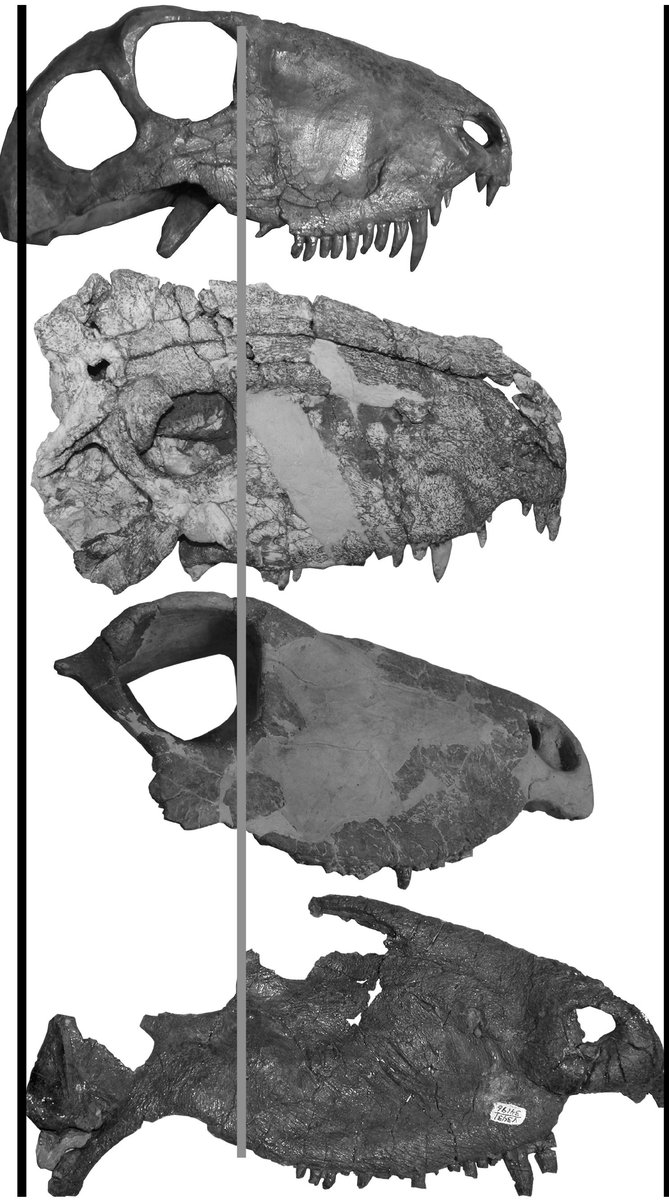
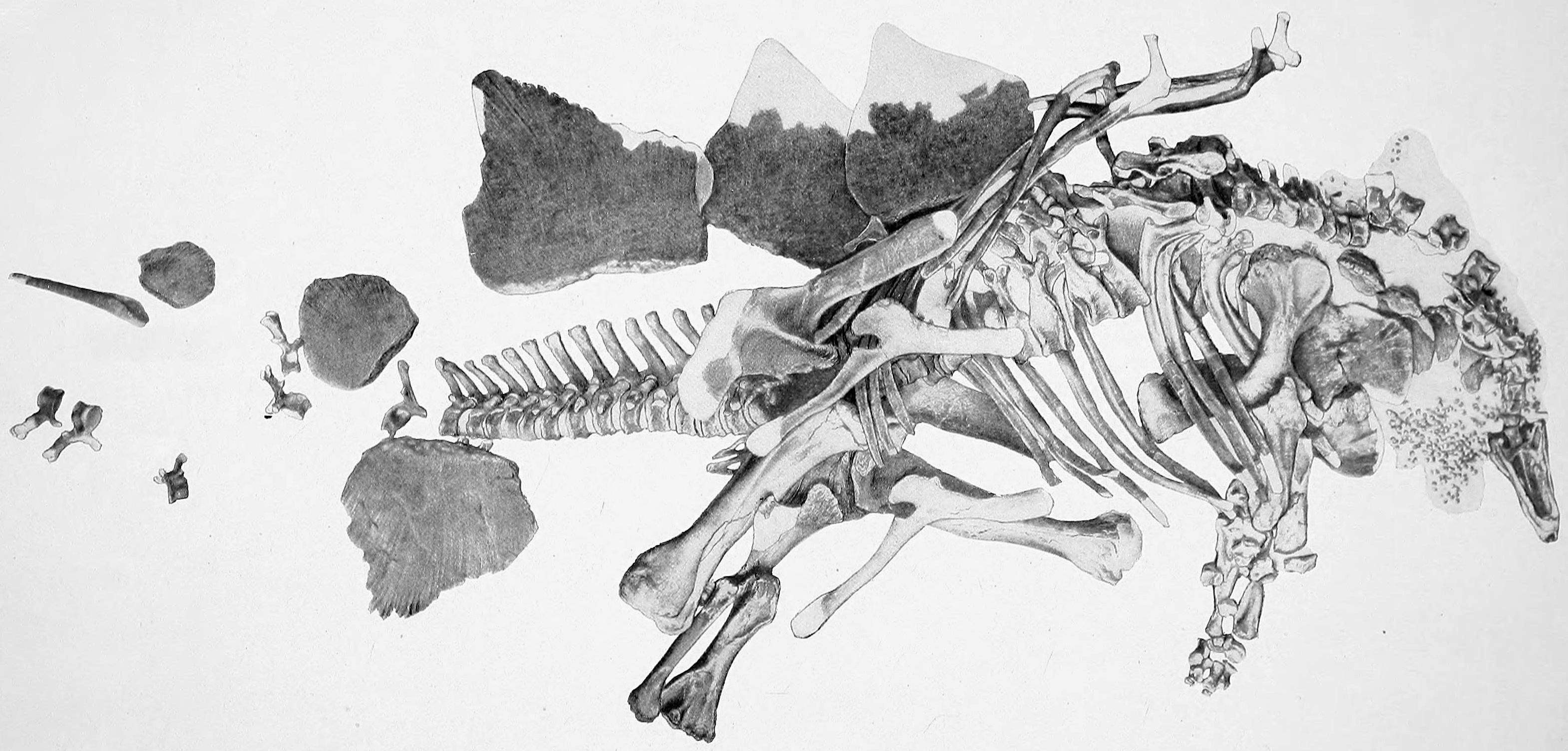
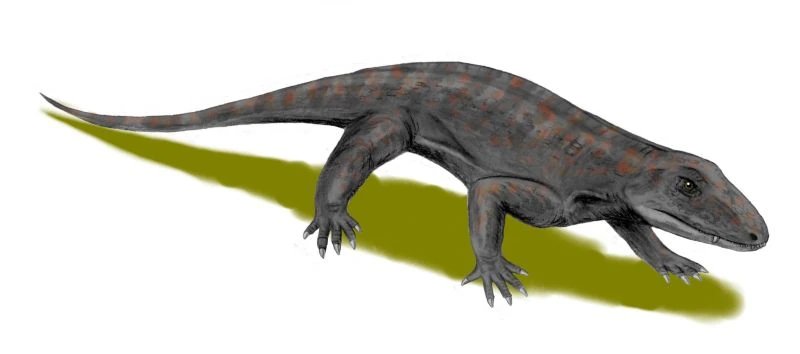
Varanops brevirostris is an extinct species of early terrestrial amniote that lived during the Early Permian period, approximately 279 to 272 million years ago. Traditionally classified as a basal pelycosaur-grade synapsid, this agile predator roamed the semi-arid landscapes of what is now the southwestern United States. The genus name translates to monitor face, a nod to its superficial but striking resemblance to modern monitor lizards of the genus Varanus. Varanops represents a crucial piece of the paleontological puzzle regarding the early diversification of amniotes, the group of tetrapods that lay terrestrially adapted eggs. By studying Varanops, paleontologists have gained profound insights into the early evolutionary pathways that eventually led to the dominant terrestrial faunas of the Paleozoic era. Its existence during the Permian highlights a time of significant evolutionary experimentation, where the foundational body plans of both mammals and reptiles were being established in the wake of the Carboniferous rainforest collapse. The physical anatomy of Varanops brevirostris reveals a highly specialized and agile predator adapted for active hunting in the Permian underbrush. Measuring approximately 100 to 120 centimeters in total body length, Varanops was roughly the size of a modern medium-sized monitor lizard, though its skeletal architecture was distinctly primitive. Weight estimates suggest a lithe animal of around 10 to 15 kilograms, built for short bursts of speed rather than sustained endurance. The skull of Varanops was relatively large, narrow, and elongated, featuring a prominent single temporal fenestra behind each eye orbit, a hallmark of synapsid anatomy. Its jaws were lined with sharp, recurved, and laterally compressed teeth, ideal for slicing through the flesh of small prey. Unlike the massive, sprawling apex predators of its time, such as Dimetrodon, Varanops possessed relatively long and slender limbs. The limb bones, particularly the radius and ulna in the forelimbs and the tibia and fibula in the hindlimbs, were elongated, suggesting a more elevated and agile sprawling gait than its contemporaries. The vertebral column was flexible, and the tail was exceptionally long, likely acting as a counterbalance during rapid changes of direction. Soft tissue inferences, drawn from the muscle attachment scars on the fossilized bones, indicate a heavily muscled jaw and a robust neck, allowing for quick, snapping motions to capture elusive prey. The paleobiology of Varanops paints a picture of a highly active, visually oriented predator. Its diet consisted primarily of smaller tetrapods, including early amphibians, smaller reptiles, and large Paleozoic insects. The sharp, recurved teeth indicate a hunting strategy focused on grasping and holding struggling prey before swallowing it whole or tearing it into manageable pieces. Locomotion in Varanops was likely characterized by a sprawling but highly efficient gait. The elongated limbs and flexible spine suggest it could achieve considerable speed in short sprints, utilizing lateral undulations of its body to increase stride length, much like modern squamates. Social behavior is difficult to infer from the fossil record, but the concentration of multiple individuals in certain fossil beds, such as the famous Cacops bonebed, has led some researchers to speculate about potential gregarious behavior or, more likely, environmental aggregations around shrinking water sources during dry seasons. Growth patterns, analyzed through bone histology of related varanopids, suggest a relatively slow, ectothermic metabolism, with growth rings indicating seasonal variations in development. This ectothermic physiology would have required Varanops to rely on environmental heat sources to regulate its body temperature, basking in the Permian sun to achieve the optimal metabolic rate for hunting. The ecological context of the Early Permian was one of dramatic climatic and geographic transformation. Varanops inhabited the vast supercontinent of Pangea, specifically in the equatorial regions that are now preserved as the red beds of Texas and Oklahoma. The climate of the Arroyo Formation during this time was semi-arid to arid, characterized by distinct wet and dry seasons. The landscape was dominated by drought-resistant flora, including early conifers, seed ferns, and cycads, interspersed with ephemeral river systems and floodplains. In this environment, Varanops occupied the niche of a mid-level predator. It shared its habitat with a diverse array of extraordinary creatures. The apex predators of this ecosystem were the large sphenacodontid synapsids, most notably the sail-backed Dimetrodon, which would have posed a significant threat to Varanops. Other contemporaries included the herbivorous, sail-backed Edaphosaurus, the heavily armored amphibian Cacops, and the aquatic boomerang-headed amphibian Diplocaulus. Varanops likely navigated the complex undergrowth and rocky outcrops to avoid larger predators while hunting its own smaller prey, playing a vital role in the intricate food web of the Early Permian terrestrial ecosystem. The discovery history of Varanops is deeply intertwined with the golden age of American paleontology. The first significant fossils were discovered in 1911 by the renowned paleontologist Samuel Wendell Williston during an expedition to the fossil-rich red beds of Baylor County, Texas. Williston and his team uncovered a remarkable concentration of fossils in what became known as the Cacops bonebed, a site that yielded numerous articulated skeletons of various Permian tetrapods. Initially, Williston described the remains under the name Varanosaurus brevirostris, believing it to be a new species of an already established genus. However, upon further preparation and detailed anatomical study, Williston recognized distinct morphological differences, particularly in the proportions of the skull and limbs, that warranted the creation of a new genus. In 1914, he officially erected the genus Varanops. The holotype specimen, an exceptionally well-preserved skull and partial skeleton, remains a cornerstone of Permian paleontological studies. Decades later, the influential paleontologist Alfred Sherwood Romer extensively studied Varanops, cementing its place in the scientific literature as a classic example of a basal pelycosaur. The evolutionary significance of Varanops and the family Varanopidae has been a subject of intense study and, more recently, profound debate. For over a century, varanopids were universally classified as basal synapsids, placing them on the evolutionary lineage that eventually led to mammals. Under this traditional paradigm, Varanops represented one of the earliest branches of the synapsid family tree, providing critical data on the primitive condition of the mammalian lineage before the evolution of more advanced traits seen in therapsids. Their anatomy was viewed as a mosaic of primitive amniote features and early synapsid specializations, particularly the structure of the temporal fenestra. However, the evolutionary narrative of Varanops is not merely about its position as a potential mammal ancestor; it also highlights the immense morphological diversity and evolutionary experimentation that occurred among early amniotes as they fully conquered terrestrial environments, independent of the aquatic habitats tied to amphibian reproduction. In recent years, the classification of Varanops has become the center of one of the most significant scientific debates in vertebrate paleontology. Beginning around 2020, comprehensive phylogenetic analyses conducted by researchers such as David Ford and Roger Benson challenged the century-old consensus. By re-evaluating the anatomical data and incorporating new morphological characters, these studies suggested that varanopids, including Varanops, might not be synapsids at all. Instead, the revised evolutionary trees placed them within Sauropsida, the lineage that includes modern reptiles and birds. This proposed reclassification is based on subtle features of the braincase, palate, and postcranial skeleton that align more closely with early diapsid reptiles. This ongoing controversy has profound implications, as it would mean that the traditional synapsid fossil record is missing a significant basal branch, and that the early diversity of reptiles was much greater than previously understood. The debate remains unresolved, with paleontologists actively re-examining specimens to test these competing hypotheses. The fossil record of Varanops is relatively sparse but of exceptionally high quality where found. The vast majority of Varanops fossils have been recovered from the Early Permian red beds of Texas, specifically within the Arroyo Formation of the Clear Fork Group. The most famous and productive site for this genus is the Cacops bonebed, which has yielded several articulated and semi-articulated skeletons. This level of preservation is somewhat rare for early terrestrial tetrapods and suggests that these individuals were buried rapidly, perhaps by a sudden flood event or by becoming trapped in drying mudholes during a severe drought. The preservation typically includes well-articulated skulls, complete vertebral columns, and intact limb bones, allowing for highly accurate skeletal reconstructions. Despite the excellent quality of these specific finds, Varanops remains an uncommon fossil overall, suggesting it may have been a specialized predator that did not exist in the massive population densities of some of its contemporaries like Dimetrodon or the amphibian Eryops. The cultural impact of Varanops is primarily confined to the realms of academia and specialized museum exhibits, lacking the widespread pop-culture recognition of its sail-backed contemporary, Dimetrodon. However, for paleontology enthusiasts and students of evolutionary biology, Varanops holds a legendary status as a textbook example of early amniote evolution. Notable displays featuring Varanops or its close relatives can be found in major natural history institutions, including the Field Museum of Natural History in Chicago and the American Museum of Natural History in New York. These exhibits utilize Varanops to educate the public about the deep time origins of modern vertebrate lineages and the dramatic ecological shifts of the Permian period.
Classification
Time Period
Discovery
Location
Texas, United States
Formation
Arroyo Formation
Frequently Asked Questions
What is Varanops?
Varanops brevirostris is an extinct species of early terrestrial amniote that lived during the Early Permian period, approximately 279 to 272 million years ago. Traditionally classified as a basal pelycosaur-grade synapsid, this agile predator roamed the semi-arid landscapes of what is now the south...
When did Varanops live?
Varanops lived during the permian period of the paleozoic era approximately 279-272 million years ago.
Where was Varanops discovered?
Fossils of Varanops were discovered in Texas, United States in the Arroyo Formation.
What did Varanops eat?
Varanops was a carnivore. It lived in terrestrial habitats.
What type of fossil is Varanops?
Varanops is preserved as a body fossil. The preservation quality is good.
Related Specimens
From the paleozoic era · body fossils