Orrorin tugenensis
Image: Image sourced via web search (Fair use / Educational)
About Orrorin tugenensis
1. INTRODUCTION: Orrorin tugenensis, often colloquially referred to as Millennium Man due to the timing of its discovery, is an early species of Homininae that lived approximately 6.1 to 5.7 million years ago during the late Miocene epoch of the Neogene period. Discovered in the Tugen Hills of Kenya, this remarkable primate represents one of the oldest known ancestors in the human evolutionary tree following the divergence of the chimpanzee and human lineages. Its discovery has been highly significant in paleontology because it provides crucial evidence regarding the origins of bipedalism. The existence of Orrorin suggests that upright walking evolved much earlier than previously thought and, crucially, in a forested environment rather than the open savannas that were long assumed to be the cradle of human bipedalism. This paradigm-shifting organism continues to be a focal point for understanding the earliest stages of hominin evolution.
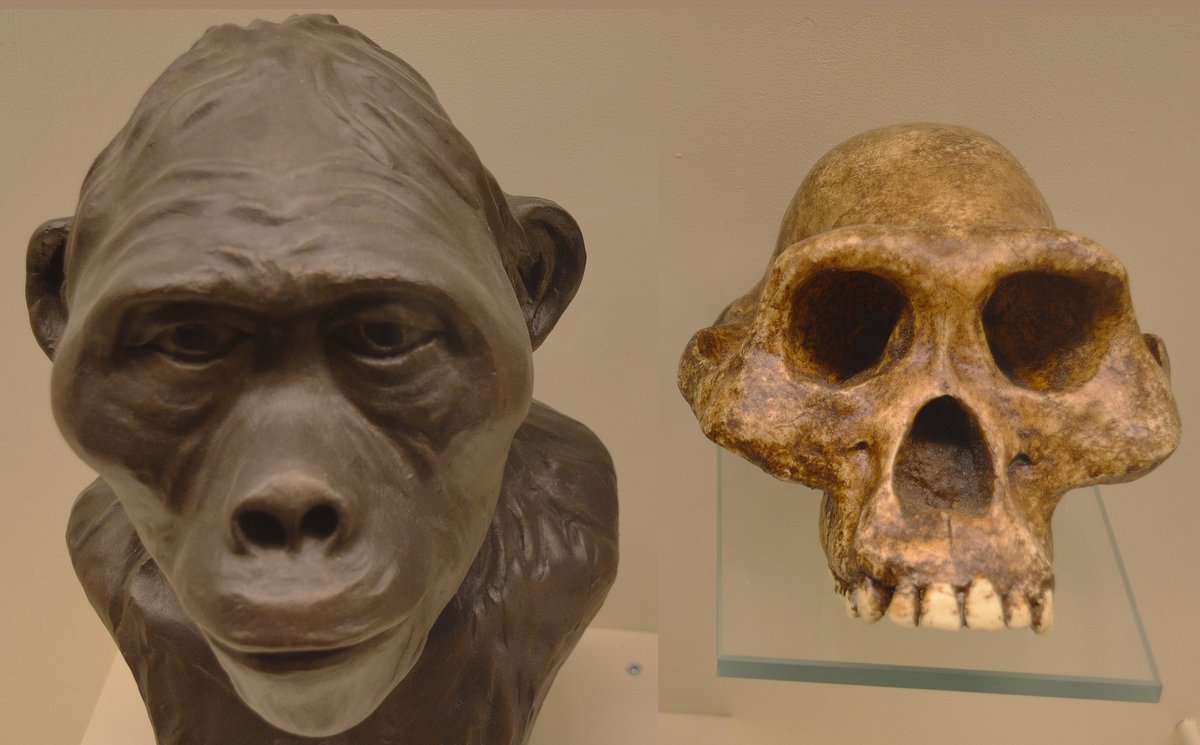
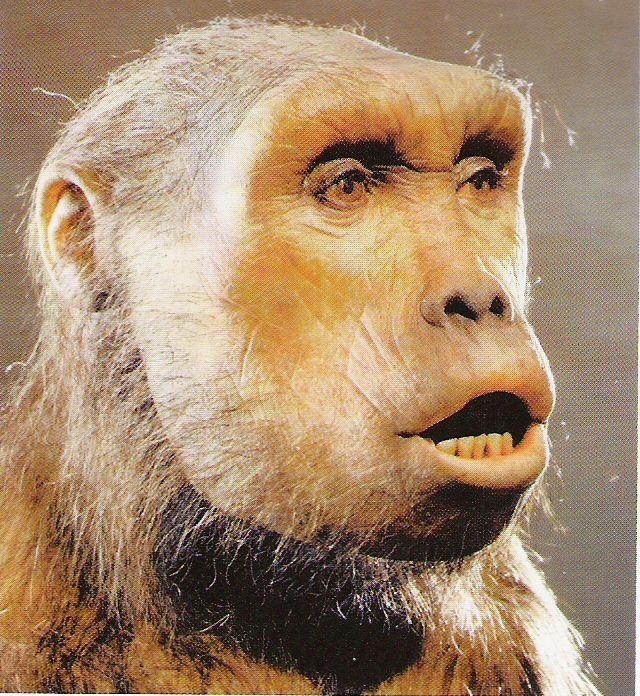
2. PHYSICAL DESCRIPTION: The physical anatomy of Orrorin tugenensis presents a fascinating mosaic of ape-like and human-like characteristics. Based on the recovered postcranial remains, particularly the femur, researchers estimate that Orrorin was approximately the size of a modern female chimpanzee, standing roughly 110 to 150 centimeters tall and weighing between 30 and 50 kilograms. The most distinctive feature of Orrorin is its femur (thigh bone), which exhibits a spherical head rotated anteriorly and a long, anteroposteriorly compressed femoral neck. These skeletal characteristics strongly indicate that Orrorin was capable of habitual bipedalism, walking upright on two legs when on the ground. However, its upper limbs tell a different story; the humerus and a curved proximal phalanx (finger bone) suggest adaptations for arboreal climbing and suspension. The dentition of Orrorin is also unique. It possessed small, thick-enameled molars, unlike the thin enamel seen in modern chimpanzees, but its canines were relatively large and ape-like, though less projecting than those of earlier Miocene apes. Soft tissue inferences are entirely speculative, but it is highly likely that Orrorin was covered in dense hair, similar to modern great apes, given its early position in the hominin lineage. The overall picture is of a creature that looked very much like an ape but moved with a unique combination of terrestrial bipedalism and arboreal agility.
3. PALEOBIOLOGY: The paleobiology of Orrorin tugenensis reveals an organism that was highly adaptable and capable of exploiting multiple ecological niches. Its diet was likely omnivorous, though predominantly frugivorous and herbivorous. The thick enamel on its small molars suggests a diet that included hard or tough food items such as nuts, seeds, roots, and tubers, in addition to softer fruits, leaves, and perhaps occasional insects or small vertebrates. This dental morphology indicates a shift from the softer fruit diets of earlier apes and points to an adaptation for processing more abrasive foods. In terms of locomotion, Orrorin practiced a dual strategy. On the ground, the morphology of its femur indicates it walked bipedally, albeit perhaps not with the same striding gait as modern humans or later Australopithecines. In the trees, its robust arms and curved fingers allowed it to climb efficiently, likely to forage for food, escape predators, and sleep safely in nests. Socially, Orrorin probably lived in multi-male, multi-female groups similar to modern chimpanzees, though the exact social structure and mating system remain unknown. Growth patterns and metabolism were likely comparable to those of extant great apes, with a relatively long period of infant dependency compared to other mammals, but shorter than that of modern humans.
4. ECOLOGICAL CONTEXT: During the late Miocene, the world of Orrorin tugenensis was characterized by significant climatic and environmental shifts. The Tugen Hills region of Kenya, where Orrorin lived, was not the open savanna often associated with early human evolution. Instead, paleoenvironmental reconstructions based on fossilized flora and fauna indicate a diverse habitat consisting of open woodlands, gallery forests along rivers and lakes, and wooded grasslands. The climate was generally warmer and more humid than today, supporting a rich biodiversity. Orrorin shared its environment with a variety of animals, including early elephants, rhinoceroses, hippopotamuses, various species of antelopes, and extinct forms of pigs and horses. Predators in this ecosystem included large felids, such as early saber-toothed cats, and massive crocodilians in the waterways. In this food web, Orrorin occupied a middle tier; it was a primary consumer of plant matter but also a potential prey item for large carnivores. The ability to climb trees would have been a crucial survival mechanism against terrestrial predators, while its bipedalism allowed it to forage efficiently across the woodland floor. This mixed environment provided the selective pressures that likely drove the evolution of Orrorin's unique locomotor repertoire.
5. DISCOVERY HISTORY: The discovery of Orrorin tugenensis is a landmark event in the history of paleoanthropology. The first fossils were unearthed in October and November of 2000 by a research team led by French paleontologist Brigitte Senut and British geologist Martin Pickford, working with the Kenya Paleontology Expedition. The discovery took place in the Lukeino Formation of the Tugen Hills, located in the Baringo District of Kenya. Because the fossils were discovered at the turn of the millennium, the media quickly dubbed the find Millennium Man. In 2001, Senut, Pickford, and their colleagues formally named the species Orrorin tugenensis. The genus name Orrorin means original man in the local Tugen language, while the specific epithet tugenensis honors the Tugen Hills where the fossils were found. The holotype specimen, BAR 1000'00, consists of a fragmentary mandible. However, the most crucial specimens are the postcranial remains, particularly the nearly complete left femur (BAR 1002'00), which provided the critical evidence for bipedalism. The discovery team recovered a total of 20 fossil fragments representing at least five individuals, including jaw fragments, isolated teeth, arm bones, and the famous thigh bones.
6. EVOLUTIONARY SIGNIFICANCE: Orrorin tugenensis holds a position of immense evolutionary significance as one of the earliest known hominins, living just after the genetic divergence of the chimpanzee and human lineages, which molecular clocks estimate occurred between 8 and 6 million years ago. Its existence challenges several traditional hypotheses about human evolution. Most notably, Orrorin provides compelling evidence that bipedalism evolved well before the expansion of open savannas, suggesting that upright walking originated in a forested or woodland environment. This contradicts the long-held savanna hypothesis, which posited that bipedalism was an adaptation to moving across tall grasses. Furthermore, the discoverers of Orrorin have controversially argued that it is a direct ancestor of the genus Homo, bypassing the later Australopithecines, which they view as a specialized, extinct side branch. They base this on the assertion that Orrorin's femur is more similar to that of modern humans than to the femur of Australopithecus afarensis. While this specific phylogenetic interpretation is hotly debated, Orrorin undeniably represents a crucial transitional form, demonstrating that bipedalism and thick dental enamel were among the earliest hominin traits to emerge, preceding significant brain expansion by millions of years.
7. SCIENTIFIC DEBATES: The interpretation of Orrorin tugenensis has been the subject of intense scientific debate since its discovery. The primary controversy revolves around its status as a biped and its exact placement in the hominin family tree. While the discoverers, Senut and Pickford, argue that the femoral morphology definitively proves habitual bipedalism and a direct ancestral link to Homo, other paleoanthropologists urge caution. Some researchers suggest that the femur's features could be associated with a unique form of arboreal locomotion rather than terrestrial bipedalism. Additionally, the claim that Orrorin renders Australopithecus an evolutionary dead end is widely contested by the broader scientific community, which generally views Australopithecines as integral to the human lineage. The fragmentary nature of the Orrorin fossils makes it difficult to resolve these debates definitively. Furthermore, the relationship between Orrorin and other early putative hominins, such as Sahelanthropus tchadensis and Ardipithecus kadabba, remains unclear, with some scientists suggesting they might represent the same or closely related genera.
8. FOSSIL RECORD: The fossil record for Orrorin tugenensis is currently extremely limited and geographically restricted. All known specimens have been recovered from the Lukeino Formation in the Tugen Hills of Kenya. To date, the collection consists of roughly 20 fossil fragments, representing a minimum of five individuals. The preservation quality is generally fair; the fossils are heavily mineralized but highly fragmentary. The recovered parts include several isolated teeth, fragments of the mandible (lower jaw), pieces of the humerus (upper arm bone), a proximal phalanx (finger bone), and most importantly, three fragments of femora (thigh bones). The lack of cranial material (skulls) is a significant gap in the fossil record, preventing researchers from estimating brain size or analyzing facial morphology. The Lukeino Formation itself is a well-dated geological sequence, utilizing radiometric dating of volcanic ash layers above and below the fossil-bearing strata to confidently place Orrorin between 6.1 and 5.7 million years ago.
9. CULTURAL IMPACT: While not as universally recognized by the general public as Lucy (Australopithecus afarensis) or the Neanderthals, Orrorin tugenensis has made a significant cultural impact within the realm of science communication and human origins education. Its nickname, Millennium Man, captured global media attention upon its announcement in 2000, symbolizing a new era of discovery in paleoanthropology. Casts of the Orrorin femur and teeth are displayed in major natural history museums worldwide, including the National Museums of Kenya in Nairobi, where the original fossils are housed. Orrorin frequently features in documentaries and educational materials about human evolution, serving as a prime example of the deep roots of bipedalism and the complex, branching nature of our early family tree.
Classification
Time Period
Discovery
Location
Tugen Hills, Kenya
Formation
Lukeino Formation
Frequently Asked Questions
What is Orrorin tugenensis?
1. INTRODUCTION: Orrorin tugenensis, often colloquially referred to as Millennium Man due to the timing of its discovery, is an early species of Homininae that lived approximately 6.1 to 5.7 million years ago during the late Miocene epoch of the Neogene period. Discovered in the Tugen Hills of Kenya...
When did Orrorin tugenensis live?
Orrorin tugenensis lived during the neogene period of the cenozoic era approximately 6.1-5.7 million years ago.
Where was Orrorin tugenensis discovered?
Fossils of Orrorin tugenensis were discovered in Tugen Hills, Kenya in the Lukeino Formation.
What did Orrorin tugenensis eat?
Orrorin tugenensis was a omnivore. It lived in arboreal and terrestrial habitats.
What type of fossil is Orrorin tugenensis?
Orrorin tugenensis is preserved as a body fossil. The preservation quality is fair.
Related Specimens
From the cenozoic era · body fossils