Thrinaxodon
Thrinaxodon liorhinus
Image: Image sourced via web search (Fair use / Educational)
About Thrinaxodon
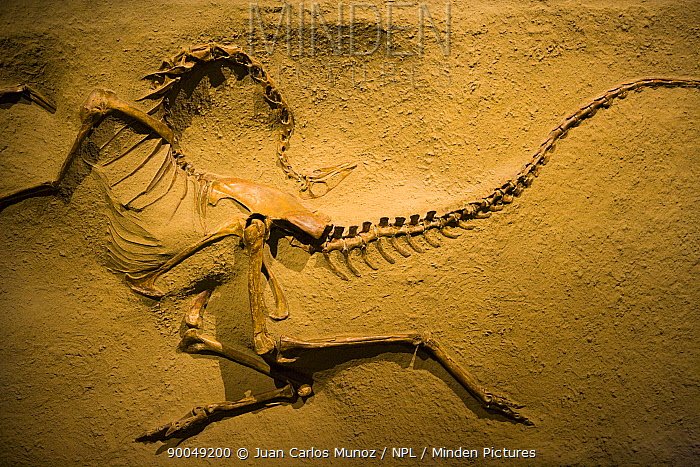
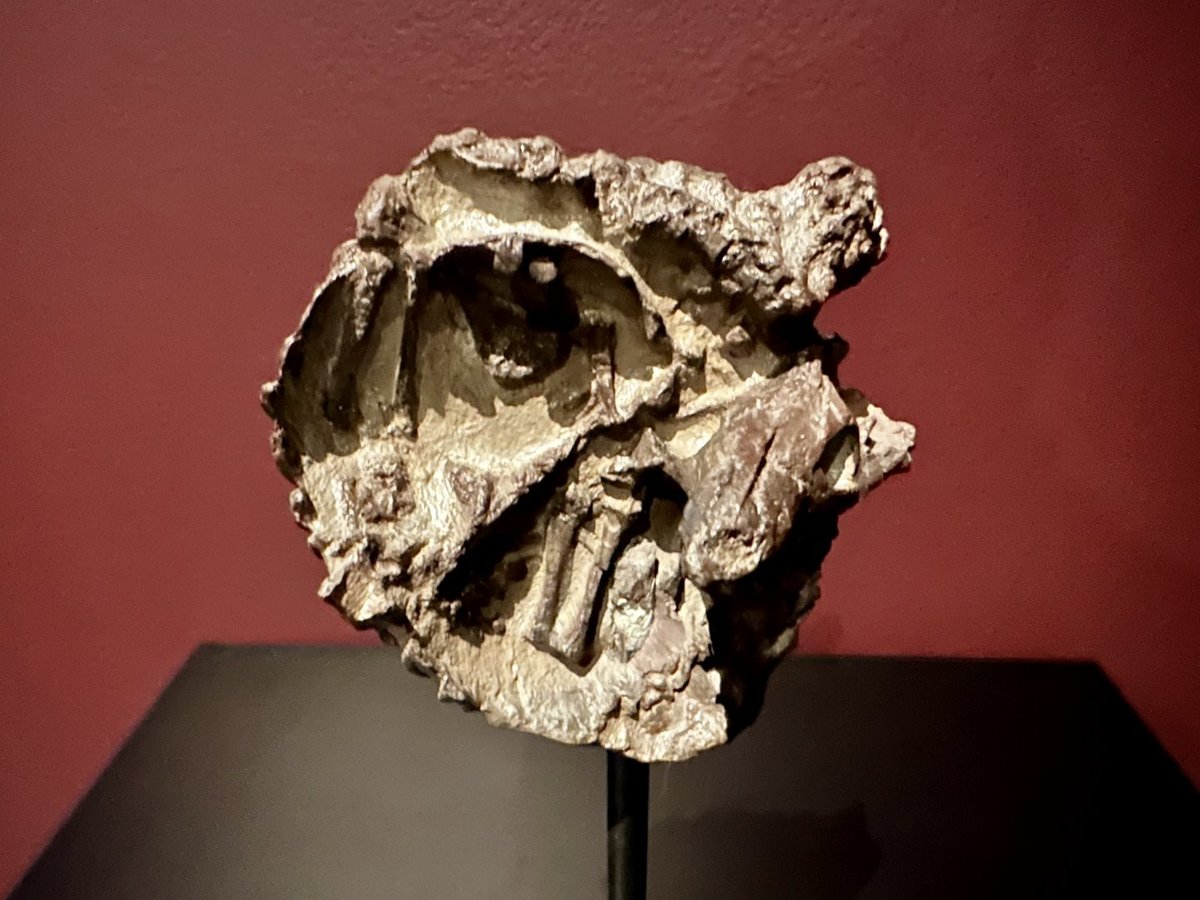
Thrinaxodon liorhinus was a remarkable cynodont, a type of advanced synapsid that lived during the Early Triassic period, approximately 252 to 247 million years ago. Found primarily in the fossil-rich deposits of South Africa and Antarctica, it is one of the most crucial transitional fossils in the history of paleontology, bridging the anatomical and physiological gap between primitive, reptile-like synapsids and true mammals. Its existence immediately following the devastating Permian-Triassic extinction event—often referred to as the Great Dying—makes it a key subject in understanding biological resilience and the evolutionary pathways that eventually led to the rise of the mammalian lineage. By studying Thrinaxodon, scientists have been able to piece together the gradual acquisition of mammalian traits, making it a cornerstone species in evolutionary biology. In terms of physical appearance, Thrinaxodon was a relatively small animal, roughly the size of a modern domestic cat or a large ferret, measuring about 50 centimeters in total body length and likely weighing between one and two kilograms. Its skeletal anatomy reveals a fascinating mosaic of primitive and advanced features. The skull of Thrinaxodon was robust and featured a fully developed secondary palate, a bony plate separating the nasal passages from the mouth. This critical adaptation allowed the animal to breathe and chew simultaneously, a hallmark of advanced metabolism. Its dentition was highly differentiated, featuring incisors for nipping, prominent canines for piercing, and complex, multi-cusped postcanine teeth—from which the name Thrinaxodon, meaning trident tooth, is derived—for shearing meat. One of the most distinctive features of its skull is the presence of numerous small pits, or foramina, on the snout. Paleontologists strongly infer that these pits housed nerves and blood vessels associated with vibrissae, or whiskers, suggesting that Thrinaxodon possessed hair and a highly developed tactile sensory system. The postcranial skeleton is equally revealing. Unlike earlier synapsids, which had ribs extending down the entire length of the torso, Thrinaxodon had a distinct division between the thoracic region, which bore ribs, and the lumbar region, which was ribless. This skeletal configuration strongly implies the presence of a muscular diaphragm, a crucial respiratory muscle that enables the efficient breathing required for a high-metabolic, endothermic lifestyle. Its posture was semi-sprawling; while its hind limbs were positioned somewhat beneath the body for efficient forward propulsion, its forelimbs retained a more primitive, sprawling stance. The paleobiology of Thrinaxodon paints a picture of an active, adaptable predator. Its differentiated teeth indicate a strictly carnivorous diet, likely consisting of insects, small reptiles, and other early synapsids that shared its environment. The presence of a secondary palate and a diaphragm points to a high metabolic rate, suggesting that Thrinaxodon was at least partially endothermic, or warm-blooded. This elevated metabolism would have required a constant intake of food but also allowed the animal to remain active during cooler temperatures when cold-blooded contemporaries might have been sluggish. Thrinaxodon is also famous for its burrowing behavior. Exceptional fossil discoveries have revealed articulated Thrinaxodon skeletons preserved inside the casts of ancient burrows. This fossorial lifestyle was likely a critical survival strategy, providing shelter from the extreme temperature fluctuations of the Early Triassic and offering protection from larger predators. In some astonishing instances, Thrinaxodon has been found preserved in the same burrow as the amphibian Broomistega. While the exact nature of this relationship is debated, it suggests complex ecological interactions, possibly indicating that the amphibian sought refuge in the cynodont's burrow during a period of environmental stress. Growth patterns analyzed from bone histology indicate that Thrinaxodon grew rapidly during its early life, another trait consistent with endothermy, before its growth slowed upon reaching adulthood. The ecological context in which Thrinaxodon lived was one of profound recovery and harsh extremes. During the Early Triassic, the Earth's landmasses were merged into the supercontinent Pangaea. The climate of the Karoo Basin, where most Thrinaxodon fossils are found, was highly seasonal, arid to semi-arid, and subject to intense monsoonal rains. This world was still reeling from the Permian-Triassic extinction, which had wiped out over ninety percent of marine species and seventy percent of terrestrial vertebrate species. In this depauperate ecosystem, Thrinaxodon was part of a pioneering community of survivors. It co-existed with the abundant, pig-sized dicynodont Lystrosaurus, which dominated the herbivorous niches, as well as early archosauriforms like Proterosuchus, which were the apex predators of the time. Thrinaxodon occupied a mesopredator niche, hunting smaller prey while avoiding the jaws of larger carnivores. Its ability to burrow and its advanced metabolic adaptations likely gave it a significant advantage in this harsh, unpredictable environment, allowing it to exploit resources efficiently and survive extreme climatic events. The discovery history of Thrinaxodon dates back to the late nineteenth century, a golden age of paleontological exploration in South Africa. The genus was first described and named by the eminent British paleontologist Harry Govier Seeley in 1894, based on fossil material recovered from the Beaufort Group of the Karoo Supergroup. Seeley recognized the unique, trident-like shape of the postcanine teeth, which inspired the genus name. Over the ensuing decades, numerous expeditions to the Karoo Basin yielded a wealth of Thrinaxodon material, making it one of the best-represented cynodonts in the fossil record. A particularly monumental moment in the history of its discovery occurred in the late 1960s, when paleontologists working in the Fremouw Formation of Antarctica uncovered fossils of Thrinaxodon. This discovery was groundbreaking; finding the exact same terrestrial species in both South Africa and Antarctica provided irrefutable fossil evidence for the theory of continental drift, proving that these landmasses were once joined as part of Pangaea. Key specimens, such as the famous burrow casts containing both Thrinaxodon and Broomistega discovered by an international team in the 2010s, continue to provide unprecedented insights into the life and behavior of this ancient animal. The evolutionary significance of Thrinaxodon cannot be overstated. It occupies a pivotal position on the evolutionary tree, situated squarely in the cynodont lineage that eventually gave rise to true mammals. Thrinaxodon exhibits a perfect blend of primitive reptilian features and advanced mammalian traits, making it a textbook example of a transitional fossil. Its anatomy documents the step-by-step evolution of the mammalian condition. For instance, while it still possessed the complex lower jaw of its ancestors—composed of multiple bones including the articular and quadrate bones that formed the jaw joint—the dentary bone (the single bone that makes up the mammalian lower jaw) was becoming increasingly dominant. Over millions of years, the smaller bones at the back of the cynodont jaw would eventually migrate to become the ossicles of the mammalian middle ear. Furthermore, the development of the secondary palate in Thrinaxodon shows how evolutionary pressures for more efficient feeding and respiration drove profound anatomical changes. By studying Thrinaxodon, scientists can trace the origins of mammalian endothermy, mastication, and sensory adaptations, providing a clear window into how our own distant ancestors evolved and survived. Despite its extensive fossil record, Thrinaxodon remains the subject of ongoing scientific debates and research. One of the primary controversies revolves around the exact timing and extent of its endothermy. While the presence of a diaphragm and secondary palate strongly suggest a high metabolic rate, some researchers argue that true, modern mammalian endothermy did not evolve until much later, and that Thrinaxodon may have possessed a more intermediate or fluctuating metabolic strategy. Another area of debate concerns the interpretation of the foramina on its snout. While the consensus is that these pits housed whiskers, some scientists caution that similar structures can be found in modern reptiles that lack hair, suggesting that the pits could have housed other types of sensory organs or glands. Additionally, the interpretation of the mixed-species burrows has sparked discussion; while some view it as evidence of commensalism or even early social tolerance, others argue it was merely a coincidental co-occurrence driven by desperate environmental conditions, where the amphibian intruded upon a dead or dying Thrinaxodon. The fossil record of Thrinaxodon is exceptionally rich, particularly in the Karoo Basin of South Africa, which has yielded hundreds of specimens ranging from isolated skulls to complete, articulated skeletons. The preservation quality is often excellent, with many fossils found in three-dimensional concretions that protect the delicate bones from crushing. The discovery of Thrinaxodon in the Fremouw Formation of the Transantarctic Mountains further expands its known geographic range and highlights its abundance across southern Pangaea during the Early Triassic. The fossils typically preserve the skull and dentition in great detail, allowing for extensive studies of its cranial anatomy and tooth replacement patterns. The famous burrow casts are particularly valuable, as they preserve not only the bones but also the behavioral context of the animal in its final moments, offering a rare snapshot of ancient ecology in action. In popular culture and public education, Thrinaxodon has made a significant impact as the quintessential mammal-like reptile. It frequently appears in documentaries and books about prehistoric life, most notably featuring in the BBC series Walking with Monsters, where its burrowing behavior and transitional anatomy were showcased to millions of viewers. Museums around the world, including the Iziko South African Museum in Cape Town and the Field Museum in Chicago, display Thrinaxodon casts and fossils, using them as key educational tools to explain the concept of transitional fossils and the evolutionary history of mammals. Its story of survival through the greatest mass extinction in Earth's history continues to capture the public imagination, making Thrinaxodon a celebrated icon of evolutionary biology and paleontological discovery.
Classification
Time Period
Discovery
Location
South Africa
Formation
Karoo Supergroup
Frequently Asked Questions
What is Thrinaxodon?
Thrinaxodon liorhinus was a remarkable cynodont, a type of advanced synapsid that lived during the Early Triassic period, approximately 252 to 247 million years ago. Found primarily in the fossil-rich deposits of South Africa and Antarctica, it is one of the most crucial transitional fossils in the ...
When did Thrinaxodon live?
Thrinaxodon lived during the triassic period of the mesozoic era approximately 252-247 million years ago.
Where was Thrinaxodon discovered?
Fossils of Thrinaxodon were discovered in South Africa in the Karoo Supergroup.
What did Thrinaxodon eat?
Thrinaxodon was a carnivore. It lived in terrestrial habitats.
What type of fossil is Thrinaxodon?
Thrinaxodon is preserved as a body fossil. The preservation quality is excellent.
Related Specimens
From the mesozoic era · body fossils