Dreadnoughtus
Dreadnoughtus schrani
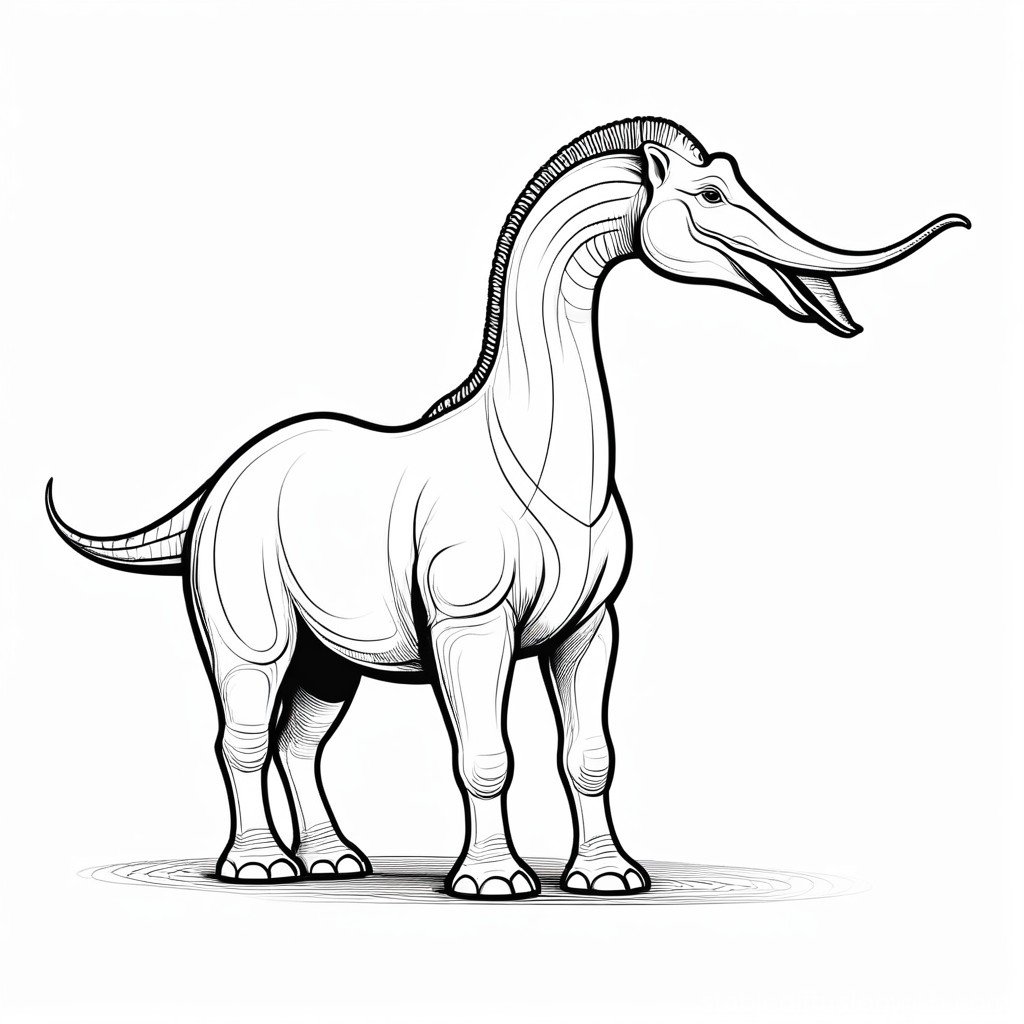
Image: Image sourced via web search (Fair use / Educational)
About Dreadnoughtus
Dreadnoughtus schrani was a colossal titanosaurian sauropod dinosaur that roamed the southern continents during the Late Cretaceous epoch, approximately 77 to 75 million years ago. Discovered in the remote expanses of Patagonia, Argentina, this magnificent creature stands as one of the most massive land animals to have ever walked the Earth, and more importantly, it represents the most complete skeleton ever found of a giant titanosaur. Its discovery has provided paleontologists with an unprecedented window into the anatomy, biomechanics, and evolution of the largest terrestrial vertebrates in our planet's history, shifting our understanding of how such immense biological structures could function and thrive. The physical dimensions of Dreadnoughtus are truly staggering, pushing the theoretical limits of terrestrial animal size. Based on the exceptionally preserved skeletal remains, paleontologists estimate that a subadult Dreadnoughtus measured approximately 26 meters, or 85 feet, in total body length, with a towering neck that extended outwards to strip foliage from high canopies and a massive, muscular tail that provided counterbalance. Initial mass estimates, calculated using the scaling relationships of the limb bones, suggested an astonishing weight of around 59 metric tons, making it heavier than a Boeing 737 airplane or a herd of modern African elephants. Although later volumetric models have proposed slightly lower weights ranging from 30 to 40 metric tons, it remains an undisputed titan of the Mesozoic. The skeletal characteristics of Dreadnoughtus are defined by robust, pillar-like limbs designed to support its immense bulk, including a humerus and femur of extraordinary thickness. Its vertebrae were highly pneumatized, meaning they contained complex networks of air sacs that significantly reduced the weight of its massive neck and torso without compromising structural integrity. Soft tissue inferences suggest a thick, leathery hide, possibly dotted with osteoderms—bony plates embedded in the skin—which are known to occur in other closely related titanosaurs, providing a form of passive armor against the elements and potential predators. In terms of paleobiology, Dreadnoughtus was an obligate herbivore with a feeding strategy heavily reliant on its enormous neck. Acting much like a giant crane, the neck allowed the animal to stand in a single location while sweeping its head across a vast arc, efficiently stripping leaves, ferns, and cycads from both high and low vegetation. This energy-saving feeding mechanism was crucial for an animal of its size, as moving its massive body required immense caloric expenditure. Its teeth, though not preserved in the holotype, were likely peg-like, designed for raking rather than chewing, meaning that digestion relied on a massive gut filled with symbiotic bacteria to ferment and break down tough plant matter over several days. Locomotion was necessarily slow and deliberate; Dreadnoughtus walked on four columnar legs, with its center of gravity positioned squarely over its robust hindquarters. Trackways from similar titanosaurs suggest they moved in herds, implying a level of social behavior that may have offered protection for younger, more vulnerable individuals. Furthermore, osteological analysis of the holotype specimen's bones revealed that despite its gargantuan size, this specific individual was still actively growing at the time of its death, indicating a rapid growth rate and a high, possibly mesothermic metabolism that allowed it to reach such colossal proportions relatively quickly. The ecological context of Late Cretaceous Patagonia was vastly different from the arid steppes seen today. During the Campanian stage, the Cerro Fortaleza Formation represented a lush, temperate to subtropical environment characterized by meandering river systems, expansive floodplains, and dense forests of conifers, ferns, and early angiosperms. Dreadnoughtus occupied the role of an apex megaherbivore, a keystone species whose massive feeding activities would have significantly shaped the landscape, clearing vegetation and opening up forest canopies. It shared its habitat with a diverse array of fauna, including smaller ornithopod dinosaurs, various theropods, crocodiliforms, and early mammals. While an adult Dreadnoughtus was virtually immune to predation due to its sheer size—a fact reflected in its genus name, which means 'fears nothing'—juveniles and sick individuals would have been prime targets for large apex predators of the region, such as the formidable megaraptorans or abelisaurids. The dynamic floodplains also posed environmental hazards; in fact, the geological evidence suggests that the two known Dreadnoughtus individuals perished in a catastrophic flash flood, their massive bodies rapidly buried in fluvial mud, which ultimately protected their bones from scavengers and weathering. The discovery history of Dreadnoughtus is a testament to the perseverance and rigorous fieldwork that characterizes modern paleontology. The first fossils were unearthed in 2005 by a team led by American paleontologist Kenneth Lacovara in the Santa Cruz Province of Patagonia, Argentina. The excavation was a monumental logistical challenge, requiring four field seasons between 2005 and 2009 to carefully extract the massive, fragile bones from the encasing rock. The sheer weight of the fossils necessitated the use of heavy machinery, specialized plaster jacketing, and complex transport logistics to move the specimens to laboratories for preparation and study. In 2014, Lacovara and his colleagues formally described and named the dinosaur Dreadnoughtus schrani. The genus name pays homage to the dreadnought battleships of the early 20th century, reflecting the animal's massive size and presumed invulnerability, while the specific epithet honors American entrepreneur Adam Schran, who provided vital financial support for the research. The holotype specimen, cataloged as MPM-PV 1156, is extraordinary, comprising over 70 percent of the postcranial skeleton, making it a Rosetta Stone for understanding titanosaur anatomy. The evolutionary significance of Dreadnoughtus cannot be overstated. It belongs to the clade Titanosauria, a diverse and globally distributed group of sauropods that dominated terrestrial ecosystems during the Cretaceous period. Within this group, Dreadnoughtus is classified as a basal lithostrotian, placing it near the evolutionary divergence of the most derived and heavily armored titanosaurs. Its exceptionally complete skeleton has allowed scientists to map the anatomical transitions that facilitated extreme gigantism. Before the discovery of Dreadnoughtus, the largest titanosaurs, such as Argentinosaurus and Puertasaurus, were known only from highly fragmentary remains—often just a few vertebrae or isolated limb bones. This lack of data forced researchers to rely heavily on extrapolation and guesswork to reconstruct their bodies. Dreadnoughtus provided the first comprehensive skeletal blueprint for a super-massive titanosaur, offering critical data points on limb proportions, spinal biomechanics, and evolutionary adaptations for weight-bearing. It has helped clarify the phylogenetic relationships within Titanosauria, demonstrating how these magnificent animals evolved specialized traits, such as wide-gauge stances and highly pneumatic skeletons, to overcome the biomechanical constraints of gravity. Despite the wealth of data provided by Dreadnoughtus, it has not been immune to scientific debates, particularly regarding its mass estimation. The initial 2014 description utilized a well-established allometric scaling equation based on the circumference of the humerus and femur, yielding a mass of 59.3 metric tons. However, in 2015, a separate team of researchers employed a volumetric approach, creating a 3D convex hull model of the skeleton and wrapping it in estimated soft tissue, which resulted in a drastically lower mass estimate of 27 to 38 metric tons. This discrepancy sparked a broader methodological debate within the paleontological community about the most accurate ways to weigh extinct megafauna. Proponents of the scaling method argue that volumetric models often underestimate the amount of soft tissue and respiratory volume in sauropods, while critics of the scaling method suggest that the limb bones of titanosaurs may have been disproportionately robust to support their unique wide-gauge stance, thus skewing the equations. This ongoing controversy highlights the iterative nature of science and the challenges inherent in reconstructing the biology of animals that have no modern analogs. The fossil record of Dreadnoughtus is currently limited to the Cerro Fortaleza Formation in Argentina, but the quality of the material is unparalleled among giant titanosaurs. The holotype specimen includes a nearly complete forelimb and hindlimb, a significant portion of the tail, dorsal and cervical vertebrae, ribs, and elements of the pectoral and pelvic girdles. A second, smaller paratype specimen was found at the same site, providing additional overlapping material that confirms the anatomical features of the genus. The preservation quality is exceptional, with the bones showing minimal distortion from tectonic activity, allowing for highly accurate 3D laser scanning and digital reconstruction. These digital models have been made freely available to researchers worldwide, democratizing access to the data and setting a new standard for open-access paleontology. While the skull remains elusive—a common issue with sauropods due to their small, fragile heads being easily detached and washed away after death—the postcranial skeleton offers a treasure trove of biomechanical data. The cultural impact of Dreadnoughtus has been significant, capturing the public imagination with its evocative name and staggering proportions. It quickly became a media sensation upon its announcement in 2014, featured in numerous documentaries, news articles, and educational programs as the quintessential giant dinosaur. Its inclusion in popular media, most notably in the blockbuster film Jurassic World: Dominion and its associated video games, has cemented its status as a household name alongside other famous dinosaurs like Tyrannosaurus rex and Triceratops. Beyond entertainment, Dreadnoughtus serves as a powerful educational tool, illustrating concepts of biomechanics, evolutionary biology, and the sheer scale of deep time. Museum exhibits featuring 3D-printed replicas of its skeleton draw massive crowds, inspiring awe and curiosity in the natural world and encouraging the next generation of scientists to explore the ancient history of our planet.
Classification
Time Period
Discovery
Location
Santa Cruz Province, Argentina
Formation
Cerro Fortaleza Formation
Frequently Asked Questions
What is Dreadnoughtus?
Dreadnoughtus schrani was a colossal titanosaurian sauropod dinosaur that roamed the southern continents during the Late Cretaceous epoch, approximately 77 to 75 million years ago. Discovered in the remote expanses of Patagonia, Argentina, this magnificent creature stands as one of the most massive ...
When did Dreadnoughtus live?
Dreadnoughtus lived during the cretaceous period of the mesozoic era approximately 77-75 million years ago.
Where was Dreadnoughtus discovered?
Fossils of Dreadnoughtus were discovered in Santa Cruz Province, Argentina in the Cerro Fortaleza Formation.
What did Dreadnoughtus eat?
Dreadnoughtus was a herbivore. It lived in terrestrial habitats.
What type of fossil is Dreadnoughtus?
Dreadnoughtus is preserved as a body fossil. The preservation quality is excellent.
Related Specimens
From the mesozoic era · body fossils