Diplodocus
Diplodocus carnegii
Image: File:Diplodocus Carnegii.jpg - Wikimedia Commons (CC BY-SA)
About Diplodocus
Diplodocus carnegii stands as one of the most iconic and thoroughly studied dinosaurs in the history of paleontology, representing a quintessential example of the colossal sauropod group that dominated the terrestrial ecosystems of the Late Jurassic period. Living approximately 154 to 152 million years ago during the Mesozoic era, this magnificent creature roamed the vast floodplains of what is now the Morrison Formation in the western United States, with its remains most famously concentrated in Colorado, Utah, and Wyoming. As a cornerstone of paleontological research, Diplodocus has provided scientists with unparalleled insights into the biology, biomechanics, and evolutionary success of gigantic herbivorous dinosaurs, while simultaneously capturing the imagination of the global public for over a century.
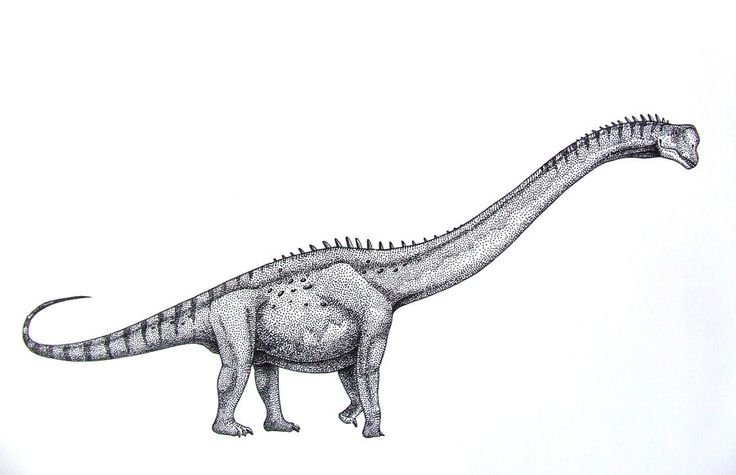
The physical anatomy of Diplodocus carnegii is a marvel of evolutionary engineering, characterized by an extreme elongation of both the neck and the tail, which together accounted for the vast majority of its impressive 24-meter (79-foot) total body length. Despite its immense dimensions, Diplodocus was remarkably slender and lightweight compared to contemporary sauropods like Apatosaurus or Brachiosaurus, with modern weight estimates placing the living animal at a relatively modest 10 to 15 metric tons. This weight reduction was achieved through a highly specialized skeletal system featuring extensively hollowed-out vertebrae, which were filled with air sacs connected to an avian-like respiratory system. The skull of Diplodocus was disproportionately small compared to its massive body, resembling that of a horse, and was situated at the end of a neck composed of fifteen elongated cervical vertebrae. The snout was elongated and sloped, ending in a broad, squared-off muzzle equipped with simple, slender, peg-like teeth that were entirely confined to the anterior portion of the jaws. Moving posteriorly, the torso was relatively short, supported by four sturdy, columnar legs, with the forelimbs being notably shorter than the hindlimbs, giving the animal's back a slight downward slope from the hips to the shoulders. The most distinctive feature of Diplodocus, however, was its extraordinarily long, whip-like tail, composed of over eighty caudal vertebrae. The generic name Diplodocus, meaning double beam, specifically refers to the unique chevron bones located on the underside of the middle section of this tail. Unlike the simple, V-shaped chevrons of other dinosaurs, these bones had both forward and backward-projecting bony extensions, which provided crucial support for the tail vertebrae and protected the delicate blood vessels when the heavy tail was resting on the ground.
In terms of paleobiology, Diplodocus was a highly specialized herbivore whose unique anatomy dictated specific feeding strategies and behavioral patterns. The concentration of peg-like teeth at the front of the mouth indicates that Diplodocus did not chew its food; rather, it used its teeth as a biological rake to strip leaves and needles from branches, swallowing the plant material whole. Its diet primarily consisted of ferns, cycads, seed ferns, and the foliage of coniferous trees that dominated the Late Jurassic landscape. For decades, scientists debated the feeding posture of Diplodocus, but modern biomechanical studies, including digital modeling of the cervical vertebrae, suggest that its neck was naturally held in a horizontal or slightly downward-sloping position, rather than in the towering, swan-like vertical posture often depicted in early paleoart. This horizontal orientation indicates that Diplodocus was primarily a low-to-mid-level browser, sweeping its long neck in broad lateral arcs to consume vast quantities of vegetation across a wide feeding envelope without needing to expend energy moving its massive body. To process this unchewed plant matter, it is hypothesized that Diplodocus relied on a massive fermentation chamber in its gut, where symbiotic bacteria broke down the tough cellulose over several days. Locomotion was strictly quadrupedal, with fossilized trackways attributed to diplodocids showing that they walked with a relatively narrow gauge, their limbs held directly under their bodies for maximum weight support. Histological studies of Diplodocus bone cross-sections have revealed highly vascularized fibrolamellar bone tissue, indicating that these animals possessed rapid growth rates, likely reaching their enormous adult sizes in just a few decades to quickly outgrow the vulnerability of predation. Furthermore, the discovery of multiple individuals of varying ages preserved together in single bonebeds strongly suggests that Diplodocus exhibited gregarious behavior, living and migrating in herds to seek out fresh feeding grounds and provide mutual protection.
The ecological context in which Diplodocus thrived was the Morrison Formation, a vast, semi-arid sedimentary basin that stretched across much of western North America during the Kimmeridgian and Tithonian stages of the Late Jurassic. This environment was characterized by distinct wet and dry seasons, featuring sprawling floodplains, meandering river systems, and ephemeral lakes. The flora was highly diverse along the watercourses, where dense galleries of conifers, ginkgoes, and tree ferns provided abundant food, while the drier uplands were dominated by low-growing ferns and cycads. Diplodocus shared this dynamic ecosystem with a spectacular array of other dinosaurs, forming one of the most diverse dinosaurian assemblages in Earth's history. It coexisted with other massive sauropods, including the heavily built Apatosaurus, the towering Brachiosaurus, and the closely related Barosaurus. To avoid direct competition for resources, these sauropods engaged in niche partitioning; while Brachiosaurus utilized its long forelimbs and vertical neck to browse high in the forest canopy, Diplodocus specialized in clearing out the underbrush and mid-level vegetation. The Morrison Formation was also home to numerous ornithischian dinosaurs, such as the plated Stegosaurus and the bipedal Camptosaurus, which browsed on the lowest vegetation. However, this environment was fraught with danger, as Diplodocus had to contend with a terrifying guild of apex predators. The apex predator of the Morrison, Allosaurus, along with the massive Torvosaurus and the pack-hunting Ceratosaurus, posed a constant threat, particularly to juveniles, the sick, and the elderly. Against such formidable carnivores, the adult Diplodocus relied on its immense size, herd structure, and its whip-like tail, which could be swung with devastating force to deter or injure attackers.
The discovery history of Diplodocus is deeply intertwined with the legendary Bone Wars, a period of intense and often ruthless fossil hunting in the late nineteenth century. The first fragmentary remains of Diplodocus were discovered in 1877 by Benjamin Mudge and Samuel Wendell Williston at Garden Park, near Cañon City, Colorado. These fossils were sent to the prominent paleontologist Othniel Charles Marsh at Yale University, who formally described and named the genus Diplodocus longus in 1878. However, the most significant breakthrough in the understanding of this animal occurred in 1899, when an expedition funded by the wealthy Scottish-American industrialist Andrew Carnegie uncovered a remarkably complete skeleton in the Sheep Creek area of the Morrison Formation in Wyoming. The expedition, led by Jacob Wortman and Arthur Coggeshall, and later overseen by the brilliant paleontologist John Bell Hatcher, successfully excavated the magnificent specimen. In 1901, Hatcher formally described this new, highly complete skeleton as a new species, Diplodocus carnegii, honoring Andrew Carnegie's immense financial contributions to paleontology. This specific skeleton, designated as the holotype for the species, was meticulously prepared and mounted at the newly established Carnegie Museum of Natural History in Pittsburgh, Pennsylvania, where it remains a centerpiece to this day. The discovery of Diplodocus carnegii was a watershed moment in paleontology, as it provided scientists with the first truly comprehensive look at the skeletal anatomy of a sauropod dinosaur, resolving numerous mysteries regarding their proportions, stance, and evolutionary adaptations.
In terms of evolutionary significance, Diplodocus occupies a crucial position within the family Diplodocidae, a highly successful clade of sauropods that radiated globally during the Late Jurassic. Within the broader sauropod family tree, diplodocids are classified as neosauropods, distinguishing them from earlier, more primitive lineages. They represent a distinct evolutionary divergence from the macronarians, the group that includes the brachiosaurids and the later titanosaurs. While macronarians generally evolved broader teeth, larger heads, and a more upright, giraffe-like posture, the diplodocoids pursued an entirely different evolutionary trajectory. They evolved elongated, low-slung bodies, whip-like tails, and highly specialized, narrow skulls with anteriorly restricted dentition. Diplodocus serves as the definitive anatomical model for this evolutionary path. The transitional features seen in the diplodocoid lineage highlight a remarkable adaptation to specific ecological niches, particularly the exploitation of low-growing, tough vegetation in semi-arid environments. Although the diplodocids suffered a significant decline at the end of the Jurassic period, likely due to changing climates and the shifting composition of global flora, their unique anatomical innovations, such as the extreme pneumatization of their vertebrae and the biomechanical perfection of their suspension-bridge-like spinal columns, demonstrate the incredible evolutionary plasticity of the sauropod lineage. They left no modern descendants, as all non-avian dinosaurs perished in the end-Cretaceous mass extinction, but their skeletal architecture continues to inform modern biomechanical studies of how biological tissues can support extreme mass and length.
Despite being known for over a century, Diplodocus remains at the center of several intense scientific debates and ongoing research. One of the most enduring controversies surrounds the exact posture and flexibility of its neck. While early twentieth-century mounts depicted Diplodocus with its head held high in the air, computer modeling by researchers such as Kent Stevens in the late 1990s argued that the interlocking zygapophyses of the cervical vertebrae severely restricted vertical movement, forcing the neck into a horizontal, sweeping posture. However, other paleontologists argue that living animals often hold their necks more vertically than their bare bones suggest, due to the presence of thick cartilage pads between the vertebrae, leaving the true resting posture a subject of active debate. Another fascinating controversy involves the function of the whip-like tail. Biomechanical simulations have suggested that the incredibly thin, elongated vertebrae at the very tip of the tail could have been flicked at supersonic speeds, producing a deafening cracking sound akin to a bullwhip, which may have been used for intraspecific communication, mating displays, or startling predators. Additionally, there have been significant taxonomic disputes regarding the genus. For instance, the enormous sauropod once known as Seismosaurus hallorum, discovered in New Mexico, was later re-evaluated by paleontologists and determined to be a massive, older individual of the genus Diplodocus, leading to its reclassification as Diplodocus hallorum. Debates also continue regarding the soft tissue of its face, with recent studies suggesting that Diplodocus may have possessed keratinous beaks or extensive fleshy lips to assist in stripping vegetation, fundamentally altering our visual reconstruction of the living animal.
The fossil record of Diplodocus is exceptionally rich, making it one of the most completely known and thoroughly documented sauropod dinosaurs in the world. Fossils attributed to the genus have been recovered across a vast geographic expanse of the Morrison Formation, with significant concentrations found in Colorado, Utah, Wyoming, and Montana. The sheer number of specimens, ranging from isolated bones to nearly complete articulated skeletons, has allowed paleontologists to study individual variation, ontogeny, and pathology in unprecedented detail. The preservation quality of these fossils is often spectacular, owing to the rapid burial of the carcasses in the river channels and floodplains of the Jurassic landscape. One of the most famous and productive sites for Diplodocus fossils is the Carnegie Quarry at Dinosaur National Monument in Utah, discovered by Earl Douglass in 1909. This remarkable bonebed has yielded numerous articulated skeletons of Diplodocus, alongside other iconic Morrison dinosaurs, preserved in a massive sandstone wall that provides a spectacular window into a Jurassic logjam where dozens of dinosaur carcasses were washed together during a catastrophic flood event. The abundance of cranial material, which is notoriously rare for sauropods due to the fragile nature of their skulls and their weak attachment to the cervical vertebrae, has been particularly vital in reconstructing the paleobiology and feeding mechanics of Diplodocus.
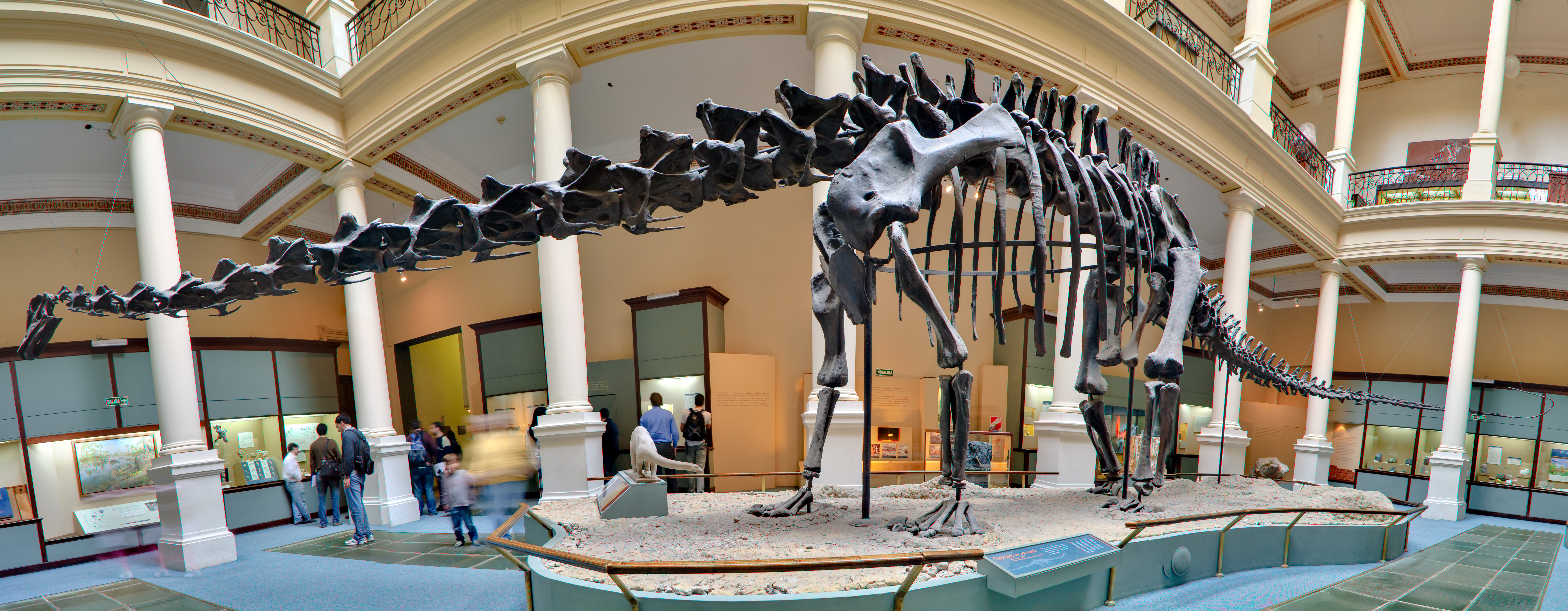
The cultural impact of Diplodocus is truly unparalleled, largely due to the philanthropic efforts of Andrew Carnegie. In the early twentieth century, Carnegie commissioned the creation of exact plaster casts of the Diplodocus carnegii holotype and donated them to major museums across the globe, including institutions in London, Berlin, Paris, Vienna, St. Petersburg, and Buenos Aires. The most famous of these casts, affectionately known as "Dippy," stood in the central hall of the Natural History Museum in London for over a century, becoming the first dinosaur skeleton that millions of people ever saw. These international donations sparked a worldwide fascination with dinosaurs, cementing Diplodocus in the public consciousness as the archetypal long-necked dinosaur. It has since appeared in countless books, documentaries, and films, from early silent animations to modern cinematic blockbusters. Beyond mere entertainment, Diplodocus serves as a vital educational tool, its massive, elegant skeleton inspiring generations of children to pursue science and continuing to stand as a monumental testament to the awe-inspiring scale and deep history of life on Earth.
Classification
Time Period
Discovery
Location
Morrison, Colorado, USA
Formation
Morrison Formation
Frequently Asked Questions
What is Diplodocus?
Diplodocus carnegii stands as one of the most iconic and thoroughly studied dinosaurs in the history of paleontology, representing a quintessential example of the colossal sauropod group that dominated the terrestrial ecosystems of the Late Jurassic period. Living approximately 154 to 152 million ye...
When did Diplodocus live?
Diplodocus lived during the jurassic period of the mesozoic era approximately 154-152 million years ago.
Where was Diplodocus discovered?
Fossils of Diplodocus were discovered in Morrison, Colorado, USA in the Morrison Formation.
What did Diplodocus eat?
Diplodocus was a herbivore. It lived in terrestrial habitats.
What type of fossil is Diplodocus?
Diplodocus is preserved as a body fossil. The preservation quality is excellent.
Related Specimens
From the mesozoic era · body fossils