Amaltheus
Amaltheus margaritatus
Image: Image sourced via web search (Fair use / Educational)
About Amaltheus
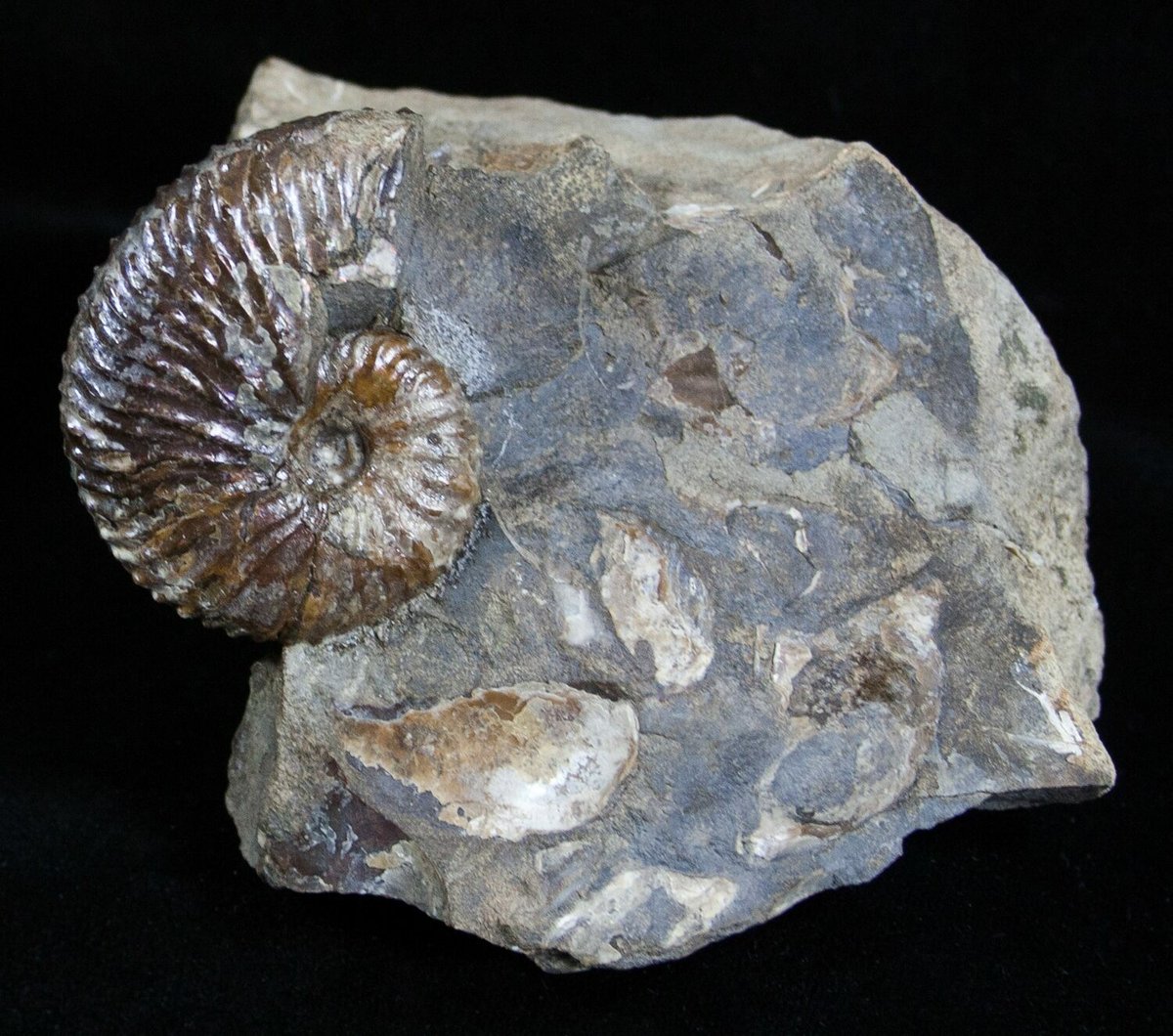
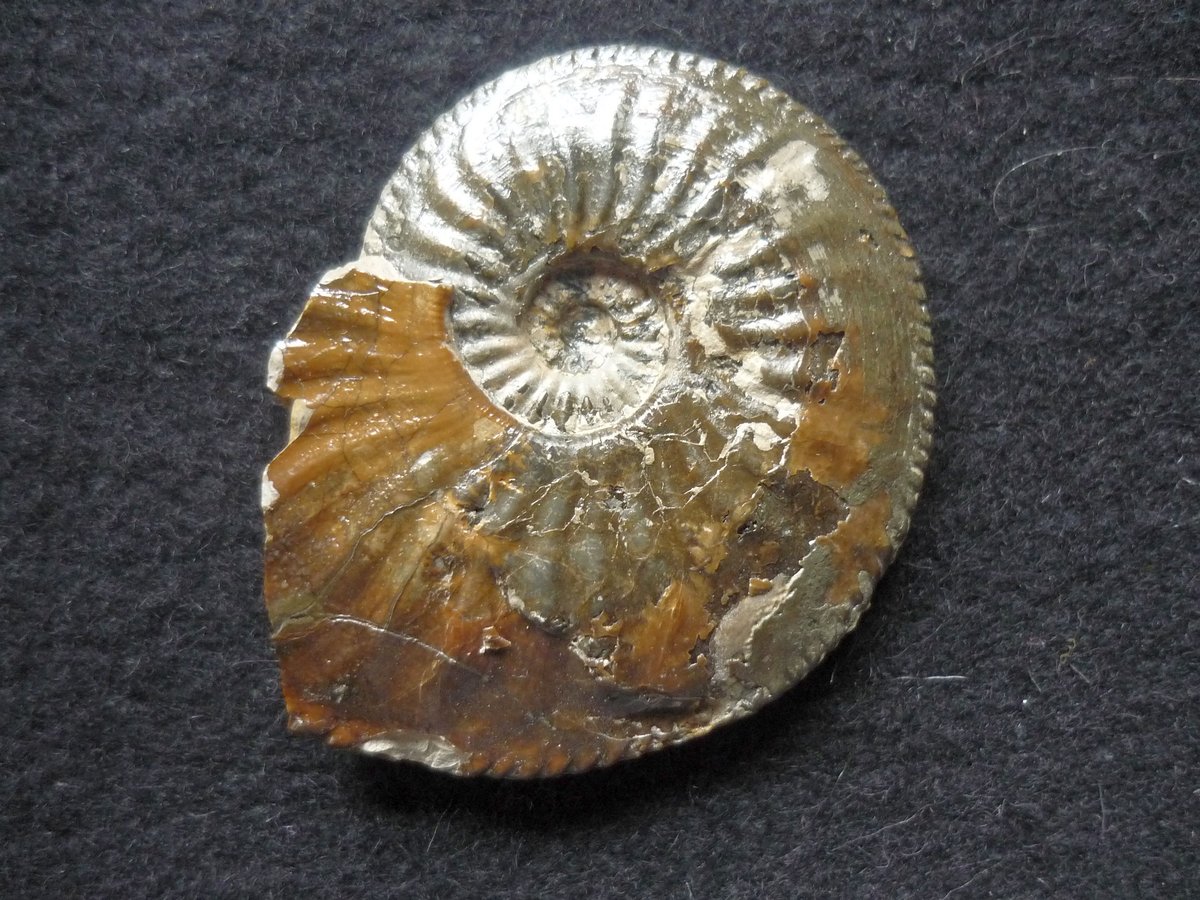
Amaltheus margaritatus is an extinct species of ammonite cephalopod that thrived during the Pliensbachian stage of the Early Jurassic period, approximately 185 to 180 million years ago. Found predominantly across the marine deposits of Europe, particularly in the United Kingdom, France, and Germany, this organism serves as a crucial index fossil for paleontologists dating marine strata of the Mesozoic era. Its distinctive ribbed shell and widespread distribution make it a cornerstone species for understanding Early Jurassic marine ecosystems, biostratigraphy, and the evolutionary dynamics of cephalopods following the Triassic-Jurassic mass extinction event. As an abundant and highly recognizable marine invertebrate, Amaltheus margaritatus provides an invaluable window into the biological and geological processes that shaped the ancient oceans of a world transitioning through the breakup of the supercontinent Pangaea. The physical anatomy of Amaltheus margaritatus is characterized primarily by its beautifully spiraled, planispiral shell, which typically measures between 5 and 15 centimeters in diameter, though some exceptional specimens may slightly exceed these dimensions. The shell is strongly compressed and features a highly distinctive, prominent keel running along the outer edge of the whorls. This keel is uniquely serrated or "beaded," resembling a braided rope, which is the exact feature that gives the species its specific epithet, "margaritatus," derived from the Latin word for pearly or beaded. The flanks of the shell are adorned with strong, sigmoidal (S-shaped) ribs that bifurcate as they approach the outer margin. While the soft tissues of Amaltheus margaritatus are not preserved in the fossil record, paleontologists infer its anatomy based on modern cephalopods like the nautilus, squid, and octopus. It would have possessed a distinct head with well-developed, camera-like eyes, a sharp chitinous beak for crushing prey, and a radula for rasping tissue. A ring of prehensile tentacles would have surrounded the mouth, used for grasping prey and manipulating objects. The animal's body was housed entirely within the outermost, largest chamber of the shell, known as the body chamber, while the inner chambers, or phragmocone, were used for buoyancy control. In terms of paleobiology, Amaltheus margaritatus was an active marine predator, though its exact position in the water column and swimming capabilities are subjects of ongoing study. As a carnivore, its diet likely consisted of a variety of small marine organisms, including zooplankton, small crustaceans, ostracods, and possibly juvenile fish or smaller cephalopods. It captured its prey using its tentacles, bringing the food to its powerful beak to be dismantled. Locomotion was achieved through a combination of buoyancy control and jet propulsion. By regulating the fluid and gas content within the chambers of its phragmocone via a specialized tube of tissue called the siphuncle, the ammonite could achieve neutral buoyancy, allowing it to hover effortlessly in the water column. To move, it would expel water forcefully from a muscular funnel or hyponome, propelling itself backward in a manner similar to modern squid, albeit likely at slower speeds due to the hydrodynamic drag of its external shell. Growth occurred incrementally; as the animal grew, it secreted new shell material at the aperture and periodically sealed off the space behind it with complex, folded walls called septa, creating a new, larger living chamber. The ecological context of the Early Jurassic world in which Amaltheus margaritatus lived was vastly different from today. During the Pliensbachian stage, the supercontinent Pangaea was in the early stages of rifting apart, leading to the formation of shallow, warm epicontinental seas that flooded much of what is now Europe. These shallow marine environments were highly productive and supported a rich and diverse ecosystem. Amaltheus shared its habitat with a wide array of marine life, including other ammonite species, belemnites (squid-like cephalopods with internal skeletons), bivalves, brachiopods, and crinoids. The waters were also patrolled by formidable marine reptiles, such as the dolphin-like ichthyosaurs and the long-necked plesiosaurs, which were the apex predators of the time. In this complex food web, Amaltheus margaritatus occupied the role of a mesopredator. It was an active hunter of smaller organisms but also served as a crucial food source for larger predators. Fossilized ammonite shells from this period occasionally show bite marks or crushing damage consistent with the jaws of marine reptiles or large durophagous (shell-crushing) fish, highlighting the perilous nature of the Jurassic seas. The discovery history of Amaltheus margaritatus is deeply intertwined with the birth of modern geology and paleontology in the 18th and 19th centuries. The genus Amaltheus was formally erected by the French naturalist Pierre Denys de Montfort in 1808, though fossils of this type had been collected and admired for centuries prior. The species name margaritatus was established to describe the beautiful, beaded keel that makes this ammonite so easily identifiable. Early geological pioneers, such as William Smith in the United Kingdom and Alcide d'Orbigny in France, quickly recognized the utility of Amaltheus margaritatus as a biostratigraphic marker. Because this species evolved rapidly, existed for a relatively short period of geological time, and was widely distributed across different marine environments, its presence in a layer of sedimentary rock allows geologists to date that rock with remarkable precision. The "Amaltheus margaritatus Zone" is a formally recognized biostratigraphic zone of the Pliensbachian stage, used to correlate rock formations across Europe and beyond. Historically significant specimens have been recovered from the famous Jurassic Coast of Dorset, the rugged coastal cliffs of Yorkshire, and the rich fossil beds of the Swabian Jura in Germany. The evolutionary significance of Amaltheus margaritatus lies in its representation of the explosive radiation of ammonites following the devastating Triassic-Jurassic mass extinction. Ammonites suffered severe losses during this extinction event, with only a few lineages surviving into the Early Jurassic. From these few survivors, a massive evolutionary diversification occurred, giving rise to a staggering variety of forms, including the family Amaltheidae to which Amaltheus belongs. The complex suture patterns of Amaltheus—the intricate, fractal-like lines where the internal septa meet the outer shell—are a key evolutionary innovation. These complex sutures are thought to have provided structural strength to the shell, allowing the ammonite to withstand the immense hydrostatic pressures of deeper water without requiring a prohibitively thick and heavy shell. Studying the evolutionary trajectory of Amaltheus and its relatives helps paleontologists understand how marine ecosystems recover and diversify after catastrophic extinction events. Furthermore, while ammonites left no direct living descendants (having gone entirely extinct at the end of the Cretaceous period), comparing their evolutionary adaptations to those of modern coleoids (squid, octopus, cuttlefish) provides profound insights into the convergent evolution of cephalopod intelligence, buoyancy mechanisms, and ecological strategies. Scientific debates surrounding Amaltheus margaritatus and its kin continue to stimulate paleontological research. One major area of ongoing discussion involves the interpretation of sexual dimorphism within the species. Like many ammonites, Amaltheus fossils often come in two distinct size classes found in the same geological deposits: larger forms known as macroconchs and smaller forms known as microconchs. It is widely hypothesized that the macroconchs represent the females, which required larger body sizes to produce and store eggs, while the microconchs represent the males. However, definitively proving this relationship remains challenging, and debates continue regarding the specific developmental pathways and ecological roles of the two morphotypes. Another significant debate centers on the exact function of the highly complex ammonitic suture patterns. While the structural support hypothesis is the most widely accepted, some researchers argue that the complex folding increased the surface area of the septal mantle, potentially aiding in more efficient fluid transport and buoyancy regulation. Additionally, the exact swimming capabilities of Amaltheus are debated; while its streamlined shell suggests it was a relatively active swimmer compared to more robust ammonites, the hydrodynamic drag of the beaded keel may have limited its speed, suggesting it might have relied more on maneuverability or ambush tactics than sustained pursuit. The fossil record of Amaltheus margaritatus is exceptionally rich and geographically extensive, making it one of the most familiar ammonites to both professional paleontologists and amateur collectors. Fossils are predominantly found in the marine mudstones, shales, and limestones of the Lias Group in the United Kingdom, as well as equivalent formations in France, Germany, and other parts of Europe. The preservation quality of these fossils can be truly spectacular. In some anoxic (oxygen-poor) shale deposits, the shells are preserved with their original aragonite, retaining a beautiful, iridescent mother-of-pearl sheen. In other environments, the shells have been replaced by minerals such as pyrite (fool's gold) or calcite, resulting in heavy, metallic, or crystalline fossils that perfectly preserve the intricate details of the ribs and the beaded keel. While the soft tissues are virtually never preserved, the sheer abundance of the shells allows for robust statistical analyses of population dynamics, growth rates, and morphological variation. Famous fossil sites, such as the coastal exposures near Whitby in North Yorkshire, have yielded thousands of specimens, contributing to a deeply detailed understanding of Early Jurassic marine environments. The cultural impact of Amaltheus margaritatus and similar ammonites extends far beyond the realm of academic science. For centuries, these striking, coiled fossils have captured the human imagination. In local folklore, particularly in regions like Yorkshire, ammonites were historically believed to be the petrified remains of coiled snakes, miraculously turned to stone by saints such as St. Hilda of Whitby. To reinforce this legend, Victorian fossil dealers would sometimes carve snake heads onto the apertures of ammonite shells, creating "snake stones" to sell to tourists and pilgrims. Today, Amaltheus margaritatus remains a staple of museum displays worldwide, its elegant, ribbed form serving as an iconic representation of prehistoric life. It is a highly sought-after specimen for amateur fossil hunters, providing a tangible and beautiful connection to the deep geological past. Educationally, it is frequently used in classrooms to teach fundamental concepts of stratigraphy, evolution, and the history of life on Earth, ensuring that this ancient marine predator continues to inspire curiosity and wonder millions of years after its extinction.
Classification
Time Period
Discovery
Location
Europe
Formation
Lias Group
Frequently Asked Questions
What is Amaltheus?
Amaltheus margaritatus is an extinct species of ammonite cephalopod that thrived during the Pliensbachian stage of the Early Jurassic period, approximately 185 to 180 million years ago. Found predominantly across the marine deposits of Europe, particularly in the United Kingdom, France, and Germany,...
When did Amaltheus live?
Amaltheus lived during the jurassic period of the mesozoic era approximately 185-180 million years ago.
Where was Amaltheus discovered?
Fossils of Amaltheus were discovered in Europe in the Lias Group.
What did Amaltheus eat?
Amaltheus was a carnivore. It lived in marine habitats.
What type of fossil is Amaltheus?
Amaltheus is preserved as a body fossil. The preservation quality is excellent.
Related Specimens
From the mesozoic era · body fossils