Syringopora
Syringopora reticulata
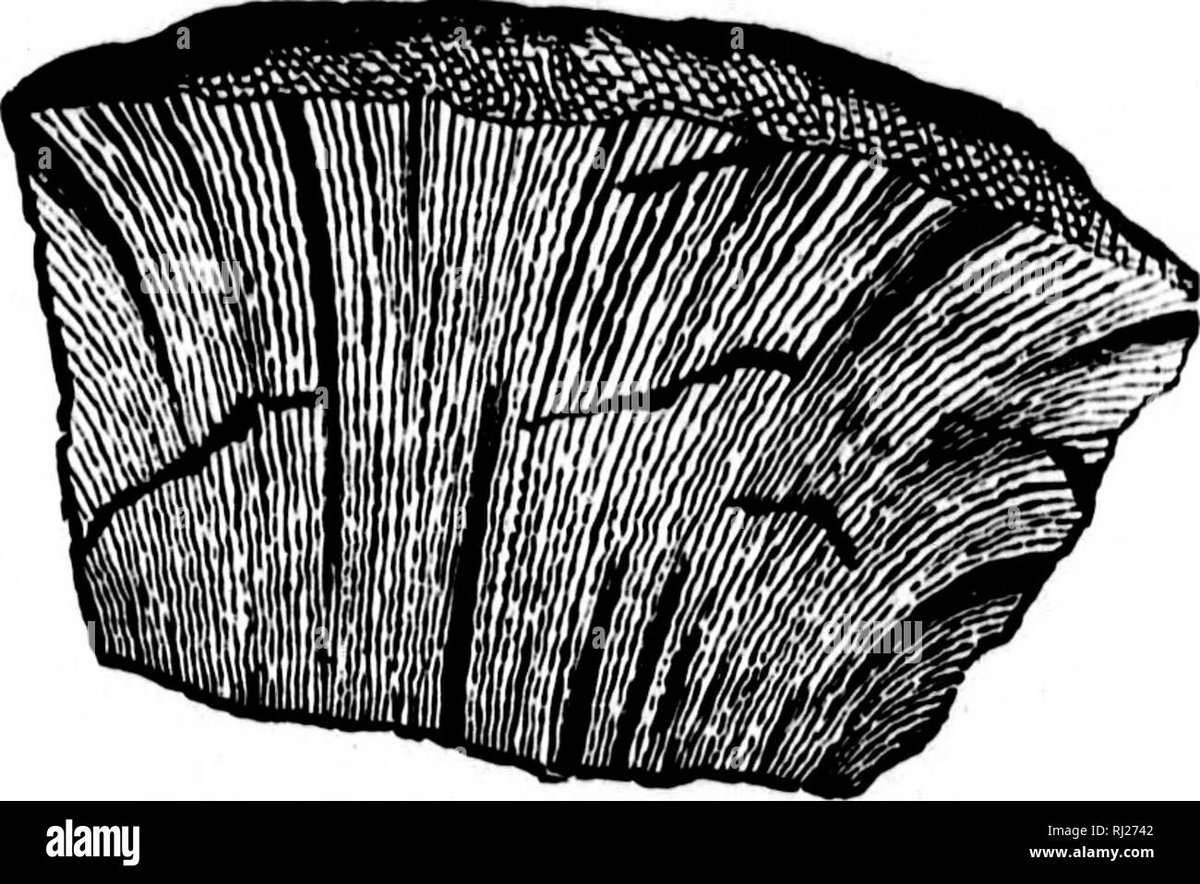
Image: Image sourced via web search (Fair use / Educational)
About Syringopora
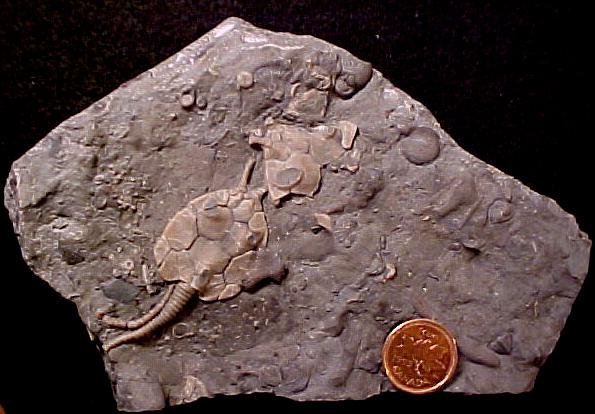
Syringopora reticulata is an extinct species of tabulate coral that thrived during the Carboniferous period, approximately 359 to 299 million years ago. As a prominent member of the Paleozoic marine benthos, this organism played a crucial role in the construction of early reef ecosystems, contributing significantly to the massive limestone deposits that characterize Carboniferous geological formations worldwide. Belonging to the order Tabulata, Syringopora reticulata represents a fascinating chapter in the evolutionary history of cnidarians, offering vital clues about the biological and ecological dynamics of ancient oceans before the devastating Permian-Triassic extinction event wiped out this entire lineage of reef-building organisms. Its widespread distribution and distinctive skeletal architecture make it a highly significant index fossil and a subject of enduring interest in invertebrate paleontology.
The physical anatomy of Syringopora reticulata is characterized by its remarkable colonial structure, which superficially resembles the modern organ-pipe coral, though they are not closely related. The colony, known as a corallum, consists of numerous upright, cylindrical tubes called corallites. Each individual corallite housed a single coral polyp and typically measured between two and five millimeters in diameter, while the entire colony could grow to massive proportions, sometimes exceeding a meter across in favorable conditions. What makes Syringopora reticulata particularly distinctive is the presence of horizontal connecting tubules, or stolons, which form a complex, reticulated network linking the vertical corallites. This interconnected framework provided structural stability against strong ocean currents and facilitated the sharing of nutrients among the polyps. Internally, the corallites are defined by the presence of tabulae—horizontal or funnel-shaped calcareous plates that the polyps secreted beneath themselves as they grew upward toward the light and nutrient-rich waters. Unlike the rugose corals or modern scleractinian corals, Syringopora and other tabulates possessed very weakly developed or entirely absent vertical septa. The skeletal material was composed of calcite, which has allowed for excellent preservation in the fossil record. Inferences about the soft tissue suggest that the polyps possessed a ring of tentacles armed with nematocysts (stinging cells) for capturing prey, similar to extant anthozoans, though the exact coloration and fleshy morphology remain lost to time.
In terms of paleobiology, Syringopora reticulata was a sessile benthic organism that relied entirely on suspension feeding to survive. Positioned firmly on the ocean floor or attached to the calcareous remains of other reef builders, the polyps would extend their tentacles into the water column to capture microscopic zooplankton, organic detritus, and dissolved nutrients drifting by in the currents. The metabolic demands of constructing such extensive calcareous skeletons suggest that these corals required warm, well-oxygenated, and nutrient-rich waters to thrive. Growth patterns observed in the fossilized colonies indicate that Syringopora reproduced both sexually, releasing gametes into the water column to colonize new areas, and asexually, through budding, which allowed the colony to expand rapidly and recover from localized damage. The interconnected nature of the corallites via the transverse stolons implies a high degree of colonial integration, where nutrients captured by polyps on the periphery could be transported to less successful polyps in the interior of the colony. While it is unknown if Syringopora hosted photosynthetic symbiotic algae (zooxanthellae) like modern reef-building corals, the shallow-water environments they inhabited and their rapid calcification rates have led some paleontologists to hypothesize that some form of photosymbiosis might have been present, though this remains a topic of ongoing investigation.
The ecological context of the Carboniferous period provided an ideal environment for Syringopora reticulata to flourish. During this time, the Earth's continents were gradually converging to form the supercontinent Pangea, creating vast, shallow epicontinental seas across much of what is now North America, Europe, and Asia. The climate was generally warm and tropical in these equatorial marine zones, fostering an explosion of marine biodiversity. Syringopora reticulata was a key structural engineer in these ecosystems, growing alongside a diverse assemblage of other marine invertebrates. They frequently co-existed with rugose corals, massive stromatoporoid sponges, crinoids (sea lilies) that formed dense underwater forests, and an abundance of brachiopods and bryozoans. These coral colonies provided crucial three-dimensional habitat complexity, offering shelter and breeding grounds for early marine arthropods, trilobites, and a variety of primitive cartilaginous and bony fishes. In the food web, Syringopora acted as a primary consumer of microplankton, while simultaneously serving as a potential food source for specialized coral-grazing predators, such as certain echinoderms or early jawed fishes equipped with crushing dentition. The dense thickets formed by Syringopora reticulata also played a vital role in trapping carbonate sediments, thereby contributing to the aggradation of the reef structure and the eventual formation of massive limestone platforms.
The discovery and taxonomic history of Syringopora reticulata is deeply intertwined with the early development of paleontology as a formal science in the 19th century. The genus Syringopora was first erected by the eminent German paleontologist Georg August Goldfuss in 1826, during a period of intense geological surveying and fossil cataloging across Europe. Fossils of Syringopora reticulata were frequently encountered by early geologists mapping the extensive Carboniferous Limestone formations of the United Kingdom, particularly in regions like Derbyshire, Yorkshire, and the Avon Gorge. These early discoveries were crucial for establishing the principles of biostratigraphy, as the distinct and easily recognizable colonies of Syringopora proved to be excellent markers for correlating rock strata across different geographic areas. The specific epithet 'reticulata' was chosen to describe the net-like appearance created by the connecting stolons between the corallites. Over the decades, countless specimens have been collected, ranging from small fragments to massive, multi-ton blocks of coral-bearing limestone. While there is no single famous specimen akin to the dinosaur 'Sue', the collective abundance of Syringopora fossils in historic collections at institutions like the Natural History Museum in London and the Smithsonian Institution has made it a foundational taxon for understanding Paleozoic marine life.
From an evolutionary standpoint, Syringopora reticulata occupies a significant position within the broader history of the Cnidaria. As a member of the subclass Tabulata, it represents an entirely extinct lineage of corals that diverged from the ancestors of modern corals hundreds of millions of years ago. The tabulate corals first appeared in the Early Ordovician period and underwent several major radiations, becoming dominant reef builders during the Silurian and Devonian periods. By the Carboniferous, while their diversity had somewhat declined following the Late Devonian extinction events, genera like Syringopora remained highly successful and ecologically vital. Studying Syringopora provides paleontologists with crucial insights into the convergent evolution of coloniality and reef-building behaviors in anthozoans. The structural solutions evolved by Syringopora—such as the use of tabulae for vertical growth and stolons for colonial integration—demonstrate alternative evolutionary pathways to the septa-dominated growth seen in later scleractinian corals. Tragically, the entire evolutionary story of the tabulate corals came to an abrupt end at the Permian-Triassic boundary, approximately 252 million years ago. The catastrophic environmental changes associated with this mass extinction, including severe ocean acidification and global warming, proved insurmountable for Syringopora and its relatives, leaving no modern descendants and clearing the ecological stage for the eventual rise of the scleractinian corals in the Mesozoic era.
Despite its long history of study, Syringopora reticulata remains the subject of several scientific debates and ongoing research. One of the primary areas of controversy involves the precise taxonomic relationships within the Tabulata and the potential affinities with other enigmatic Paleozoic organisms. For instance, the exact nature of the relationship between Syringopora and certain types of calcareous sponges, such as the chaetetids, has been debated, with some historical classifications blurring the lines between these groups due to convergent skeletal morphologies. Additionally, there is ongoing discussion regarding the interpretation of the connecting stolons; while generally accepted as conduits for nutrient sharing, some researchers have proposed they may have also played a role in housing commensal or symbiotic organisms. Furthermore, the question of whether Syringopora possessed photosymbiotic algae remains unresolved. Isotopic analysis of the carbonate skeletons has yielded mixed results, and the debate continues over whether the rapid growth rates required to build such massive colonies could have been sustained by heterotrophic feeding alone in the Carboniferous seas.
The fossil record of Syringopora reticulata is exceptionally robust, making it one of the most familiar fossils to students of Paleozoic geology. Geographically, fossils are found across the Northern Hemisphere, with particularly rich deposits located in the Carboniferous limestones of the British Isles, the Mississippian sub-period formations of the American Midwest, and various localities in Western Europe and Asia. The preservation quality is typically good to excellent, owing to the robust, calcitic nature of the skeleton. In many cases, the fossils are preserved in three dimensions within solid limestone matrices. In certain unique geological settings, the original calcite has been replaced by silica through the process of silicification. When these silicified rocks are treated with weak acids in the laboratory, the surrounding limestone dissolves away, leaving behind perfectly preserved, delicate, three-dimensional networks of the Syringopora colonies, allowing for microscopic examination of the corallites and stolons. Famous fossil sites include the classic exposures in the Peak District of England and the extensive Mississippian outcrops in the Illinois Basin of the United States.
Culturally, while Syringopora reticulata may not command the same public fascination as a Tyrannosaurus rex, it holds a special place in the realm of geology and local heritage. In regions where Carboniferous limestone is abundant, rock containing dense networks of Syringopora is often quarried and polished for use as decorative building stone, sometimes referred to locally as 'bird's eye marble' due to the striking circular cross-sections of the corallites. These polished stones can be seen adorning the facades of historic buildings, bank lobbies, and public monuments, quietly displaying the remnants of ancient oceans to the modern world. In educational settings, Syringopora is a staple of university paleontology collections, serving as an ideal teaching specimen for introducing students to coral morphology, biostratigraphy, and the concept of mass extinctions. Museums worldwide feature impressive slabs of Syringopora-bearing rock in their halls of ancient life, highlighting the organism's role as a silent architect of the Paleozoic world.
Classification
Time Period
Discovery
Location
United Kingdom
Formation
Carboniferous Limestone Supergroup
Frequently Asked Questions
What is Syringopora?
Syringopora reticulata is an extinct species of tabulate coral that thrived during the Carboniferous period, approximately 359 to 299 million years ago. As a prominent member of the Paleozoic marine benthos, this organism played a crucial role in the construction of early reef ecosystems, contributi...
When did Syringopora live?
Syringopora lived during the carboniferous period of the paleozoic era approximately 359-299 million years ago.
Where was Syringopora discovered?
Fossils of Syringopora were discovered in United Kingdom in the Carboniferous Limestone Supergroup.
What did Syringopora eat?
Syringopora was a filter-feeder. It lived in marine reef habitats.
What type of fossil is Syringopora?
Syringopora is preserved as a body fossil. The preservation quality is good.
Related Specimens
From the paleozoic era · body fossils