Keichousaurus
Keichousaurus hui
Image: Image sourced via web search (Fair use / Educational)
About Keichousaurus
Keichousaurus hui is an extinct genus of marine reptile belonging to the pachypleurosaur family, which thrived during the Middle Triassic period, approximately 245 to 235 million years ago. Discovered in the Guizhou Province of southwestern China, this small, lizard-like creature is one of the most abundant and spectacularly preserved fossil reptiles in the world. Its exceptional fossil record has provided paleontologists with unprecedented insights into the early evolution of marine reptiles, particularly regarding their reproductive strategies, sexual dimorphism, and adaptation to aquatic environments following the devastating Permian-Triassic extinction event. As a transitional figure in the Mesozoic oceans, Keichousaurus helps bridge the gap between terrestrial reptilian ancestors and the highly specialized marine predators that would later dominate the seas.
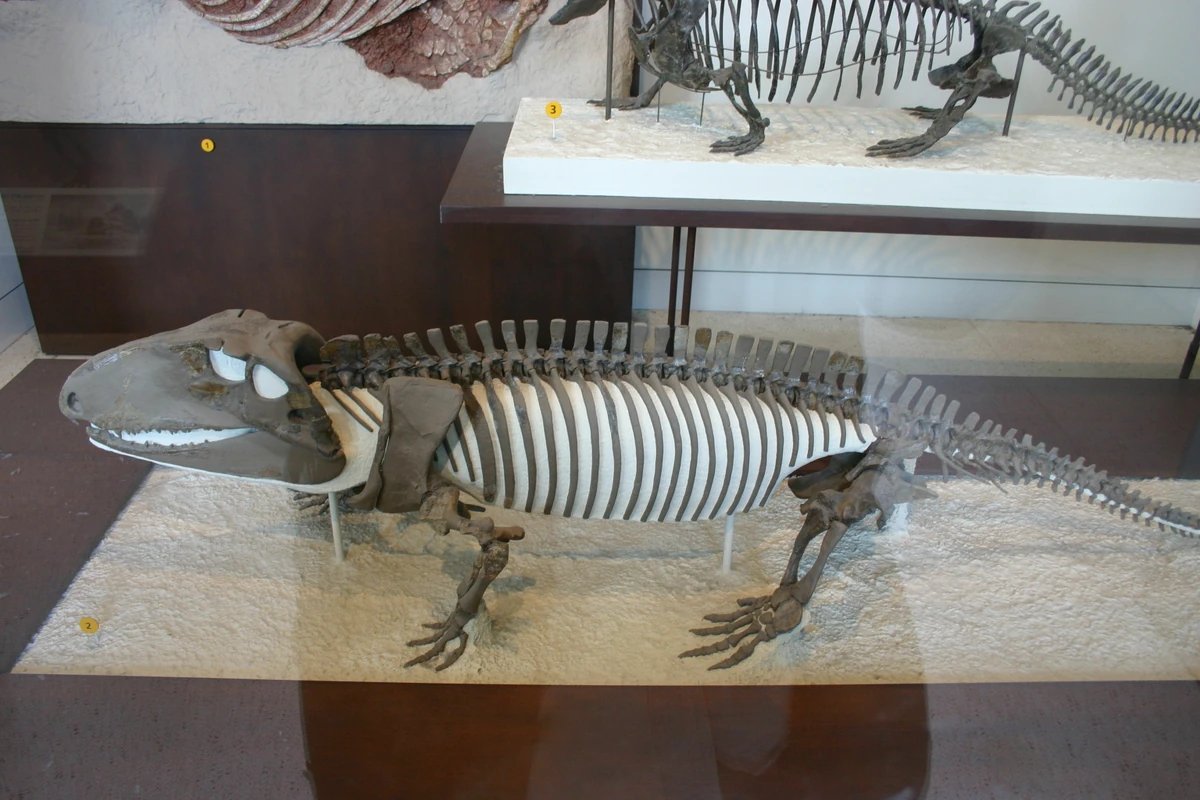
Keichousaurus was a relatively small marine reptile, with adult individuals typically measuring between 15 and 30 centimeters in total length, though some exceptional, older specimens reached up to 40 centimeters. In terms of scale, it was roughly the size of a modern bearded dragon or a large salamander, weighing only a few hundred grams. Its body was highly specialized for an aquatic lifestyle, featuring a streamlined, elongated torso, a long, flexible neck, and a relatively small head with a pointed snout. The skull was equipped with numerous sharp, needle-like teeth, perfectly adapted for snatching slippery prey. One of the most distinctive skeletal characteristics of Keichousaurus was its robust shoulder girdle and broad, paddle-like limbs. The forelimbs were slightly more developed than the hindlimbs, suggesting a specialized mode of swimming. The bones of the limbs and ribs were notably thick and dense, a condition known as pachyostosis. This skeletal thickening acted as ballast to help the animal overcome natural buoyancy and remain submerged in shallow waters without expending excessive energy. Soft tissue inferences, occasionally supported by exceptional carbonized outlines in the fossil matrix, indicate a smooth, streamlined body contour lacking heavy dermal armor, further facilitating efficient movement through the water. Sexual dimorphism is strongly evident in the skeletal anatomy; males possessed significantly more robust humeri (upper arm bones) and broader forearms compared to females, likely used for territorial displays, combat, or grasping mates during copulation.
The paleobiology of Keichousaurus is exceptionally well-understood due to the sheer volume of available specimens. As a carnivore, its diet primarily consisted of small fish, aquatic invertebrates, and possibly small crustaceans that inhabited the shallow Triassic seas. Its sharp, interlocking teeth were ideal for a piscivorous lifestyle, allowing it to grasp and hold onto struggling prey. In terms of locomotion, Keichousaurus likely employed a combination of lateral undulation—moving its body and long tail side-to-side like an eel or modern marine iguana—and limb-driven paddling. The thickened bones suggest it was a slow-moving, bottom-dwelling predator rather than a high-speed pursuit hunter, likely relying on ambush tactics in the murky or vegetated shallows. Perhaps the most groundbreaking aspect of Keichousaurus paleobiology is its reproductive strategy. Fossil evidence has conclusively demonstrated that Keichousaurus was viviparous, meaning it gave birth to live young rather than laying eggs on land. Several spectacular fossils have been discovered with fully developed embryos preserved within the abdominal cavity of adult females, oriented in a way that indicates they were developing internally. This adaptation was crucial for a fully marine lifestyle, freeing the animal from the need to return to shore to nest, a dangerous endeavor for a creature so highly adapted to water. Growth patterns analyzed through bone histology reveal a rapid initial growth phase followed by a slowing down upon reaching sexual maturity, a pattern consistent with many modern reptiles.
During the Middle Triassic, approximately 240 million years ago, the Earth was recovering from the devastating Permian-Triassic extinction event. The global climate was generally warm, arid, and lacked polar ice caps. The region that is now southwestern China was situated on the eastern margins of the Paleotethys Ocean, characterized by a vast, shallow epicontinental sea dotted with carbonate platforms and island arcs. This warm, sunlit, and nutrient-rich marine environment was a cradle for early Mesozoic marine life. Keichousaurus inhabited these shallow coastal waters, lagoons, and reef margins, sharing its ecosystem with a diverse array of organisms. The food web was complex; Keichousaurus occupied a mesopredator niche. It preyed upon the abundant small actinopterygian fishes, ammonites, and bivalves that thrived in the carbonate-rich waters. In turn, Keichousaurus was likely preyed upon by larger marine reptiles that patrolled the same waters, such as early ichthyosaurs, larger sauropterygians like Nothosaurus, and predatory fish. The sea floor was carpeted with crinoids and early corals, providing ample hiding spots for a small, camouflaged predator. The transition from terrestrial to marine ecosystems was in full swing during this period, and the shallow seas of the Paleotethys served as an evolutionary laboratory where various reptile lineages experimented with aquatic adaptations.
The discovery of Keichousaurus marks a significant milestone in Asian paleontology. The first fossils were unearthed in 1957 in the Guizhou Province of southwestern China, a region that would later become world-renowned for its Triassic marine fossil deposits. The genus was formally described and named in 1958 by Dr. Chung Chien Young (Yang Zhongjian), widely regarded as the father of Chinese vertebrate paleontology. The generic name Keichousaurus is derived from Keichou, an older romanization of Guizhou, and the Greek saurus, meaning lizard. The specific epithet hui honors Mr. Yaoming Hu, a pivotal figure in the collection of the initial specimens. The fossils were discovered in the dark grey, thinly bedded limestones of the Falang Formation, specifically within the Zhuganpo Member. Initial discoveries consisted of a few articulated skeletons, but subsequent excavations over the decades have yielded thousands of spectacularly preserved individuals. The sheer abundance of these fossils in the region led to extensive commercial quarrying in the late 20th and early 21st centuries. While this provided a massive sample size for researchers, it also led to challenges regarding fossil smuggling and the loss of crucial taphonomic data. Today, key specimens, including the holotype and the famous pregnant females demonstrating viviparity, are housed in the Institute of Vertebrate Paleontology and Paleoanthropology (IVPP) in Beijing and the National Museum of Natural Science in Taiwan.
Keichousaurus holds a critical position in the evolutionary tree of marine reptiles. It is classified within the Pachypleurosauria, a group of primitive sauropterygians that flourished during the Triassic period. Sauropterygians are a diverse superorder that eventually gave rise to the highly successful plesiosaurs and pliosaurs of the Jurassic and Cretaceous periods. Keichousaurus serves as a vital transitional form, illustrating the early stages of adaptation from a terrestrial reptilian ancestor to a fully aquatic lifestyle. Its anatomy showcases a mosaic of primitive and derived traits; while it retains functional limbs with distinct digits rather than fully transformed flippers, its pachyostotic bones, elongated neck, and modified shoulder girdle clearly indicate a commitment to the sea. Furthermore, the definitive proof of viviparity in Keichousaurus provides profound insights into the evolutionary pressures of marine environments. Live birth evolved independently in several lineages of marine reptiles, including ichthyosaurs and mosasaurs, as a necessary adaptation to avoid the vulnerability of terrestrial egg-laying. Keichousaurus provides some of the earliest and most compelling evidence of this reproductive strategy in the sauropterygian lineage, suggesting that the transition to live birth occurred relatively early in their evolutionary history, thereby facilitating their subsequent radiation into open-ocean environments.
Despite the abundance of fossil material, Keichousaurus remains the subject of several scientific debates. One ongoing controversy centers around its precise taxonomic placement within the Sauropterygia. While generally accepted as a pachypleurosaur, some cladistic analyses have suggested that pachypleurosaurs might be a paraphyletic grouping, meaning Keichousaurus could be more closely related to nothosaurs or even the direct ancestors of plesiosaurs than previously thought. Another area of debate involves its exact mode of locomotion. While the consensus points to a combination of axial undulation and limb paddling, biomechanical models differ on the primary propulsive force. Some researchers argue the robust forelimbs were the main drivers, functioning in a rudimentary flying motion akin to later plesiosaurs, while others maintain that the tail and trunk provided the majority of the thrust. Additionally, the interpretation of sexual dimorphism has been scrutinized; while the robust humerus in certain morphotypes is widely accepted as a male characteristic, some paleontologists caution that these differences could partially reflect ontogenetic changes or even the presence of cryptic, closely related species within the same fossil beds.
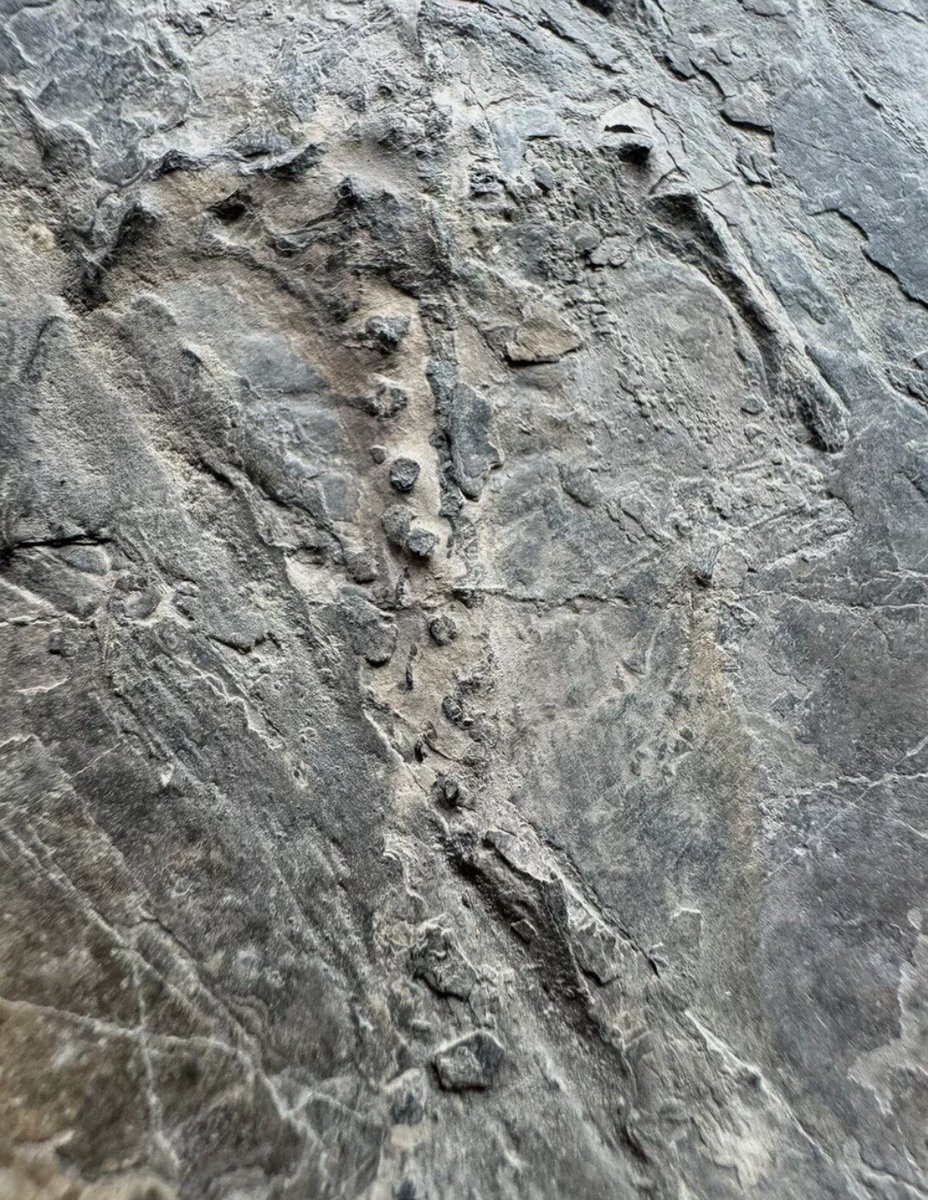
The fossil record of Keichousaurus is nothing short of extraordinary, ranking among the most abundant and completely preserved vertebrate fossils in the world. Geographically, the fossils are overwhelmingly concentrated in the Middle Triassic marine deposits of Guizhou Province, China, particularly around the Xingyi area. To date, tens of thousands of individual specimens have been collected. The preservation quality is typically exceptional; the vast majority of fossils are found as fully articulated, complete skeletons compressed onto slabs of dark limestone. This exceptional preservation is attributed to the anoxic conditions of the stagnant bottom waters in the Triassic lagoons where these animals died, which prevented scavenging and bacterial decay. Typically, the entire skeletal structure is preserved, from the delicate skull bones to the tiny phalanges of the digits. In rare, spectacular instances, the fossilization process has preserved the carbonized outlines of soft tissues, skin impressions, and, most famously, the delicate bones of unborn embryos within the body cavities of adult females.
Keichousaurus has made a significant cultural impact, particularly within the realm of fossil collecting and education. Due to their abundance, complete Keichousaurus skeletons are relatively common in the commercial fossil trade, making them one of the few articulated vertebrate fossils accessible to private collectors and amateur paleontologists. This ubiquity has sparked public fascination and served as a gateway for many into the science of paleontology. Museums worldwide feature Keichousaurus in their displays to illustrate early marine reptile evolution and the phenomenon of fossil Lagerstatten. In China, it is celebrated as a national paleontological treasure, highlighting the country's rich prehistoric heritage.
Classification
Time Period
Discovery
Location
Guizhou Province, China
Formation
Falang Formation
Frequently Asked Questions
What is Keichousaurus?
Keichousaurus hui is an extinct genus of marine reptile belonging to the pachypleurosaur family, which thrived during the Middle Triassic period, approximately 245 to 235 million years ago. Discovered in the Guizhou Province of southwestern China, this small, lizard-like creature is one of the most ...
When did Keichousaurus live?
Keichousaurus lived during the triassic period of the mesozoic era approximately 245-235 million years ago.
Where was Keichousaurus discovered?
Fossils of Keichousaurus were discovered in Guizhou Province, China in the Falang Formation.
What did Keichousaurus eat?
Keichousaurus was a carnivore. It lived in marine habitats.
What type of fossil is Keichousaurus?
Keichousaurus is preserved as a body fossil. The preservation quality is exceptional.
Related Specimens
From the mesozoic era · body fossils
/7725c8fee486.jpg)