Amphicyon
Amphicyon major
Image: Image sourced via web search (Fair use / Educational)
About Amphicyon
Amphicyon major, commonly referred to as the European bear dog, stands as one of the most iconic and formidable apex predators of the Cenozoic era, specifically dominating the terrestrial ecosystems of the Miocene epoch during the Neogene period. Living approximately 20 to 9 million years ago, this massive carnivore represents the quintessential member of the extinct family Amphicyonidae. The significance of Amphicyon major in the realm of paleontology cannot be overstated; it provides an extraordinary window into the evolutionary experimentation that occurred among early caniform carnivores before the modern families of bears, dogs, and mustelids fully established their ecological dominance. By studying Amphicyon major, paleontologists have been able to reconstruct the complex food webs of Miocene Europe, tracing how these massive predators influenced the evolution of their herbivorous prey. Its widespread presence across various fossil sites has made it a biostratigraphic marker and a subject of intense scientific inquiry regarding the functional morphology and paleoecology of extinct mammalian carnivores.
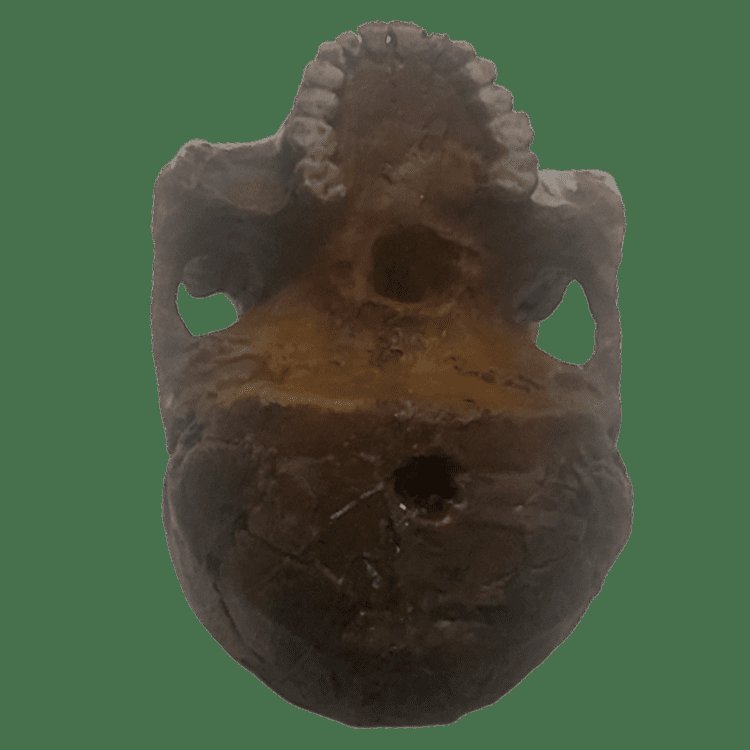
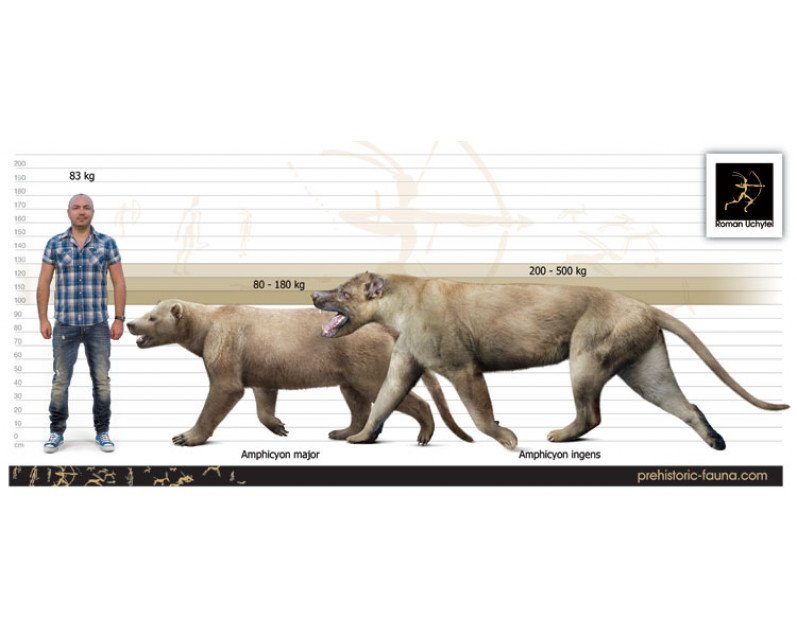
In terms of physical description, Amphicyon major was a creature of imposing proportions and fascinating anatomical contradictions, blending the robust, heavily muscled physique of a modern brown bear with the elongated snout and dentition of a large wolf. Adult individuals are estimated to have reached body lengths of approximately 200 to 250 centimeters, not including a substantial tail, and stood roughly 90 to 100 centimeters at the shoulder. Weight estimates for this massive predator range from 180 to over 200 kilograms, placing it in the same size category as a contemporary adult male African lion or a large grizzly bear. The skeletal architecture of Amphicyon major reveals a heavily built animal with thick, powerful limb bones designed for strength rather than sustained high-speed pursuit. Its forelimbs were particularly robust, equipped with large, non-retractable claws that would have been devastating weapons in close-quarters combat or when subduing large prey. Unlike modern canids, which are digitigrade and walk on their toes for maximum speed, Amphicyon major was semi-plantigrade to plantigrade, meaning it walked with its feet flat on the ground much like a modern bear. This stance provided immense stability and power, allowing it to grapple with massive herbivores. The skull of Amphicyon major was exceptionally large and heavily constructed, featuring a prominent sagittal crest that served as the attachment point for massive temporalis muscles, indicating a bite force capable of crushing thick bone. Its dentition was a versatile toolkit; the anterior teeth and canines were adapted for piercing and tearing flesh, while the robust posterior molars retained crushing capabilities, suggesting a diet that could incorporate both meat and hard materials like bone or tough vegetation. Soft tissue inferences suggest a thick coat of fur suitable for the temperate to subtropical climates of Miocene Europe, with a muscular neck and broad chest that would have given it a deeply intimidating profile.
The paleobiology of Amphicyon major paints a picture of a highly adaptable and devastatingly effective predator. Given its massive build and plantigrade stance, it is highly unlikely that Amphicyon major was a cursorial hunter capable of chasing down fleet-footed prey over long distances like modern wolves. Instead, paleontologists infer that it utilized an ambush strategy, relying on the dense cover of Miocene forests and woodlands to get close to its targets before launching a short, explosive attack. Once engaged, it would have used its immense upper body strength and powerful forelimbs to wrestle prey to the ground, delivering a fatal bite to the neck or spine with its massive jaws. Its diet was primarily carnivorous, focusing on the abundant large herbivores of the era, but its robust molars suggest it was also an opportunistic omnivore, capable of scavenging carcasses, crushing bones to access nutrient-rich marrow, and potentially supplementing its diet with fruits, roots, and other plant matter when meat was scarce. Socially, the behavior of Amphicyon major remains a subject of speculation, but the prevailing consensus is that, like modern bears, it was largely a solitary creature, coming together with others of its kind only for mating or when drawn to a particularly massive carcass. Growth patterns analyzed from bone histology indicate a relatively rapid growth rate during adolescence, allowing young bear dogs to reach a size where they were safe from other predators relatively quickly. Its metabolism was likely comparable to that of modern large carnivorans, requiring substantial caloric intake to maintain its massive bulk, which in turn meant it needed a vast home range to secure sufficient food resources.
The ecological context in which Amphicyon major thrived was a world undergoing significant climatic and environmental transformations. During the early to middle Miocene, Europe was characterized by a generally warm, subtropical to temperate climate, though temperatures began a gradual cooling trend towards the end of the epoch. The landscape was a diverse mosaic of dense, closed-canopy forests, expansive riverine woodlands, and emerging open savanna-like environments. This environmental heterogeneity supported an incredibly rich diversity of mammalian life. Amphicyon major shared its habitat with a variety of fascinating creatures, including early rhinoceroses, primitive horses like Anchitherium, various species of deer and antelope, and ancient proboscideans such as Gomphotherium. In this vibrant ecosystem, Amphicyon major occupied the very top of the food web as an apex predator. Its primary prey likely consisted of the slower-moving, heavily built herbivores, particularly juvenile or sick individuals of the larger ungulate and proboscidean species. However, it was not the only predator on the landscape. Amphicyon major had to navigate a complex predator guild that included early saber-toothed cats (machairodonts), large hyena-like animals, and other species of bear dogs. Niche partitioning was essential; while the saber-toothed cats likely specialized in precision killing of specific prey types, Amphicyon major's sheer size and bone-crushing capabilities allowed it to dominate carcasses, steal kills from smaller predators, and exploit a broader range of food resources, cementing its role as the undisputed tyrant of the Miocene European woodlands.
The discovery history of Amphicyon major is deeply intertwined with the foundational years of vertebrate paleontology in Europe. The genus Amphicyon, which translates to 'ambiguous dog' in reference to its confusing mix of bear and dog traits, was first named and described by the pioneering French paleontologist Édouard Lartet in 1836. Lartet made his groundbreaking discoveries at the famous fossil site of Sansan in the Gers department of southwestern France. The Sansan site, dating to the middle Miocene, yielded an astonishing array of exceptionally preserved fossils, among which the remains of Amphicyon major were some of the most spectacular. Lartet's initial descriptions were based on fragmentary jaws and teeth, but subsequent excavations over the following decades uncovered much more complete material, including nearly complete skulls and articulated postcranial skeletons. These discoveries sparked immense interest among the scientific community of the 19th century, as the creature defied easy categorization within the known families of living carnivores. Over the years, numerous specimens have been unearthed across Europe, from Spain to Germany, solidifying its status as a widespread species. While there isn't a single universally famous specimen with a colloquial name like 'Sue' the T. rex, the composite skeletons mounted in major European museums, often assembled from the rich deposits of Sansan or the fissure fills of Quercy, serve as the quintessential representatives of the species. The naming history has remained relatively stable since Lartet's time, though the exact boundaries of the species and its relationship to other members of the genus have been continuously refined as new fossil material has come to light.
The evolutionary significance of Amphicyon major lies in its position as a premier representative of the Amphicyonidae, a family that represents an early, highly successful radiation of caniform carnivorans. In the grand tree of life, bear dogs are positioned near the base of the Caniformia suborder, sharing a distant common ancestor with true dogs (Canidae), bears (Ursidae), and pinnipeds. Amphicyon major is a textbook example of evolutionary experimentation and convergence. It demonstrates how early carnivorans evolved massive size and bone-crushing adaptations independently of the true bears and the bone-crushing borophagine dogs of North America. The study of Amphicyon major provides critical insights into the morphological transitions that occur when a lineage adapts to an apex predator niche. Its anatomy reveals a transitional state where the cursorial adaptations seen in later canids had not yet evolved, and the massive, grappling adaptations of bears were achieved through a different evolutionary pathway. Ultimately, the Amphicyonidae lineage, including Amphicyon major, proved to be an evolutionary dead end. They left no direct modern descendants, having been driven to extinction by a combination of climate change, the spread of open grasslands which favored faster, more cursorial predators, and increasing competition from the rapidly evolving true dogs and modern bears. However, their 30-million-year reign stands as a testament to the success of their unique anatomical blueprint.
Despite centuries of study, Amphicyon major remains the subject of several ongoing scientific debates and controversies within the paleontological community. One of the primary areas of contention revolves around its exact dietary preferences. While its status as a formidable predator is undisputed, researchers debate the extent of its hypercarnivory versus its omnivory. Some paleontologists argue, based on isotopic analysis of tooth enamel and the sheer robusticity of its molars, that it consumed a significant amount of plant matter and scavenged bone, functioning much like a modern brown bear. Others contend that its cranial biomechanics and the wear patterns on its carnassial teeth point to a diet heavily dominated by fresh meat, making it a more active hunter. Another significant debate concerns its locomotion and hunting style. While the consensus leans heavily towards ambush predation due to its plantigrade stance and heavy limbs, some recent biomechanical modeling suggests it may have been capable of short bursts of surprising speed, prompting re-evaluations of its role in the ecosystem. Furthermore, the taxonomy of the Amphicyonidae family is notoriously complex. The classification of various fragmentary specimens assigned to Amphicyon major is frequently disputed, with some researchers suggesting that the species as currently understood might actually represent a complex of several closely related species that varied slightly across different geographic regions and time periods in Miocene Europe.
The fossil record of Amphicyon major is remarkably robust, particularly when compared to many other large terrestrial carnivores of the Miocene. Fossils are predominantly found across western and central Europe, with significant concentrations in France, Spain, Germany, and Switzerland. The preservation quality ranges from fair to excellent, depending on the specific taphonomic conditions of the depositional environments. The most commonly preserved elements are teeth and robust jaw fragments, as their dense enamel and bone resist degradation. However, several sites have yielded beautifully preserved, nearly complete skulls that provide invaluable data on the animal's cranial anatomy and sensory capabilities. Postcranial elements, including massive limb bones, vertebrae, and ribs, are also relatively common, allowing for accurate reconstructions of its body size and proportions. Famous fossil sites that have contributed heavily to our understanding of Amphicyon major include the aforementioned Sansan in France, the incredibly rich deposits of the Madrid Basin in Spain, and various localities in the Molasse Basin of Germany. These sites, representing ancient river systems, floodplains, and fissure fills, have acted as excellent traps and preservation environments for the remains of these massive predators, ensuring that their legacy endures in the geological record.
The cultural impact of Amphicyon major, while perhaps not as globally pervasive as that of dinosaurs like Tyrannosaurus rex or Pleistocene megafauna like the saber-toothed cat, is nonetheless significant within the realm of paleontology and natural history education. The colloquial moniker 'bear dog' has captured the public's imagination, evoking a fearsome hybrid creature that frequently appears in paleontology documentaries, popular science books, and paleoart. Museums across Europe, such as the Muséum national d'Histoire naturelle in Paris and various natural history museums in Germany and Spain, feature impressive skeletal mounts and life-sized reconstructions of Amphicyon major, drawing awe from visitors due to its sheer size and intimidating appearance. Educationally, it serves as a perfect ambassador for the Miocene epoch, helping to illustrate concepts of convergent evolution, the dynamics of extinct ecosystems, and the fascinating diversity of mammalian life that existed long before the dawn of humanity. Its legacy continues to inspire both scientific curiosity and public fascination with the ancient world.
Classification
Time Period
Discovery
Location
France
Formation
Sansan fossil site
Frequently Asked Questions
What is Amphicyon?
Amphicyon major, commonly referred to as the European bear dog, stands as one of the most iconic and formidable apex predators of the Cenozoic era, specifically dominating the terrestrial ecosystems of the Miocene epoch during the Neogene period. Living approximately 20 to 9 million years ago, this ...
When did Amphicyon live?
Amphicyon lived during the neogene period of the cenozoic era approximately 20-9 million years ago.
Where was Amphicyon discovered?
Fossils of Amphicyon were discovered in France in the Sansan fossil site.
What did Amphicyon eat?
Amphicyon was a carnivore. It lived in terrestrial habitats.
What type of fossil is Amphicyon?
Amphicyon is preserved as a body fossil. The preservation quality is good.
Related Specimens
From the cenozoic era · body fossils