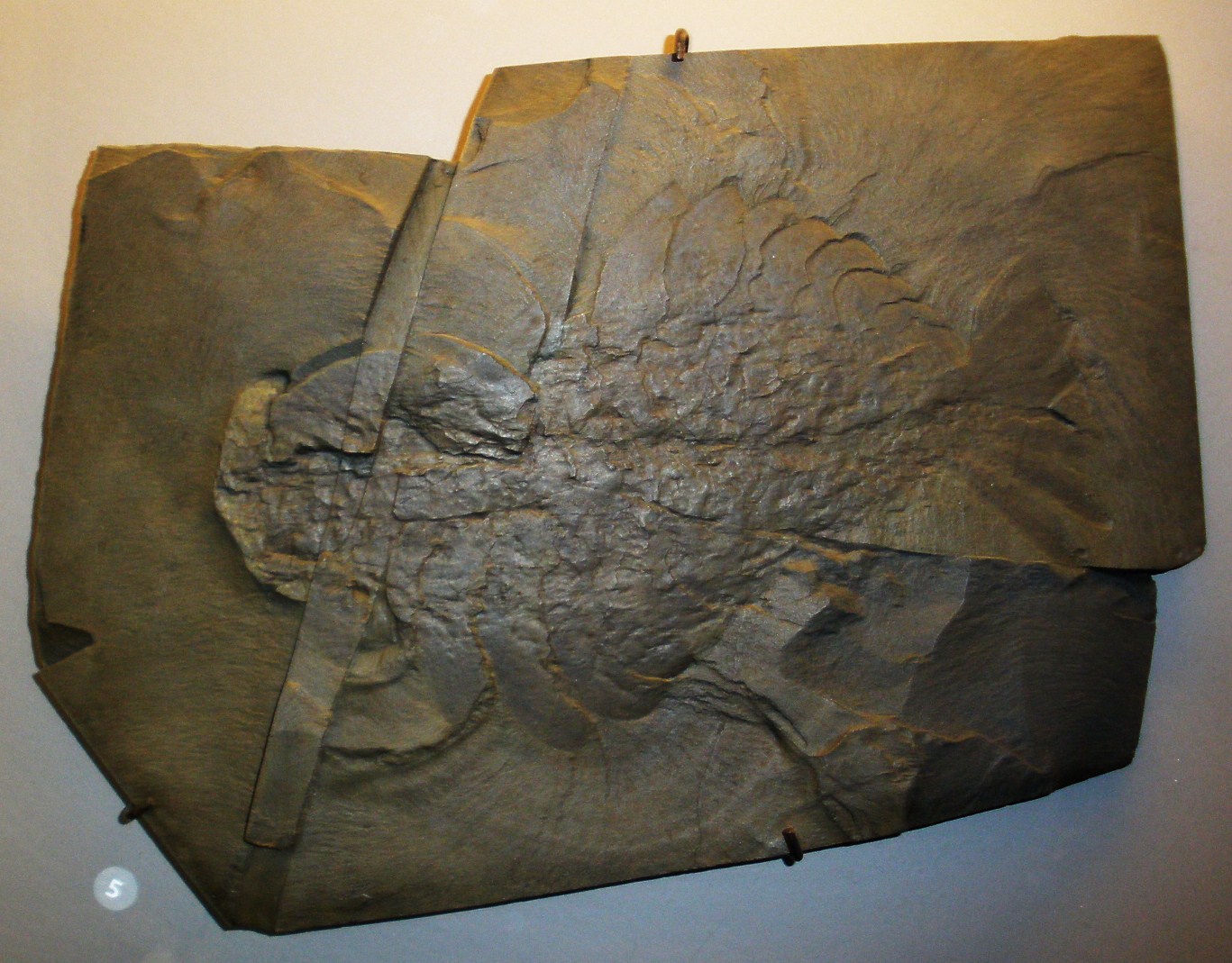
Anomalocaris
Anomalocaris canadensis
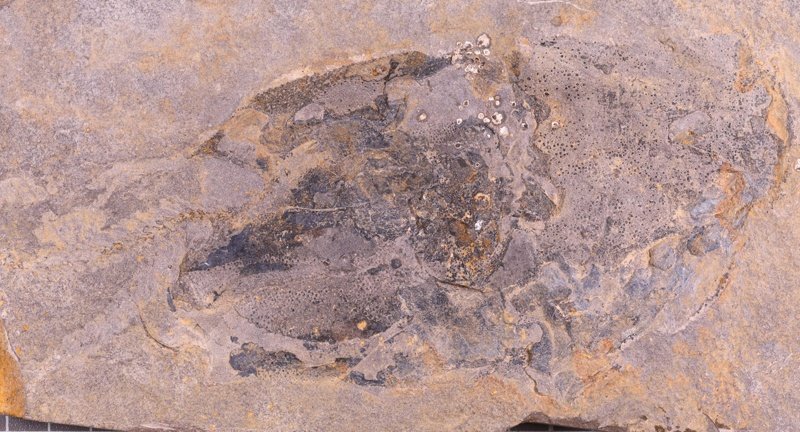
Image: File:Anomalocaris canadensis fossil 1.jpg - Wikimedia Commons (CC BY-SA)
About Anomalocaris
Anomalocaris canadensis, whose scientific name translates to the abnormal shrimp from Canada, stands as one of the most formidable and iconic marine organisms of the Paleozoic Era, thriving during the Cambrian Period approximately 508 to 497 million years ago. As the undisputed apex predator of its time, this remarkable creature played a foundational role in the Cambrian Explosion, a period characterized by the rapid diversification of complex multicellular life. Discovered primarily within the exceptionally preserved fossil beds of the Burgess Shale in British Columbia, Canada, Anomalocaris has fundamentally reshaped our understanding of early animal ecosystems and the evolutionary origins of complex predatory behaviors.
The physical anatomy of Anomalocaris canadensis was entirely unprecedented for its time and remains visually striking even by modern biological standards. Reaching lengths of up to one meter, or roughly thirty-nine inches, it was an absolute giant in a world where most organisms measured only a few centimeters. While exact weight estimates are difficult to determine from flattened fossils, biomechanical models suggest a robust, muscular organism capable of sustained, powerful movement. Its body plan was highly streamlined and segmented, lacking the hard, calcified exoskeleton seen in later marine arthropods, but possessing a tough, unmineralized cuticle. Along the sides of its body ran a series of flexible, overlapping lateral lobes, which functioned as swimming fins. At the posterior end, a large, fan-shaped tail composed of three pairs of upward-pointing fins provided stabilization and rapid propulsion through the water column. Perhaps the most striking sensory adaptations were its enormous, stalked compound eyes. Measuring up to three centimeters in length and containing thousands of individual lenses, these eyes provided Anomalocaris with exceptionally acute vision, rivaling that of modern predatory insects and crustaceans, and allowing it to spot prey in the illuminated upper layers of the Cambrian oceans. At the front of its head extended two large, segmented, and highly flexible appendages lined with sharp, spine-like outgrowths. These frontal appendages were perfectly adapted for grasping and subduing prey. Situated on the underside of the head was a bizarre, circular mouthpart known as an oral cone, composed of thirty-two overlapping plates arranged like the diaphragm of a camera, with a central opening lined with serrated teeth.
In terms of paleobiology, Anomalocaris canadensis was a highly specialized, active carnivore that utilized its unique anatomical toolkit to dominate the Cambrian food web. Its primary mode of locomotion involved undulating its lateral lobes in a wave-like motion, a swimming style analogous to that of modern cuttlefish or manta rays. This method of propulsion, combined with its stabilizing tail fan, granted Anomalocaris remarkable agility and speed, allowing it to actively pursue moving targets. When hunting, the creature likely used its superior vision to track prey before lunging forward and extending its spiny frontal appendages to ensnare its victim. The exact mechanics of its feeding have been the subject of extensive study. Once captured, the prey would be brought to the circular mouth on the ventral side of the head. For decades, paleontologists believed that the tough, tooth-lined oral cone was used to crush the hard exoskeletons of trilobites, a common Cambrian arthropod. However, more recent biomechanical analyses and three-dimensional modeling of the mouthplates suggest that the oral cone could not completely close and lacked the structural integrity to crack heavy armor without sustaining damage. Consequently, it is now widely believed that Anomalocaris primarily targeted soft-bodied organisms or freshly molted arthropods, using its mouth to suck in and shred softer tissues rather than crushing hard shells. Growth patterns deduced from various fossil specimens indicate that Anomalocaris underwent a series of molts, shedding its cuticle to grow larger, much like modern arthropods, with juveniles exhibiting proportionally larger eyes and appendages relative to their body size.
The ecological context of the mid-Cambrian world was one of warm, shallow seas teeming with newly evolved, diverse life forms. The Burgess Shale environment, located near the equator during the Cambrian Period, was a submerged marine escarpment where nutrient-rich waters supported a vibrant ecosystem. In this habitat, Anomalocaris canadensis occupied the very top of the food chain, acting as the apex predator in a complex ecological network. Its presence exerted immense selective pressure on co-existing species, likely driving the evolution of defensive adaptations such as the heavy armor of trilobites, the protective spines of the slug-like Wiwaxia, and the burrowing behaviors of various marine worms. The ecosystem was incredibly diverse, featuring other strange creatures like the five-eyed Opabinia, the sponge-like Vauxia, and early chordates like Pikaia, which represents the deep evolutionary lineage of vertebrates. Anomalocaris was not the only predator in these waters, but it was by far the largest, and its active hunting lifestyle required a high metabolic rate and a constant supply of food. The evolutionary arms race initiated by predators like Anomalocaris is often cited by evolutionary biologists as a primary catalyst for the rapid morphological diversification observed during the Cambrian Explosion, as prey species were forced to adapt or face extinction.
The history of the discovery of Anomalocaris is one of the most famous and fascinating narratives in the field of paleontology, characterized by decades of confusion and mistaken identity. The first fossil fragment was discovered in 1892 by Canadian paleontologist Joseph Whiteaves. This specimen consisted only of a single, isolated grasping appendage, which Whiteaves misidentified as the tail of a shrimp-like crustacean, hence the name Anomalocaris, meaning abnormal shrimp. Years later, in 1911, the legendary American paleontologist Charles Doolittle Walcott discovered a fossilized circular structure in the Burgess Shale that resembled a jellyfish with a hole in the center; he named it Peytoia. Around the same time, Walcott found a poorly preserved, flattened body fossil that he interpreted as a type of sea cucumber or sponge, naming it Laggania. For over seventy years, these three distinct fossils were believed to represent completely different, unrelated animals. It was not until the late 1970s and early 1980s that paleontologists Harry Whittington and Derek Briggs began a meticulous re-examination of the Burgess Shale fossils. While preparing a particularly large and complex specimen, Whittington carefully chipped away layers of rock to reveal that the abnormal shrimp appendage was actually attached to the front of the sea cucumber body, and the jellyfish Peytoia was positioned exactly where the mouth of the creature should be. In 1985, Whittington and Briggs published their groundbreaking reconstruction, proving that these disparate, puzzling pieces were actually the fragmented remains of a single, massive predator. This revelation shocked the scientific community and fundamentally changed the interpretation of Cambrian life.
The evolutionary significance of Anomalocaris canadensis cannot be overstated, as it provides crucial insights into the early evolution of arthropods, the most diverse group of animals on Earth today. Taxonomically, Anomalocaris belongs to an extinct order known as the Radiodonta, which are considered stem-group arthropods. This means they are positioned near the very base of the arthropod family tree, branching off just before the evolution of true, crown-group arthropods like insects, spiders, and crustaceans. Anomalocaris exhibits a fascinating mix of primitive and advanced traits, serving as a transitional form that illustrates how the complex arthropod body plan was assembled over millions of years. For instance, while it possessed the jointed appendages and compound eyes characteristic of modern arthropods, it lacked the hardened, calcified exoskeleton and the jointed legs along its main body. The discovery of its highly developed compound eyes, which are among the oldest and largest known in the fossil record, demonstrated that sophisticated visual systems evolved extremely early in the history of animal life, likely preceding the evolution of hard exoskeletons. Furthermore, the study of Anomalocaris and other radiodonts has helped scientists trace the evolutionary origins of arthropod limbs, suggesting that the diverse mouthparts and antennae of modern insects and crustaceans ultimately evolved from the specialized frontal appendages of Cambrian predators.
Despite its iconic status, Anomalocaris remains the subject of ongoing scientific debates and intense paleontological research. One of the most significant controversies revolves around its specific diet and feeding capabilities. As previously mentioned, the traditional view held that Anomalocaris was a durophagous predator, capable of crushing the hard carapaces of trilobites. This theory was supported by the presence of healed bite marks on some trilobite fossils and fossilized feces, or coprolites, containing crushed trilobite shells. However, recent biomechanical studies led by researchers such as Allison Daley and John Paterson have challenged this narrative, demonstrating that the unmineralized oral cone of Anomalocaris would have fractured under the force required to break a trilobite shell. This has led to a revised consensus that Anomalocaris likely preyed on soft-bodied animals, while other, yet-to-be-identified predators were responsible for the damage seen on trilobites. Additionally, there are ongoing taxonomic disputes regarding the classification of various radiodont species, with researchers continuously refining the phylogenetic relationships between Anomalocaris, its close relatives like Amplectobelua, and the broader arthropod lineage as new, better-preserved fossils are discovered around the world.
The fossil record of Anomalocaris and its close relatives is surprisingly extensive for such ancient, soft-bodied organisms, though preservation requires highly specific geological conditions. The most famous and prolific site for Anomalocaris canadensis fossils is the Burgess Shale in the Canadian Rockies, where the unique, fine-grained mudstones allowed for exceptional Burgess Shale-type preservation. This taphonomic process preserved not only the tougher cuticles and appendages but also delicate soft tissues, including the eyes, gills, and gut tracts. To date, hundreds of specimens, ranging from isolated appendages to complete body fossils, have been excavated from this site. Beyond Canada, related radiodont species have been discovered in other Cambrian Lagerstatten globally, most notably in the Chengjiang fossil site in Yunnan Province, China, and the Emu Bay Shale in South Australia. These discoveries indicate that radiodonts were a highly successful and globally distributed group of predators. The quality of preservation at these sites has allowed paleontologists to study the microscopic structures of their eyes and respiratory organs, providing an unprecedented window into the biology of early marine life.
The cultural impact of Anomalocaris extends far beyond the confines of academic paleontology, as it has become a recognizable symbol of the bizarre and wondrous nature of prehistoric life. It is prominently featured in major natural history museums worldwide, with the Royal Ontario Museum in Toronto housing some of the most spectacular original specimens and life-sized dioramas. In popular culture, Anomalocaris has made numerous appearances in documentaries, most notably the BBC series Walking with Monsters, which brought the creature to life through computer-generated imagery. Its unique, alien-like appearance has also inspired creature designs in various media, including video games, where the popular Pokemon franchise features a creature named Anorith that is directly modeled after the ancient predator. Educationally, Anomalocaris serves as a captivating entry point for teaching students and the public about the Cambrian Explosion, the process of fossilization, and the dynamic nature of scientific discovery, illustrating how our understanding of the deep past is constantly evolving as new evidence comes to light.
Classification
Time Period
Discovery
Location
Burgess Shale, British Columbia, Canada
Formation
Burgess Shale
Frequently Asked Questions
What is Anomalocaris?
Anomalocaris canadensis, whose scientific name translates to the abnormal shrimp from Canada, stands as one of the most formidable and iconic marine organisms of the Paleozoic Era, thriving during the Cambrian Period approximately 508 to 497 million years ago. As the undisputed apex predator of its ...
When did Anomalocaris live?
Anomalocaris lived during the cambrian period of the paleozoic era approximately 508-497 million years ago.
Where was Anomalocaris discovered?
Fossils of Anomalocaris were discovered in Burgess Shale, British Columbia, Canada in the Burgess Shale.
What did Anomalocaris eat?
Anomalocaris was a carnivore. It lived in marine habitats.
What type of fossil is Anomalocaris?
Anomalocaris is preserved as a impression fossil. The preservation quality is exceptional.
Related Specimens
From the paleozoic era · impression fossils
/cc86f4a1bc00.jpg)