/cc86f4a1bc00.jpg)
Anomalocaris canadensis (Burgess Shale)
Anomalocaris canadensis
About Anomalocaris canadensis (Burgess Shale)
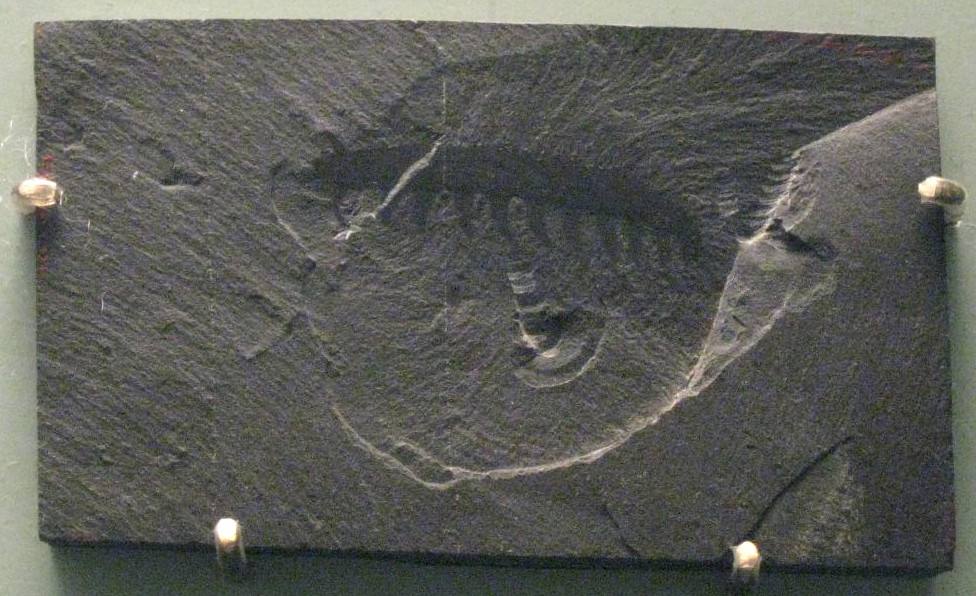
Anomalocaris canadensis was a colossal apex predator of the middle Cambrian period, dominating the marine ecosystems of the Paleozoic era approximately 508 million years ago. Discovered primarily within the celebrated Burgess Shale Formation of British Columbia, Canada, this iconic stem-arthropod represents a crucial piece of the evolutionary puzzle regarding the origins of complex animal life. Its remarkable anatomy and formidable predatory adaptations make it one of the most significant and recognizable organisms to emerge from the Cambrian Explosion, offering profound insights into early marine food webs.
The physical description of Anomalocaris canadensis reveals an organism that was truly alien by modern standards, yet foundational to the arthropod lineage. While most Cambrian animals were mere millimeters or a few centimeters long, Anomalocaris was a giant of its time, with typical specimens ranging from several centimeters to over fifty centimeters in length, and some fragmentary evidence suggesting even larger dimensions. Its body was clearly divided into a distinct head and a segmented trunk. The head was equipped with a pair of large, stalked compound eyes, which recent fossil discoveries suggest contained tens of thousands of individual lenses, providing the animal with exceptionally acute vision comparable to that of modern predatory insects like dragonflies. Extending from the front of the head were two prominent, segmented, and spined appendages. These frontal appendages, which gave the animal its name meaning abnormal shrimp, curled downward and inward, perfectly adapted for grasping and securing prey. Beneath the head lay a unique, circular mouthpart composed of thirty-two overlapping plates arranged like a pineapple slice, with a central square opening lined with serrated teeth. The trunk of Anomalocaris consisted of eleven distinct segments, each bearing a pair of flexible, overlapping lateral swimming flaps. These flaps were striated and likely housed feather-like gills on their dorsal surfaces, serving dual functions in locomotion and respiration. The body terminated in a fan-like tail composed of three pairs of upward-pointing fins and a central terminal lobe, which provided stabilization and steering. Unlike modern arthropods, Anomalocaris lacked a heavily biomineralized exoskeleton, possessing instead a tough but unmineralized cuticle that allowed for significant flexibility.
In terms of paleobiology, Anomalocaris canadensis is widely regarded as the first true apex predator of the world's oceans, possessing a suite of adaptations tailored for a carnivorous lifestyle. Its primary mode of locomotion was nektonic, meaning it was an active swimmer rather than a bottom-dweller. Biomechanical models and robotic simulations suggest that Anomalocaris swam by undulating its lateral flaps in a wave-like motion from front to back, a method similar to the swimming style of modern cuttlefish or manta rays. This undulatory swimming would have allowed it to cruise efficiently through the water column while maintaining stability, using its large tail fan for sudden bursts of speed or rapid changes in direction when pursuing prey. The highly developed compound eyes indicate that it was a visual hunter, relying on ambient light in the photic zone to spot movement. Once prey was located, Anomalocaris would have used its spined frontal appendages to snatch and manipulate the victim, drawing it toward the circular mouth. The exact mechanics of its feeding remain a subject of intense study, but it is generally believed that the oral cone functioned by constricting and crushing, while the teeth lining the inner margin shredded the food before ingestion. Growth patterns inferred from various fossil sizes suggest that Anomalocaris underwent a series of molts, shedding its cuticle to grow, much like modern arthropods, though the exact developmental stages from larva to adult are still being pieced together from the fossil record.
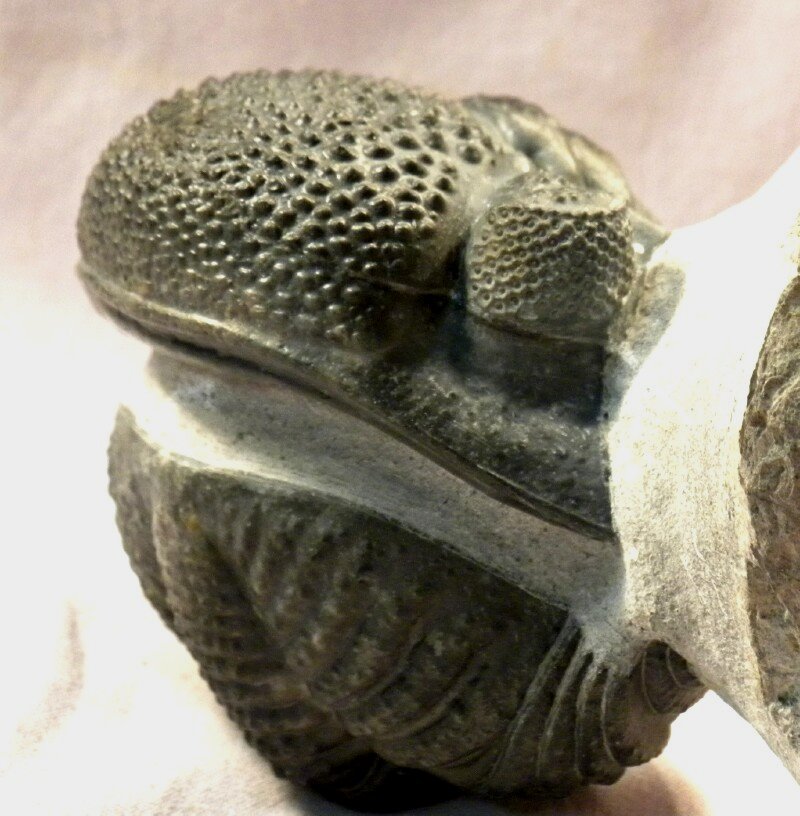
The ecological context of Anomalocaris canadensis is inextricably linked to the dramatic biological and geological shifts of the Cambrian Explosion. During this period, the Earth's landmasses were largely barren, but the oceans were teeming with a sudden and unprecedented diversity of multicellular life. The Burgess Shale environment, where Anomalocaris thrived, was situated along the submerged edge of the ancient continent of Laurentia, near the equator. This tropical, shallow marine reef system was built not by corals, but by calcareous algae and sponges. Anomalocaris occupied the very top of the food web in this vibrant ecosystem. It co-existed with a bizarre menagerie of early animals, including the five-eyed Opabinia, the armored trilobite Olenoides, the spiky worm Hallucigenia, and early chordates like Pikaia. As an apex predator, Anomalocaris played a crucial role in driving the evolutionary arms race of the Cambrian period. Its presence exerted immense selective pressure on other organisms, likely accelerating the evolution of defensive adaptations such as the hard exoskeletons of trilobites, the protective spines of various worms, and the burrowing behaviors of benthic creatures. The dynamic predator-prey interactions established by Anomalocaris and its relatives laid the foundational structure for all subsequent marine ecosystems.
The discovery history of Anomalocaris canadensis is one of the most fascinating and convoluted tales in the annals of paleontology, spanning nearly a century of misidentification and scientific detective work. The first piece of the puzzle was discovered in 1892 by Joseph Whiteaves, who found an isolated, shrimp-like fossil in the Ogygopsis Shale of Mount Stephen, British Columbia. Believing it to be the abdomen of a crustacean, he named it Anomalocaris canadensis, meaning abnormal shrimp from Canada. Years later, in the early twentieth century, the legendary paleontologist Charles Doolittle Walcott discovered massive deposits of fossils in the nearby Burgess Shale. Among his finds were a circular, pineapple-like fossil he identified as a jellyfish, naming it Peytoia, and a large, sponge-like body he named Laggania. For decades, these three distinct fossils—the abnormal shrimp, the jellyfish, and the sponge—were displayed in museums worldwide as completely separate organisms. It was not until the late 1970s and early 1980s, during a comprehensive reinvestigation of the Burgess Shale fauna led by Harry Whittington and his graduate students Derek Briggs and Simon Conway Morris, that the truth was revealed. While meticulously preparing a specimen, Whittington uncovered a pair of the abnormal shrimp attached to the front of the sponge-like body, with the jellyfish situated right behind them as a mouthpart. The scientific community was astounded to realize that these disparate parts belonged to a single, massive predator. Because the name Anomalocaris had been published first by Whiteaves, the rules of taxonomic priority dictated that the entire animal take on that name, forever cementing its legacy as a triumph of modern paleontological reconstruction.
The evolutionary significance of Anomalocaris canadensis cannot be overstated, as it provides a critical window into the early assembly of the arthropod body plan. Taxonomically, Anomalocaris is classified as a radiodont, an extinct order of stem-group arthropods. This means it belongs to the evolutionary lineage that eventually gave rise to modern euarthropods—insects, spiders, crustaceans, and millipedes—but it branched off before the last common ancestor of all living arthropods. Anomalocaris exhibits a fascinating mosaic of transitional features. Its segmented body, paired appendages, and compound eyes are clear arthropod hallmarks. However, its lack of a hardened, biomineralized exoskeleton and the absence of jointed legs on its trunk segments differentiate it from crown-group arthropods. The discovery that Anomalocaris possessed highly advanced, stalked compound eyes was particularly groundbreaking, as it demonstrated that complex visual organs evolved very early in the arthropod lineage, possibly even before the evolution of hardened exoskeletons and jointed limbs. Furthermore, the study of its brain and nervous system, inferred from exceptionally preserved radiodont specimens found in other fossil deposits, indicates that the fundamental neurological architecture of arthropods was already established in these Cambrian predators. By studying Anomalocaris, evolutionary biologists can trace the step-by-step acquisition of traits that made arthropods the most diverse and abundant animal phylum on Earth.
Despite its iconic status, Anomalocaris canadensis remains the subject of ongoing scientific debates, particularly regarding its diet and feeding capabilities. For decades, the prevailing consensus was that Anomalocaris was a durophagous predator, meaning it actively hunted and crushed hard-shelled prey like trilobites. This theory was supported by the discovery of trilobite fossils with W-shaped bite marks that seemed to match the oral cone of Anomalocaris, as well as fossilized feces containing trilobite fragments. However, recent biomechanical studies and finite element analyses led by paleontologists such as Allison Daley and John Paterson have challenged this view. Their research suggests that the unmineralized plates of the Anomalocaris mouthpart and the flexible nature of its frontal appendages would have lacked the structural integrity required to crack thick trilobite carapaces without sustaining catastrophic damage to the predator itself. Consequently, a new hypothesis has emerged proposing that Anomalocaris primarily targeted soft-bodied prey, such as worms, unprotected swimming arthropods, or freshly molted trilobites whose shells had not yet hardened. The debate continues, with some scientists suggesting that the W-shaped bite marks may belong to other, yet-undiscovered Cambrian predators, or that Anomalocaris possessed specialized behaviors for extracting soft tissue from hard shells without direct crushing.
The fossil record of Anomalocaris canadensis and its radiodont relatives is surprisingly robust for a soft-bodied organism, thanks to the unique taphonomic conditions of the Cambrian period. Fossils of Anomalocaris are most famously and abundantly found in the Burgess Shale Formation of British Columbia, where underwater mudslides rapidly buried the organisms in fine, anoxic sediment, preventing decay and preserving delicate tissues as carbonaceous films. This type of preservation, known as Burgess Shale-type preservation, has yielded dozens of complete or near-complete specimens of Anomalocaris, along with hundreds of isolated frontal appendages and oral cones. While Anomalocaris canadensis is specific to the Burgess Shale, closely related radiodont species have been discovered in other Cambrian Lagerstatten around the world, indicating a global distribution. Notable sites include the Chengjiang biota in Yunnan Province, China, which has produced older, exceptionally preserved radiodonts like Amplectobelua and Lyrarapax, and the Emu Bay Shale in South Australia, which yielded the crucial specimens proving Anomalocaris possessed compound eyes. The widespread geographic distribution and the sheer number of specimens highlight the ecological success and dominance of the radiodonts during the Cambrian period.
The cultural impact of Anomalocaris canadensis extends far beyond the confines of academic paleontology, as it has become a recognizable symbol of prehistoric life and the wonders of the Cambrian Explosion. Its bizarre, alien appearance has captured the public imagination, earning it prominent displays in major natural history museums around the world, including the Royal Ontario Museum in Toronto and the Smithsonian National Museum of Natural History in Washington, D.C. Anomalocaris has been featured in numerous popular science documentaries, most notably the BBC series Walking with Monsters, which brought the predator to life through computer-generated imagery. It frequently appears in educational materials, paleontology-themed video games, and even as plush toys, serving as an accessible and engaging entry point for students and enthusiasts learning about evolutionary biology. As the mascot of the Burgess Shale, Anomalocaris continues to inspire awe and curiosity about the deep history of life on our planet.
Time Period
Discovery
Location
Burgess Shale, British Columbia, Canada
Formation
Burgess Shale Formation
Frequently Asked Questions
What is Anomalocaris canadensis (Burgess Shale)?
Anomalocaris canadensis was a colossal apex predator of the middle Cambrian period, dominating the marine ecosystems of the Paleozoic era approximately 508 million years ago. Discovered primarily within the celebrated Burgess Shale Formation of British Columbia, Canada, this iconic stem-arthropod re...
When did Anomalocaris canadensis (Burgess Shale) live?
Anomalocaris canadensis (Burgess Shale) lived during the cambrian period of the paleozoic era approximately 508 million years ago.
Where was Anomalocaris canadensis (Burgess Shale) discovered?
Fossils of Anomalocaris canadensis (Burgess Shale) were discovered in Burgess Shale, British Columbia, Canada in the Burgess Shale Formation.
What did Anomalocaris canadensis (Burgess Shale) eat?
Anomalocaris canadensis (Burgess Shale) was a carnivore/predator (likely preyed on trilobites and other soft-bodied organisms). It lived in marine (deep-water benthic or nektonic) habitats.
What type of fossil is Anomalocaris canadensis (Burgess Shale)?
Anomalocaris canadensis (Burgess Shale) is preserved as a body fossil. The preservation quality is excellent.
Related Specimens
From the paleozoic era · body fossils