Hadrosaurus
Hadrosaurus foulkii
Image: Image sourced via web search (Fair use / Educational)
About Hadrosaurus
Hadrosaurus foulkii stands as a landmark genus in the history of paleontology, representing the first dinosaur skeleton to be mounted for public display anywhere in the world. This large, herbivorous ornithopod dinosaur lived during the late Campanian stage of the Late Cretaceous period, approximately 80 to 78 million years ago, in what is now eastern North America. Its discovery in New Jersey fundamentally altered scientific and public perception of dinosaurs, transforming them from sluggish, quadrupedal reptilian behemoths into more dynamic, bipedal creatures, and sparking a wave of fossil hunting across the continent.
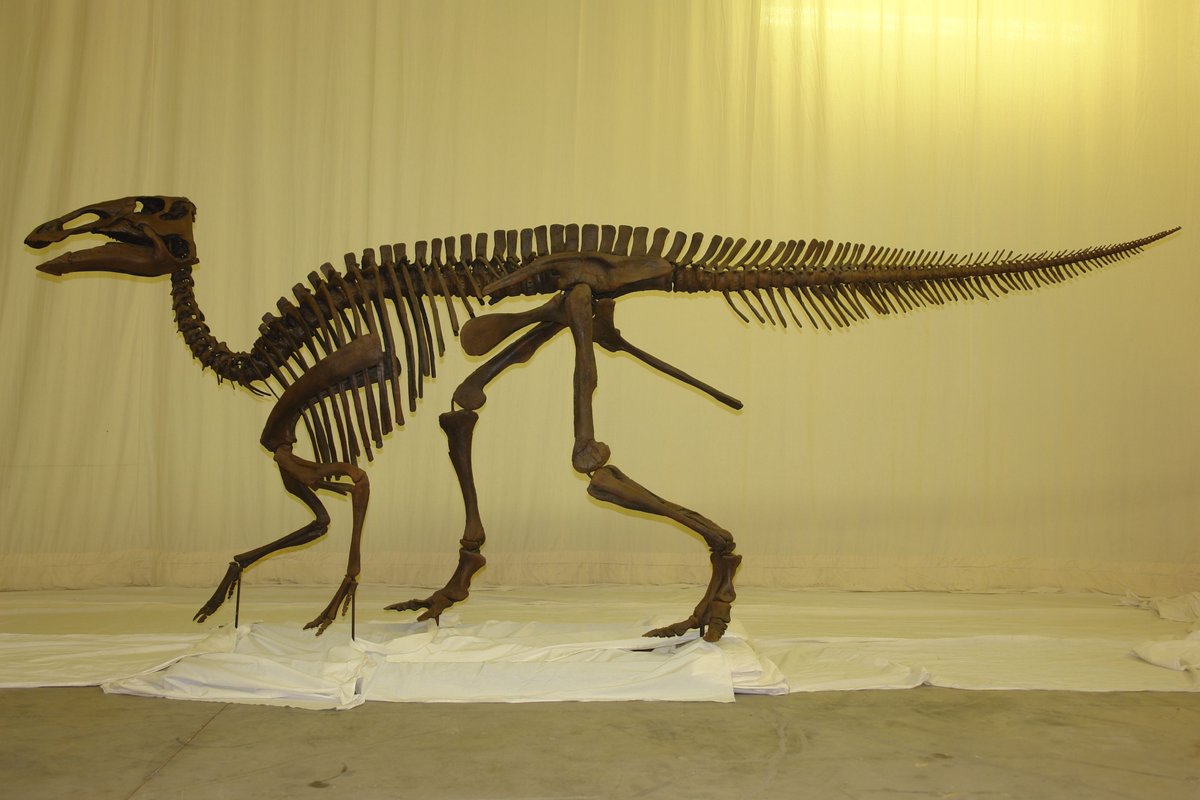
Hadrosaurus was a substantial animal, estimated to have reached lengths of 7 to 8 meters (approximately 23 to 26 feet) and weighed between 2 to 4 metric tons. For comparison, it was roughly the size of a modern African bush elephant, though with a very different body plan. Its most notable characteristic, inferred from its relatives, was a broad, flattened, toothless beak at the front of its snout, resembling that of a duck, which gives the entire Hadrosauridae family its common name, the "duck-billed dinosaurs." The skeleton of Hadrosaurus foulkii reveals a creature with a robust build. Its hind limbs were significantly larger and more powerful than its forelimbs, a key piece of evidence that led early paleontologists to correctly infer a bipedal or facultatively bipedal posture. The forelimbs were shorter but still strong, likely used for support while foraging on low-lying vegetation. The tail was long, deep, and muscular, stiffened by ossified tendons, which would have acted as a crucial counterbalance for the body during locomotion. While the original holotype specimen (ANSP 9200) lacks a skull, comparisons with closely related hadrosaurids like Gryposaurus and Kritosaurus suggest it would have possessed a large, elongated head without the elaborate hollow crests seen in lambeosaurine hadrosaurs. Instead, it likely had a solid bony arch over its nasal region. The back of its jaws contained complex dental batteries, with hundreds of tightly packed, continuously replacing teeth designed for efficiently grinding tough plant material.
The paleobiology of Hadrosaurus foulkii is primarily inferred from its skeletal anatomy and the fossil evidence of its close relatives. As a member of the Hadrosauridae family, its diet was strictly herbivorous. The broad beak was likely used for cropping vegetation such as twigs, leaves, and possibly fruits, while the sophisticated dental batteries in its cheeks would have processed this tough material with a complex grinding motion. This efficient oral processing system was a hallmark of hadrosaurid success. Its powerful hind legs and counterbalancing tail indicate that Hadrosaurus was an adept terrestrial locomotor, capable of walking and running bipedally, especially to escape predators. It may have adopted a quadrupedal stance for low browsing or slow walking. Fossil trackways attributed to hadrosaurs suggest they were social animals that moved in herds, a behavior that would have offered protection from predators and facilitated migration to new feeding grounds. Growth studies on other hadrosaurs show they grew rapidly, reaching near-adult size in less than a decade, a strategy indicative of a relatively high metabolic rate for a reptile, closer to that of modern birds and mammals than to crocodiles. This rapid growth would have helped young hadrosaurs quickly outsize potential threats.
Hadrosaurus lived in a warm, humid, subtropical coastal plain environment along the eastern margin of the Western Interior Seaway, an immense shallow sea that divided North America into two landmasses, Laramidia to the west and Appalachia to the east. The Woodbury Formation, where its fossils were found, represents a nearshore marine and deltaic setting, suggesting Hadrosaurus inhabited lush, forested floodplains and estuaries. The climate was much warmer than today's, supporting a rich flora of conifers, ferns, and early flowering plants (angiosperms), which formed the base of the herbivore's diet. The fauna of Late Cretaceous Appalachia was distinct from its more famous western counterpart. Hadrosaurus shared its ecosystem with other dinosaurs, though the Appalachian fossil record is sparse. Potential predators included the large tyrannosauroid Dryptosaurus, a formidable carnivore that would have posed a significant threat. The waterways were inhabited by giant crocodiles like Deinosuchus, which could have ambushed dinosaurs at the water's edge. Other contemporaries included various turtles, fish, and marine reptiles in the adjacent seaway, painting a picture of a vibrant and dangerous coastal world where Hadrosaurus occupied a key role as a large primary consumer.
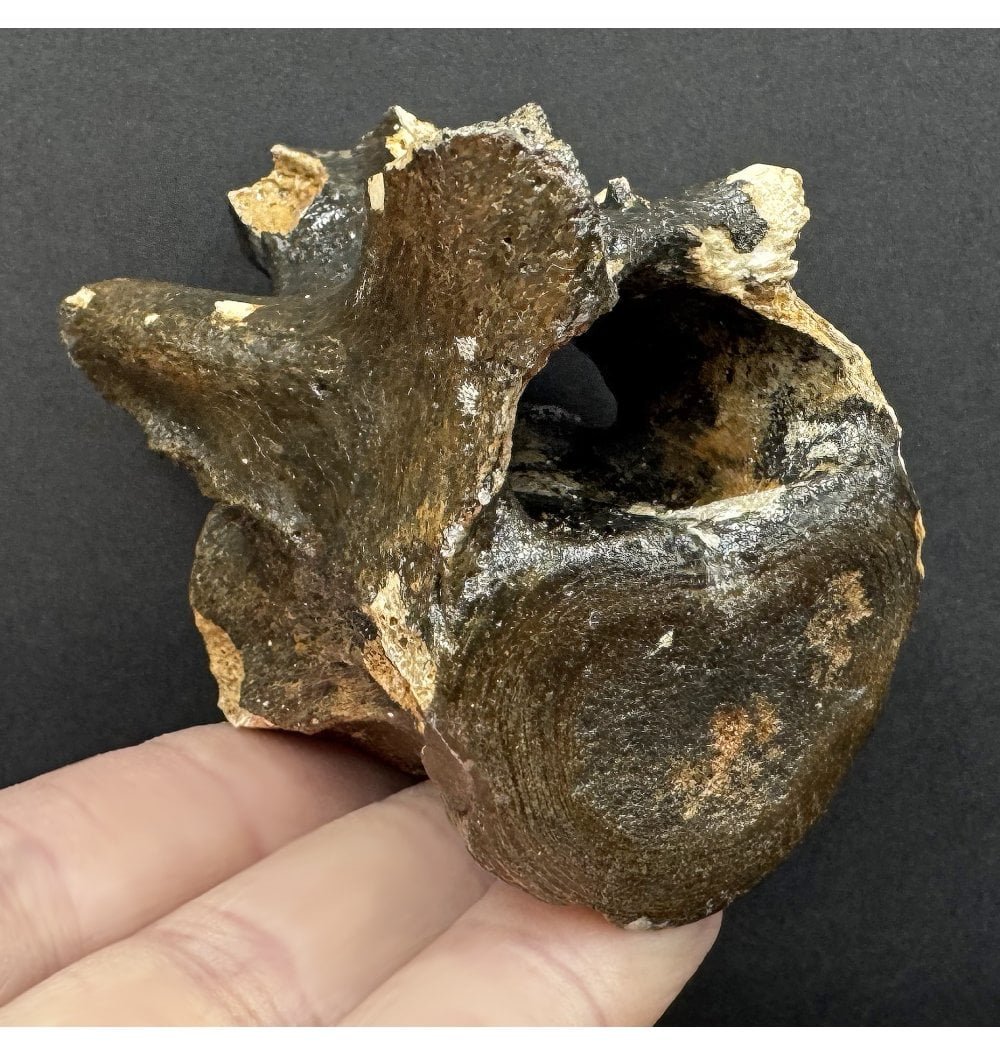
The discovery of Hadrosaurus foulkii is a pivotal chapter in American science. In 1838, workmen digging in a marl pit in Haddonfield, New Jersey, owned by John Estaugh Hopkins, uncovered several large bones. For two decades, these bones remained local curiosities. In 1858, a visitor to Haddonfield, William Parker Foulke, learned of the discovery and, with permission from Hopkins, excavated the site, recovering a significant portion of a skeleton, including limb bones, vertebrae, and parts of the pelvis and jaw. Recognizing their importance, Foulke contacted paleontologist Dr. Joseph Leidy of the Academy of Natural Sciences in Philadelphia. Leidy studied the remains and, in 1858, formally named the creature Hadrosaurus foulkii, meaning "Foulke's bulky lizard." The holotype specimen, cataloged as ANSP 9200, was revolutionary because it was far more complete than any dinosaur found in North America previously. Based on the disparity between the large hind limbs and smaller forelimbs, Leidy controversially proposed that it was bipedal, challenging the prevailing image of dinosaurs as quadrupedal, dragon-like beasts. In 1868, a skeletal mount, with a speculative skull sculpted by artist Benjamin Waterhouse Hawkins, was erected at the Academy, becoming the world's first mounted dinosaur skeleton and a sensational public attraction.
Hadrosaurus foulkii holds immense evolutionary significance as the type genus for the entire Hadrosauridae family, one of the most diverse and successful dinosaur groups of the Late Cretaceous. It provides a crucial data point for understanding the fauna of the isolated landmass of Appalachia. For much of the Late Cretaceous, the Western Interior Seaway separated the continent, leading to divergent evolutionary paths for its inhabitants. Hadrosaurus and its relatives represent the Appalachian branch of hadrosaur evolution. It belongs to the subfamily Hadrosaurinae (or Saurolophinae, depending on the classification used), which are typically characterized by their solid or non-hollow crests. Its anatomy showcases the key adaptations that made hadrosaurs so successful: advanced dental batteries for efficient herbivory and a versatile locomotor system. While it has no direct modern descendants, as all non-avian dinosaurs went extinct at the end of the Cretaceous, its closest living relatives are birds, which are descended from theropod dinosaurs. The study of Hadrosaurus and its kin helps paleontologists trace the radiation of ornithopod dinosaurs and understand how different clades adapted to changing environments across the globe during the final chapter of the Mesozoic Era.
Despite its historical importance, the scientific status of Hadrosaurus foulkii has been a subject of debate. The primary issue stems from the incompleteness of the holotype specimen, most notably its lack of a skull. The skull is critical for diagnosing and differentiating hadrosaur species, as features like crest shape and snout anatomy are key taxonomic markers. Because of this, some paleontologists in the late 20th century argued that Hadrosaurus foulkii was a *nomen dubium*, or a "doubtful name," as the postcranial skeleton was considered too generic to definitively distinguish it from other hadrosaurids found elsewhere. However, a comprehensive 2011 re-evaluation by Albert Prieto-Márquez and colleagues identified several unique anatomical features (autapomorphies) in the hip and other bones of the holotype, arguing that these were sufficient to validate it as a distinct and diagnosable genus. This study re-established Hadrosaurus foulkii as a valid taxon, securing its place in paleontological literature not just as a historical artifact but as a legitimate biological entity, though debates on its precise relationships within Hadrosauridae continue.
The fossil record for Hadrosaurus foulkii is geographically restricted to the Late Cretaceous deposits of the Atlantic Coastal Plain of North America, specifically the Woodbury Formation of New Jersey and potentially correlative formations in neighboring states like Delaware. The original holotype remains the most significant and most complete specimen known. Other fragmentary remains from the same region have been assigned to the genus over the years, but their attribution is often tentative due to their incompleteness. Compared to the fossil-rich formations of western North America, like the Hell Creek or Dinosaur Park Formations which have yielded thousands of hadrosaur specimens, the fossil record from Appalachia is exceptionally poor. The acidic soils and geological history of the eastern coast are not conducive to good fossil preservation. Therefore, articulated skeletons are exceedingly rare, and most finds consist of isolated bones or teeth. The Haddonfield site, now a registered National Historic Landmark, remains the most famous locality associated with the genus, cementing its identity with the state of New Jersey.
The cultural impact of Hadrosaurus foulkii is immense and far-reaching. Its 1868 skeletal mounting in Philadelphia ignited the first great wave of public "dinomania" in the United States, inspiring a generation of scientists and launching the competitive fossil-hunting expeditions that defined late 19th-century American paleontology. It established the museum dinosaur exhibit as a powerful tool for public science education. In recognition of its historic and scientific importance, Hadrosaurus foulkii was designated the official state dinosaur of New Jersey in 1991. A statue of the dinosaur, sculpted by John Giannotti, now stands in downtown Haddonfield, New Jersey, near the site of its discovery, serving as a proud local landmark and a permanent tribute to the fossil that changed our view of the prehistoric world.
Classification
Time Period
Discovery
Location
New Jersey, USA
Formation
Woodbury Formation
Frequently Asked Questions
What is Hadrosaurus?
Hadrosaurus foulkii stands as a landmark genus in the history of paleontology, representing the first dinosaur skeleton to be mounted for public display anywhere in the world. This large, herbivorous ornithopod dinosaur lived during the late Campanian stage of the Late Cretaceous period, approximate...
When did Hadrosaurus live?
Hadrosaurus lived during the cretaceous period of the mesozoic era approximately 80-78 million years ago.
Where was Hadrosaurus discovered?
Fossils of Hadrosaurus were discovered in New Jersey, USA in the Woodbury Formation.
What did Hadrosaurus eat?
Hadrosaurus was a herbivore. It lived in terrestrial, coastal plain habitats.
What type of fossil is Hadrosaurus?
Hadrosaurus is preserved as a body fossil. The preservation quality is fair.
Related Specimens
From the mesozoic era · body fossils