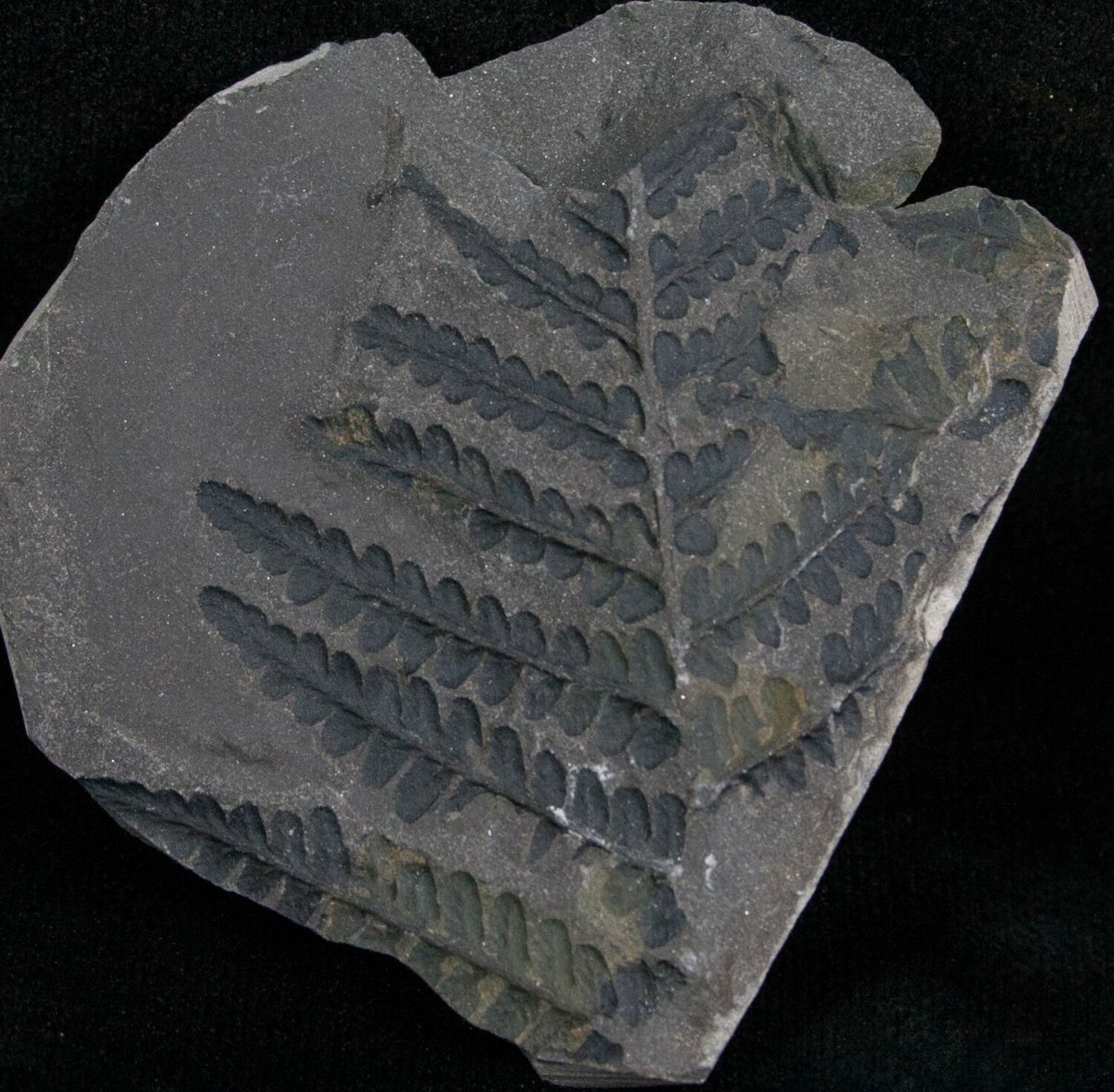
Pecopteris
Pecopteris arborescens
Image: Image sourced via web search (Fair use / Educational)
About Pecopteris
Pecopteris arborescens represents one of the most iconic and ecologically significant plant species of the late Paleozoic era, specifically thriving during the Carboniferous period approximately 320 to 300 million years ago. As a prominent member of the ancient coal swamp flora, this prehistoric tree fern played a foundational role in shaping the terrestrial ecosystems of Laurussia and Gondwana. Its extensive fossil remains, primarily preserved as detailed impressions and compressions in shale and coal deposits, have provided paleontologists and paleobotanists with crucial insights into early forest dynamics and the global carbon cycle. The sheer abundance of Pecopteris fossils underscores its dominance in the understory and sub-canopy of these primordial rainforests, making it a key indicator species for understanding the climatic and environmental conditions of a world that was vastly different from our own.
The physical anatomy of Pecopteris arborescens is characterized by its large, highly complex fronds and distinctive pinnule structure, which are the primary features preserved in the fossil record. The name Pecopteris itself is technically a form genus used to describe the leaves, while the trunk of the tree fern is typically referred to the genus Psaronius. When fully grown, the entire plant could reach impressive heights of up to 10 meters (approximately 1000 centimeters), towering over modern herbaceous ferns and resembling the extant tree ferns of tropical regions, albeit with a completely different internal anatomy. The fronds were massive, sometimes exceeding a meter in length, and were heavily divided into smaller leaflets called pinnules. These pinnules were typically attached to the central rachis by their entire base, featuring a distinct midvein that extended to the tip, with secondary veins branching off perpendicularly or at slight angles. Unlike modern trees that rely on secondary xylem for structural support, the trunk of this ancient fern was composed of an intricate, interwoven mantle of adventitious roots that surrounded a relatively small central vascular cylinder. This root mantle grew thicker toward the base of the plant, providing the necessary stability to support the massive crown of fronds in the waterlogged soils of the Carboniferous swamps. The soft tissues of the fronds, inferred from the exceptional preservation of cuticles in some specimens, suggest a relatively thin lamina adapted to the humid, shaded environments of the dense forest understory.
In terms of paleobiology, Pecopteris arborescens functioned as a highly efficient photosynthetic organism, adapted to the unique atmospheric conditions of the Carboniferous period, which featured significantly higher oxygen levels and fluctuating carbon dioxide concentrations compared to the modern era. As a vascular plant, it utilized a complex network of xylem and phloem to transport water, nutrients, and photosynthates throughout its massive structure. Reproduction was achieved through the production of spores rather than seeds, a characteristic typical of pteridophytes. These spores were housed in specialized structures called sporangia, which were often clustered into synangia located on the abaxial underside surface of the fertile pinnules. The release of millions of microscopic spores into the wind and water allowed Pecopteris to rapidly colonize newly exposed mudflats and disturbed areas within the dynamic swamp environment. The growth patterns of the plant were likely continuous, lacking the distinct seasonal growth rings seen in modern temperate trees, reflecting the relatively stable, tropical climate of the equatorial coal swamps. Its metabolism was optimized for rapid vertical growth, allowing it to compete effectively for light in the dense, multi-tiered canopy of the Carboniferous rainforests. The extensive adventitious root system not only provided structural support but also facilitated efficient nutrient and water uptake in the anoxic, acidic soils typical of peat-forming wetlands.
The ecological context in which Pecopteris arborescens thrived was one of the most alien and fascinating environments in Earth's history. During the Pennsylvanian subperiod of the Carboniferous, the global climate was characterized by extensive glaciation in the southern hemisphere and vast, tropical wetland forests at the equator. These coal swamps were dominated by giant lycopsids such as Lepidodendron and Sigillaria, giant horsetails like Calamites, and early seed ferns. Pecopteris occupied a crucial ecological niche as a dominant component of the sub-canopy and understory, forming dense thickets that provided habitat and shelter for a diverse array of early terrestrial fauna. The hyperoxic atmosphere, with oxygen levels potentially reaching 30 to 35 percent, supported the gigantism of arthropods, including the massive griffinfly Meganeura, which had a wingspan of over two feet, and the colossal millipede-like Arthropleura, which could grow to over two meters in length. Early amphibians and some of the first amniotes navigated the dense, humid undergrowth of Pecopteris fronds, hunting for insects and other small prey. As a primary producer, Pecopteris formed the base of a complex food web, although direct herbivory on its fronds was likely limited due to the presence of defensive secondary metabolites and tough structural tissues. Instead, the plant contributed massively to the detrital food web; its shed fronds and decaying root mantles accumulated in the stagnant, oxygen-poor waters, eventually compressing over millions of years to form the vast coal seams that fueled the human Industrial Revolution.
The discovery and subsequent study of Pecopteris arborescens are deeply intertwined with the birth of paleobotany as a formal scientific discipline in the 19th century. The genus Pecopteris was first established by the pioneering French paleobotanist Adolphe Brongniart in 1822. Brongniart, often referred to as the father of paleobotany, recognized the distinct venation patterns and attachment styles of these fossilized fern leaves, separating them from other ancient plant remains. The specific epithet arborescens reflects the tree-like nature of the plant, deduced from the association of these fronds with the massive Psaronius trunks. Throughout the 1800s and 1900s, countless specimens of Pecopteris were unearthed during coal mining operations across Europe and North America. One of the most famous and scientifically significant localities for Pecopteris fossils is the Mazon Creek fossil beds in Illinois, USA. Discovered in the mid-19th century, the ironstone nodules of Mazon Creek have yielded exceptionally preserved impressions and compressions of Pecopteris fronds, sometimes retaining delicate details of the sporangia and even the cellular structure of the leaf epidermis. These nodules, formed by the rapid burial of plant material in deltaic muds, have provided generations of researchers with a window into the Carboniferous world. The naming history of Pecopteris has been complex, as isolated fragments of leaves, stems, and reproductive organs were historically given different names before their biological connection was understood, leading to a rich but sometimes confusing taxonomic literature that modern paleobotanists continue to refine.
The evolutionary significance of Pecopteris arborescens lies in its position within the broader radiation of ferns during the late Paleozoic. It is widely classified within the order Marattiales, an ancient lineage of eusporangiate ferns that first appeared in the Carboniferous and survives to the present day, albeit in a much reduced and less diverse form. Pecopteris represents a critical stage in the evolution of complex leaf architectures and reproductive strategies in vascular plants. The development of large, highly dissected fronds allowed for maximum light capture in the shaded understory environments, a morphological innovation that has been retained by many modern fern lineages. Furthermore, the structural adaptation of the Psaronius trunk, utilizing a mantle of adventitious roots rather than secondary wood, demonstrates a unique evolutionary solution to the biomechanical challenges of achieving tree-like stature. Studying Pecopteris and its relatives helps paleobotanists understand the deep-time origins of the Marattiaceae family, which today includes tropical genera such as Angiopteris and Marattia. The survival of the Marattialean lineage through the catastrophic Permian-Triassic extinction event, which wiped out many of the dominant coal swamp plants like the giant lycopsids, highlights the evolutionary resilience of this group. The fossil record of Pecopteris thus serves as a crucial bridge connecting the bizarre, extinct floras of the Paleozoic with the extant fern diversity observed in modern tropical ecosystems.
Despite centuries of study, Pecopteris arborescens remains the subject of several ongoing scientific debates and taxonomic revisions. One of the primary controversies revolves around the concept of form taxa versus biological taxa. Because fossil plants are rarely preserved whole, different parts of the same plant are often assigned different generic names. The challenge of definitively linking Pecopteris leaves to Psaronius trunks and specific types of fossilized spores has led to debates over the true biological boundaries of the species. Additionally, the genus Pecopteris is notoriously wastebasket in nature; historically, any fern-like foliage with a specific type of venation was thrown into this genus, resulting in hundreds of named species. Modern paleobotanists are actively working to untangle this taxonomic mess using advanced imaging techniques, such as micro-CT scanning and cuticular analysis, to identify true evolutionary relationships and synonymize redundant species names. There is also ongoing debate regarding the exact ecological tolerances of Pecopteris; while traditionally viewed as strictly swamp-dwelling, recent sedimentological evidence suggests that some species may have adapted to drier, more upland environments during the climatic fluctuations of the late Pennsylvanian, challenging the monolithic view of Carboniferous ecology.
The fossil record of Pecopteris arborescens is exceptionally rich and globally distributed, reflecting the widespread nature of the Carboniferous coal swamps across the supercontinent of Laurussia and parts of Gondwana. Fossils are predominantly found in North America, Europe, and parts of Asia, closely tracking the major coal-producing basins of the world. The preservation quality ranges from fair to exceptional, depending on the depositional environment. The most common fossils are carbonaceous compressions and impressions in shale, where the organic material of the leaf has been flattened and altered, leaving a dark silhouette on the lighter rock. In some remarkable instances, such as within the calcium carbonate concretions known as coal balls, the plant material is permineralized, preserving the three-dimensional cellular structure of the stems, roots, and reproductive organs in exquisite microscopic detail. Famous fossil sites yielding abundant Pecopteris specimens include the aforementioned Mazon Creek in Illinois, the Joggins Fossil Cliffs in Nova Scotia, Canada, and the extensive coal measures of the United Kingdom and Germany. The sheer volume of Pecopteris fossils recovered from these sites provides an unparalleled dataset for studying the morphological variation and paleoecology of ancient plant life.
The cultural impact of Pecopteris arborescens, while perhaps less prominent than that of charismatic megafauna like dinosaurs, is deeply embedded in the history of industrial civilization and public science education. Because Pecopteris is a major constituent of the coal deposits that fueled the Industrial Revolution, its fossilized remains were frequently encountered by coal miners, who often collected the beautifully preserved fronds as curiosities. Today, Pecopteris fossils are a staple of natural history museum dioramas worldwide, used to reconstruct the lush, alien landscapes of the Carboniferous period. These exhibits capture the public imagination, illustrating a time when giant insects ruled the air and massive ferns formed the forests. Furthermore, the abundance and aesthetic appeal of Pecopteris fossils make them highly sought after by amateur rockhounds and fossil collectors, serving as an accessible entry point for public engagement with paleontology and the deep history of our planet.
Classification
Time Period
Discovery
Location
Europe and North America
Formation
Mazon Creek
Frequently Asked Questions
What is Pecopteris?
Pecopteris arborescens represents one of the most iconic and ecologically significant plant species of the late Paleozoic era, specifically thriving during the Carboniferous period approximately 320 to 300 million years ago. As a prominent member of the ancient coal swamp flora, this prehistoric tre...
When did Pecopteris live?
Pecopteris lived during the carboniferous period of the paleozoic era approximately 320-300 million years ago.
Where was Pecopteris discovered?
Fossils of Pecopteris were discovered in Europe and North America in the Mazon Creek.
What did Pecopteris eat?
Pecopteris was a photosynthetic. It lived in terrestrial habitats.
What type of fossil is Pecopteris?
Pecopteris is preserved as a impression fossil. The preservation quality is excellent.
Related Specimens
From the paleozoic era · impression fossils
/bf5239087f6c.png)