Araripesaurus
Araripesaurus castilhoi
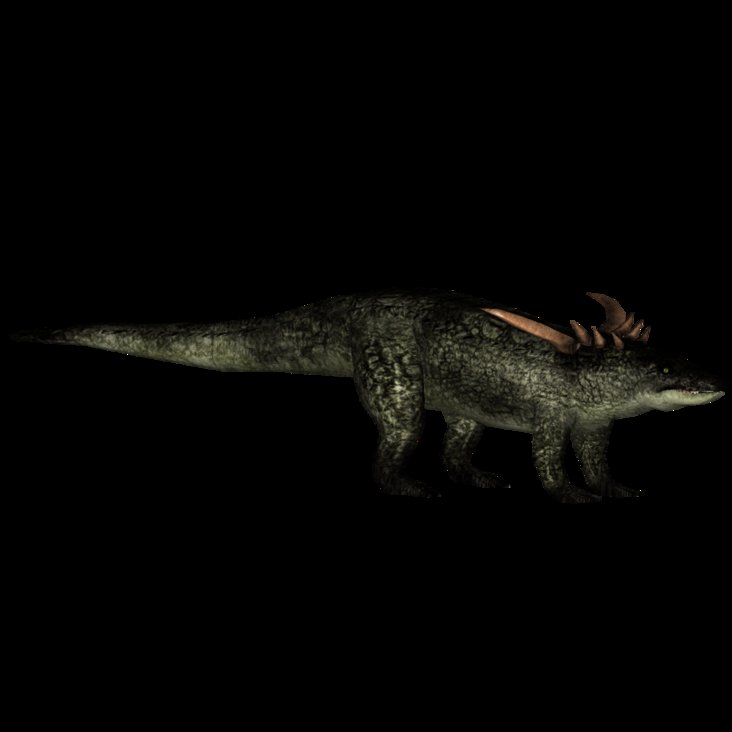
Image: Image sourced via web search (Fair use / Educational)
About Araripesaurus
Araripesaurus castilhoi is a genus of pterosaur that soared through the skies of what is now Brazil during the Early Cretaceous period, approximately 112 to 108 million years ago. As one of the many flying reptiles discovered in the famed Romualdo Formation, it provides a crucial, albeit fragmentary, window into the diversity and evolution of pterosaurs in the Southern Hemisphere. Its classification has been a subject of considerable debate, highlighting the challenges paleontologists face when interpreting incomplete fossil remains from this dynamic period of reptilian evolution.
Based on the fragmentary holotype specimen, which consists primarily of a partial wing, Araripesaurus was a medium-sized pterosaur. Extrapolations from the preserved elements, including the first phalanx of the wing finger, suggest a wingspan estimated to be between 2.2 and 3 meters (approximately 7 to 10 feet). This would make it comparable in size to a modern-day albatross or a large eagle. The wing bones, though incomplete, show the typical lightweight yet robust construction seen in pterosaurs, with thin cortical bone and a hollow interior, an adaptation for powered flight. While the skull is unknown, its likely classification within the Ornithocheiridae family suggests it would have possessed a long, narrow snout, possibly adorned with a crest, and lined with sharp, conical teeth suited for catching fish. The overall body would have been small relative to its expansive wings, covered in a coat of pycnofibers—hair-like filaments analogous to fur—that provided insulation. Its hind limbs would have been slender, and its feet likely adapted for perching or walking on land, though its primary domain was undoubtedly the air.
Araripesaurus was a carnivore, and its paleoenvironment strongly suggests a piscivorous diet. Like other ornithocheirids, it likely employed a skim-feeding or dip-feeding strategy, flying low over the surface of the shallow sea that covered the Araripe Basin and snatching fish with its long, toothed jaws. Its large wingspan would have been ideal for soaring and gliding over long distances, efficiently covering vast stretches of open water in search of prey. The anatomy of its wing suggests it was capable of powerful, flapping flight for takeoff and maneuvering, but relied on thermal updrafts and air currents for energy-efficient travel. There is no direct fossil evidence for social behavior, but many modern seabirds that occupy similar ecological niches are colonial, nesting and roosting in large groups on coastal cliffs or islands. It is plausible that Araripesaurus exhibited similar behaviors, congregating in rookeries for safety and breeding. Growth patterns for pterosaurs indicate they grew rapidly, reaching adult size within a few years, a strategy that would have minimized their vulnerability during their juvenile stages.
The world of Araripesaurus during the Aptian-Albian stages of the Cretaceous was a warm, tropical environment dominated by a large, shallow epicontinental sea. The Romualdo Formation, where its fossils were found, represents a coastal lagoon or shallow marine setting with fluctuating salinity. This ecosystem was teeming with life. Araripesaurus shared its airspace with a spectacular diversity of other pterosaurs, including the giant Ornithocheirus and Anhanguera, as well as the bizarre, crested Tapejara and Tupuxuara. The waters below were filled with a rich variety of fish, such as Rhacolepis and Calamopleurus, which would have formed the primary food source for Araripesaurus. The seas were also home to marine reptiles like plesiosaurs and crocodilians, while on the nearby landmasses, dinosaurs such as the spinosaurid Irritator and the small compsognathid Mirischia roamed. As a medium-sized predator, Araripesaurus occupied a middle tier in the food web. It was a predator of small to medium-sized fish but could have been prey for larger marine reptiles or even larger pterosaurs when on the water's surface or on land.
The discovery of Araripesaurus is tied to the rich fossil beds of the Araripe Basin in northeastern Brazil. The holotype specimen, cataloged as DGM 529-R (originally held at the Divisão de Geologia e Mineralogia do Departamento Nacional da Produção Mineral), consists of a partial right wing, including the distal end of the ulna, the proximal and distal ends of the wing metacarpal, and the first wing phalanx. It was found in the Romualdo Formation at Ceará. The genus and species were formally named and described in 1971 by the renowned Brazilian paleontologist Llewellyn Ivor Price. The genus name, Araripesaurus, means "Araripe lizard," referencing the Araripe Plateau where it was discovered. The specific name, castilhoi, honors Moacir Marques de Castilho, who collected the fossil in 1966 and donated it to the museum. For many years, this single, incomplete specimen was the only material definitively assigned to the genus, making it a frustratingly enigmatic taxon for paleontologists studying pterosaur diversity.
Araripesaurus holds a significant, if complex, place in the pterosaur family tree. It was one of the first pterosaurs to be named from the prolific Araripe Basin, heralding the flood of discoveries that would later make the region world-famous for its exceptionally preserved flying reptiles. Initially, Price classified it within the Ornithocheiridae, a family of large, toothed pterosaurs known for their global distribution during the Cretaceous. This placement has been generally supported over the years, linking Araripesaurus to other famous genera like Ornithocheirus from England and Anhanguera, also from Brazil. Its anatomy, though fragmentary, aligns with the general body plan of these sea-going pterosaurs. It represents a branch of the Pterodactyloidea, the group of advanced, short-tailed pterosaurs that dominated the skies in the latter half of the Mesozoic. Its existence in South America contributes to a broader understanding of the paleobiogeography of ornithocheirids, demonstrating their presence and diversification in the ecosystems of the ancient supercontinent of Gondwana as it continued to break apart.
The scientific identity of Araripesaurus has been a persistent source of debate, largely due to the fragmentary nature of its holotype. Over the years, several paleontologists have questioned its validity as a distinct genus. In 1985, Peter Wellnhofer suggested that Araripesaurus was a junior synonym of Santanadactylus, another pterosaur from the same formation. Later, researchers like Alexander Kellner argued that the features used to define Araripesaurus were not sufficiently unique and could be found in other ornithocheirids, leading to the proposal that it should be considered a *nomen dubium* (a doubtful name). Some have even suggested the material might belong to the genus Anhanguera. A second species, *Araripesaurus santanae*, was named based on a more complete specimen, but this was later reassigned to its own genus, Anhanguera. This taxonomic instability underscores a common problem in paleontology: when a genus is named based on very limited material, it becomes difficult to confidently assign new fossils to it or even to be certain of its distinction from better-known contemporaries. As such, the name Araripesaurus is often used cautiously in scientific literature today.
The fossil record of Araripesaurus is extremely limited. The only definitive specimen is the holotype, DGM 529-R, discovered in the Romualdo Formation of the Araripe Basin in Ceará, Brazil. This formation is a *Lagerstätte*, a site known for exceptional fossil preservation, often including soft tissues, due to its unique depositional environment of an anoxic lagoon. While many other pterosaur fossils from this region are preserved as three-dimensional concretions, the holotype of Araripesaurus is somewhat crushed. The scarcity of its remains makes it a very rare taxon. While countless other pterosaur fossils have been recovered from the Araripe Basin, the lack of overlapping skeletal elements with the Araripesaurus holotype makes definitive referrals impossible. Therefore, our entire understanding of this genus hinges on a single, incomplete wing, highlighting the challenges and uncertainties inherent in reconstructing the diversity of past ecosystems from a fragmented fossil record.
Despite its taxonomic obscurity within the scientific community, Araripesaurus has a minor cultural footprint, primarily due to its status as one of the first pterosaurs named from Brazil. It is occasionally mentioned in books and online resources about pterosaurs, often as an example of the incredible diversity found in the Araripe Basin. However, it is not a well-known genus among the general public and is rarely depicted in popular media or featured prominently in museum exhibits, which tend to focus on more complete and visually striking contemporaries like Tapejara or Anhanguera. Its primary importance remains educational, serving as a case study in the complexities of paleontological classification and the ongoing process of scientific discovery and revision.
Classification
Time Period
Discovery
Location
Brazil
Formation
Romualdo Formation
Frequently Asked Questions
What is Araripesaurus?
Araripesaurus castilhoi is a genus of pterosaur that soared through the skies of what is now Brazil during the Early Cretaceous period, approximately 112 to 108 million years ago. As one of the many flying reptiles discovered in the famed Romualdo Formation, it provides a crucial, albeit fragmentary...
When did Araripesaurus live?
Araripesaurus lived during the cretaceous period of the mesozoic era approximately 112-108 million years ago.
Where was Araripesaurus discovered?
Fossils of Araripesaurus were discovered in Brazil in the Romualdo Formation.
What did Araripesaurus eat?
Araripesaurus was a carnivore. It lived in coastal, aerial, marine habitats.
What type of fossil is Araripesaurus?
Araripesaurus is preserved as a body fossil. The preservation quality is poor.
Related Specimens
From the mesozoic era · body fossils