Mawsonia
Mawsonia gigas
Image: Image sourced via web search (Fair use / Educational)
About Mawsonia
Mawsonia was a colossal genus of coelacanth, a type of lobe-finned fish, that inhabited freshwater and coastal marine environments during the Cretaceous Period. As one of the largest known coelacanths to have ever lived, its fossils provide crucial insights into the diversity and gigantism of ancient aquatic ecosystems. Its widespread distribution across the separating continents of South America and Africa makes it a key taxon for understanding the paleobiogeography of the supercontinent Gondwana as it fragmented.
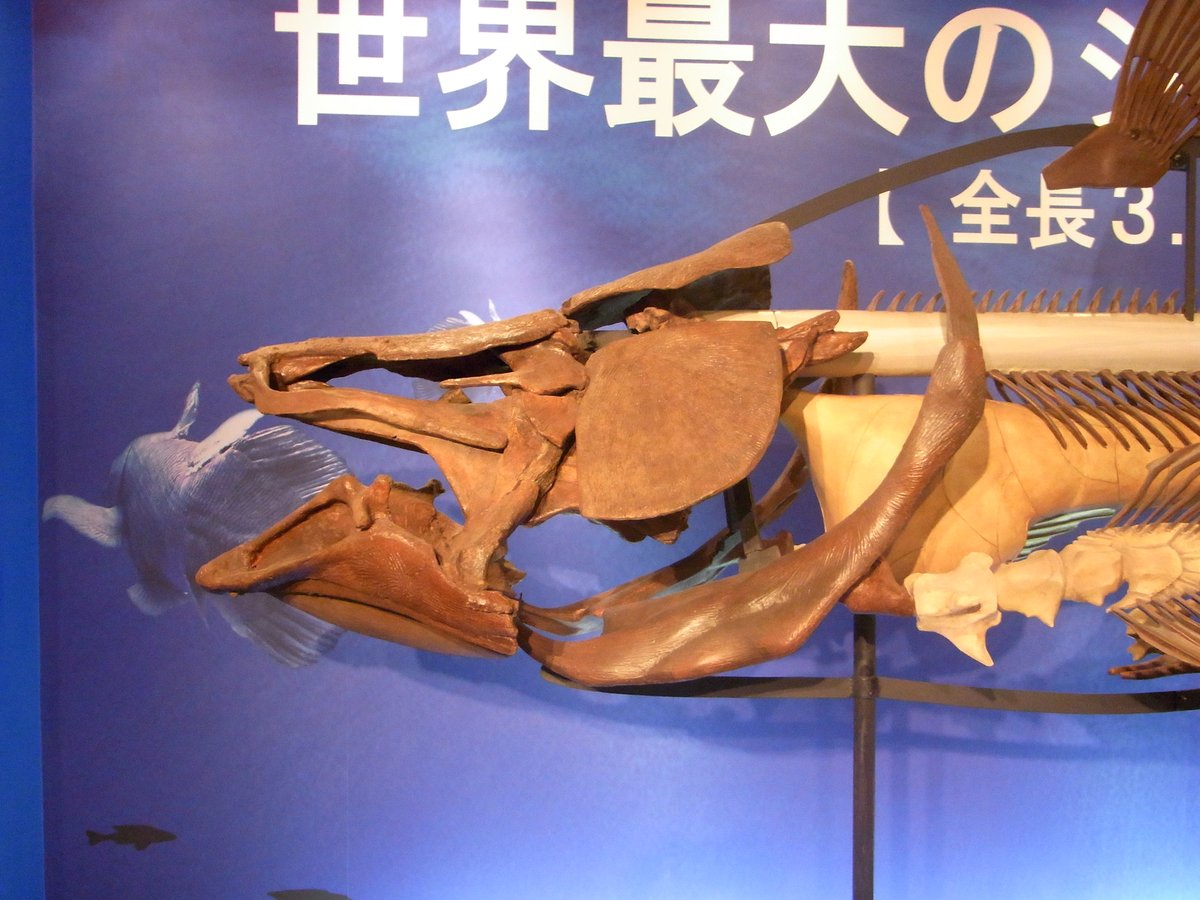
Mawsonia was a truly gigantic fish, far surpassing its modern relatives in size. While most specimens are incomplete, estimates based on scaling from cranial remains and associated postcranial elements suggest a maximum body length of between 3.5 to 6 meters (approximately 11.5 to 19.7 feet). This would make it comparable in length to a large great white shark. Weight estimates are more speculative but likely reached several hundred kilograms, possibly exceeding 500 kg for the largest individuals. Its body was robust and deep, typical of coelacanths, but scaled up to immense proportions. The skull was heavily ossified and broad, featuring a large gape armed with numerous small, conical teeth, indicating a predatory lifestyle. A key feature was its intracranial joint, a hinge in the middle of the skull that allowed the front part to be lifted when opening the mouth, dramatically increasing its gape size. Like other coelacanths, it possessed fleshy, lobe-like fins supported by bone, which are the precursors to tetrapod limbs. It had two dorsal fins, large pectoral and pelvic fins, and a distinctive three-lobed tail fin (diphycercal) with a small supplementary lobe in the middle. Its body was likely covered in large, thick cosmoid scales, providing a protective armor.
The paleobiology of Mawsonia paints a picture of a formidable, slow-moving ambush predator. Its massive size and powerful jaws, equipped with an intracranial joint for an expanded gape, suggest it was capable of consuming large prey. Its diet likely consisted of other fish, large crustaceans, and possibly even small aquatic reptiles or dinosaurs that ventured too close to the water's edge. The small, numerous teeth were not designed for shearing but for gripping slippery prey, which would have been swallowed whole. The structure of its lobe fins suggests it was not a fast, open-water swimmer. Instead, it probably used these fins for slow, precise maneuvering in complex environments like submerged forests, river channels, or coastal reefs. It likely employed a 'lie-and-wait' or stalking strategy, using its fins to scull slowly or hold its position in the current before lunging at unsuspecting prey with a rapid burst of speed. There is no direct evidence for social behavior, but given its size, it was likely a solitary hunter. Growth patterns, inferred from fossil size ranges, indicate it grew throughout its life, reaching its gigantic proportions over many years, a trait common in large, long-lived fish.
Mawsonia lived in a world dramatically different from our own, during the mid-Cretaceous, a time of high global temperatures and sea levels. Its fossils are found in deposits that represent a variety of aquatic environments across the newly forming South Atlantic Ocean. In South America, particularly in Brazil's Araripe Basin (Romualdo and Crato Formations), it inhabited a large, warm, brackish to freshwater lagoon system. This ecosystem was teeming with life, including other large fish like the bony-tongued fish *Arapaima* and the predatory *Vinctifer*, as well as various sharks and rays. The skies above were filled with pterosaurs like *Tapejara* and *Thalassodromeus*. In North Africa's Kem Kem Group, Mawsonia shared its river systems with an even more fearsome assembly of megafauna. It was a top aquatic predator, but it coexisted with the giant spinosaurid dinosaurs *Spinosaurus* and *Suchomimus*, the massive crocodilian *Sarcosuchus*, and the giant sawfish *Onchopristis*. In this environment, Mawsonia was both a high-level predator of smaller fish and a potential prey item for the even larger semi-aquatic dinosaurs and crocodylomorphs, occupying a complex and dangerous position in one of the most hazardous freshwater food webs known to science.
The discovery history of Mawsonia begins in 1907 when British paleontologist Arthur Smith Woodward first described the genus. He based his description on fossil fragments, specifically parts of a skull roof, found in the Ilhas Group of Bahia, Brazil. He named the genus *Mawsonia* in honor of the Australian geologist and Antarctic explorer Sir Douglas Mawson, who had collected geological samples in the region. The type species was named *Mawsonia gigas*, reflecting its enormous estimated size even from these initial, incomplete remains. For decades, knowledge of the animal remained fragmentary. The most significant discoveries came later from the remarkably well-preserved fossils of the Araripe Basin in northeastern Brazil, particularly from the Crato and Romualdo Formations. These sites yielded numerous, often three-dimensionally preserved skulls and, more rarely, partial skeletons, which allowed for a much more complete and accurate reconstruction of the animal's anatomy and size. Further discoveries in the mid-to-late 20th century across North and West Africa, from localities like the Kem Kem Group in Morocco, revealed that the genus had a much wider, trans-oceanic distribution than previously thought, cementing its importance in paleobiogeography.
Mawsonia holds significant evolutionary importance as a member of the coelacanths (Actinistia), a group often referred to as 'living fossils'. Coelacanths belong to the Sarcopterygii, or lobe-finned fishes, the group that also includes lungfish and the ancestors of all tetrapods, including humans. The discovery and study of Mawsonia demonstrate that this ancient lineage, which first appeared over 400 million years ago, was not merely a static group of survivors. Instead, it was ecologically diverse and capable of evolving gigantic body sizes, occupying apex predator niches in Cretaceous ecosystems. Mawsonia, along with its close relatives in the family Mawsoniidae, represents a successful radiation of giant freshwater and coastal coelacanths that thrived for millions of years before eventually going extinct. Its anatomy, particularly the bony supports within its lobe fins, showcases the foundational bauplan from which the limbs of terrestrial vertebrates evolved, providing a tangible link to our own deep evolutionary past. It serves as a powerful reminder that the 'living fossil' label can be misleading, as the group has a rich and dynamic evolutionary history of its own, with Mawsonia representing one of its most impressive, albeit extinct, evolutionary experiments.
While the existence and general anatomy of Mawsonia are well-established, some scientific debates persist. A primary area of discussion revolves around the exact number of valid species within the genus. Several species have been named from different locations in Africa and South America, such as *M. brasiliensis*, *M. libyca*, and *M. tegamensis*. However, some paleontologists argue that the anatomical differences between them are minor and may represent individual or regional variation within a single, widespread species, *Mawsonia gigas*. Resolving this taxonomic issue is crucial for accurately understanding the genus's diversity and biogeographic history. Another point of discussion is its precise habitat preference. While fossils are found in both freshwater river systems (like Kem Kem) and brackish or shallow marine lagoons (like Araripe), the extent of its tolerance for salinity and whether it migrated between these environments remains an active area of research. These debates highlight the ongoing process of refining our understanding of this ancient giant through new fossil discoveries and re-evaluation of existing specimens.
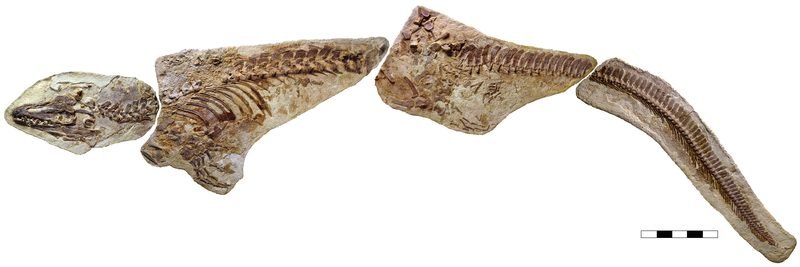
The fossil record of Mawsonia is geographically extensive but paleontologically patchy. Its remains are most famously known from two key regions that were once connected as part of Gondwana: northeastern Brazil and North Africa. In Brazil, the Santana Group, especially the Romualdo Formation, has yielded some of the best-preserved fossils, including numerous three-dimensional skulls and partial skeletons encased in limestone concretions. These nodules provide exceptional anatomical detail. In Africa, fossils are found across a wide swath of the continent, from Morocco and Algeria (in the Kem Kem Group) to Niger and Tunisia. African fossils are typically more fragmentary, often consisting of isolated skull bones, scales, and vertebrae found in fluvial 'bone bed' deposits. The sheer number of these fragments in places like Kem Kem indicates that Mawsonia was a relatively common and significant component of the fauna. Despite the abundance of cranial material, a complete, articulated skeleton of Mawsonia has yet to be discovered, making precise body length and weight estimations a continued challenge for paleontologists.
Despite its scientific importance, Mawsonia has a relatively low profile in popular culture compared to dinosaurs or other megafauna. However, it is a significant feature in museum exhibits focusing on Cretaceous ecosystems or 'living fossils'. Reconstructed skulls and skeletal mounts of Mawsonia are displayed in major natural history museums, including the American Museum of Natural History in New York and the National Museum of Brazil (prior to the 2018 fire). Its immense size often makes it a highlight, serving as a powerful educational tool to illustrate the concept of gigantism in non-dinosaurian animals and to showcase the incredible biodiversity of ancient aquatic worlds. It is sometimes featured in paleontological documentaries about the ecosystems of the Araripe Basin or the Kem Kem Group, often depicted as a formidable predator in the shadow of the even larger *Spinosaurus*.
Classification
Time Period
Discovery
Location
Brazil
Formation
Santana Group (specifically Crato and Romualdo Formations), Ilhas Group, Kem Kem Group
Frequently Asked Questions
What is Mawsonia?
Mawsonia was a colossal genus of coelacanth, a type of lobe-finned fish, that inhabited freshwater and coastal marine environments during the Cretaceous Period. As one of the largest known coelacanths to have ever lived, its fossils provide crucial insights into the diversity and gigantism of ancien...
When did Mawsonia live?
Mawsonia lived during the cretaceous period of the mesozoic era approximately 145-94 million years ago.
Where was Mawsonia discovered?
Fossils of Mawsonia were discovered in Brazil in the Santana Group (specifically Crato and Romualdo Formations), Ilhas Group, Kem Kem Group.
What did Mawsonia eat?
Mawsonia was a carnivore. It lived in freshwater, brackish, coastal marine habitats.
What type of fossil is Mawsonia?
Mawsonia is preserved as a body fossil. The preservation quality is good.
Related Specimens
From the mesozoic era · body fossils