Archaefructus
Archaefructus sinensis
Image: Image sourced via web search (Fair use / Educational)
About Archaefructus
Archaefructus sinensis, whose genus name translates to 'ancient fruit,' represents one of the most significant paleobotanical discoveries of the late twentieth century, offering an unprecedented glimpse into the early evolution of flowering plants. Living during the Early Cretaceous epoch, approximately 125 to 122 million years ago, this remarkable organism thrived in the ancient freshwater lakes of what is now Liaoning Province in northeastern China. As a basal angiosperm, Archaefructus holds a critical position in the evolutionary tree of life, providing tangible fossil evidence that helps to unravel what Charles Darwin famously referred to as the 'abominable mystery'—the seemingly sudden appearance and rapid diversification of flowering plants in the fossil record. The discovery of Archaefructus sinensis fundamentally shifted the scientific understanding of early angiosperm morphology and ecology, suggesting that some of the earliest flowering plants may have been humble, herbaceous aquatic organisms rather than woody terrestrial shrubs or trees. This paradigm-shifting plant continues to be a focal point of intense study, as its unique combination of primitive reproductive structures and specialized vegetative adaptations offers vital clues about the selective pressures that drove the most successful plant radiation in Earth's history.
In terms of physical description, Archaefructus sinensis was a relatively small, herbaceous plant that likely reached lengths of up to 50 centimeters, though its sprawling, aquatic nature means its exact overall dimensions could vary based on environmental conditions. Unlike the robust, woody trunks of contemporary gymnosperms such as conifers and ginkgoes, Archaefructus possessed slender, flexible stems that were highly adapted to a buoyant, submerged, or semi-submerged lifestyle. The leaves of Archaefructus were finely dissected, a classic morphological adaptation seen in modern aquatic plants like hornworts or water milfoils, which serves to maximize surface area for underwater gas exchange while minimizing resistance to water currents. The most distinctive and scientifically crucial features of Archaefructus, however, were its reproductive organs. Unlike modern flowers, which typically feature tightly clustered whorls of protective sepals and visually striking petals to attract pollinators, Archaefructus lacked these sterile floral organs entirely. Instead, its reproductive structures were arranged along an elongated reproductive shoot or axis. The male organs, or stamens, were positioned below the female organs, or carpels, on this extended stem. The carpels themselves were folded structures that enclosed the seeds—the defining characteristic of all angiosperms. These carpels were relatively primitive, lacking the fused, complex ovary structures seen in more derived flowering plants. The overall appearance of Archaefructus would have been unassuming, resembling a delicate, weedy pond plant, yet its internal anatomy and reproductive architecture represent a monumental leap in botanical complexity.
As a photosynthetic organism, the paleobiology of Archaefructus sinensis was intimately tied to the shallow, sunlit margins of the Early Cretaceous lakes it inhabited. Its finely dissected leaves were highly efficient at capturing the filtered sunlight penetrating the water column, allowing it to maintain a steady metabolic rate in a temperate to subtropical climate. The lack of woody tissue suggests a rapid growth cycle, potentially allowing Archaefructus to quickly colonize newly formed or disturbed aquatic habitats, much like modern opportunistic aquatic weeds. Reproduction in Archaefructus provides fascinating insights into the paleobiology of early angiosperms. The absence of showy petals and specialized nectaries strongly implies that Archaefructus did not rely on the complex, co-evolutionary relationships with insect pollinators that characterize the vast majority of modern flowering plants. Instead, its reproductive strategy likely depended on water currents or wind to transport pollen from the stamens to the receptive surfaces of the carpels. Because the reproductive axes extended above the finely dissected vegetative leaves, it is highly probable that these 'flowers' breached the water's surface, releasing pollen into the air or onto the water surface where it could drift to neighboring plants. Once fertilized, the carpels developed into small, multi-seeded fruits. The buoyant nature of these early fruits or seeds would have facilitated effective dispersal across the interconnected lake systems of the region, allowing the plant to maintain genetic diversity and expand its geographic range.
Ecologically, Archaefructus sinensis was a vital component of the world-renowned Jehol Biota, an extraordinarily rich and diverse ancient ecosystem characterized by a series of deep, freshwater lakes surrounded by active volcanoes. The climate during this portion of the Early Cretaceous was generally warm and temperate, with distinct seasonal variations that influenced the flora and fauna. The landscape was dominated by extensive forests of gymnosperms, including conifers, cycads, and ginkgoes, while the understory and aquatic environments provided niches for ferns, horsetails, and early angiosperms like Archaefructus. In this vibrant ecosystem, Archaefructus occupied the role of a primary producer in the shallow lacustrine zones, providing oxygen, biomass, and structural habitat for a myriad of aquatic organisms. The waters it inhabited teemed with early teleost fish, aquatic insects, and freshwater invertebrates, many of which may have utilized the dense, dissected foliage of Archaefructus for shelter or as a substrate for laying eggs. Above the water, the skies and lake margins were populated by an astonishing array of early birds, such as Confuciusornis, and feathered non-avian dinosaurs, including the famous Microraptor and Sinosauropteryx. Pterosaurs soared overhead, while early mammals scurried in the terrestrial underbrush. Although Archaefructus itself may not have been a primary food source for the larger terrestrial herbivores of the time, its presence in the aquatic food web was undoubtedly significant, contributing to the overall productivity and ecological complexity of the Jehol lakes.
The discovery history of Archaefructus is a compelling narrative of scientific perseverance and serendipity. The first fossils of Archaefructus were discovered in the late 1990s in the fossil-rich beds of the Yixian Formation in Liaoning Province, China, a site that has yielded some of the most spectacularly preserved fossils in the world. The initial discovery was made by a team of paleobotanists led by Dr. Sun Ge of Jilin University, working in collaboration with researchers from the Florida Museum of Natural History, including Dr. David Dilcher. In 1998, they published the description of the first species, Archaefructus liaoningensis. A few years later, in 2002, the discovery of a more complete and spectacularly preserved species, Archaefructus sinensis, was announced. This new specimen was a revelation, as it preserved not just the reproductive organs but the entire plant, including roots, stems, and leaves, allowing for a comprehensive reconstruction of its life appearance and habitat. The naming of the genus, Archaefructus, meaning 'ancient fruit,' perfectly encapsulated the significance of the find. Initially, there was considerable excitement and controversy regarding the age of the fossils, with early estimates suggesting they might date back to the Jurassic period, which would have made them the undisputed oldest flowering plants. However, subsequent, more rigorous radiometric dating of the volcanic ash layers interspersed with the fossil-bearing shales firmly established the age of the Yixian Formation at approximately 125 to 122 million years old, placing Archaefructus squarely in the Early Cretaceous.
The evolutionary significance of Archaefructus sinensis cannot be overstated, as it provides a crucial morphological bridge between non-flowering seed plants (gymnosperms) and true flowering plants (angiosperms). For decades, paleobotanists struggled to find transitional forms that could explain how the complex, multi-whorled structure of a modern flower evolved from the simpler reproductive cones of gymnosperms. Archaefructus offers a compelling model for this transition. Its elongated reproductive axis, bearing separated male and female organs without sterile protective leaves (perianth), supports the hypothesis that the modern flower is actually a highly condensed and modified shoot system. In this view, the ancestral condition of the flower was an extended branch with reproductive organs spaced along its length, which over millions of years became compressed into the tight, concentric whorls we see in modern blooms. Furthermore, the aquatic nature of Archaefructus sparked a major paradigm shift in botanical circles. Prior to its discovery, the prevailing theory was that flowering plants evolved in terrestrial, possibly semi-arid environments, adapting to drought conditions. Archaefructus introduced the 'aquatic origin hypothesis' for angiosperms, suggesting that the rapid life cycle, herbaceous nature, and flexible morphology required for aquatic life may have provided the evolutionary crucible for the defining traits of flowering plants. While it is now generally believed that Archaefructus represents a specialized, early-diverging side branch rather than the direct ancestor of all living angiosperms, its anatomy remains one of our best proxies for understanding the ancestral angiosperm condition.
Despite its importance, Archaefructus has been the subject of intense scientific debates and ongoing controversies. The primary debate centers on its exact phylogenetic placement within the angiosperm family tree. When first discovered, its discoverers proposed that Archaefructus was the most basal of all flowering plants, a sister group to all other living and extinct angiosperms. This placement supported the idea that the very first flowering plants were aquatic herbs. However, subsequent cladistic analyses by other research teams have challenged this view. Some paleobotanists argue that the simple, elongated reproductive structures of Archaefructus are not primitive, but rather highly derived adaptations to its aquatic environment. In this alternative interpretation, Archaefructus is viewed as a specialized member of a slightly more advanced group of early angiosperms, perhaps related to modern water lilies (Nymphaeales) or even early eudicots. The debate hinges on whether the lack of petals and sepals is an ancestral condition (they hadn't evolved yet) or a secondary loss (they were lost because they were unnecessary in a wind- or water-pollinated aquatic plant). Additionally, the initial misdating of the Yixian Formation to the Jurassic caused significant taxonomic confusion, which was only resolved after extensive argon-argon radiometric dating. These debates highlight the dynamic nature of paleontology, where new analytical techniques and comparative morphological studies constantly refine our understanding of ancient life.
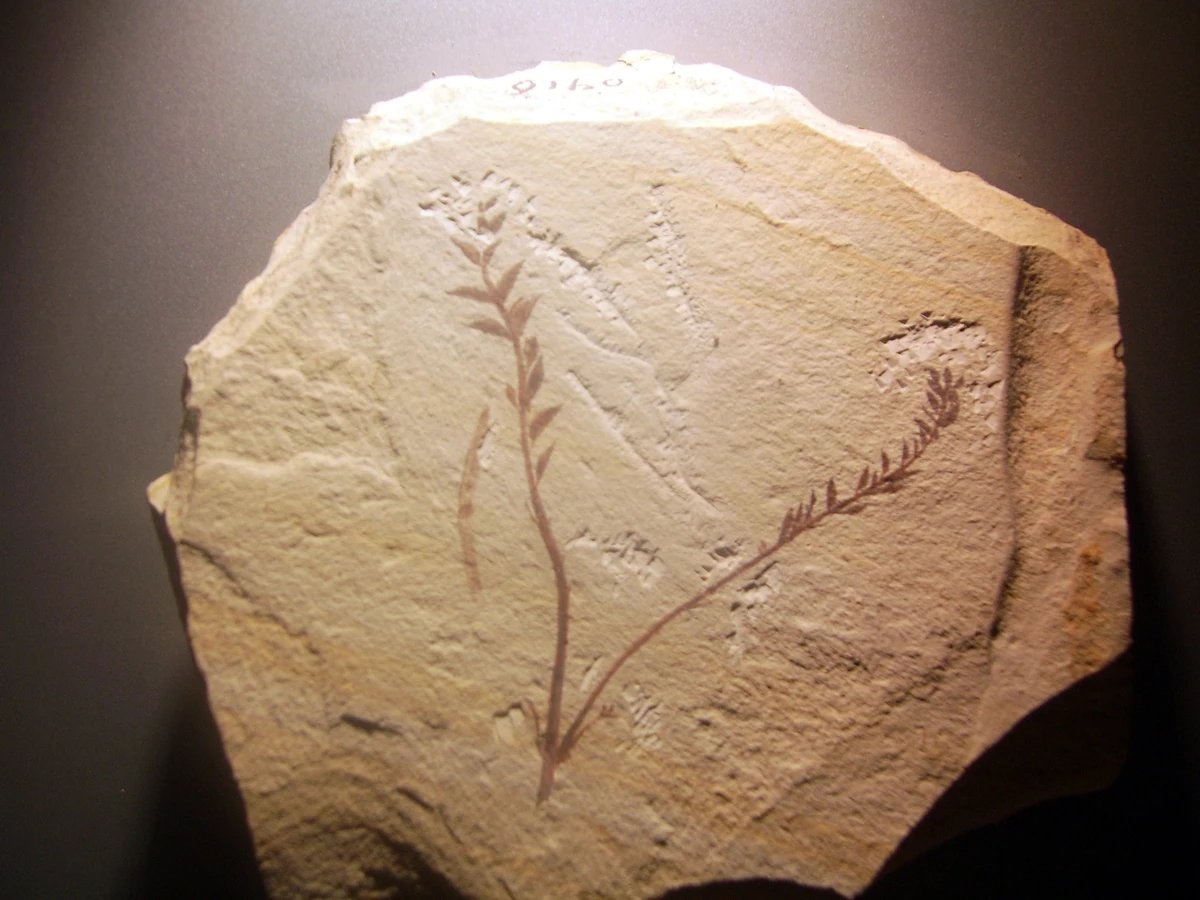
The fossil record of Archaefructus is geographically restricted but exceptionally rich in terms of preservation quality. All known specimens of Archaefructus, including A. sinensis, A. liaoningensis, and the later-described A. eoflora, have been recovered from the Yixian Formation in western Liaoning Province, China. The fossils are typically found as compression-impression fossils in fine-grained lacustrine (lake) shales. The preservation quality is frequently categorized as exceptional, a hallmark of the Jehol Biota's taphonomic conditions. The plants were likely buried rapidly by fine volcanic ash settling into the anoxic (oxygen-poor) bottoms of the deep lakes, preventing decomposition by scavengers and bacteria. This rapid burial preserved incredibly delicate structures that are rarely fossilized, including the fine, thread-like divisions of the submerged leaves, the slender filaments of the stamens, and the precise cellular outlines of the seed-bearing carpels. In some extraordinary specimens, even the pollen grains enclosed within the anthers have been preserved and studied using scanning electron microscopy. The fossils are often found on split slabs of shale, creating a part and counterpart (slab and counter-slab) that allows researchers to study the three-dimensional structure of the plant compressed into two dimensions. While the geographic range of Archaefructus fossils is currently limited to this specific region of China, the sheer quality and quantity of the specimens recovered have provided an outsized contribution to our understanding of Early Cretaceous flora.
The cultural impact of Archaefructus, while perhaps less prominent in mainstream media than its dinosaurian contemporaries, has been profound within educational and scientific communities. It frequently features in natural history museum exhibits focusing on the evolution of plants, often displayed alongside the spectacular feathered dinosaurs of the Jehol Biota to provide a complete picture of the Early Cretaceous ecosystem. Archaefructus has been the subject of numerous science documentaries and popular science books discussing the origins of flowers, helping to demystify Darwin's 'abominable mystery' for the general public. Its discovery has also fostered a greater public appreciation for paleobotany, demonstrating that the evolution of plants is just as dynamic, complex, and fascinating as the evolution of animals, and that a humble aquatic weed can hold the key to understanding the origins of the diverse, flower-filled world we inhabit today.
Classification
Time Period
Discovery
Location
Liaoning Province, China
Formation
Yixian Formation
Frequently Asked Questions
What is Archaefructus?
Archaefructus sinensis, whose genus name translates to 'ancient fruit,' represents one of the most significant paleobotanical discoveries of the late twentieth century, offering an unprecedented glimpse into the early evolution of flowering plants. Living during the Early Cretaceous epoch, approxima...
When did Archaefructus live?
Archaefructus lived during the cretaceous period of the mesozoic era approximately 125-122 million years ago.
Where was Archaefructus discovered?
Fossils of Archaefructus were discovered in Liaoning Province, China in the Yixian Formation.
What did Archaefructus eat?
Archaefructus was a photosynthetic. It lived in freshwater habitats.
What type of fossil is Archaefructus?
Archaefructus is preserved as a impression fossil. The preservation quality is exceptional.
Related Specimens
From the mesozoic era · impression fossils