Mastodonsaurus
Mastodonsaurus giganteus
Image: Image sourced via web search (Fair use / Educational)
About Mastodonsaurus
Mastodonsaurus giganteus was a colossal temnospondyl amphibian that dominated the freshwater ecosystems of the Middle to Late Triassic period, approximately 242 to 227 million years ago. Primarily discovered in the fossil-rich deposits of Germany and other parts of Europe, this giant predator represents one of the largest amphibians to have ever lived on Earth. Its significance in paleontology is profound, as it provides crucial insights into the evolutionary apex of temnospondyls before the rise of crocodilians and aquatic dinosaurs, serving as a testament to the diverse and often bizarre forms life took during the Mesozoic era's dawn. The sheer scale of Mastodonsaurus challenges our modern understanding of amphibian biology, pushing the limits of what was physiologically possible for non-amniote tetrapods in a prehistoric world. It stands as a prime example of how ancient amphibians occupied apex predator niches that are today entirely dominated by reptiles and mammals.
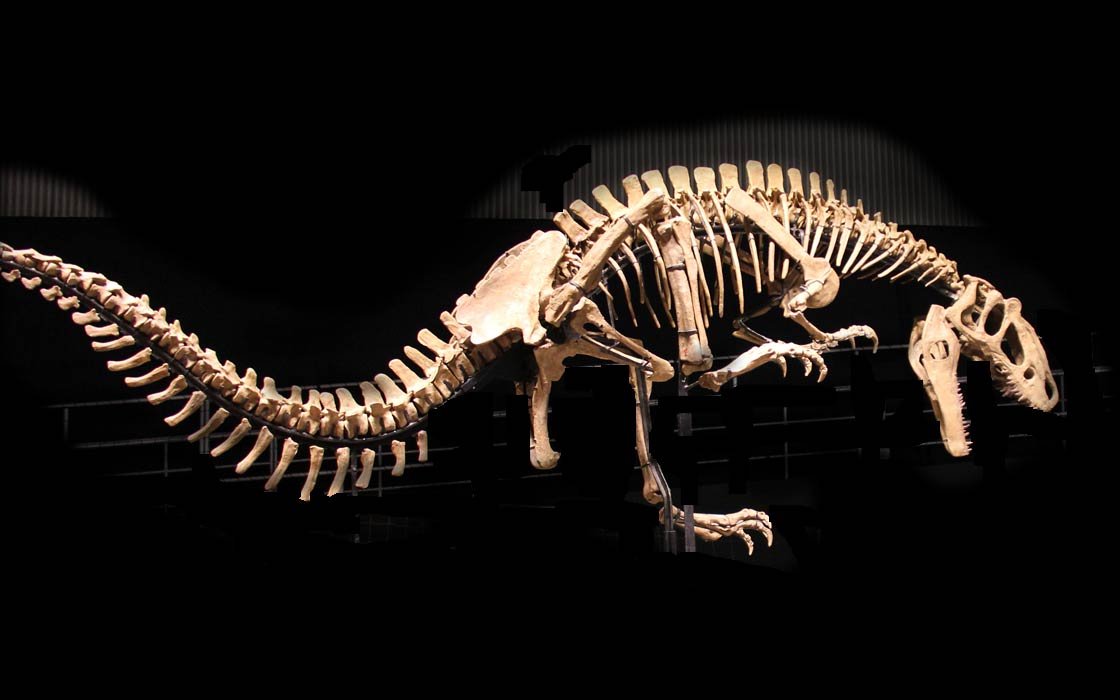
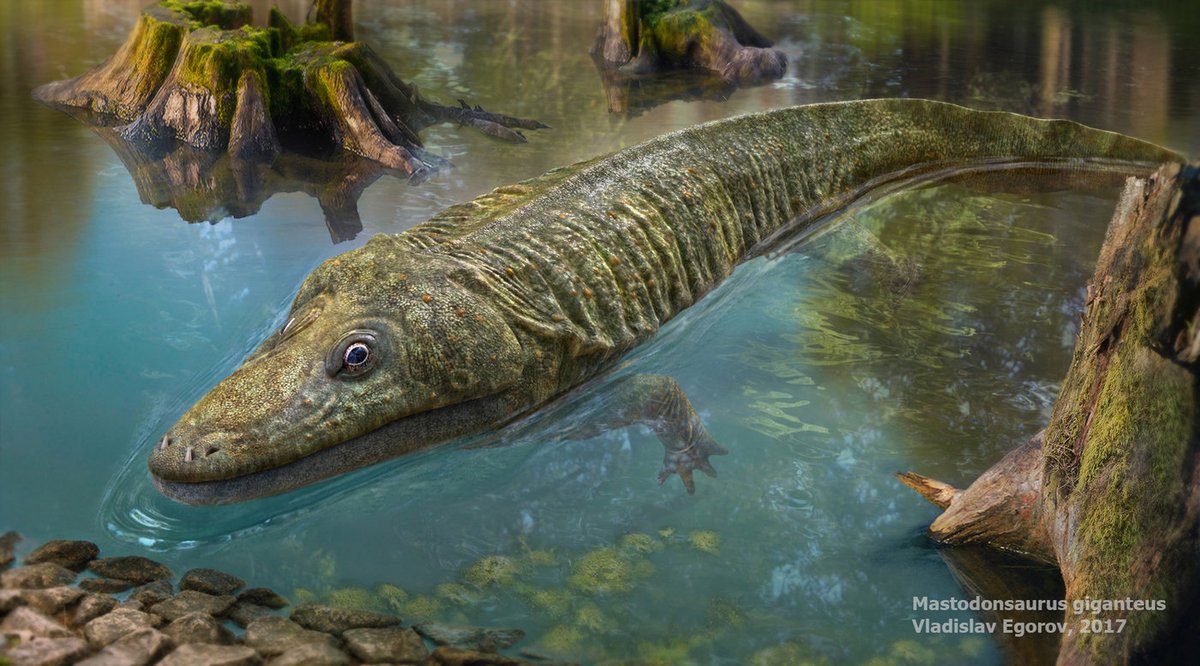
In terms of physical description, Mastodonsaurus giganteus was an absolute behemoth compared to any living amphibian today, reaching estimated body lengths of 400 to 600 centimeters, or roughly 13 to 20 feet. Weight estimates suggest fully grown adults could have weighed anywhere from 500 to over 1000 kilograms, rivaling the mass of modern saltwater crocodiles. The most distinctive feature of Mastodonsaurus was its massive, flattened, and somewhat triangular skull, which alone could measure up to 1.25 meters (over 4 feet) in length. This enormous head was equipped with powerful jaws lined with sharp, conical teeth designed for gripping slippery prey. Perhaps its most bizarre anatomical quirk was a pair of enlarged, tusk-like teeth situated on the lower jaw. These lower tusks were so long that they actually protruded through specialized openings in the upper jaw and snout when the mouth was closed, a feature unique among known tetrapods. The postcranial skeleton of Mastodonsaurus reveals a creature heavily adapted to an aquatic lifestyle. It possessed a relatively short, barrel-shaped trunk, a powerful, laterally compressed tail for swimming, and disproportionately small, weak limbs. These limbs were almost certainly incapable of supporting the animal's massive bulk on land, indicating that Mastodonsaurus was an obligate aquatic organism. Soft tissue inferences, based on the deeply grooved lateral line system visible on the skull bones, suggest it had sensory organs similar to modern fish and aquatic amphibians, allowing it to detect the minute vibrations of approaching prey in murky waters.
The paleobiology of Mastodonsaurus paints a picture of a highly specialized, formidable aquatic predator. Its diet was strictly carnivorous, primarily consisting of fish, smaller amphibians, and possibly unwary terrestrial animals that ventured too close to the water's edge. Given its massive size and relatively weak limbs, Mastodonsaurus was almost certainly an ambush predator, employing a hunting strategy similar to that of modern alligator snapping turtles or certain bottom-dwelling fish. It likely lay motionless at the bottom of lakes and rivers, perfectly camouflaged against the substrate, waiting for prey to swim overhead. When a target came within range, Mastodonsaurus would open its massive jaws, creating a sudden vacuum that sucked the prey into its mouth, securing it with its interlocking teeth and prominent lower tusks. Locomotion was primarily achieved through lateral undulations of its powerful tail, while the small limbs were likely used only for steering or crawling slowly along the muddy bottom. Social behavior is difficult to infer from the fossil record, but mass death assemblages suggest they may have congregated in shrinking pools during dry seasons, though whether this indicates true sociality or merely environmental concentration remains debated. Growth patterns, analyzed through bone histology, indicate that Mastodonsaurus grew rapidly in its early years, slowing down as it reached sexual maturity, a pattern consistent with many modern large ectotherms. Its metabolism was undoubtedly slow and cold-blooded, requiring less frequent feeding than a similarly sized mammal or dinosaur, allowing it to survive in environments where food availability might fluctuate with the seasons.
The ecological context of the Middle Triassic world in which Mastodonsaurus thrived was vastly different from today. During this time, the Earth's landmasses were joined together in the supercontinent of Pangea, characterized by a generally warm, arid climate with distinct, sometimes severe, monsoonal seasons. However, the specific habitats of Mastodonsaurus were the extensive freshwater systems, lush river valleys, and sprawling swamps that cut across the arid interior of Pangea, particularly in what is now Europe. These aquatic environments were teeming with life, forming complex food webs where Mastodonsaurus sat comfortably at the apex. It co-existed with a variety of other organisms, including diverse ray-finned fishes, primitive sharks, and other smaller temnospondyl amphibians, which formed the bulk of its prey base. On the riverbanks, early archosaurs, the ancestors of dinosaurs and crocodiles, were beginning to diversify, alongside dicynodonts and cynodonts. While adult Mastodonsaurus had virtually no natural predators, their eggs and juveniles would have been highly vulnerable to predation by other aquatic predators and opportunistic terrestrial scavengers. The relationship between Mastodonsaurus and the terrestrial fauna was likely one-sided; while it could not pursue prey on land, any animal coming to drink was a potential meal. This ecological dominance in freshwater systems would eventually be challenged and usurped by the evolving semi-aquatic archosaurs, such as phytosaurs, in the Late Triassic, but during its reign, Mastodonsaurus was the undisputed king of the Triassic swamps.
The discovery history of Mastodonsaurus is a fascinating chapter in the early days of paleontology. The genus was first described and named by the eminent German paleontologist Georg Friedrich Jaeger in 1828. The initial discovery consisted of a single, massive tooth found in the Lettenkeuper deposits of southwestern Germany. The sheer size and robust nature of this tooth led Jaeger to mistakenly believe it belonged to a prehistoric mammal, perhaps an ancient pachyderm, hence the name Mastodonsaurus, which translates to breast-tooth lizard (a reference to the nipple-like shape of the tooth's crown, similar to the mammalian mastodon). It wasn't until more complete cranial material was discovered in the subsequent decades, particularly by the renowned anatomist Richard Owen, that the true, amphibian nature of the beast was recognized. The most significant leap in our understanding of Mastodonsaurus came much later, in the 1970s, during the construction of a highway near Kupferzell, Germany. This excavation uncovered a spectacular mass death assemblage, yielding dozens of exceptionally preserved Mastodonsaurus skeletons of various ages and sizes. This site provided an unprecedented wealth of anatomical data, allowing paleontologists to reconstruct the animal with remarkable accuracy and correcting earlier, erroneous reconstructions that had depicted it as a more terrestrial, frog-like creature. The Kupferzell specimens remain the cornerstone of Mastodonsaurus research today.
In terms of evolutionary significance, Mastodonsaurus occupies a crucial position within the Temnospondyli, a diverse and highly successful order of primitive amphibians that flourished from the Carboniferous to the Early Cretaceous. Mastodonsaurus belongs to the family Mastodonsauridae, representing the pinnacle of size and specialization within the Capitosauria clade. Its evolutionary trajectory tells a story of extreme adaptation to a fully aquatic, benthic lifestyle. While early tetrapods had evolved to walk on land, Mastodonsaurus and its kin represent a secondary return to the water, an evolutionary reversal that saw the reduction of limbs and the re-acquisition of fish-like sensory systems such as the lateral line. This lineage provides a spectacular example of convergent evolution, as Mastodonsaurus evolved a body plan and ecological niche remarkably similar to that of modern crocodilians, millions of years before true crocodiles existed. However, despite their impressive adaptations and dominance during the Triassic, the mastodonsaurids were ultimately an evolutionary dead end. They left no modern descendants. The living amphibians of today—frogs, salamanders, and caecilians (Lissamphibia)—are generally believed to have evolved from a different, much smaller branch of temnospondyls or lepospondyls. The eventual extinction of Mastodonsaurus and its giant relatives at the end of the Triassic was likely driven by a combination of climate change, the drying up of their extensive swamp habitats, and increasing competition from the rapidly diversifying aquatic reptiles.
Scientific debates surrounding Mastodonsaurus have been lively and have significantly shaped our current understanding of the animal. For over a century, the most contentious issue was its posture and habitat. Early reconstructions, influenced by its status as an amphibian, often depicted Mastodonsaurus sitting upright on land like a gigantic, monstrous frog. It was only through the detailed biomechanical analysis of the Kupferzell specimens that scientists definitively proved its limbs were far too weak to support its body out of the water, cementing its status as an obligate aquatic bottom-dweller. Another ongoing area of discussion involves the function of its bizarre lower tusks. While it is generally accepted that they aided in capturing prey, the exact mechanics of how the jaws closed without the tusks interfering or causing injury to the animal itself have been the subject of numerous biomechanical studies. Some researchers have debated whether the openings in the snout were covered by flexible skin or open to the environment. Furthermore, taxonomic disputes have occasionally arisen regarding the numerous species assigned to the genus over the years, with modern consensus heavily pruning the list, recognizing Mastodonsaurus giganteus as the primary, valid species, while reassigning or invalidating many others based on fragmentary remains.
The fossil record of Mastodonsaurus is remarkably robust for a Triassic amphibian, primarily concentrated in the Middle Triassic deposits of Europe. The vast majority of specimens, and certainly the most complete, have been recovered from Germany, particularly from the Lettenkeuper and the Lower Keuper formations. The preservation quality ranges from isolated, fragmented bones to the exceptional, nearly complete articulated skeletons found at the Kupferzell site. To date, hundreds of individual specimens are known, representing a wide ontogenetic series from juveniles to massive, old adults. Typically, the massive, heavily ossified skulls are the most commonly preserved elements, as their robust nature allows them to survive the fossilization process better than the more delicate postcranial skeleton. The Kupferzell mass accumulation is particularly famous, interpreted as a catastrophic event where a large population of Mastodonsaurus became trapped in a shrinking pool during a severe drought, eventually dying en masse as the water evaporated. This site alone has provided more information about the anatomy, growth, and population dynamics of Mastodonsaurus than all other sites combined, making it one of the most important Triassic fossil localities in the world.
The cultural impact of Mastodonsaurus, while perhaps not as ubiquitous as that of popular dinosaurs like Tyrannosaurus rex, is nonetheless significant within the realm of paleontology and natural history. It frequently appears in paleoart and documentaries focusing on the Triassic period, often depicted as the terrifying, lurking monster of the ancient swamps. Museums with notable displays, such as the State Museum of Natural History in Stuttgart, Germany, feature spectacular, life-sized reconstructions and mounted skeletons that never fail to captivate the public. These exhibits play a crucial educational role, illustrating the incredible diversity of life before the dinosaurs and highlighting the fascinating, often overlooked evolutionary history of amphibians. The sheer, shocking size of Mastodonsaurus continues to inspire public fascination, serving as a powerful reminder of the deep, alien history of our planet.
Classification
Time Period
Discovery
Location
Germany
Formation
Lettenkeuper Formation
Frequently Asked Questions
What is Mastodonsaurus?
Mastodonsaurus giganteus was a colossal temnospondyl amphibian that dominated the freshwater ecosystems of the Middle to Late Triassic period, approximately 242 to 227 million years ago. Primarily discovered in the fossil-rich deposits of Germany and other parts of Europe, this giant predator repres...
When did Mastodonsaurus live?
Mastodonsaurus lived during the triassic period of the mesozoic era approximately 242-227 million years ago.
Where was Mastodonsaurus discovered?
Fossils of Mastodonsaurus were discovered in Germany in the Lettenkeuper Formation.
What did Mastodonsaurus eat?
Mastodonsaurus was a carnivore. It lived in freshwater habitats.
What type of fossil is Mastodonsaurus?
Mastodonsaurus is preserved as a body fossil. The preservation quality is excellent.
Related Specimens
From the mesozoic era · body fossils