Archaeopteris
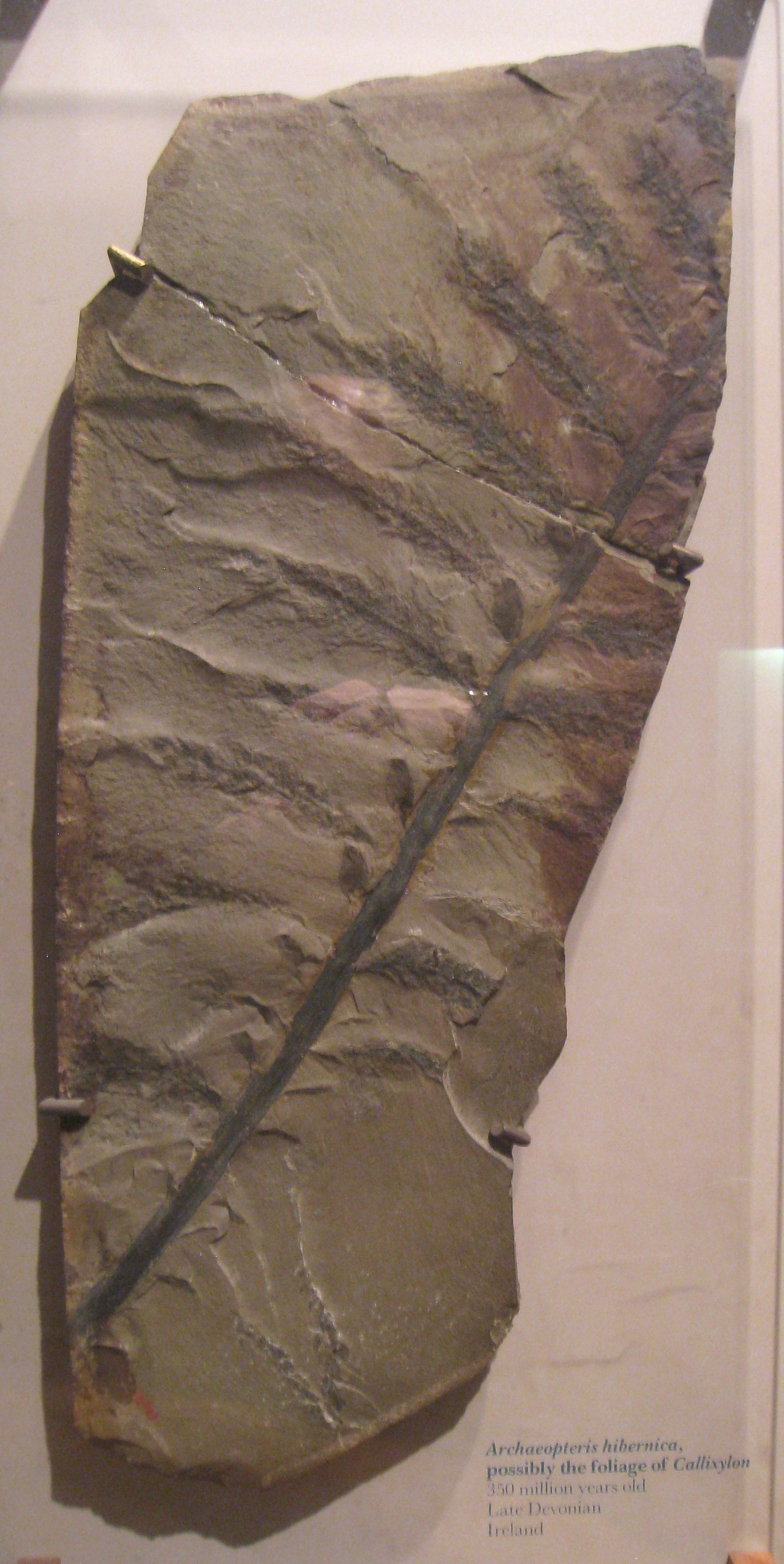
Archaeopteris hibernica
Image: File:Archaeopteris hibernica - National Museum of Natural History - IMG 1972.JPG - Wikimedia Commons (CC BY-SA)
About Archaeopteris
Archaeopteris, specifically the species Archaeopteris hibernica, was a revolutionary prehistoric plant that dominated the terrestrial landscapes of the Late Devonian period, approximately 383 to 359 million years ago. Widely celebrated by paleobotanists as the first true tree to emerge in Earth's history, this monumental organism represents a critical evolutionary bridge between primitive, spore-bearing ferns and modern, seed-bearing plants such as conifers. Thriving in the ancient environments preserved within the Kiltorcan Formation of County Kilkenny, Ireland, Archaeopteris fundamentally engineered the planet's first extensive forest ecosystems, permanently altering the global climate, the composition of the atmosphere, and the geological dynamics of terrestrial environments.
The physical anatomy of Archaeopteris was a remarkable amalgamation of primitive and advanced botanical features, creating an organism that looked fundamentally different from any single plant alive today. Reaching towering heights of up to 3000 centimeters, or 30 meters, with trunk diameters exceeding one meter, it possessed the massive, woody stature of a modern conifer combined with the delicate, leafy canopy of a giant fern. The trunk and branches were composed of true wood, scientifically classified under the form genus Callixylon before the whole plant was understood. This wood was generated by a bifacial vascular cambium, a layer of actively dividing cells that produced secondary xylem inward and secondary phloem outward, allowing the tree to grow continuously in girth. The wood anatomy featured tracheids with distinct circular bordered pits grouped in radial bands, a highly efficient water-transport system nearly identical to that of modern pine trees. However, instead of bearing needles or broad leaves, the branches of Archaeopteris terminated in massive, flattened frond-like structures. These fronds were densely covered with small, fan-shaped, dichotomously veined leaflets or pinnules that overlapped to capture maximum sunlight. Below ground, Archaeopteris possessed an extensive, deeply penetrating root system, a dramatic departure from the shallow, creeping rhizomes of earlier Devonian plants. This robust root architecture not only anchored the massive weight of the 30-meter tree but also allowed it to tap into deep subterranean water tables, enabling the plant to survive in drier inland environments far from the immediate edges of swamps and rivers.
As a photosynthetic autotroph, the paleobiology of Archaeopteris was defined by its need to maximize solar energy capture while managing water loss and structural stability. Its towering height was an evolutionary strategy to outcompete shorter flora for sunlight in the increasingly crowded Devonian landscapes. The growth patterns of Archaeopteris, as evidenced by fossilized wood cross-sections, show distinct seasonal growth rings in specimens found in higher paleolatitudes, indicating that these trees responded dynamically to seasonal variations in light and temperature, shedding their fern-like lateral branch systems much like modern deciduous trees shed their leaves. Rather than producing seeds, Archaeopteris reproduced via spores, a primitive trait linking it to its fern-like ancestors. It was heterosporous, producing two distinct types of spores: large megaspores that would develop into female gametophytes, and tiny microspores that would become male gametophytes. These spores were produced in specialized, modified leaflets called sporangia, which were clustered along the fertile branches of the fronds. When mature, millions of spores would be released into the wind, drifting across the Devonian landscape to settle in moist environments where fertilization could occur. This reproductive strategy required a delicate balance, as the free-living gametophyte stage necessitated environmental water for the motile sperm to swim to the egg, tying the reproductive cycle of this otherwise highly advanced tree to the humid microclimates of the forest floor.
The ecological context in which Archaeopteris lived was one of profound global transformation, largely driven by the plant itself. During the Late Devonian, the Earth's landmasses were consolidating into the supercontinents of Gondwana and Euramerica. The climate was generally warm, but the explosion of Archaeopteris forests initiated a massive drawdown of atmospheric carbon dioxide through photosynthesis and the weathering of silicate rocks by their deep root systems. This carbon sequestration likely contributed to global cooling and the subsequent Late Devonian glaciations. Locally, in regions like the Kiltorcan Formation, Archaeopteris formed the world's first closed-canopy forests. These dense woodlands created entirely new terrestrial habitats: shaded, humid, and protected microclimates on the forest floor. The deep roots of Archaeopteris physically and chemically broke down bedrock, contributing to the creation of the first deep, nutrient-rich soils. By stabilizing riverbanks, these roots transformed wide, shallow, braided streams into deeper, meandering river systems. The massive influx of organic matter from shed fronds and fallen trunks provided a rich food source for detritivores, supporting an emerging complex food web. Archaeopteris shared its habitat with early terrestrial arthropods, such as millipedes, mites, and early wingless insects, which navigated the decaying leaf litter. In the waterways winding through these forests, early tetrapods, the first vertebrates to venture onto land, navigated the submerged roots and fallen logs, hunting primitive lobe-finned fishes and aquatic invertebrates.
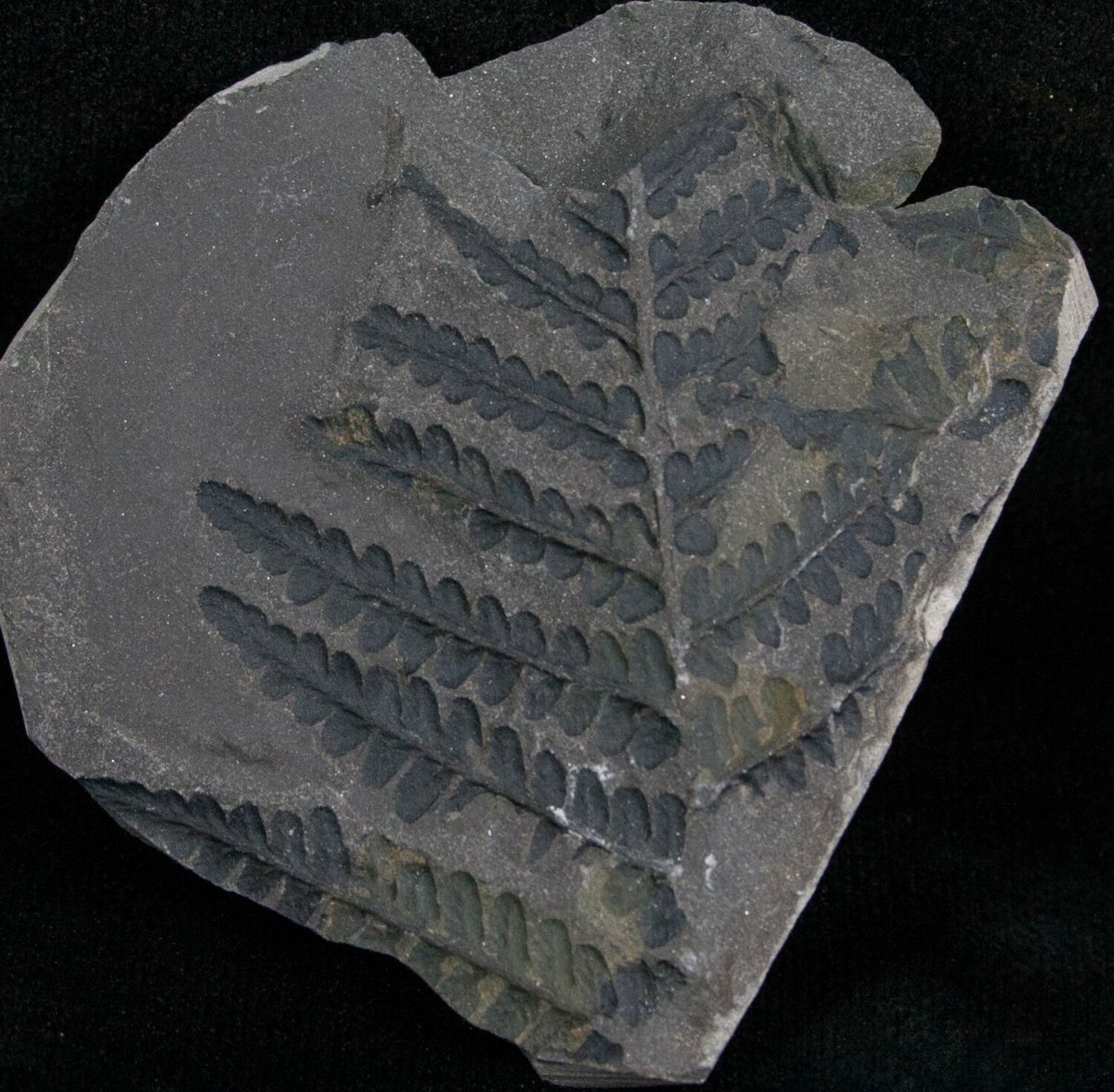
The discovery history of Archaeopteris is one of the most fascinating narratives in the field of paleobotany, characterized by a century-long mystery of mistaken identity. Fossils of the plant's delicate, fan-shaped fronds were first discovered in the mid-19th century in the Upper Devonian strata of the Kiltorcan Formation in Ireland. These beautiful compression fossils were initially classified by paleontologists as a type of ancient fern and were formally named Archaeopteris, meaning ancient fern. Decades later, geologists excavating Devonian rocks in North America and Europe began uncovering massive, petrified logs of fossilized wood. This wood, exhibiting advanced anatomical features like secondary xylem, was named Callixylon and was assumed to belong to an extinct group of early gymnosperms or conifers. For nearly a hundred years, Archaeopteris and Callixylon were treated as entirely separate organisms occupying different branches of the plant kingdom. The monumental paradigm shift occurred in 1960 when American paleobotanist Charles B. Beck was examining Devonian fossils from the continental United States. Beck discovered a spectacular, unprecedented specimen in which the fern-like fronds of Archaeopteris were physically attached to the woody, conifer-like stem of Callixylon. This singular fossil proved that the ancient fern and the ancient conifer were, in fact, the exact same plant. Beck's discovery was a watershed moment, resolving a major paleobotanical puzzle and forcing a complete re-evaluation of early plant evolution.
The evolutionary significance of Archaeopteris cannot be overstated, as it occupies a crucial transitional position in the tree of life. Following Beck's discovery, a new taxonomic class was created to accommodate this unique combination of traits: the Progymnospermopsida, or progymnosperms. Archaeopteris is the most famous and well-understood member of this group. It demonstrates that the evolution of complex, wood-producing trees occurred before the evolution of the seed. By developing a bifacial vascular cambium, Archaeopteris solved the biomechanical and physiological challenges of growing tall, providing a structural blueprint that all subsequent woody plants would inherit. While Archaeopteris itself went extinct at the end of the Devonian period, the anatomical innovations it pioneered set the stage for the massive coal-swamp forests of the subsequent Carboniferous period. Furthermore, the heterosporous reproductive strategy of Archaeopteris is widely considered by evolutionary biologists to be the direct precursor to the evolution of the true seed. The retention of the megaspore within protective tissues, a logical next step from the reproduction of Archaeopteris, eventually led to the gymnosperms, making this Devonian tree a vital evolutionary aunt, if not a direct ancestor, to all modern seed-bearing plants, from towering redwoods to flowering angiosperms.
Despite its well-established importance, Archaeopteris remains the subject of ongoing scientific debates and intense paleobotanical research. One major area of contention involves the precise taxonomic boundaries of the progymnosperms and whether they represent a monophyletic group, meaning a single common ancestor and all its descendants, or a paraphyletic grade of various transitional forms that independently evolved wood. Some researchers argue that the anatomical similarities between different progymnosperms might be the result of convergent evolution driven by the ecological advantages of growing tall. Additionally, there are debates regarding the reproductive diversity within the Archaeopteris genus itself. While Archaeopteris hibernica and several other species are definitively known to be heterosporous, some fragmentary fossil evidence suggests that earlier or closely related species might have been homosporous, producing only one type of spore. This has led to complex discussions about the exact timeline and environmental triggers that drove the evolution of heterospory. Recent revisions utilizing high-resolution CT scanning of permineralized fossils continue to reveal new details about the vascular architecture of the branch attachments, challenging older models of how the plant managed water flow from its massive trunk into its shedding lateral branches.
The fossil record of Archaeopteris is exceptionally rich and globally distributed, reflecting its status as a cosmopolitan genus that dominated the Late Devonian world. Fossils have been recovered from nearly every continent, with particularly famous and well-preserved assemblages found in the Kiltorcan Formation of Ireland, the Catskill Delta of New York and Pennsylvania in the United States, and the Snetnaya Formation in Russia. The preservation quality varies significantly depending on the geological context. In shale deposits, Archaeopteris is typically preserved as carbonaceous compressions, which beautifully capture the delicate morphology of the fronds and sporangia but offer little internal anatomy. Conversely, in environments where the plant material was rapidly buried in mineral-rich waters, the wood and stems are often preserved via permineralization. In these petrified specimens, silica or calcium carbonate has replaced the organic material cell by cell, allowing paleobotanists to study the microscopic structure of the tracheids, rays, and cambium in three dimensions. The sheer volume of Archaeopteris fossils found in Late Devonian strata worldwide is a testament to its overwhelming ecological dominance and its role as the primary biomass producer of its era.
The cultural and educational impact of Archaeopteris is profound, serving as a flagship organism for teaching the history of life on Earth. It is prominently featured in natural history museums around the world, where massive slabs of its fossilized fronds and heavy sections of its petrified wood are displayed to illustrate the concept of transitional fossils and the evolution of the modern biosphere. In popular science and paleontology documentaries, Archaeopteris is frequently highlighted to correct the common misconception that the Earth's first forests were dominated by modern trees, painting instead a vivid picture of an alien landscape ruled by giant, wood-bearing ferns. By studying and showcasing Archaeopteris, educators and scientists can effectively communicate the interconnectedness of life and the Earth system, demonstrating how a single evolutionary innovation in plant anatomy could alter the atmosphere, reshape the continents, and pave the way for the complex terrestrial ecosystems we inhabit today.
Classification
Time Period
Discovery
Location
Kiltorcan, County Kilkenny, Ireland
Formation
Kiltorcan Formation
Frequently Asked Questions
What is Archaeopteris?
Archaeopteris, specifically the species Archaeopteris hibernica, was a revolutionary prehistoric plant that dominated the terrestrial landscapes of the Late Devonian period, approximately 383 to 359 million years ago. Widely celebrated by paleobotanists as the first true tree to emerge in Earth's hi...
When did Archaeopteris live?
Archaeopteris lived during the devonian period of the paleozoic era approximately 383-359 million years ago.
Where was Archaeopteris discovered?
Fossils of Archaeopteris were discovered in Kiltorcan, County Kilkenny, Ireland in the Kiltorcan Formation.
What did Archaeopteris eat?
Archaeopteris was a photosynthetic. It lived in terrestrial habitats.
What type of fossil is Archaeopteris?
Archaeopteris is preserved as a impression fossil. The preservation quality is good.
Related Specimens
From the paleozoic era · impression fossils