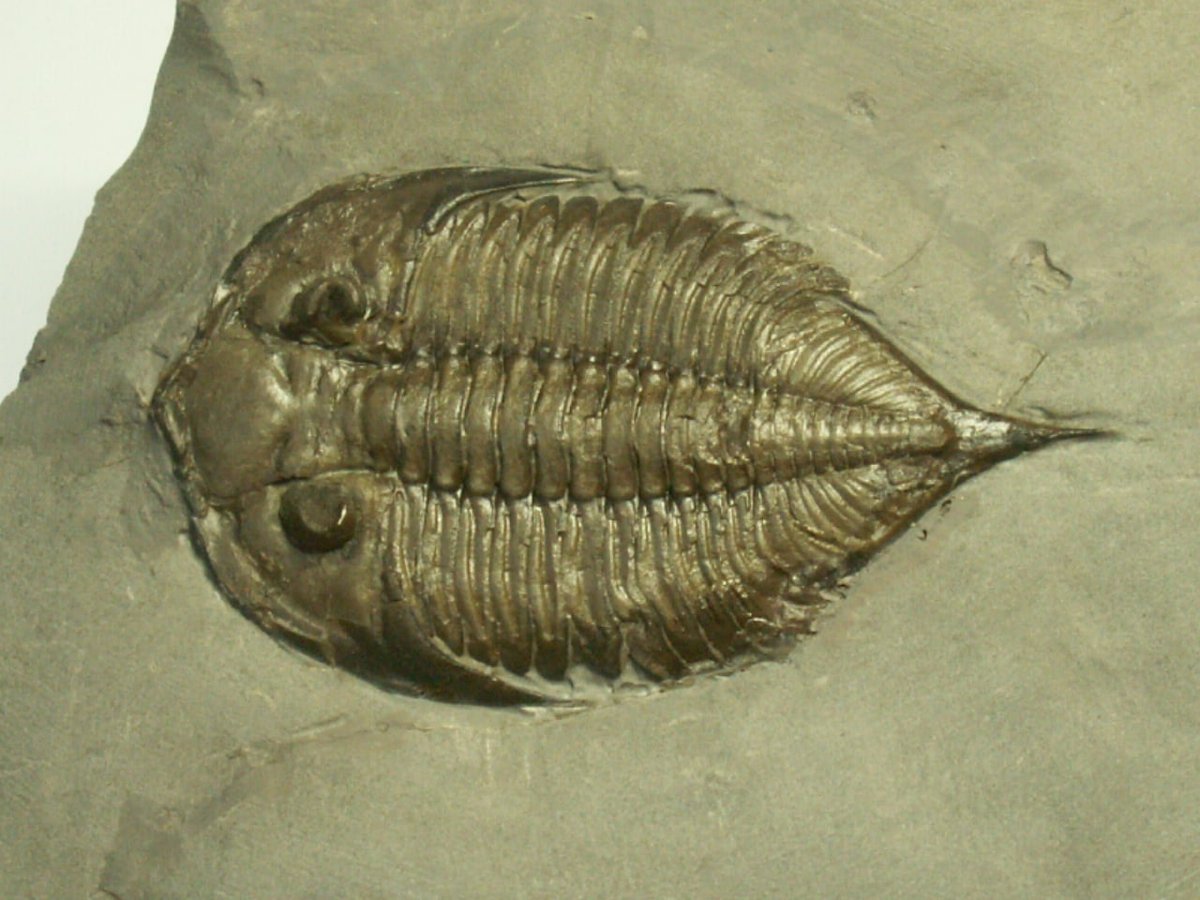
Dalmanites
Dalmanites limulurus
Image: Image sourced via web search (Fair use / Educational)
About Dalmanites
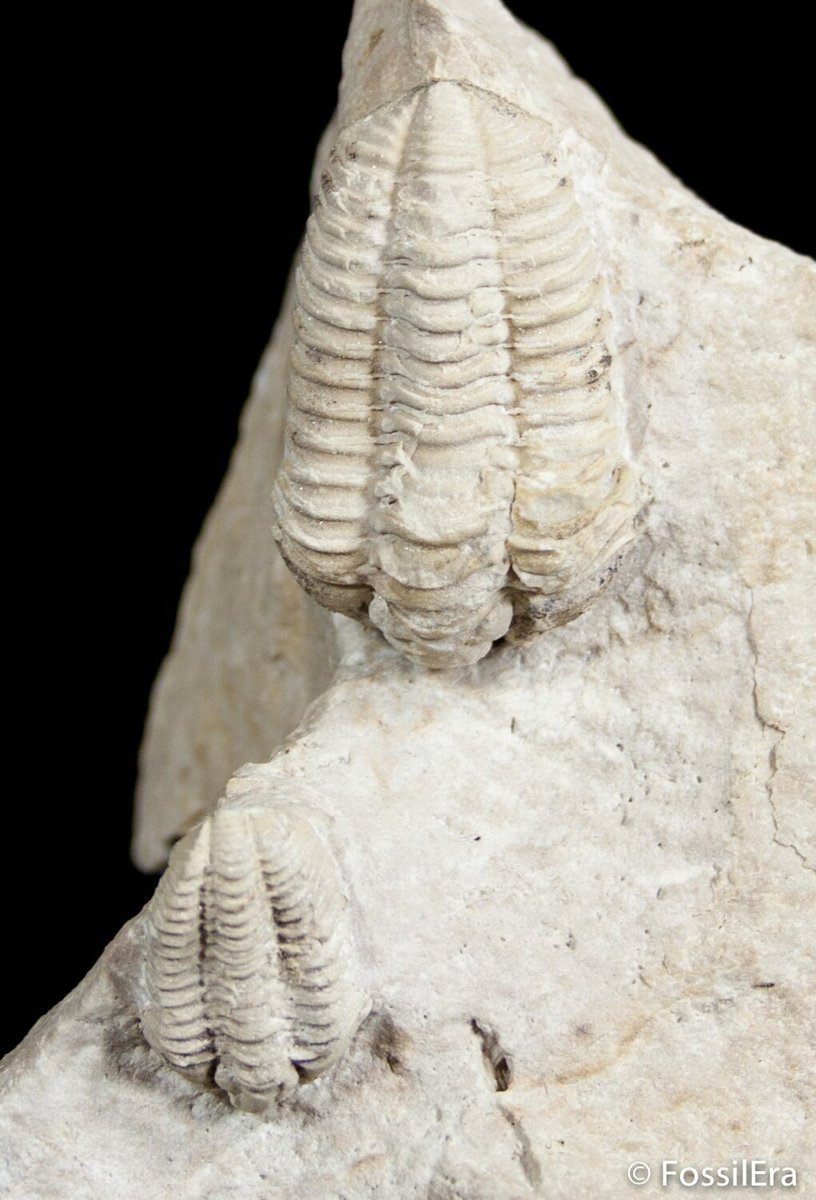
Dalmanites limulurus is a highly recognizable and scientifically significant species of trilobite that thrived during the Silurian Period, approximately 430 to 420 million years ago. As a marine arthropod belonging to the order Phacopida, this organism was a prominent benthic inhabitant of the shallow, warm epicontinental seas that covered much of what is now North America. It is particularly famous for its abundant and exquisitely preserved fossil remains found in the Rochester Shale formation of New York and Ontario. The species serves as a crucial index fossil for the Silurian Period and has provided paleontologists with invaluable insights into the anatomy, ecology, and evolutionary dynamics of Paleozoic marine ecosystems. Its distinctive morphological features, including prominent genal spines and a long tail spine, make it a classic representative of middle Paleozoic trilobite diversity and a staple in both academic research and museum collections worldwide. The physical anatomy of Dalmanites limulurus is characterized by a flattened, heavily calcified exoskeleton divided into three distinct longitudinal lobes and three transverse sections: the cephalon (head), the thorax (body), and the pygidium (tail). Adult specimens typically range from 5 to 10 centimeters in length, making them moderately sized compared to other trilobites, roughly equivalent in scale to a modern large prawn or small horseshoe crab. The cephalon is broad and semicircular, featuring a prominent glabella (the raised central area of the head) that expands anteriorly. One of the most striking features of the cephalon is the presence of long, swept-back genal spines that extend from the rear corners of the head shield down the sides of the thorax. These spines likely served a dual purpose: providing hydrodynamic stability in ocean currents and acting as a deterrent against predators. The eyes of Dalmanites are particularly noteworthy; they are large, crescent-shaped, and of the schizochroal type, a sophisticated visual system unique to the suborder Phacopina. These eyes consist of relatively few, large, individually distinct lenses separated by thick scleral walls, each lens functioning almost like a separate eye, providing the animal with a wide field of vision and excellent motion detection in the dimly lit benthic environment. The thorax is composed of eleven articulating segments, allowing the animal a degree of flexibility, though its broad, flat shape suggests it was less capable of tight enrollment than some of its relatives. The pygidium is large, triangular, and highly segmented, terminating in a distinct, elongated posterior spine known as a mucro. This mucro is a defining characteristic of the species and may have aided in steering or anchoring the animal in soft sediments. While the calcified dorsal exoskeleton is well-documented, inferences about its soft tissue—such as the biramous (two-branched) appendages used for walking and respiration, and the ventral antennae—are drawn from exceptionally preserved specimens of related taxa, indicating a complex anatomy adapted for a highly active benthic lifestyle. The paleobiology of Dalmanites limulurus suggests it was an active, mobile organism that lived primarily on or just above the sea floor. Its flattened body profile and dorsally positioned eyes indicate a benthic lifestyle, where it likely scuttled across the muddy or sandy substrates of the Silurian seas. The diet of Dalmanites is a subject of ongoing study, but its functional morphology points toward a role as a predator or scavenger. Lacking the specialized filter-feeding appendages seen in some other arthropods, it probably used its spiny legs to capture small, soft-bodied invertebrates, such as marine worms, or to scavenge the carcasses of other marine organisms. The strong, calcified exoskeleton and the presence of a hypostome (a hard mouthpart plate on the ventral side) suggest it was capable of processing relatively tough food items. Locomotion was achieved through the rhythmic, coordinated movement of its numerous biramous appendages, which also housed the gills necessary for extracting oxygen from the water. Like all arthropods, Dalmanites grew through a process of ecdysis, or molting. It would periodically shed its rigid exoskeleton to allow for growth, a vulnerable process that often left behind discarded molts (exuviae). The fossil record of Dalmanites is heavily biased toward these molts, which often disarticulate into separate cephalon, thorax, and pygidium pieces. Social behavior is difficult to infer directly from the fossil record, but the frequent discovery of dense aggregations of Dalmanites fossils in certain bedding planes suggests they may have gathered in large numbers for mating or molting, similar to the behavior observed in modern horseshoe crabs. The ecological context of Dalmanites limulurus is rooted in the vibrant, shallow marine environments of the Silurian Period. During this time, the global climate was generally warm and stable, leading to high sea levels that flooded continental margins and created expansive, sunlit epicontinental seas. The Appalachian Basin, where Dalmanites is most commonly found, was situated in tropical to subtropical latitudes. This environment was characterized by extensive reef systems built not by modern corals, but by extinct tabulate and rugose corals, as well as stromatoporoids (sponge-like organisms). Dalmanites lived alongside a rich and diverse community of marine life. Its neighbors included articulate brachiopods, crinoids (sea lilies), bryozoans, bivalves, and cephalopods. The food web was complex, with Dalmanites occupying a middle tier as a benthic consumer. However, it was also prey for larger, more formidable predators. The Silurian seas were home to the apex predators of the era: the eurypterids, or sea scorpions. Genera such as Eurypterus and Pterygotus, some of which reached massive sizes, shared the same habitats and likely preyed upon trilobites. The defensive adaptations of Dalmanites, including its genal spines, mucro, and tough exoskeleton, were evolutionary responses to the intense predation pressure exerted by these early marine predators and the increasingly diverse jawed fishes that were beginning to appear during this time. The discovery history of Dalmanites limulurus is deeply intertwined with the early development of paleontology in North America. The species was first formally described by the pioneering American naturalist Jacob Green in 1832, during a period of intense geological exploration in the United States. Green originally placed the organism in the genus Asaphus, naming it Asaphus limulurus, noting its superficial resemblance to the modern horseshoe crab (Limulus) due to its long tail spine. The genus Dalmanites was later established by the French paleontologist Auguste Rouault in 1843, honoring the Swedish paleontologist Johan Wilhelm Dalman, and the species was subsequently reassigned. The most significant discoveries of Dalmanites limulurus occurred during the mid-19th century, particularly in conjunction with the excavation of the Erie Canal in New York. The blasting and digging through the Silurian bedrock exposed the highly fossiliferous Rochester Shale, bringing to light thousands of exquisitely preserved specimens. The legendary American paleontologist James Hall, who served as the State Paleontologist of New York, extensively studied and illustrated Dalmanites in his monumental multi-volume work, 'Palaeontology of New York.' Hall's detailed descriptions and lithographs brought international attention to the species and established the Rochester Shale as a world-class fossil Lagerstätte. Since then, countless specimens have been collected by both professionals and amateurs, making it one of the most thoroughly documented trilobite species in the world. The evolutionary significance of Dalmanites limulurus lies in its position within the broader history of the Trilobita class. As a member of the order Phacopida, it represents a highly derived and successful lineage that originated in the Ordovician and persisted until the Late Devonian mass extinction. The Phacopids are particularly noted for their evolutionary innovations, most notably the development of the schizochroal eye. This complex visual organ, with its double-lens system designed to correct spherical aberration, is considered one of the most sophisticated optical systems to have ever evolved in the animal kingdom. Dalmanites provides a critical data point for understanding the evolution of this eye structure and its adaptive advantages in Paleozoic marine environments. Furthermore, the morphological variations seen within the Dalmanitidae family, such as changes in spine length and eye size, offer excellent examples of evolutionary adaptation to different benthic niches. The eventual decline and extinction of the Dalmanitids, along with many other trilobite lineages during the Devonian, highlight the shifting ecological dynamics of the Paleozoic, particularly the rise of jawed fishes and the changing nature of marine predator-prey arms races. While Dalmanites left no direct modern descendants, its study contributes significantly to our understanding of arthropod evolution and the functional morphology of extinct marine invertebrates. Scientific debates surrounding Dalmanites limulurus primarily focus on the finer details of its paleobiology and the interpretation of its functional morphology. One ongoing area of discussion is the precise mechanics of its vision. While the schizochroal eye is well understood optically, debates continue regarding how the visual information was processed and whether the animal had color vision or was adapted primarily for low-light conditions. Another topic of debate is its exact feeding strategy. While generally accepted as a predator or scavenger, the lack of preserved gut contents or specialized feeding appendages leaves room for interpretation. Some researchers suggest it may have engaged in shallow burrowing to hunt infaunal prey, while others argue its morphology is strictly adapted for surface walking. Additionally, there are periodic taxonomic revisions within the family Dalmanitidae, as new discoveries and advanced morphometric analyses prompt re-evaluations of species boundaries and generic assignments. The distinction between true Dalmanites and closely related genera like Odontochile can sometimes be subtle, leading to debates over the classification of specific specimens. The fossil record of Dalmanites limulurus is exceptionally robust, making it a cornerstone of Silurian biostratigraphy. Fossils are predominantly found in the Rochester Shale formation, which outcrops in western New York State and extends into Ontario, Canada. This formation represents a shallow, muddy marine shelf environment that was highly conducive to the rapid burial and preservation of benthic organisms. The preservation quality is often excellent, with the calcified exoskeleton retaining fine details such as the individual lenses of the eyes and the delicate ornamentation of the carapace. However, the vast majority of Dalmanites fossils represent molted exoskeletons rather than dead carcasses. Because the trilobite molted in pieces, it is common to find isolated cephalons, thoracic segments, and pygidia. Complete, fully articulated specimens are relatively rare and highly prized by collectors and museums. Famous fossil sites, such as the Caleb's Quarry in New York, have yielded spectacular mortality beds where dozens of complete Dalmanites are preserved on a single slab of shale, providing a snapshot of Silurian marine life. The cultural impact of Dalmanites limulurus is significant within the realm of paleontology and natural history education. Due to its distinctive appearance and relative abundance, it is one of the most recognizable trilobites to the general public. It frequently appears in educational materials, textbooks, and popular science books as a quintessential example of Paleozoic life. Major natural history museums around the world, including the American Museum of Natural History in New York and the Smithsonian National Museum of Natural History in Washington D.C., feature prominent displays of Dalmanites fossils, often showcasing spectacular multi-specimen slabs from the Rochester Shale. The species also holds a special place in the amateur fossil collecting community. Its aesthetic appeal, characterized by its sweeping spines and large eyes, makes it a highly sought-after specimen, driving a continued public fascination with these ancient marine arthropods and fostering a broader appreciation for Earth's deep history.
Classification
Time Period
Discovery
Location
New York, USA
Formation
Rochester Shale
Frequently Asked Questions
What is Dalmanites?
Dalmanites limulurus is a highly recognizable and scientifically significant species of trilobite that thrived during the Silurian Period, approximately 430 to 420 million years ago. As a marine arthropod belonging to the order Phacopida, this organism was a prominent benthic inhabitant of the shall...
When did Dalmanites live?
Dalmanites lived during the silurian period of the paleozoic era approximately 430-420 million years ago.
Where was Dalmanites discovered?
Fossils of Dalmanites were discovered in New York, USA in the Rochester Shale.
What did Dalmanites eat?
Dalmanites was a carnivore/scavenger. It lived in marine habitats.
What type of fossil is Dalmanites?
Dalmanites is preserved as a body fossil. The preservation quality is excellent.
Related Specimens
From the paleozoic era · body fossils