Archelon
Archelon ischyros
Image: Image sourced via web search (Fair use / Educational)
About Archelon
Archelon ischyros represents the largest sea turtle ever known to have existed, a colossal marine reptile that navigated the shallow seas of North America during the Late Cretaceous Period. Living approximately 75 to 72 million years ago, its fossils provide a remarkable window into the marine ecosystems of the Mesozoic Era. Its sheer size and unique adaptations make it a subject of immense paleontological interest, illustrating the evolutionary extremes possible within the turtle lineage and the rich biodiversity of the ancient Western Interior Seaway. Archelon was a true giant of its time, dwarfing its modern relatives and playing a significant role in its prehistoric environment.
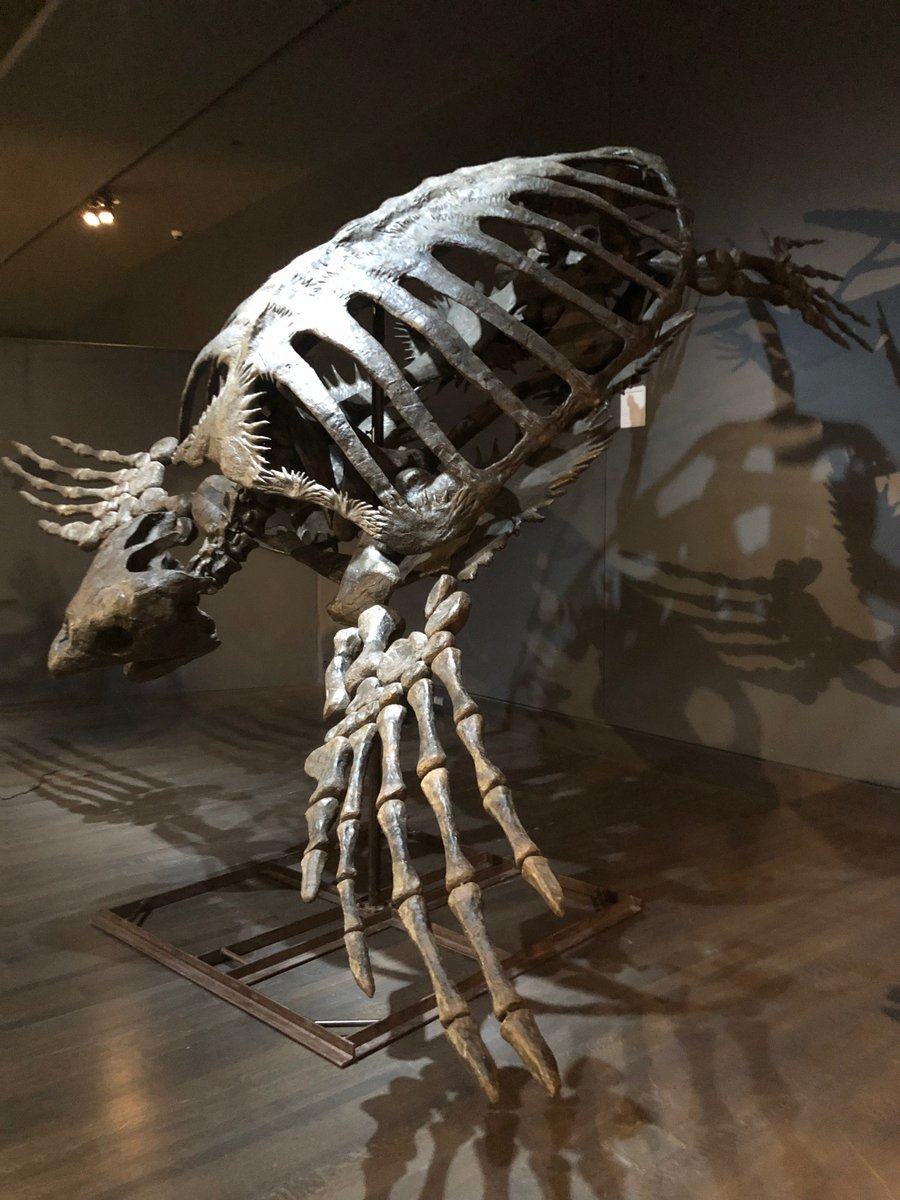
In terms of physical description, Archelon was a truly immense animal, far exceeding any modern turtle in scale. The largest known specimen, nicknamed 'Brigitta,' measures around 4.6 meters (15 feet) from head to tail and would have had a flipper-span of approximately 4.9 meters (16 feet). Weight estimates for an individual of this size range from 2,200 to 3,200 kilograms (4,900 to 7,000 pounds), comparable to a large pickup truck. Its most distinctive feature was its unique carapace. Unlike the solid, heavy, bony shells of modern sea turtles, Archelon's shell was a framework of bony struts and ribs, covered by a thick, leathery skin, similar to the modern leatherback sea turtle (Dermochelys coriacea), but on a much grander scale. This structure, known as a 'girdle-like plastron,' significantly reduced the animal's weight, a crucial adaptation for a creature of its size in a marine environment. The skull was proportionally large, narrow, and elongated, ending in a strongly hooked beak that lacked teeth, indicative of a specialized diet. Its powerful front flippers were enormous, providing the primary thrust for swimming, while the smaller rear flippers likely served as rudders for steering.
Examining the paleobiology of Archelon reveals a highly adapted marine predator. The powerful, hooked beak suggests a diet consisting of soft-bodied prey. Paleontologists theorize that it fed primarily on slow-moving invertebrates like squid, jellyfish, and ammonites, which were abundant in the Western Interior Seaway. The beak would have been effective at slicing through these soft tissues. It is unlikely that Archelon was a fast pursuit predator; instead, its massive size and powerful flippers suggest it was a strong, steady swimmer capable of long-distance cruising in open waters. Like modern sea turtles, it would have needed to surface periodically to breathe air. Its growth pattern was likely rapid, reaching its enormous size in a relatively short lifespan for such a large reptile, a strategy to outgrow potential predators quickly. It is believed that Archelon, like its modern counterparts, would have migrated to coastal areas or sandy shores to lay eggs, a vulnerable period in its life cycle where it would have been exposed to terrestrial predators. Social behavior is difficult to infer, but it was likely a solitary animal, gathering only for mating or nesting.
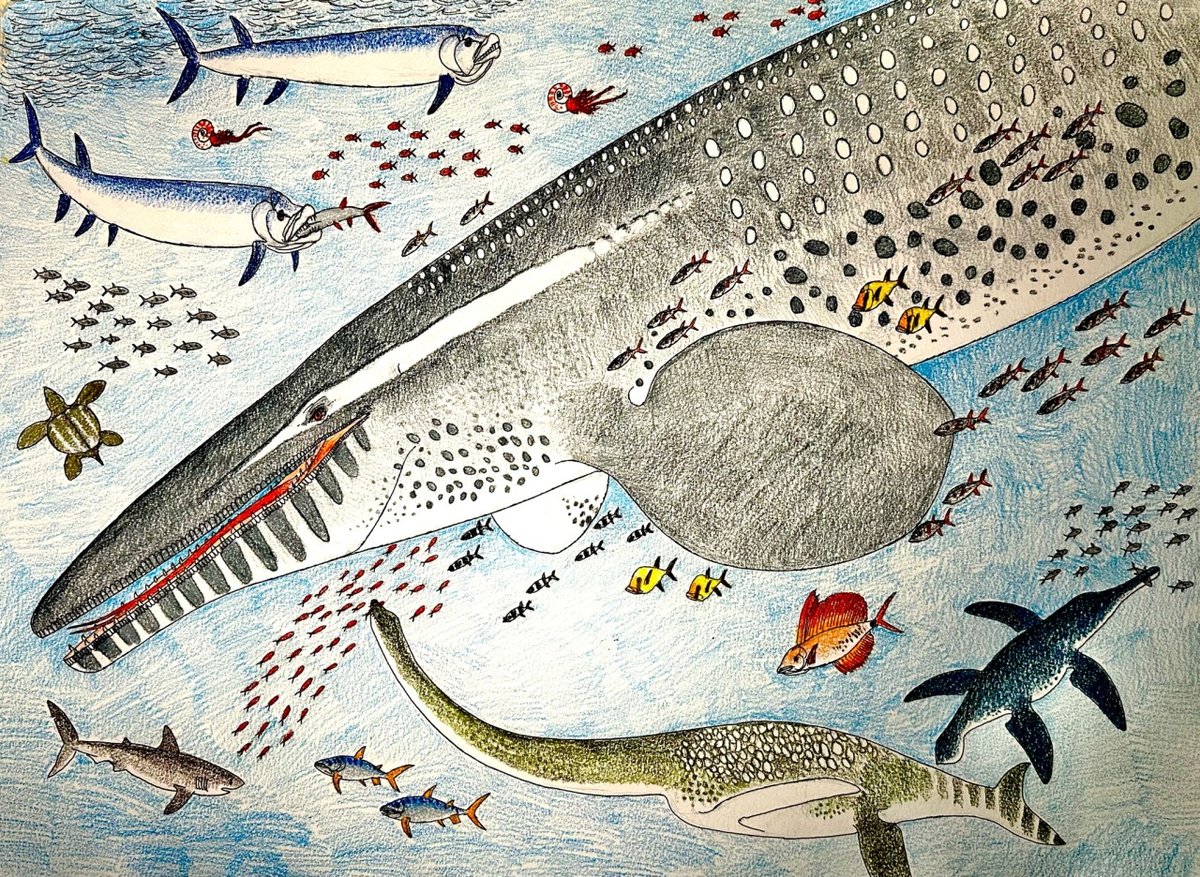
The ecological context of Archelon's world was vastly different from today. During the Late Cretaceous, high global sea levels created the Western Interior Seaway, a vast, shallow epicontinental sea that split North America into two landmasses, Laramidia to the west and Appalachia to the east. The climate was warm and subtropical, with no polar ice caps. Archelon was an apex or near-apex predator within this marine ecosystem. It shared its habitat with a diverse array of formidable creatures. Its primary predators were likely large mosasaurs, such as Tylosaurus and Mosasaurus, which were the dominant marine carnivores of the time. Fossil evidence, including mosasaur bite marks on some turtle fossils, supports this predator-prey relationship. Other inhabitants of the seaway included plesiosaurs like Elasmosaurus, the predatory fish Xiphactinus, and various species of sharks, including Cretoxyrhina. Archelon's food source, ammonites and squid, formed a crucial part of the food web, linking the smaller organisms to the larger predators. The seafloor was likely a soft, muddy substrate, as indicated by the Pierre Shale formation where its fossils are found.
The discovery history of Archelon is rooted in the 'Bone Wars' of the late 19th century. The holotype specimen was discovered in the Pierre Shale of South Dakota in 1895 by the famed paleontologist George Reber Wieland. Working for Othniel Charles Marsh of Yale University, Wieland unearthed a massive, nearly complete skeleton. He formally named and described it as Archelon ischyros in 1896. The genus name 'Archelon' translates to 'ruler turtle,' and the species name 'ischyros' means 'mighty' or 'powerful,' a fitting description for the colossal reptile. The most famous and largest specimen, 'Brigitta,' was discovered in 1992, also in the Pierre Shale of South Dakota, by a private fossil hunter. This exceptionally complete fossil was eventually acquired by the Natural History Museum of Vienna, Austria, where it remains a centerpiece exhibit, providing invaluable data on the maximum size and anatomy of the species. These key discoveries have cemented Archelon's status as a paleontological icon.
Archelon holds significant evolutionary importance as a member of the Protostegidae, an extinct family of sea turtles that were among the first to achieve a global distribution and large body size. This family is considered a sister group to the modern leatherback sea turtle's family, Dermochelyidae. The structural similarities in their shells—a reduced, non-solid carapace—represent a fascinating case of convergent evolution, where two distinct lineages independently evolved a similar solution to the challenge of large body size in a marine environment. Archelon's existence demonstrates the remarkable adaptive radiation of turtles during the Mesozoic Era, showcasing their ability to evolve into giant, open-ocean specialists. It provides a crucial data point for understanding the evolutionary history of Testudines, highlighting the diversity and ecological roles that turtles have occupied over geological time. Its lineage, however, did not survive the Cretaceous-Paleogene extinction event 66 million years ago, which wiped out the protostegids along with the non-avian dinosaurs and other large marine reptiles.
Despite its well-established status, some scientific debates surrounding Archelon persist. One area of discussion involves its precise metabolic rate and physiology. While reptiles are traditionally considered 'cold-blooded' (ectothermic), the enormous size of Archelon and its active, cruising lifestyle in potentially cooler deep waters have led some scientists to propose it may have exhibited some form of gigantothermy. This is a condition where a large body mass allows an animal to maintain a stable, high internal body temperature, similar to modern leatherback turtles. Another debate concerns its diving capabilities. The lightweight, flexible nature of its shell might have allowed it to withstand the pressure changes associated with deep dives in pursuit of prey like squid, but direct evidence remains elusive. Ongoing research into the bone histology of Archelon and its relatives may provide clearer answers about its growth rates, metabolism, and life history, continually refining our understanding of this magnificent creature.
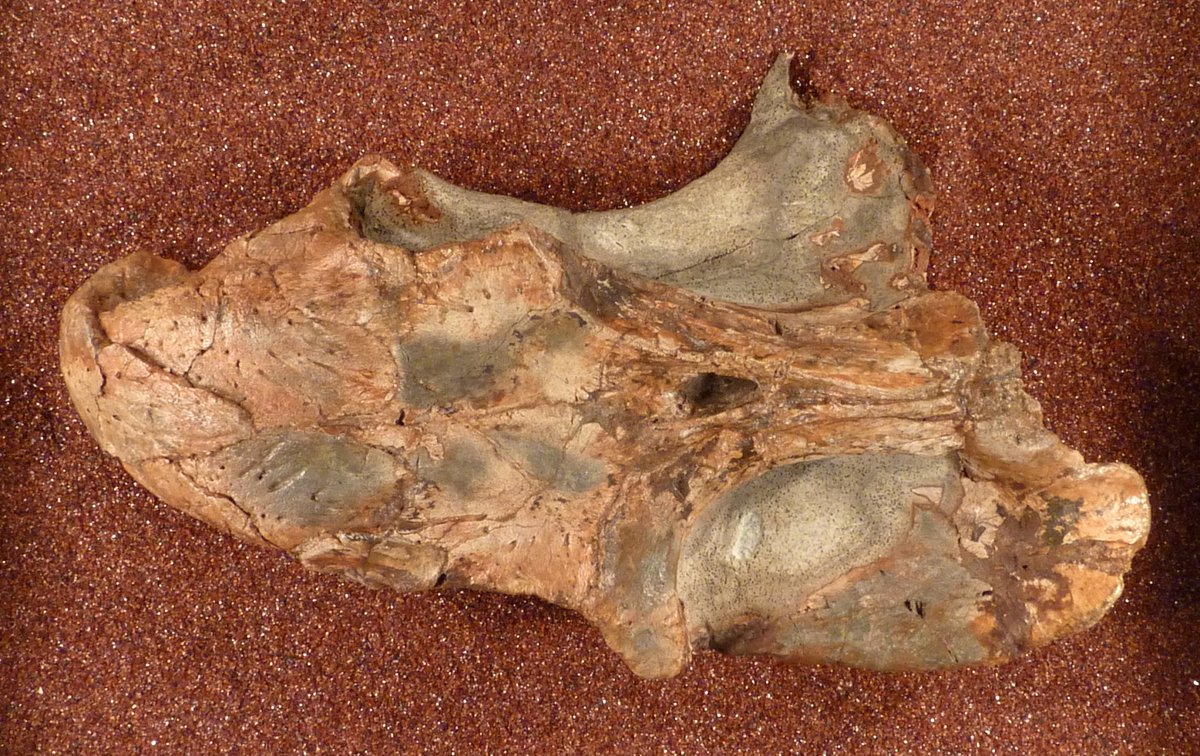
The fossil record of Archelon is geographically concentrated, with the vast majority of specimens being unearthed from the Pierre Shale formation in South Dakota and Wyoming in the United States. This geological unit represents the deep, muddy sediments of the Western Interior Seaway, an ideal environment for the preservation of large marine animals. While not a common fossil, a respectable number of partial to nearly complete skeletons have been recovered, providing a robust understanding of its anatomy. The preservation quality is often good, with many skeletons found articulated or semi-articulated. The most commonly preserved elements are the robust bones of the limbs, skull, and the framework of the carapace and plastron. The delicate bones of the digits and tail are rarer finds. Famous fossil sites within the Pierre Shale continue to yield important specimens, and major museum collections, including the Yale Peabody Museum of Natural History and the Natural History Museum Vienna, house the most significant Archelon fossils known to science.
Archelon's immense size and unique appearance have secured its place in popular culture. It is a staple in books, documentaries, and video games about prehistoric life, often depicted as a gentle giant of the Cretaceous seas. Its skeleton is a breathtaking and popular display in museums around the world, most notably the 'Brigitta' specimen in Vienna and the holotype at the Yale Peabody Museum. These displays serve a vital educational purpose, captivating the public's imagination and providing a tangible sense of the scale and majesty of life in Earth's ancient oceans. For many, the image of Archelon swimming alongside mosasaurs and plesiosaurs defines the marine world of the dinosaurs, making it an important ambassador for paleontology and the science of our planet's deep history.
Classification
Time Period
Discovery
Location
South Dakota, USA
Formation
Pierre Shale
Frequently Asked Questions
What is Archelon?
Archelon ischyros represents the largest sea turtle ever known to have existed, a colossal marine reptile that navigated the shallow seas of North America during the Late Cretaceous Period. Living approximately 75 to 72 million years ago, its fossils provide a remarkable window into the marine ecosy...
When did Archelon live?
Archelon lived during the cretaceous period of the mesozoic era approximately 75-72 million years ago.
Where was Archelon discovered?
Fossils of Archelon were discovered in South Dakota, USA in the Pierre Shale.
What did Archelon eat?
Archelon was a carnivore. It lived in marine habitats.
What type of fossil is Archelon?
Archelon is preserved as a body fossil. The preservation quality is good.
Related Specimens
From the mesozoic era · body fossils
-tooth/7fb56d2cf543.png)