Pterodactylus
Pterodactylus antiquus
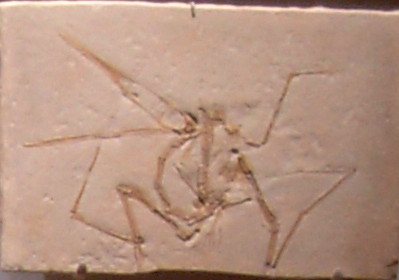
Image: File:Pterodactylus antiquus cm24000.jpg - Wikimedia Commons (CC BY-SA)
About Pterodactylus
Pterodactylus was a genus of small, winged reptiles belonging to the order Pterosauria that inhabited the coastal regions of Europe during the Late Jurassic period, approximately 150.8 to 148.5 million years ago. As the very first pterosaur ever to be scientifically described, its discovery in the late 18th century fundamentally altered our understanding of prehistoric life, introducing the world to the concept of flying reptiles that ruled the Mesozoic skies. Found primarily within the exceptionally preserved Solnhofen Limestone of Bavaria, Germany, Pterodactylus remains one of the most iconic and historically significant fossils ever unearthed, lending its name to the entire group of pterosaurs and shaping the public perception of the age of reptiles.
The physical anatomy of Pterodactylus is well-documented thanks to numerous complete skeletons, many of which preserve delicate soft-tissue impressions. It was a relatively small pterosaur, with the largest known specimen, an adult *Pterodactylus antiquus*, possessing a wingspan of approximately 1.04 meters (about 3.4 feet). Its body was lightly built, with hollow bones filled with air sacs, a feature analogous to modern birds that significantly reduced its weight for efficient flight. Its skull was long, slender, and tapered to a point, accounting for a significant portion of its total body length. The jaws were lined with around 90 small, sharp, conical teeth that pointed outwards and forwards, particularly at the tips of the jaws, an adaptation ideal for grasping slippery prey. Unlike many later, more derived pterosaurs such as *Pteranodon*, *Pterodactylus* lacked a large, bony crest on its skull. However, fossil evidence from exceptionally preserved specimens reveals the presence of a soft-tissue crest, likely made of keratin and fibrous tissue, that ran along the top of its head from the back of the skull towards the snout. This structure may have served as a display feature for species recognition or mating rituals. Its wings were formed by a leathery membrane, known as a patagium, which stretched from the tip of an enormously elongated fourth finger down to its hind limbs. The remaining three fingers were small, clawed, and free, likely used for clambering or gripping surfaces. A short, stubby tail and a long, flexible neck completed its distinctive profile, making it an agile and efficient aerial predator.
The paleobiology of Pterodactylus reveals a creature finely tuned to its coastal environment. Its numerous, needle-like teeth strongly indicate a diet primarily composed of small, soft-bodied animals. Stomach contents and the general morphology of its feeding apparatus suggest it was a carnivore and likely an insectivore or piscivore, preying on small fish, crustaceans, and other invertebrates that thrived in the shallow lagoon waters of its habitat. Its feeding strategy likely involved skimming low over the water's surface, using its sharp eyesight to spot prey and its pointed jaws to snatch them with precision. On the ground, the locomotion of Pterodactylus, like other pterosaurs, has been a subject of debate. The prevailing scientific consensus now supports a quadrupedal stance, where it walked on all fours, folding its long wing-fingers back to use its three smaller, clawed fingers and its hind feet for movement. This would have allowed it to move with surprising agility on land, perhaps to stalk terrestrial insects or to launch into flight. Growth studies based on the numerous specimens of varying sizes have provided a detailed look into its life cycle. Research by paleontologists like Christopher Bennett has shown that Pterodactylus grew continuously throughout its life, with distinct growth stages, or "year classes," identifiable in the fossil record. These studies suggest that what were once thought to be different species of varying sizes were, in fact, juvenile, subadult, and adult individuals of the same species, *Pterodactylus antiquus*.
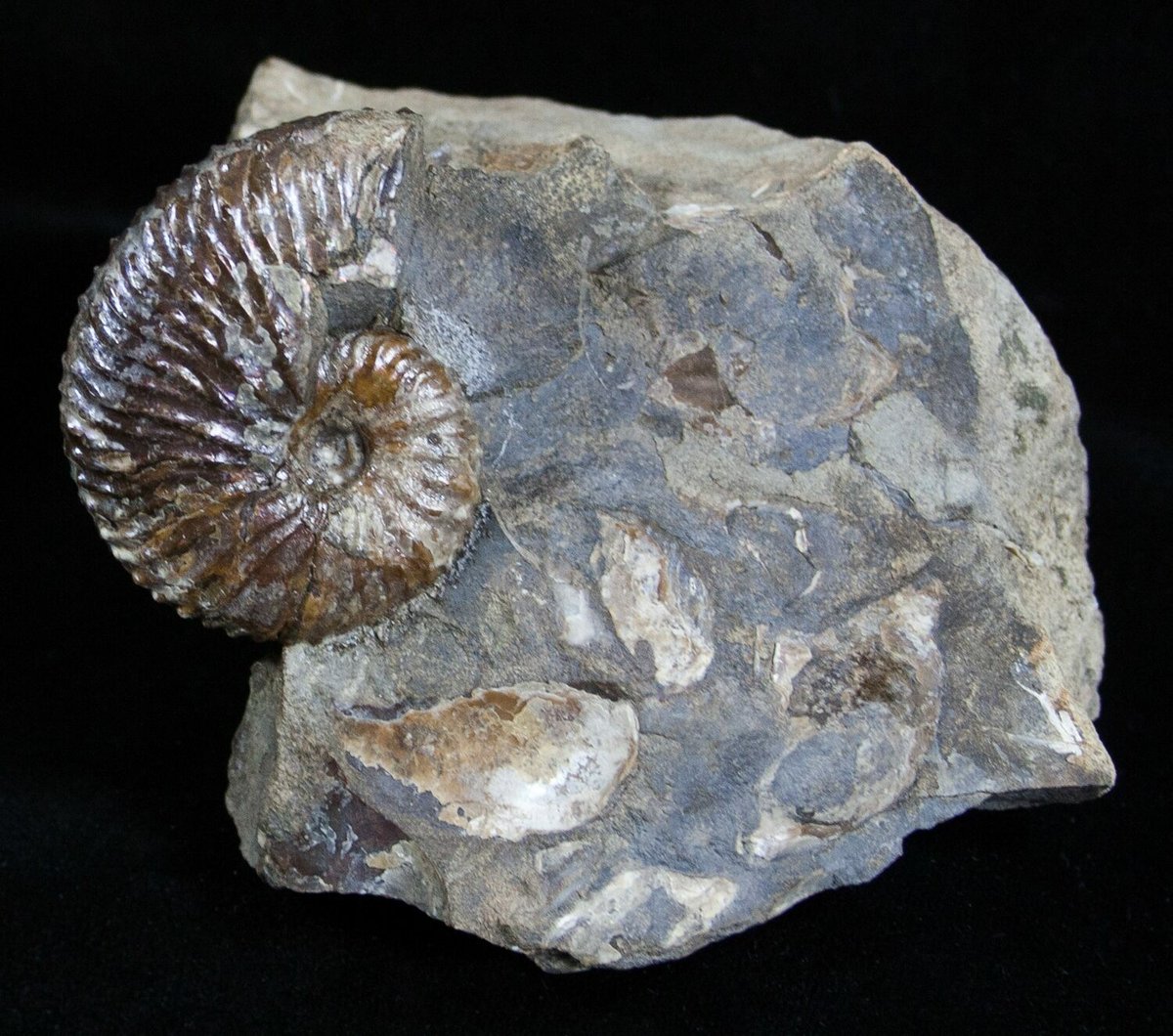
During the Tithonian age of the Late Jurassic, Pterodactylus lived in an environment dramatically different from modern-day Europe. The region was an archipelago of islands situated in a shallow, tropical sea on the edge of the ancient Tethys Ocean. The climate was warm and arid, similar to modern subtropical zones. The Solnhofen Limestone, where its fossils are found, represents a series of placid, hypersaline lagoons that were largely cut off from the open sea. This unique chemical environment, with low oxygen levels at the bottom, was inhospitable to scavengers, leading to the exquisite, articulated preservation of organisms that fell or were washed into the water. Pterodactylus shared this ecosystem with a rich diversity of life. In the skies, it flew alongside other pterosaurs like the long-tailed *Rhamphorhynchus* and the smaller *Anurognathus*. The waters teemed with fish, ammonites, and crustaceans, while the surrounding islands were home to small, predatory dinosaurs such as *Compsognathus*, the fossils of which have been found in the same deposits. The famous "first bird," *Archaeopteryx*, also lived in this environment, representing a fascinating intersection of early avian and pterosaur evolution. Within this complex food web, Pterodactylus occupied the niche of a small aerial predator, likely competing with other small pterosaurs and juvenile marine reptiles for food resources while being potential prey for larger predators like *Compsognathus* or larger marine reptiles that may have ventured into the lagoons.
The discovery and scientific interpretation of Pterodactylus mark a foundational chapter in the history of paleontology. The first specimen was unearthed in 1784 from the Solnhofen Limestone in Bavaria, Germany, by the Italian scientist Cosimo Alessandro Collini. As the curator of the natural history collections of Charles Theodore, Elector of Bavaria, Collini was perplexed by the fossil's strange anatomy, particularly its elongated forelimbs. He initially, and incorrectly, concluded it was an aquatic creature, suggesting its long arms were used as paddles. The specimen remained a curiosity until the turn of the 19th century. In 1809, the renowned French naturalist Georges Cuvier, a pioneer in comparative anatomy, studied a detailed illustration of the fossil. He correctly identified it as a flying reptile, a revolutionary concept at the time. Cuvier named it "Ptero-Dactyle," from the Greek words for "wing finger," in reference to the elongated fourth digit that supported the wing. The official scientific name, *Pterodactylus antiquus*, was assigned by Samuel Thomas von Sömmerring in 1812, who, despite Cuvier's work, still believed it to be a type of bat. Cuvier’s interpretation ultimately prevailed, and his 1812 publication firmly established the existence of a previously unknown group of extinct flying reptiles, forever changing the scientific view of prehistoric ecosystems. This original specimen, known as the "Collini specimen," is still preserved and housed at the Bayerische Staatssammlung für Paläontologie und Geologie in Munich.
Pterodactylus holds a crucial position in the evolutionary history of life. As the first member of the order Pterosauria to be identified, it became the type genus for the entire group. It belongs to the suborder Pterodactyloidea, a group of more derived, "short-tailed" pterosaurs that flourished during the Late Jurassic and Cretaceous periods. Compared to earlier, long-tailed pterosaurs like *Rhamphorhynchus*, *Pterodactylus* exhibits several advanced features, including a much shorter tail, a longer skull relative to its torso, and more elongated metacarpals in the hand, which shifted the wing structure. These adaptations likely made it a more dynamic and agile flyer. Pterosaurs are not dinosaurs, but they are their closest relatives, both belonging to the larger clade Ornithodira. This places them in a pivotal position for understanding the evolution of archosaurs, the group that also includes crocodilians. Their unique method of flight, utilizing a membrane supported by a single elongated finger, represents a remarkable example of convergent evolution with birds and bats, which evolved wings independently through different anatomical modifications. While pterosaurs left no direct modern descendants, their study provides invaluable insights into the biomechanics of flight and the incredible adaptive radiation of reptiles during the Mesozoic Era. Pterodactylus, as one of the earliest known pterodactyloids, offers a snapshot of the evolutionary transition from more primitive pterosaur forms to the later giants of the Cretaceous.
Despite being one of the most well-known pterosaurs, the taxonomy of Pterodactylus has been a subject of considerable scientific debate and revision. For over a century, its name became a "wastebasket taxon," with dozens of species from around the world being incorrectly assigned to the genus. This created significant confusion, lumping together unrelated pterosaurs of different sizes and from different time periods. Beginning in the late 20th century, rigorous re-examinations, particularly by paleontologist Christopher Bennett, led to a major taxonomic cleanup. Bennett's detailed studies of the Solnhofen specimens concluded that many of the supposed different species of *Pterodactylus* were actually just different growth stages of a single species: *Pterodactylus antiquus*. This revision drastically streamlined the genus, which is now considered monotypic, containing only this one valid species. Other species previously assigned to *Pterodactylus*, such as *Pterodactylus kochi*, have been reclassified into new genera like *Aurorazhdarcho*. This ongoing process of taxonomic refinement highlights the dynamic nature of paleontological science, where new analytical methods and a deeper understanding of ontogeny (growth and development) can reshape our classification of long-extinct animals.
The fossil record of Pterodactylus is geographically restricted but exceptionally rich in quality. Over 30 known specimens, ranging from small juveniles to fully grown adults, have been recovered almost exclusively from the Solnhofen Limestone quarries in Bavaria, Germany. This geological formation is a Lagerstätte, a site of extraordinary fossil preservation. The fine-grained limestone, formed in an anoxic lagoon environment, preserved not only the delicate, hollow bones of Pterodactylus in full articulation but also faint impressions of its soft tissues. These rare imprints have revealed crucial details about its anatomy, including the extent of its wing membranes, the presence of a throat pouch similar to that of a pelican, and the soft-tissue crest on its head. The quality of these fossils has allowed for detailed studies of its growth, anatomy, and biomechanics that are impossible for most other extinct animals. The abundance of specimens representing a full growth series is particularly valuable, providing a unique window into the life history of a Mesozoic reptile. The Solnhofen remains a globally significant site, and the fossils of Pterodactylus are among its most prized and scientifically important treasures.
The cultural impact of Pterodactylus is immense and far-reaching. Since its discovery, it has captured the public imagination as one of the quintessential prehistoric creatures, often appearing alongside dinosaurs like *Tyrannosaurus* and *Triceratops* in popular media. Although the term "pterodactyl" is often used colloquially and incorrectly to refer to all pterosaurs, its widespread use is a testament to the animal's iconic status. Skeletons of *Pterodactylus antiquus* are prominent exhibits in major natural history museums worldwide, including the American Museum of Natural History in New York and the Natural History Museum in London. Its dramatic appearance has made it a staple in books, films, and documentaries about the age of dinosaurs, serving as a primary educational tool for introducing the concept of flying reptiles and the diversity of life in the Mesozoic Era.
Classification
Time Period
Discovery
Location
Bavaria, Germany
Formation
Solnhofen Limestone
Frequently Asked Questions
What is Pterodactylus?
Pterodactylus was a genus of small, winged reptiles belonging to the order Pterosauria that inhabited the coastal regions of Europe during the Late Jurassic period, approximately 150.8 to 148.5 million years ago. As the very first pterosaur ever to be scientifically described, its discovery in the l...
When did Pterodactylus live?
Pterodactylus lived during the jurassic period of the mesozoic era approximately 150.8-148.5 million years ago.
Where was Pterodactylus discovered?
Fossils of Pterodactylus were discovered in Bavaria, Germany in the Solnhofen Limestone.
What did Pterodactylus eat?
Pterodactylus was a carnivore. It lived in coastal habitats.
What type of fossil is Pterodactylus?
Pterodactylus is preserved as a body fossil. The preservation quality is exceptional.
Related Specimens
From the mesozoic era · body fossils